

The Collaborative Legacy of Lake|Flato Architects and Positive Energy
The landscape of contemporary architecture is increasingly defined by the synergy between visionary design and rigorous building science. At the forefront of this evolution stands the enduring partnership between San Antonio based Lake|Flato Architects, renowned for their distinctive, context-responsive designs, and Positive Energy, an Austin, TX-based residential MEP engineering and building science firm. For over a decade, our collaboration has consistently yielded award-winning projects, particularly within the challenging environmental contexts of the Texas Hill Country and beyond. This blog post explores how our integrated approach to design has not only created beautiful and award winning architecture, but also offers invaluable lessons for the broader architectural community.
The landscape of contemporary architecture is increasingly defined by the synergy between visionary design and rigorous building science. At the forefront of this evolution stands the enduring partnership between San Antonio based Lake|Flato Architects, renowned for their distinctive, context-responsive designs, and Positive Energy, an Austin, TX-based residential MEP engineering and building science firm. For over a decade, our collaboration has consistently yielded award-winning projects, particularly within the challenging environmental contexts of the Texas Hill Country and beyond. This blog post explores how our integrated approach to design has not only created beautiful and award winning architecture, but also offers invaluable lessons for the broader architectural community.
The Power of Partnership: Lake|Flato and Positive Energy's Collaborative Legacy
The collaboration between Lake|Flato and Positive Energy transcends a typical client-consultant relationship; it represents a deep, integrated design collaboration. This partnership is founded on a shared commitment to creating buildings that are not only aesthetically remarkable but also inherently healthy, durable, and environmentally responsive.
We at Positive Energy have endeavored to clearly articulate our mission to leverage "building science and human-centered design to engineer healthy, comfortable, and resilient spaces". This commitment practically means that we work with architecture teams to create healthier indoor environments and electrify those homes, leveraging resilient systems that move our society forward and away from fossil fuel based solutions. This forward-thinking approach aligns with Lake|Flato's architectural ethos, which is rooted in fostering "meaningful connections to the landscape that inspire positive change and environmental conservation". Lake|Flato consistently aims to design “buildings that conserve water and other resources, use less energy, and reduce operational and embodied carbon". This shared philosophy forms the bedrock of our highly successful project history together.
When architectural vision, as exemplified by Lake|Flato, and engineering expertise, as provided by Positive Energy, are driven by a fundamental commitment to human well-being and resilience, it creates a dynamic wherein collaboration can occur on a deep level. In this model, the engineering team does not merely fulfill a design brief; it becomes an active partner in shaping the design itself from the earliest stages. This deep integration allows for proactive problem-solving, the selection of innovative materials and systems, and a holistic approach to building performance. Such comprehensive outcomes are significantly more challenging to achieve when the underlying philosophies of an architectural firm and our engineering team are disparate. For architects, selecting engineering partners whose values and approach to design are in strong alignment with their own is paramount. This can lead to more cohesive, higher-performing, and ultimately more impactful architectural outcomes. A shared vision is just as crucial as technical competence.
Collaborative Excellence in Action: Award-Winning Projects
The following case studies illustrate the practical application of building science principles and the profound benefits of integrated design.
Marfa Ranch: Rammed Earth, Thermal Mass, and Healthy Interiors
Situated in the remote and climatically challenging Chihuahuan Desert, the Marfa Ranch is a low-profile residential compound comprising eight structures organized around a central courtyard. This design consciously "borrows from the area's earliest structures", creating a cool respite from the sun-drenched desert. The defining feature of its architectural response to climate is its construction with two-foot-thick rammed earth walls , specifically chosen to protect its inhabitants from the extremes of the region, heat, cold, and wind. Lightweight breezeways and porches made of recycled oil field pipe connect the structures, allowing inhabitants to connect with the vast landscape.

Photography: Casey Dunn
Positive Energy served as both MEP Engineer and Building Envelope consultant for this project. This dual responsibility for an MEP firm is unusual compared to traditional project structures where an independent waterproofing consultant is also onboarded. It was helpful to the integrated design approach for us as the MEP engineer to have a deep understanding of the unique wall assembly behavior. This building-science-forward approach to MEP engineering led to a high quality experience for the occupants of the home.
The massive rammed earth walls at Marfa Ranch function as a passive heating and cooling system, a practical application of building science principles. In climates with high diurnal swings, like Marfa, TX, the thermal mass effect can be particularly useful. During the hot desert days, the walls slowly absorb and store heat. As external temperatures decline at night, this stored heat is gradually released back into the interior, contributing to a warmer indoor environment. Conversely, during cool nights, the walls release heat, and can be "regenerated" by absorbing cooler night air. This strategic use of thermal mass can significantly reduce the reliance on active heating and cooling systems, with some studies showing 20% to 52% reductions in heating and cooling loads compared to conventional buildings. The heavy thermal mass of the rammed earth walls can act as a natural, passive climate control system. Instead of relying solely on mechanical HVAC equipment to maintain indoor temperatures, the walls themselves temper the internal environment by buffering the large external temperature swings in the desert. This reduces the peak heating and cooling demands, allowing for smaller, more efficient mechanical systems. This is a fundamental principle of passive design in high desert climates that directly impacts energy consumption and resilience. Architects should view high-thermal-mass materials, when appropriate for the climate, as primary design elements that can dramatically reduce a building's energy footprint and enhance occupant comfort. This approach moves beyond simply insulating walls to actively engaging the building envelope in climate regulation, offering a key lesson in practical building science.
Beyond thermal performance, the crucial role of moisture management was addressed. For instance, maintaining a 75mm exposed slab edge above finished grade helps protect against moisture ingress. This detail highlights that even high-performing walls like rammed earth require careful attention to moisture, as even high-R walls can be susceptible to moisture problems. Every wall needs robust moisture management and rammed earth is no exception to the rule.
Marfa Ranch has garnered significant recognition, including the 2022 Texas Society of Architects Design Award, 2022 Dezeen’s Top 10 Houses of 2022, and featured in publications like Dwell and Architectural Digest.
The Prow: Off-Grid Resilience and Integrated Systems
The Prow is Lake|Flato’s first off-the-grid Porch House, nestled against a secluded bluff in the Davis Mountains of far west Texas. Its simple design is protected by a long-gable roof with a porch running the length of the building, offering expansive views. Positive Energy provided crucial Building Envelope and Energy Modeling/Consulting services for this net-zero project.

Photography: Casey Dunn
The Prow achieves net-zero energy consumption through a combination of active and passive systems. It utilizes a photovoltaic array for electricity generation, battery storage for energy independence, and solar thermal collectors for a radiant flooring heating system. A large cistern collects rainwater, which is used for potable purposes and fire protection, showcasing comprehensive resource management. The exterior is clad in rusting steel, chosen for its durability to withstand the harsh West Texas environment and its inherent fire resistance, a critical consideration in remote areas.
Energy modeling can be a powerful tool that allows engineers and architects to see the effects of design changes on a building's energy consumption. For an off-grid project like The Prow, this capability is paramount because the demand for energy cannot exceed the building’s ability to provide it. There is no energy grid to lean on if the home’s energy systems reach their limit. Positive Energy's modeling was used to inform how Lake|Flato would meticulously optimize the orientation, window-to-wall ratio, and insulation levels to reduce energy demand before sizing the renewable energy systems. A highly efficient building envelope is the foundation for achieving net-zero, as it minimizes the energy load that the solar array needs to meet, ensuring the off-grid system is robust and reliable. Energy modeling is not merely a compliance check; it can be used as a dynamic, predictive design tool. It allows architects and engineers to virtually simulate the building's performance under various conditions and with different design choices. This iterative process enables informed decision-making early in the design phase, identifying the most effective and cost-efficient strategies to achieve ambitious energy targets like net-zero. For an off-grid project, this predictive capability is critical for ensuring that the renewable energy systems are appropriately sized and the building can reliably meet its own energy demands. Architects should proactively integrate energy modeling into their design workflow from the conceptual stage. This empowers them to make evidence-based decisions that optimize building performance, reduce operational costs, and confidently pursue advanced sustainability goals, transforming theoretical ambitions into tangible realities.
The Prow received the 2016 AIA San Antonio Design Award.
Verde Creek Ranch: Self-Sustaining Design and Energy Independence
Verde Creek Ranch is a private family retreat nestled within a large creek bend, designed to evoke a "camp experience" with separate structures spaced apart to maintain the feeling of a hidden clearing. Positive Energy served as the MEP Engineer for this project.

Photography: Casey Dunn
The ranch features a 12.8 kW solar array on the carport roof and two Tesla batteries. This system is designed to allow the house to sustain itself through power outages and offset its energy use. This integration of solar and battery storage provides significant energy independence, a crucial feature in rural settings where grid reliability can be a concern. It ensures continuous comfort and functionality even during power disruptions. In an era of increasing climate variability, extreme weather events, and potential grid instability, designing for resilience is no longer a niche concern but a fundamental necessity. Integrating on-site renewable energy generation with battery storage directly addresses this by providing energy independence and ensuring critical systems remain operational during power outages. This moves beyond simply reducing environmental impact to actively safeguarding occupant well-being and property value in the face of external disruptions. Architects should increasingly consider resilience as a core design parameter, integrating passive and active strategies to ensure buildings can perform effectively and safely even under adverse conditions. This proactive approach adds significant long-term value for clients.
Confluence Park: A Living Laboratory of Sustainable Design
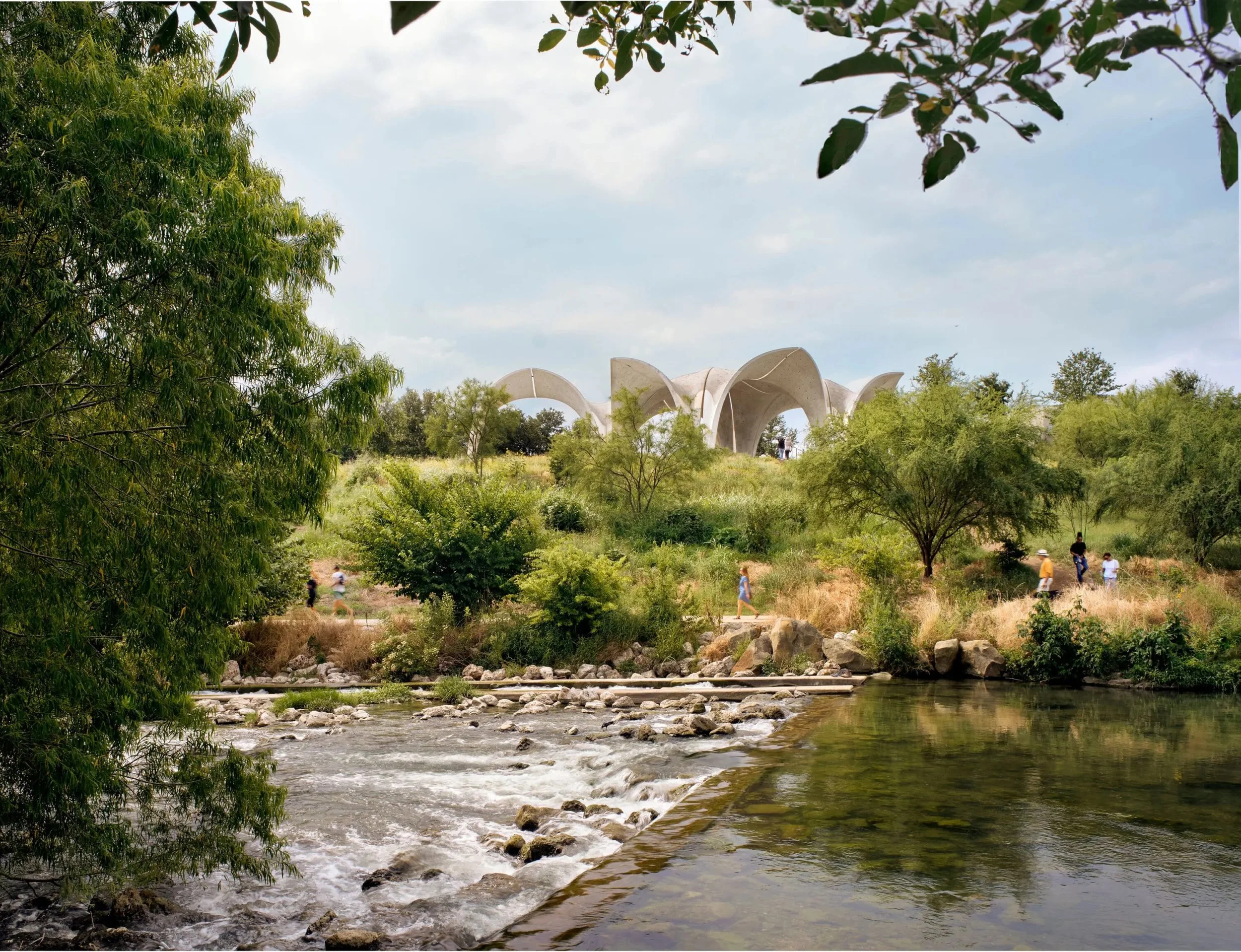
Located along the San Antonio River, Confluence Park is a public amenity transformed from a blighted industrial yard. It serves as a living laboratory designed to educate visitors on south Texas ecotypes and the impact of urban development on local watersheds. The design features a central pavilion with unique concrete petal structures and a multi-purpose education center. Positive Energy took a step outside of its conventional residential project typology to provide Energy Modeling and Consulting services for this ambitious public project.
Photography: Casey Dunn
The park showcases an innovative biomimetic rainwater harvesting system: the central pavilion's concrete "petal" structures are "inspired by plants that funnel rainwater to their roots". These petals are formed to collect and funnel rainwater into a central underground catchment basin, predicted to collect around 825,000 gallons annually and capable of holding up to 100,000 gallons. The collected rainwater is filtered through alluvial soils, preventing contaminated runoff from entering the San Antonio River, and is then used for sewage conveyance and irrigation within the park. Instead of imposing purely technological or conventional solutions, the design team at Confluence Park looked to natural systems for elegant and efficient blueprints. This biomimetic approach resulted in a rainwater harvesting system that is not only highly functional but also aesthetically integrated and deeply meaningful to the park's educational mission. Building science and civil engineering expertise is crucial here to translate these natural inspirations into quantifiable performance, ensuring the system's efficiency, capacity, and durability. Architects should explore biomimicry as a powerful source of sustainable design inspiration. By studying how nature solves problems, they can uncover innovative, context-responsive solutions that are both environmentally effective and architecturally compelling. Collaboration with building science experts is key to translating these natural principles into engineered realities.
The Estela Avery Education Center features a green roof and a solar photovoltaic array intended to produce 100% of the park’s energy needs. Confluence Park transformed a blighted industrial site into a vibrant public amenity, welcoming over 32,000 students and registrants since its opening, serving as a powerful example of sustainable urban regeneration.
The park has received significant accolades, including the 2023 AIA Committee on the Environment Top Ten Award and the 2022 Metropolis Planet Positive Award Honoree.
Other Distinctive Projects: A Glimpse into Diverse Collaborations
The breadth of successful collaborations between Lake|Flato and Positive Energy demonstrates the universal applicability and necessity of building science expertise in architectural practice. These projects span diverse geographies (desert, rural Texas, urban Austin, San Antonio), project types (residential, public park), and scales. Positive Energy's scope also varies, from full MEP engineering to specialized building envelope and energy modeling. This diversity demonstrates that building science principles and integrated engineering are not niche disciplines applicable only to extreme climates or highly specialized projects. Instead, they are universally valuable tools for enhancing performance, comfort, durability, and sustainability across virtually any architectural challenge. Positive Energy's ability to adapt its deep expertise to the specific needs of each project—whether it is optimizing complex mechanical systems, fine-tuning a building envelope, or modeling energy flows—underscores the fundamental role of building science in achieving design excellence in varied contexts. Architects should recognize that engaging building science expertise is beneficial for all projects aiming for high performance, occupant well-being, and long-term value. It is not an optional add-on but an integral part of modern, responsible architectural practice, regardless of project type or location.
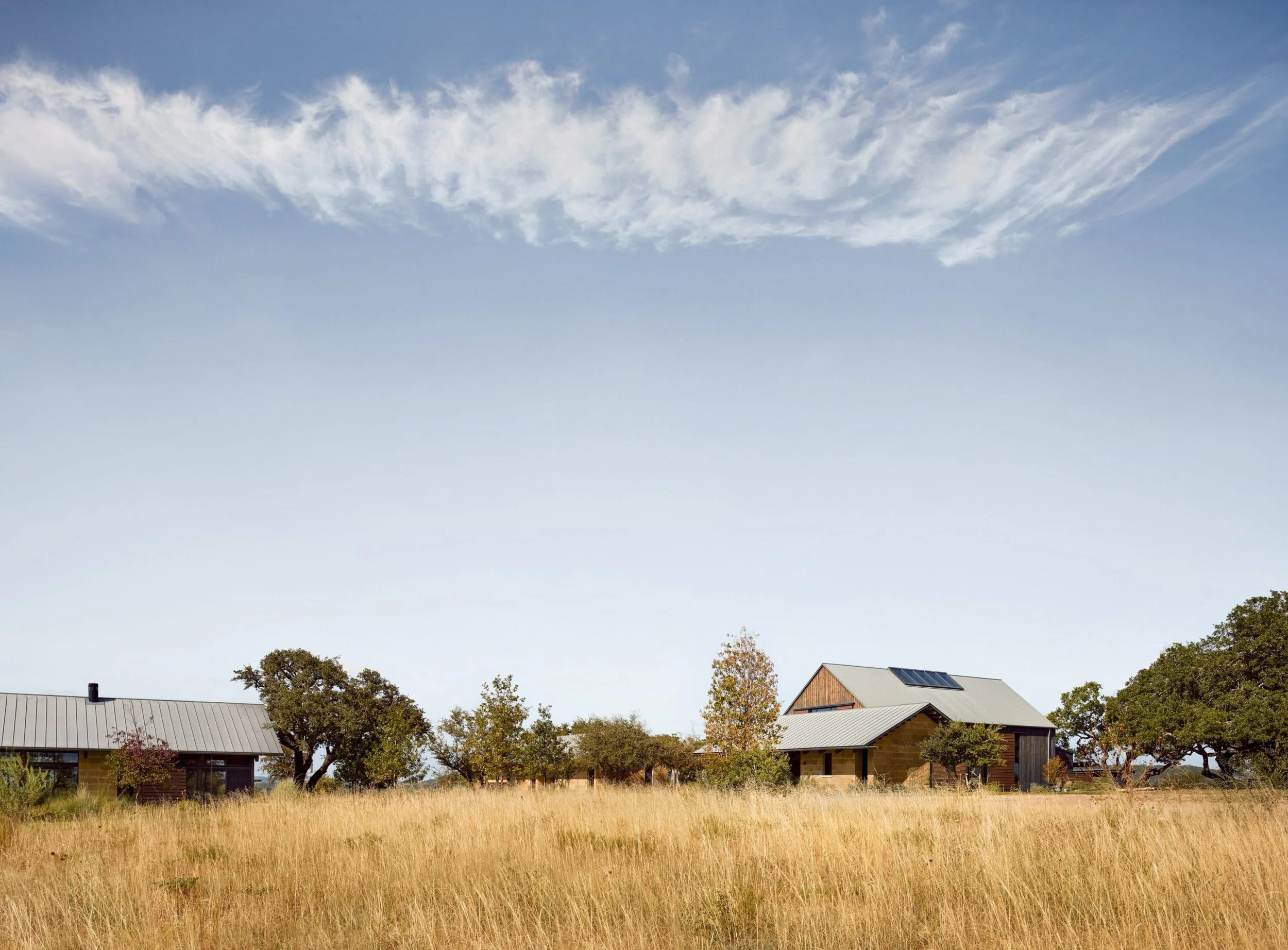
Madrone Mesa Ranch, for instance, is a multi-building family compound in the Texas Hill Country, designed as a retreat and later a full-time residence. Positive Energy provided MEP Engineering for this project, which is centered around a party barn and courtyard, thoughtfully integrated with large mature oak trees.
Photography: Casey Dunn
The Fall Creek Residence, for which Positive Energy also provided MEP Engineering, comprises a series of humble shed-roofed structures perched on a bluff. It features limestone walls and weathered steel, with a large porch designed to capture the sound of the falls and interiors using a "rich, truly native palette" of local materials. This project received the 2025 Residential Design Architecture Award.

Photography: Casey Dunn
The River Bend Residence, with MEP Engineering by Positive Energy, was designed to "sit lightly upon the land" overlooking the Guadalupe River, composed of multiple structures. Its orientation strategically takes advantage of prevailing winds for natural ventilation, and large skylights capture Northern daylight. The landscape is intentionally minimal and indigenous to reduce maintenance and environmental impact.
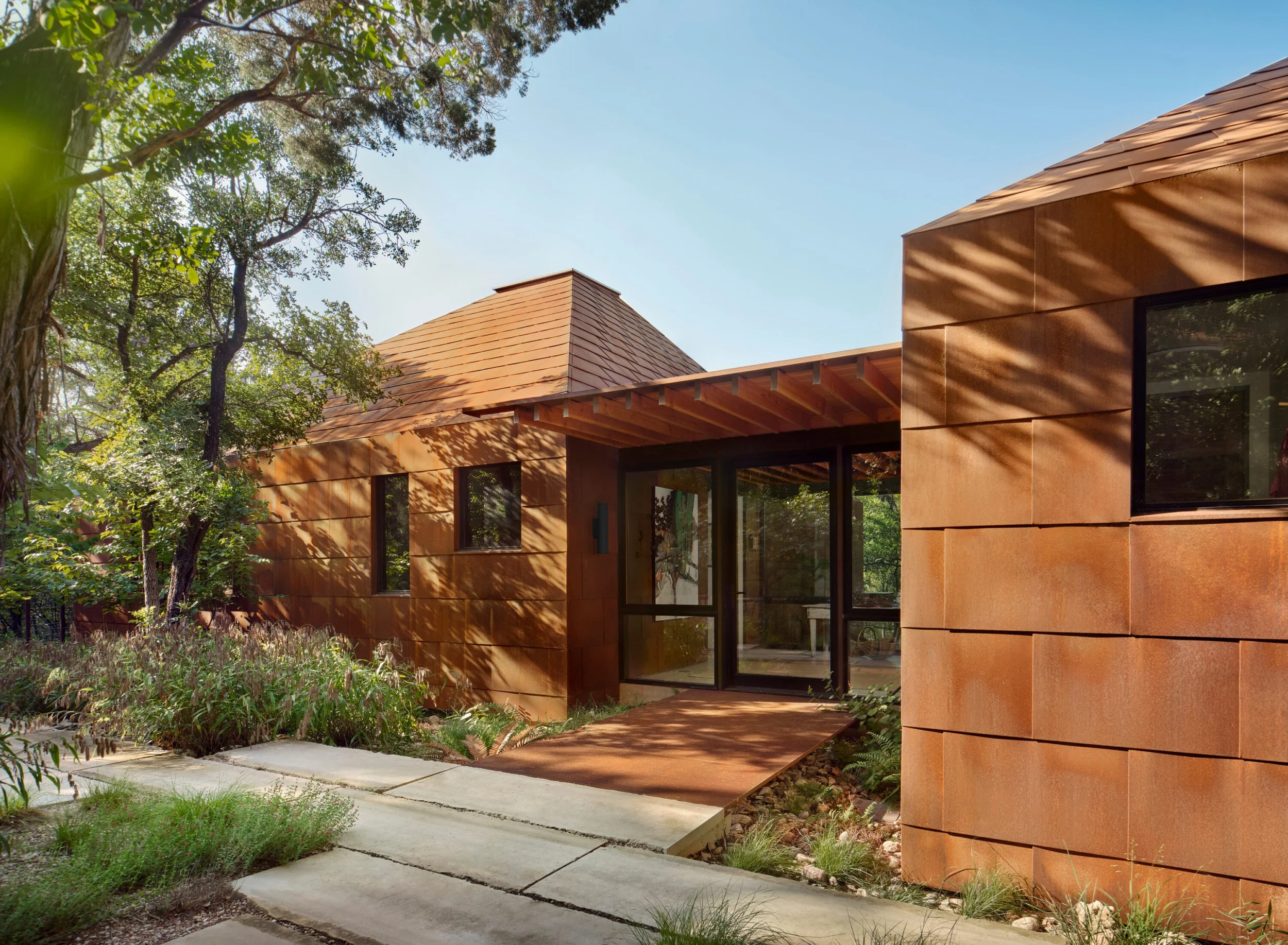
Finally, the Hog Pen Creek Residence, where Positive Energy provided Enclosure & Energy Modeling/Consulting, is situated at the confluence of Hog Pen Creek and Lake Austin. This residence emphasizes exterior living space. Its L-shaped footprint and orientation thoughtfully address challenging site constraints like towering oak trees and a steeply sloping site, featuring a boardwalk connecting structures down to a screened pavilion by the water's edge.

Inspiring the Next Generation of Architecture
The decade-plus-long collaboration between Lake|Flato Architects and Positive Energy stands as a powerful model for the architecture and construction industry. Their joint portfolio of distinctive, award-winning projects demonstrates that high-performance, durable, and healthy buildings are not abstract ideals but achievable realities. These buildings are realized through thoughtful, context-responsive design, the practical application of rigorous building science principles, and, most importantly, deep, early, and integrated collaboration between architectural visionaries and building science experts.
This partnership illustrates that by embracing building science and fostering similar integrated design relationships, architects can create buildings that not only stand the test of time but also profoundly respond to their environment, enhance the lives of their occupants, and inspire the next generation of truly sustainable and resilient architecture.

Feldman Architecture and Positive Energy Forge a Path to World Class Architecture
Feldman Architecture is a distinguished firm based in San Francisco and widely recognized for their creation of warm, light-filled spaces characterized by an understated modern aesthetic. Beyond the visual appeal of their designs, Feldman Architecture is driven by a profound commitment to addressing complex problems through design, aiming to significantly enhance human interaction with the built environment and the planet. This ethos finds a powerful complement in our work here at Positive Energy. We are a specialty MEP engineering and building science firm from Austin, TX, and share with our partners at Feldman Architecture a foundational mission to transform the delivery of conditioned space to society.
By Positive Energy Staff
A Partnership Redefining Architectural Excellence
Feldman Architecture is a distinguished firm based in San Francisco and widely recognized for their creation of warm, light-filled spaces characterized by an understated modern aesthetic. Beyond the visual appeal of their designs, Feldman Architecture is driven by a profound commitment to addressing complex problems through design, aiming to significantly enhance human interaction with the built environment and the planet. This ethos finds a powerful complement in our work here at Positive Energy. We are a specialty MEP engineering and building science firm from Austin, TX, and share with our partners at Feldman Architecture a foundational mission to transform the delivery of conditioned space to society.
The collaborative efforts between Feldman Architecture and Positive Energy are particularly potent in our extensive work together in the Santa Lucia Preserve in Carmel, CA. In this unique setting, we provide essential MEP Design Engineering and Title 24 consulting services, helping Feldman Architecture's ambitious and beautiful projects realize a brilliant balance of form and function. This partnership transcends a typical client-consultant dynamic; it is a deep alignment of values and a shared dedication to pushing the boundaries of sustainable design. Positive Energy explicitly seeks to collaborate with architects who seamlessly integrate contextual and beautiful aesthetic expressions with a pervasive culture of sustainability, moving beyond superficial marketing claims. We love to work with firms that leverage their passion for sustainability to deliver world-class projects.
We are so excited and thrilled that our combined vision and technical expertise create buildings that are not only aesthetically profound but also environmentally and ethically responsible. Our collaborative approach offers a compelling model for the architecture industry, demonstrating that strategic, early collaboration is fundamental to achieving high-performance design. For a project to truly embody regenerative principles and achieve ambitious performance metrics, like the Feldman team does through their Living Building Challenge (LBC) and Carbon Budget initiatives, technical excellence must be integrated from the inception of the design process. This is why Feldman Architecture proactively involves Positive Energy to provide building science and MEP expertise to inform core design decisions. A comprehensive understanding of building physics, preventing costly rework, optimizing performance, and ensuring that aesthetic and ethical aspirations are intrinsically linked with technical feasibility. This co-creative process ensures that technical solutions are woven into the very fabric of the design, leading to superior outcomes that extend far beyond mere code compliance.
The Ethical Imperative of Design
Jonathan Feldman, founding partner, and Anjali Iyer, partner and the studio's sustainability director, recently offered profound insights into the broader impact of design when Kristof Irwin interviewed them for an episode of The Building Science Podcast. The practice of architecture, as championed by Feldman Architecture, is a powerful convergence of ethics and aesthetics. That’s exactly why the episode was titled “Design Matters: Aesthetics, Ethics and Architectural Impact.”
Jonathan Feldman, the firm's founding partner stated in the interview that "it’s time to rethink the idea that architecture does not sully itself with social or ecological ills". Design is inherently and inextricably linked with ethical considerations and must move beyond the sole pursuit of visual appeal. For Feldman Architecture, design is understood as a powerful force, capable of making a tangible difference, extending far beyond merely creating visually pleasing or monumental structures.
Anjali expanded on this idea, stating that it is "extremely myopic to think about the impact of your project or your building, only from the perspective of the immediate habitants of that building". The building industry's influence extends to the entire planet, thereby establishing a "moral imperative" for architects to fully comprehend and address this expansive scope.
The firm's designs also generate a significant ripple effect that extends beyond individual clients to influence the broader industry and public perception. In the interview, Jonathan explained how the deliberate and proud display of sustainable features, such as visible water tanks, rather than concealing them, can inspire others. This intentional architectural expression acts as a powerful catalyst, encouraging more individuals and firms to consider and adopt similar sustainable features in their own projects, thereby fostering wider adoption of responsible practices.
Feldman Architecture actively contributes to influencing policy and industry standards. Jonathan's longtime involvement with the AIA California Climate Action Committees is a commitment to systemic change. This work focuses on shaping the criteria for architectural awards, ensuring that they encompass not only aesthetic merit but also energy performance, carbon-smart design, equity, social issues, adaptability, and resilience. By advocating for and promoting these aspirational standards, Feldman Architecture actively "changes the conversation of what good design looks like" across the entire profession. The firm also supports lobbying efforts for more stringent "reach codes" at municipal and statewide levels, advocating for mandates such as all-electric buildings or pre-wiring for solar panels. When such requirements become codified, sustainable practices transition from optional client choices to standard industry practice, significantly broadening their impact and ensuring widespread adoption.
This deep commitment to design excellence and climate action also serves as a powerful magnet for top talent. Jonathan observes that this commitment leads to reduced job turnover and attracts younger architects who are increasingly concerned about climate action. These emerging professionals view architecture as a significant lever for positive change in the world, seeking firms that align with their values. This alignment cultivates a highly motivated and dedicated workforce. The firm's transparent communication of its values and ethical commitments serves as a powerful differentiator in a competitive market. By openly articulating its moral stance, Feldman Architecture effectively self-selects its client base, attracting those who genuinely share its deep sustainability commitments while filtering out those who may not. This strategic positioning leads to more fulfilling projects and stronger, more productive partnerships.
A pragmatic yet profound aspect of Feldman Architecture's sustainable design philosophy centers on the importance of creating buildings that are loved and endure. Jonathan emphasizes that buildings must be appreciated to ensure their longevity, thereby preventing their premature demolition and replacement, which would incur significant new carbon emissions.1 In this view, aesthetics directly contribute to sustainability. Anjali extends this concept, defining beauty as an "emotional resonance" that is "timeless and eternal". This enduring quality, she argues, constitutes the most sustainable form of beauty, ensuring a building's relevance and value across generations. This comprehensive definition of beauty encompasses durability, high performance, and emotional resonance, in addition to visual appeal, ensuring that sustainable features are not perceived as compromises but as integral, value-adding components of an exceptional, lasting, and environmentally responsible design.
The firm's success in embedding sustainability into its organizational structure and culture is evident in the intergenerational transfer of its sustainable ethos. The carbon budget initiative, for instance, originated with a previous partner, and Anjali Iyer has now assumed the role of sustainability director, imprinting her own vision and evolving the initiative further.1 This continuous refinement and leadership succession ensure that the firm's core ethos remains vibrant and adaptable over time, rather than being dependent on a single individual. This deliberate strategy for knowledge transfer and leadership succession in key sustainability roles ensures the firm's ethos is resilient, dynamic, and deeply integrated into its operational DNA.
Building Science in Action From Concept to Carbon
Feldman Architecture's commitment to sustainable design is rigorously applied through its innovative approach to building science, particularly evident in its pioneering Carbon Budget initiative.
Feldman Architecture’s Carbon Budget
Introduced in 2023, Feldman Architecture's Carbon Budget sets an ambitious target, an aggressive goal of 100 metric-tons (tonnes) per home, encompassing both operational and embodied carbon. This proactive and measurable approach underscores a deep commitment to environmental impact reduction. A custom carbon dashboard is utilized to measure projected carbon emissions throughout every design phase, with this data actively informing design optimization. The initiative has already been implemented across 11 projects.
The firm leverages specialized software for comprehensive analysis. Climate Studio, a plugin for their 3D modeling software, is employed for daylighting and energy modeling. For embodied carbon analysis, Tally is utilized across multiple project phases. A strategic shift in their process involves running energy modeling internally during schematic design, rather than relying solely on external mechanical engineers and Title 24 compliance. This early integration allows for more accurate determination of energy loads and photovoltaic (PV) system sizes, enabling proactive design adjustments that optimize performance from the outset. This is the disparity between compliance-focused tools and actual performance modeling: Climate Studio often reveals a more accurate and higher operational carbon footprint than what is typically indicated by Title 24 energy modeling, highlighting the limitations of compliance tools for achieving true net-zero or aggressive low-carbon goals. Simply meeting minimum code requirements is insufficient for achieving genuine deep carbon reduction.
The Fog's Edge residence, for which Positive Energy provided MEP Engineering, on serves as a prime example of the successful integration of the carbon budget initiative. This project presented a steep learning curve for the design team as they navigated the subtle challenges and commitment required for pioneering new methodologies in carbon accounting. To skillfully navigate these complexities, a dedicated member of Feldman Architecture's Sustainability Committee was actively integrated into the Fog's Edge project team, providing essential resources, answering questions, and guiding design suggestions for carbon impact assessment. The initial constraint of the carbon budget, rather than limiting creativity, was a powerful catalyst, compelling the design team to innovate and explore novel solutions that might not have been considered under conventional approaches. This led to more resourceful and sophisticated designs and a real sense that something special was happening.
Feldman’s commitment to "radical candor," a core philosophy, fosters an environment where open dialogue and robust feedback loops are encouraged from all levels of the company. This culture empowers individuals, even senior technicians, to openly challenge assumptions about the carbon budget, such as questioning how a project can meet its target when current projections are double the goal. Anjali Iyer encouraged and empowered team members to find solutions and expand their knowledge in the process. This open, challenging, and solution-oriented culture has since significantly accelerated the firm's collective technical expertise, as every team member is encouraged to understand, question, and contribute to complex building science solutions.
Positive Energy’s Approach To Carbon As Signatories of MEP2040
Positive Energy made a commitment to be proud and solution-oriented advocates of electrification of all of our projects since 2012. We deepened our commitment to carbon reduction when we became a founding signatory of the MEP2040 Challenge. Our carbon reduction vision is to demonstrate that exceptional comfort, indoor air quality, and aesthetics can be achieved hand-in-hand with significant reductions in both operational and embodied carbon. Our firm is dedicated to actively working towards the MEP2040 Challenge targets by transparently tracking and reducing the embodied carbon of our projects while continuously optimizing their energy performance.
The success of this effort requires comprehensive engagement across Positive Energy’s engineering and consulting team, maintaining a client-centric approach, and committing to continuous learning. Primary strategies to reduce carbon in MEP systems are to select systems that do not require fossil fuels to operate, to optimize total system materials in their most efficient configuration, to minimize refrigerant volumes in mechanical systems, advising our partners on design decisions that negatively impact the project’s carbon footprint, and designing for systems that use very little energy to operate. By systematically addressing embodied carbon, we aim to exemplify leadership in sustainable MEP design and significantly contribute to the MEP2040 Challenge with each project we touch.
Positive Energy’s alignment with Feldman Architecture on carbon reduction goals is core to our shared philosophy and allows for deep integration of sustainable practices from the beginning of our project collaborations. This shared vision and technical expertise lead to buildings that are not only aesthetically remarkable, but also environmentally responsible. Early collaboration, informed by a comprehensive understanding of building physics, prevents costly rework and ensures that design decisions are aligned with performance metrics.
This synergy enables us to pursue ambitious goals like the Living Building Challenge and achieve significant carbon reductions. Our partnership is reinforced when we have the good fortune to demonstrate these shared values and tackle ambitious and challenging projects.
Materials Matter: Crafting Durable and Healthy Environments
Feldman Architecture's approach to material selection is deeply informed by building science principles and a commitment to reducing environmental impact. They have identified key material categories that contribute most significantly to a home's embodied carbon footprint. These include concrete, which can account for up to 50% of a home's carbon footprint, as well as structural steel, aluminum, and spray foam insulation, which is often toxic and has an extremely high carbon footprint.
The Fog's Edge project again is a compelling case study for how strategic design and material choices can drastically reduce embodied carbon. The most straightforward and impactful material method employed by the Feldman team was reducing the building's overall square footage, which for Fog's Edge meant converting a full basement to a partial one and modifying concrete slabs into wood-framed floors. Beyond size reduction, strategic material choices were paramount:
Concrete retaining walls were replaced with reinforced masonry walls, utilizing low-carbon CMU with a high recycled aggregate content
Almost all structural steel was eliminated and replaced with mass-ply roofs and floors to achieve desired cantilevers, showcasing innovative structural solutions that minimize high-carbon materials.
The introduction of mass timber was a key strategy, as it actively sequesters carbon, providing a significant environmental benefit.
Upgrading to wooden doors and windows further reduced the carbon footprint compared to aluminum alternatives.
They specified locally sourced stone from within California, minimizing transportation emissions, and utilized a concrete mix that replaced 70% of Portland cement with slag (a byproduct of steel and iron manufacturing) and low-carbon CMUs.
The firm's pursuit of the Living Building Challenge (LBC) for the Curveball project further underscores its commitment to responsible material choices, including the demanding Materials Petal. This petal requires avoiding materials on the "Red List"—a compilation of the worst-in-class toxic chemicals. This initiative involves significant advocacy, transparency, and cooperation across the industry to shift towards a truly responsible materials economy.
The Living Building Challenge: Pushing the Boundaries of Performance
The Curveball residence is Feldman Architecture's pioneering project aiming for Living Building Challenge certification. It is envisioned to be the first residential certification at CORE level or higher in California, setting a new benchmark for regenerative design. The LBC, developed by the International Living Future Institute (ILFI), is globally recognized as the most rigorous proven performance standard for buildings. Its framework encourages designs that "give more than they take," fostering a deep connection between occupants and natural systems, like light, air, food, nature, and community. LBC certified buildings are designed to be self-sufficient, operating within their site's resource limits and creating a positive impact on both human and natural systems.
Firm partner Anjali Iyer describes the LBC journey as profoundly transformative for the firm. The immense growth, knowledge, and exposure gained from this rigorous process have permeated their entire practice, fundamentally changing their core thinking and design process for all subsequent projects. Sustainability is an embedded, intuitive, and standard part of their firm’s design methodology. Once a firm commits to and learns these advanced practices, they become their new "normal," making high-performance design more efficient, consistent, and scalable across their portfolio.
A key challenge during LBC registration for Curveball involved effectively communicating the unique ecological and historical significance of the Santa Lucia Preserve site. The Preserve is a land trust with 18,000 protected acres and 2,000 acres designated for residential development, where owners commit to acting as stewards of their land. After successfully registering the project (confirming CORE certification feasibility), Feldman Architecture is motivated to pursue additional "petals," particularly the Energy petal (requiring net positive energy) and the Materials petal (focusing on Red List avoidance).
The Santa Lucia Preserve
The Santa Lucia Preserve, nestled in central California's coastal hills, offers a distinctive context for sustainable development. This private community spans 20,000 acres, with a stunning 18,000 acres protected in perpetuity by the Santa Lucia Conservancy, a non-profit land trust dedicated to ecological integrity. The remaining 10% of the land is thoughtfully allocated for infrastructure, community amenities, and 297 homesites, where owners commit to dividing their parcel into homeland and openland, acting as stewards with support from the Conservancy.
Feldman Architecture initiated its long-term relationship with the Preserve in 2004, designing its first home there. This engagement was pivotal in introducing and fostering an appreciation for contemporary and sustainable design within the community. The firm's sustained presence and numerous projects have allowed the Preserve to function as a living laboratory where Feldman Architecture has been able to iteratively test, refine, and evolve its sustainable design approaches. Each project builds upon the last, establishing precedents and influencing the community's overall design guidelines. This cumulative impact fosters deeper expertise and demonstrates a continuous commitment to innovation within a specific context, rather than isolated successes. Feldman Architecture's work has significantly influenced and shaped the Preserve's design guidelines and progression, introducing a modern, site-sensitive ethos that harmonizes with the natural landscape.
Leaders within the Preserve commend Feldman Architecture for its consistent excellence. Jen Anello, Senior Director of Sales & Marketing, has praised the firm for pushing boundaries and inspiring transformative projects that align with the Preserve's mission, vision, and values, making it an appealing choice for environmentally conscious buyers. Jeffrey B. Froke, Ph.D., Founding President of the Santa Lucia Conservancy, notes that Feldman Architecture's designs "belong" in the Preserve, reflecting authenticity and contributing to its natural and cultural legacy. Kate Stickley, Founding Partner at Arterra Landscape, has highlighted how Feldman Architecture distilled the essence of traditional guidelines into contemporary homes that seamlessly integrate with the land.
Progressive, sustainable design does not require a complete rejection of existing contexts or rules. Instead, Feldman Architecture has shown a unique ability to deeply understand and creatively reinterpret these guidelines, pushing the boundaries of what is considered acceptable or desirable while maintaining contextual relevance. This strategic approach to innovation within or by influencing existing frameworks is crucial for the broader adoption of sustainable practices in established communities.
Positive Energy and Feldman Architecture Projects In The Santa Lucia Preserve
Across all their Preserve projects, Feldman Architecture consistently demonstrates its ability to adapt designs to varied local landscapes and micro-climates while remaining true to its core principles of responsive, regenerative design and responsible land stewardship.
Curveball
Curveball aims to demonstrate how regenerative and site-sensitive design strategies will define a new architecture that is committed to stewardship and climate action. The project will attempt to achieve a CORE Green Building Certification, a pathway within the Living Building Challenge, which would make this home the first to do so in California.

Renderings by Feldman Architecture. More project photos available on the Feldman Architecture website.
Fog’s Edge
A particularly scenic plot in the Santa Lucia Preserve served as the primary inspiration for Fog's Edge, a homage to the California coastline that frames and enhances the site’s beauty with a subtle architectural intervention. Its inhabitants, a couple of nature lovers from Los Gatos and their dogs, look forward to welcoming friends and family into a regional modern retreat that gracefully curves with the contours of the land on which it sensitively rests.

Renderings by Feldman Architecture. More project photos available on the Feldman Architecture website.
Cloud’s Rest
On a remote property in the Santa Lucia Preserve, Cloud's Rest responds gently to a sloping site with thoughtfully articulated structures that curate distinct, intimate moments.

Renderings by Feldman Architecture. More project photos available on the Feldman Architecture website.
Stone’s Throw
A couple with a twenty-year history living in the Santa Lucia Preserve purchased an ecologically diverse lot, looking to downsize and modernize from their current Hacienda-style dwelling down the road. In search of a new single-story home, with interiors bathed in natural light, our team set out to design an understated, modern, warm residence prioritizing space for visiting children and grandchildren. The home responds thoughtfully to the site – a low slung, meandering design blends into the grassy landscape, framing oak and hillside views.

Renderings by Feldman Architecture. More project photos available on the Feldman Architecture website.
Modern Craft
On a parcel in the Santa Lucia Preserve, a young couple envisioned a full-time residence crafted for raising a family, entertaining, working from home, and prioritizing thoughtful connections with the surrounding hills and meadows. Drawing inspiration from early 20th-century architecture studio Greene & Greene and their California craftsman style, we set out to design a love letter to the carefully detailed, thoughtfully articulated traditional homes of this era through a modern and clarified lens.

Renderings by Feldman Architecture. More project photos available on the Feldman Architecture website.
The Power of Partnership & Creating A Model for the Industry
The collaboration and partnership between Feldman Architecture and Positive Energy is a powerful model for the architectural industry. Our continued work together across a portfolio of projects shows how specialized expertise can be leveraged to achieve ambitious sustainable design goals.
As an MEP engineering and building science firm, Positive Energy provides MEP Design Engineering and Title 24 consulting for many of Feldman Architecture's projects, not just those limited to the Santa Lucia Preserve. With our technical support, we get to become part of the story as Feldman Architecture's ambitious sustainability objectives take shape in beautiful homes. The partnership is built on a foundation of mutual alignment, respect, and care. We always try to align ourselves with the best architects in the world who are able to combine contextual and beautiful aesthetic expressions with a practice of sustainability that permeates the firm’s culture. Our partnership with Feldman is rooted in these shared values and a commitment to deep integration of sustainable practices.
Feldman Architecture strategically recognizes its role as excellent generalists who leverage the expertise of talented consultants to collaborate in solving complex problems. This understanding of when and how to integrate specialized knowledge is key to their success in high-performance design. Achieving certifications like the Living Building Challenge and meeting aggressive carbon targets necessitates deep, specialized expertise in areas like advanced building science, energy modeling, material chemistry, and systems integration. These are precisely the areas where firms like Positive Energy excel. This collaborative model allows Feldman Architecture to maintain its focus on core architectural design strengths, while ensuring the technical performance, environmental integrity, and long-term durability of their projects are expertly managed by their partners. This synergy enables the firm to confidently tackle what Anjali Iyer refers to as "impossible goals," knowing they have robust expert support to navigate the complexities. Achieving truly groundbreaking sustainable outcomes is often beyond the capacity of a single firm, regardless of its commitment or talent. Strategic partnerships with specialized experts are not just beneficial but essential force multipliers, enabling firms to reach ambitious goals that would otherwise be unattainable due to the sheer complexity and depth of required knowledge.
Feldman Architecture fosters an internal philosophy of "radical candor," which encourages a transparent, two-way flow of information and robust feedback loops from all levels of the company. This culture empowers individuals to openly challenge assumptions and hold leadership accountable for sustainability commitments, fostering a dynamic and self-correcting environment. This open and challenging environment extends to collective problem-solving, where even junior staff are encouraged to contribute to finding innovative solutions for complex issues like carbon reduction, leading to rapid knowledge growth across the firm. Jonathan Feldman describes the firm's internal and external collaborations as an "ecosystem," akin to jazz improvisation—constantly adapting, tweaking, and evolving with intent, but also with agility. This fluid and responsive approach is crucial for navigating the ever-changing landscape of sustainable design.
Anjali Iyer's observation that "As architects, we act as the hub in the wheel. We are generalists who leverage the expertise of talented consultants to solve complex problems," fundamentally redefines the architect's role in complex projects. Instead of being the sole repository of all knowledge, the architect becomes the central coordinator, integrator, and facilitator of diverse, specialized expertise. This is particularly crucial in the context of advanced sustainable design, which demands deep knowledge in areas like building physics, material science, energy systems, and indoor environmental quality. This shift empowers architects to lead complex projects by orchestrating a team of specialists.
Practical Steps for Architects
The collaborative journey of Feldman Architecture and Positive Energy offers invaluable lessons for architects seeking to elevate their practice and contribute meaningfully to a sustainable future.
A primary lesson is the power of embracing constraints as creative opportunities. Feldman Architecture's experience demonstrates that ethical and environmental parameters, often perceived as limitations, are in fact "meaty design constraints" that significantly enrich the outcome and satisfaction of their work, leading to more creative and innovative solutions. Jonathan Feldman reinforces this perspective; "I can't imagine a design that we ever came up with that was amazing, that didn't solve something difficult at its core". This viewpoint reframes challenges as essential drivers of design excellence, rather than mere obstacles. Positive Energy shares this perspective and finds powerful motivation in complex design and coordination challenges in our work.
Continuous learning and a willingness to challenge conventional practices are also paramount. Feldman Architecture's journey with the 2030 Challenge, where they initially "failed early and learned from it" but eventually "exceeded the benchmarks," vividly illustrates the value of setting ambitious goals and embracing an iterative learning process. This willingness to confront shortcomings and adapt is crucial for growth. The "exponential growth in the knowledge of the office" resulting from grappling with complex issues like the carbon budget highlights the transformative power of self-reflection, open inquiry, and a commitment to continuous improvement within a firm.
Architects also have a vital role beyond individual projects through advocacy for better building codes and industry standards. By supporting efforts to enact more stringent "reach codes" at local and state levels, and by actively participating in climate action initiatives within professional organizations like the AIA, architects can directly influence the regulatory landscape. By ensuring that architectural awards and industry recognition consider energy performance, carbon-smart design, equity, and resilience alongside aesthetics, architects can collectively change the conversation of what good design looks like, setting higher standards for the entire profession.1 Jonathan Feldman explicitly discusses the potential to influence "thousands of buildings" beyond the "few hundred" his firm will directly design in their lifetime. This influence is achieved through various channels: winning awards, getting published, and actively participating in lobbying and committee work. This highlights that an architect's impact is not limited to the physical boundaries of their projects. Their work, when celebrated and articulated, has a systemic ripple effect on industry standards, client expectations, and public perception, far exceeding the scope of individual commissions.
Feldman Architecture's experience clearly demonstrates the business benefits of taking a proactive stand on sustainability. Launching a firm-wide carbon budget and being early adopters of the 2030 Challenge are not just ethical choices but also smart business moves. This commitment attracts like-minded, values-aligned clients and top-tier talent, leading to less job turnover and significant long-term financial benefits. This commitment resonates particularly strongly with younger architects, who are increasingly prioritizing climate action and seeking firms that align with their values, making it a powerful recruiting tool. Kristof Irwin's summary puts a nice point on it; "given that it's always hard, given that it's always risky, you might as well embrace those... realities and seek meaning. Seek purpose, seek joy." This perspective, reinforced by Jonathan Feldman in the podcast interview, is a way to reframe the inherent difficulties, stresses, and uncertainties of architectural practice into opportunities to infuse work with deeper meaning, purpose, and ultimately, greater satisfaction. This mindset shifts the profession from merely providing a service to actively pursuing a higher calling, which can be incredibly motivating.
Designing for a Better Tomorrow
The enduring partnership and friendship between Feldman Architecture and Positive Energy serves as a compelling archetype for how a shared, unwavering commitment to ethical design, aesthetic excellence, and rigorous building science can collectively lead to truly regenerative and impactful architectural outcomes. Their extensive portfolio of work in the Santa Lucia Preserve stands as a powerful testament to the transformative power of integrated design, where the beauty of a structure and its environmental performance are not separate considerations but are inextricably linked and mutually enhancing.
For architects, this collaboration offers a clear call to action:
Embrace Building Science as a Core Tool: Architects are urged to view building science not as a daunting technical hurdle or a secondary consideration, but as a fundamental, empowering tool. Integrating this knowledge from the outset is essential for achieving design excellence and creating buildings that genuinely serve individuals, communities, and the planet. The ultimate aspiration for architects aiming to lead in sustainable design should be to internalize these principles to the point where they become second nature—a "muscle memory". This deep integration allows for consistent application of advanced sustainable strategies across all projects, regardless of client brief, driving systemic change within the firm's practice and, by extension, contributing to the broader industry's evolution towards a more sustainable built environment.
Prioritize Early and Deep Collaboration: The success of Feldman Architecture underscores the critical importance of early and profound collaboration with specialized consultants like Positive Energy. Leveraging their expertise in MEP engineering and building science from schematic design onwards is key to unlocking innovative solutions and pushing the boundaries of what's possible in sustainable construction.
Cultivate a Culture of Innovation and Humility: Architects should strive to foster an internal culture that views design constraints as fertile ground for creative opportunities and continuous growth. Embracing humility, learning from challenges, and promoting "radical candor" within their own practices will drive ongoing improvement and collective intelligence.
Recognize and Embrace "Role Power": Beyond individual projects, architects possess significant "role power" to influence broader industry standards, advocate for progressive policy changes, and shape the societal conversation around the built environment. This expanded vision of their impact is crucial for driving systemic change towards a more sustainable future.
Design for a Meaningful Future: By holistically integrating ethical principles, aesthetic vision, and robust building science, architects can design for a better tomorrow. This means creating spaces that are not only visually beautiful and structurally durable but also inherently good for human health, community well-being, and the ecological health of our planet. Jonathan Feldman highlights the profound responsibility and emerging opportunity for architects to design spaces that actively contribute to human well-being and mental health, especially in an era of global uncertainty and societal challenges. By thoughtfully considering the psychological impact of their designs, architects can create environments that act as restorative havens, adding another crucial layer to the ethical and aesthetic imperative of their profession.