

Breathing Easy: The Case for a National Indoor Air Quality Code in the United States
The United States faces a significant, yet largely unregulated, public health challenge: the quality of the air inside its buildings. Americans spend approximately 90% of their time indoors , breathing air that can be two to five times, and occasionally more than 100 times, more polluted than outdoor air. Despite this reality, the nation lacks a comprehensive federal code specifically governing indoor air quality (IAQ), relying instead on a fragmented system of state regulations, voluntary guidelines, and limited occupational standards. This regulatory gap results in inconsistent protection and contributes to a silent epidemic of health problems—ranging from asthma and allergies to cardiovascular disease, cognitive impairment, and cancer—and imposes a substantial economic burden through healthcare costs and lost productivity, estimated in the tens to hundreds of billions of dollars annually.
By Positive Energy staff
A Call To Code
The United States faces a significant, yet largely unregulated, public health challenge: the quality of the air inside its buildings. Americans spend approximately 90% of their time indoors (1), breathing air that can be two to five times, and occasionally more than 100 times, more polluted than outdoor air.(3) Despite this reality, the nation lacks a comprehensive federal code specifically governing indoor air quality (IAQ), relying instead on a fragmented system of state regulations, voluntary guidelines, and limited occupational standards.(5) This regulatory gap results in inconsistent protection and contributes to a silent epidemic of health problems—ranging from asthma and allergies to cardiovascular disease, cognitive impairment, and cancer—and imposes a substantial economic burden through healthcare costs and lost productivity, estimated in the tens to hundreds of billions of dollars annually.(7)
This report makes the case that the United States would significantly benefit from establishing a national IAQ code, drawing parallels with the proven success of existing building codes for structural integrity, fire safety, electrical systems, and plumbing. These established codes, often born from past tragedies, have demonstrably saved lives, prevented injuries, and enhanced public welfare by setting minimum safety standards.(10) An IAQ code would function similarly, addressing the invisible threat of indoor air pollution by establishing baseline requirements for ventilation, filtration, and source control, mitigating risks that occupants cannot easily assess or control themselves.
A national IAQ code could be founded on principles derived from EPA recommendations, ASHRAE standards (particularly 62.1 and 62.2), WHO guidelines, and international best practices.(13) Key components would include minimum health-based ventilation rates, enhanced air filtration requirements (e.g., MERV 13+), limits on indoor pollutant sources (e.g., VOCs, formaldehyde), and protocols for monitoring and maintenance.(16) While challenges related to implementation costs, technical complexities, and stakeholder coordination exist (19), cost-benefit analyses consistently show that the long-term economic and health benefits of improved IAQ far outweigh the investments required.(21)
Recommendations include legislative action to establish a federal IAQ mandate, phased implementation with financial and technical support, increased investment in research and workforce development, and fostering public-private partnerships. Implementing a national IAQ code is not merely a regulatory measure; it is a critical investment in public health, economic productivity, educational attainment, and national resilience against environmental threats and future pandemics. Just as past generations codified protections against fire and structural collapse, the time has come to ensure the air we breathe indoors supports, rather than harms, our health and well-being.
The Invisible Threat: Understanding the Indoor Air Quality Crisis in the United States
While considerable attention and regulatory effort have focused on outdoor air pollution, the quality of air within the buildings where Americans live, work, learn, and play remains a largely unaddressed environmental health concern. The very structures designed to shelter us can trap and concentrate pollutants, leading to exposures that significantly impact health, quality of life, and impose substantial economic costs. Understanding the scope of this crisis, including the current regulatory landscape and the profound consequences of inaction, is the first step toward establishing necessary protections.
The Current Regulatory Void: A Patchwork of Inconsistent Standards
Unlike outdoor air, which is subject to federal regulation under the Clean Air Act through the National Ambient Air Quality Standards (NAAQS) (5), indoor air quality in the United States lacks a comprehensive, binding national framework. The federal government's authority over IAQ is primarily limited to federal buildings.(5) No single federal law or agency is tasked with governing IAQ across the nation's diverse building stock.(6)
This absence of federal leadership means the responsibility for improving IAQ largely defaults to individual states. The result is a fragmented and inconsistent "patchwork of regulations and varied approaches across the country".(5) Some states have taken proactive steps, adopting portions of the Johns Hopkins Model Clean Indoor Air Quality Act (MCIAA) (5), establishing task forces, or setting specific standards for schools or public buildings.(5) California, for example, has incorporated detailed ventilation and filtration requirements, including MERV 13 filters, into its Title 24 energy code for residential buildings.(25) However, many other states have minimal or no specific IAQ regulations, relying on general building code provisions that may not adequately address modern IAQ concerns.(9) This geographic disparity creates inherent inequities, where the level of protection from indoor air hazards depends significantly on state or local jurisdiction rather than on a uniform national standard of care. Citizens in states with weaker regulations receive less protection, potentially leading to worse health outcomes, particularly for vulnerable populations residing in those areas.
Federal agencies do play limited roles. The Environmental Protection Agency (EPA) conducts research, issues voluntary guidelines, and promotes best practices, such as the Clean Air in Buildings Challenge.(5) However, these guidelines are generally not enforceable in non-federal buildings.(5) The Occupational Safety and Health Administration (OSHA) is responsible for workplace safety, but it does not have specific IAQ standards.(27) OSHA relies on existing standards for ventilation and specific contaminants, along with the General Duty Clause, which requires employers to provide a workplace free from known hazards likely to cause death or serious injury.(27) This clause can be applied to severe IAQ problems, but it does not provide a proactive, comprehensive framework for managing everyday indoor air quality in workplaces.
The existence of voluntary frameworks like the MCIAA 5 and ASHRAE Standards 62.1 and 62.2 13 highlights the recognized need for standardized approaches to IAQ. Yet, decades of reliance on these voluntary measures and fragmented state action have proven insufficient to ensure a baseline level of safe indoor air nationwide.(19) This regulatory "gap" 5 is not a neutral void; it represents a significant ongoing opportunity cost, contributing directly to preventable illnesses, cognitive impairment, lost productivity, and premature deaths across the country. A mandatory, national approach is needed to address this systemic failure.
The Heavy Toll of Neglected Indoor Air
The failure to adequately regulate and manage indoor air quality imposes severe and widespread burdens on public health and the national economy. These costs, though often hidden or underestimated, are substantial and affect millions of Americans daily.
Public Health Impacts: A Silent Epidemic
Poor indoor air quality is linked to a wide range of adverse health effects, contributing to what can be considered a silent epidemic. Exposure to indoor pollutants can cause immediate effects such as irritation of the eyes, nose, and throat, headaches, dizziness, and fatigue.(2) More concerning are the long-term health consequences, which can manifest after years of exposure or prolonged periods of exposure.(2)
Common indoor pollutants contribute significantly to respiratory illnesses. Particulate matter (PM), especially fine particles (PM2.5), can penetrate deep into the lungs and even enter the bloodstream, exacerbating conditions like asthma and COPD, and increasing the risk of lung cancer, heart attacks, and other cardiovascular problems.(28) Household air pollution, often from cooking with polluting fuels but also relevant to poorly ventilated homes with other sources, is a major global killer, responsible for millions of premature deaths annually from ischemic heart disease, stroke, lower respiratory infections (LRI), COPD, and lung cancer.(30) Exposure nearly doubles the risk for childhood LRI and is responsible for 44% of pneumonia deaths in children under five.(31) Volatile Organic Compounds (VOCs), emitted from building materials, furniture, cleaning products, and paints, can cause irritation, headaches, and long-term damage to the liver, kidneys, and central nervous system.(2) Mold growth due to excess moisture is linked to asthma development and exacerbation, allergies, and respiratory infections.(2) Other pollutants like carbon monoxide (CO) from combustion appliances (2), radon seeping from the ground (2), nitrogen dioxide (NO2) from gas stoves and heaters (28), and ozone (O3) (28) also pose significant health risks. The American Medical Association specifically recognizes the link between gas stove use, indoor NO2 levels, and increased risk and severity of childhood asthma.(33)
Beyond respiratory and cardiovascular impacts, compelling evidence now links poor air quality, including indoor exposures, to cognitive impairment. Studies have shown associations between long-term exposure to PM2.5 and poorer performance in memory, attention, and executive function in older adults, potentially accelerating cognitive aging and increasing dementia risk.(35) Poor IAQ in offices has been shown to reduce cognitive function scores significantly (37), and research suggests improved ventilation in classrooms can positively impact student cognitive performance.(3) This cognitive toll represents a significant, often under-appreciated, impact on education, workplace productivity, and overall quality of life.
Certain populations are disproportionately affected. Children are particularly vulnerable due to their developing organ systems, higher breathing rates relative to body weight, and significant time spent in environments like schools, where IAQ may be poor.(1) Asthma, the leading chronic disease causing school absenteeism (1), is strongly linked to indoor allergens and pollutants. The elderly and individuals with pre-existing respiratory or cardiovascular conditions also face heightened risks.(2) Furthermore, low-income and minority communities often experience higher exposures due to factors like substandard housing, proximity to outdoor pollution sources, and limited resources to mitigate IAQ problems.(2)
The sheer number of people affected underscores the scale of the problem. Over 50 million Americans suffer from allergic diseases, many related to indoor allergens like dust mites, pet dander, and cockroaches.(1) Asthma affects 20-30 million Americans.(1) The pervasiveness of indoor sources—building materials, furnishings, cleaning products, combustion appliances, and human occupancy itself 2—means that exposure is nearly constant, making source control and effective ventilation and filtration critical public health interventions.
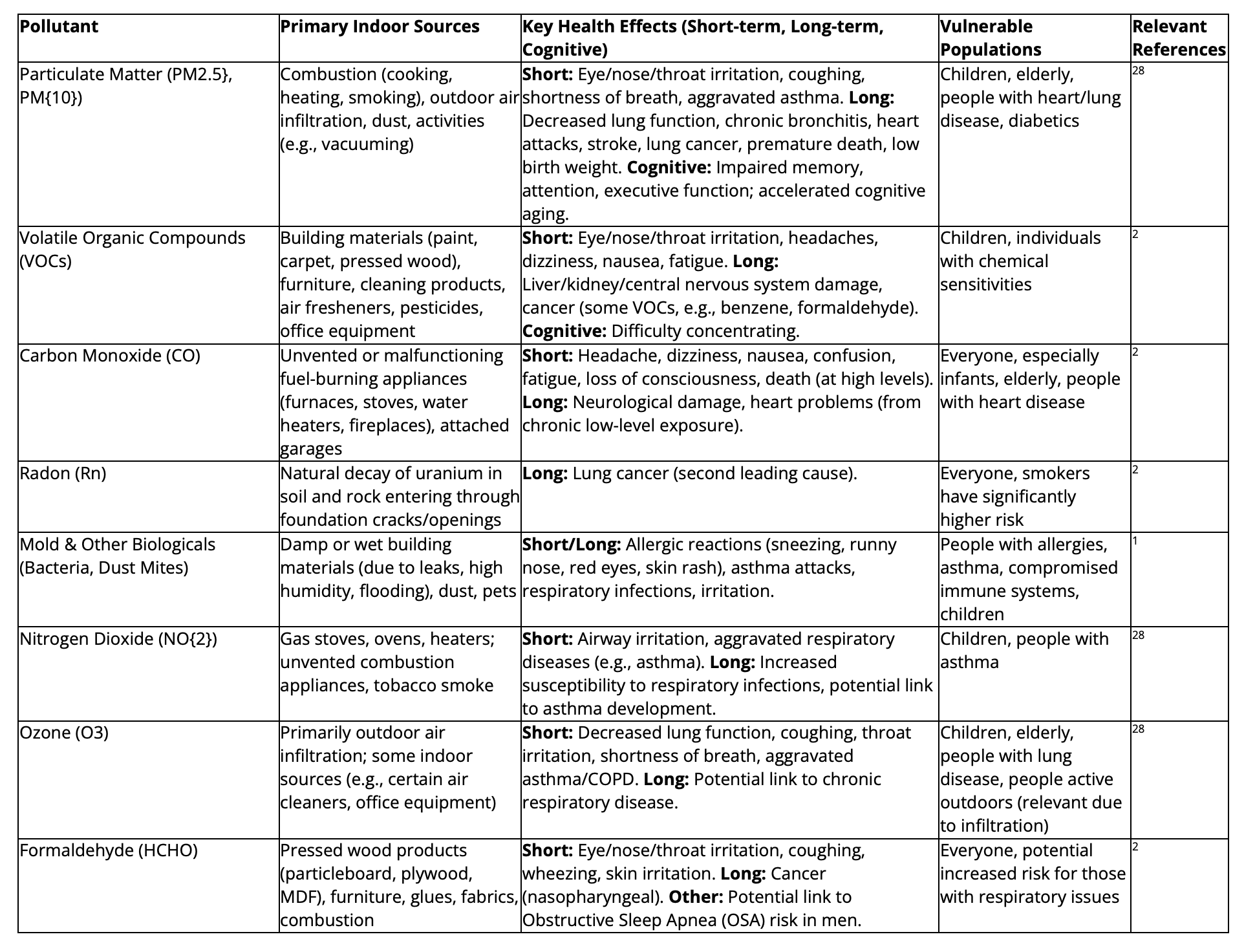
Table 1: Health Effects of Common Indoor Air Pollutants
The Economic Burden: A Drain on National Resources
The public health crisis engendered by poor IAQ translates directly into a significant economic burden for the United States. This burden manifests in multiple ways, including direct healthcare expenditures, lost productivity due to illness and cognitive impairment, and reduced educational attainment.
Direct healthcare costs associated with treating IAQ-related illnesses are substantial. Studies have estimated billions of dollars spent annually on conditions exacerbated or caused by poor indoor environments, such as asthma, allergies, and respiratory infections.(7) For instance, one analysis estimated $36 billion in annual healthcare costs (in 1996 dollars) attributable to common respiratory illnesses linked to indoor environments.(7) More recent figures show staggering increases in spending on respiratory conditions, reaching over $170 billion in 2016 (42), and asthma treatments alone costing Americans an average of $88 billion annually.(42) While not solely due to IAQ, indoor exposures are a major contributing factor. The broader cost of air pollution, much of which occurs indoors or infiltrates from outside, runs into the hundreds of billions annually when considering premature deaths and illnesses.(43)
Beyond direct medical expenses, the indirect costs associated with lost productivity are enormous. Poor IAQ contributes to increased absenteeism from work and school.(3) Estimates suggest millions of lost workdays annually due to IAQ-related symptoms and illnesses.(7) Furthermore, even when present, workers and students may experience reduced performance and difficulty concentrating due to symptoms like headaches, fatigue, or pollutant-induced cognitive impairment.(27) This phenomenon, sometimes termed "presenteeism," significantly hampers productivity. Studies estimate that poor IAQ can decrease overall worker productivity by as much as 10% (37), and the costs associated with lost productivity from "sick building syndrome" symptoms alone have been estimated at $93 billion per year.(8) More recent estimates place the potential annual economic value of IAQ improvements in the workplace at over $130 billion nationwide, with $50 billion potentially saved just from avoided sick days.(9)
In educational settings, poor IAQ not only increases student and staff absenteeism but also negatively impacts learning and academic performance.(3) This has long-term economic consequences for both individuals and society, potentially leading to lower lifetime earnings and reduced national competitiveness. Additionally, poor IAQ can shorten the lifespan and effectiveness of building systems and equipment, leading to increased maintenance and replacement costs for building owners, including school districts.(3)
Crucially, the economic narrative often focuses disproportionately on the costs of implementing IAQ improvements. However, the evidence strongly indicates that the cost of inaction—represented by the ongoing healthcare expenditures and productivity losses—is far greater.(9) Cost-benefit analyses of IAQ improvements, such as increased ventilation or enhanced filtration, consistently show that the economic benefits derived from improved health and productivity significantly outweigh the implementation and operational costs, often with remarkably short payback periods.(21) For example, the Lancet Commission on Pollution and Health noted that in the U.S., every dollar invested in air pollution control since 1970 has yielded an estimated $30 in benefits.(23) Therefore, addressing the IAQ crisis is not just a public health imperative but also an economically sound strategy.
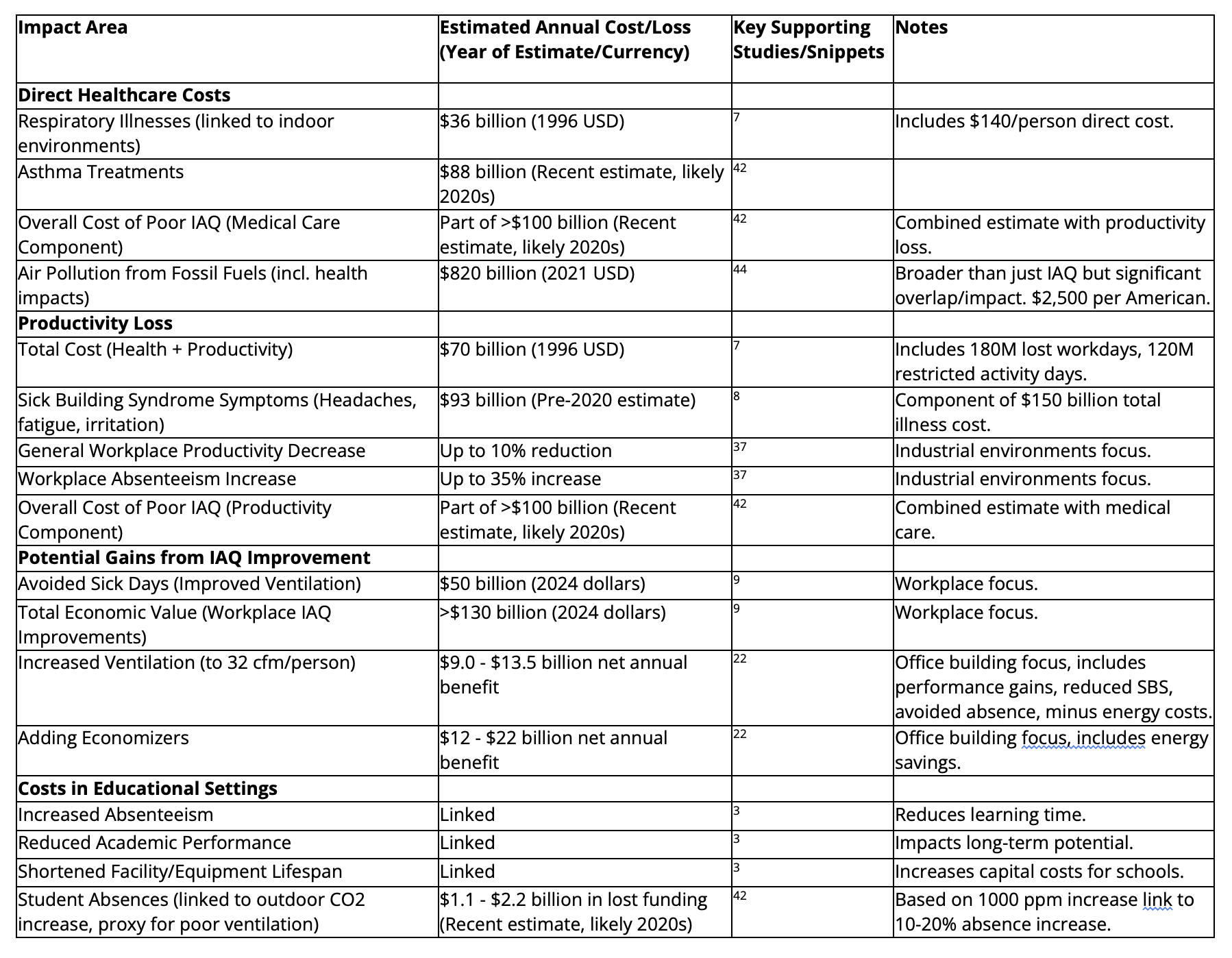
Table 2: Estimated Economic Impacts of Poor IAQ in the U.S.
Note: Estimates vary based on methodology, scope, and year. Figures are presented as reported in sources; conversions or adjustments for inflation may affect direct comparability.
Learning from Precedent: The Success of Building Codes in Protecting Public Welfare
The call for a national indoor air quality code is not a proposal for an entirely novel form of regulation. Rather, it represents a logical and necessary extension of a well-established and highly successful system of building codes that already governs structural integrity, fire safety, electrical installations, and plumbing systems. Examining the history, purpose, and impact of these existing codes provides a powerful precedent and compelling rationale for codifying protections for the air we breathe indoors.
A Legacy of Safety: How Structural, Fire, Electrical, and Plumbing Codes Revolutionized Public Health
Modern building codes in the United States are the product of over a century of evolution, often driven by tragedy and the recognition that minimum standards are essential for public safety and health.(10) Early regulations frequently emerged as local responses to devastating events. Catastrophic urban fires in the 19th and early 20th centuries, such as the Great Chicago Fire (1871) and the Baltimore Fire (1904), starkly revealed the dangers of unregulated construction practices.(10) These events spurred the development of fire codes, initially promoted by insurance groups like the National Board of Fire Underwriters (NBFU), which published the first model building code in 1905 focusing on fire-resistant construction.(10) Tragedies like the Iroquois Theater fire (1903) and the Triangle Shirtwaist Factory fire (1911) led directly to stricter requirements for exits, stairways, occupancy limits, and fire suppression systems, eventually codified in standards like the National Fire Protection Association's (NFPA) Life Safety Code (NFPA 101).(11) These reactive origins underscore a critical lesson: proactive standards based on known risks are preferable to waiting for disaster to compel action. The accumulated evidence of harm from poor IAQ justifies such proactive measures today.
Similarly, the development of electrical codes arose from the need for safety and consistency as electricity became widespread. The existence of multiple conflicting standards in the late 1800s created confusion and hazards.(48) This led to the development of the National Electrical Code (NEC) in 1897, sponsored by the NFPA, providing a uniform standard for safe electrical installations.(48) The National Electrical Safety Code (NESC), initiated by the National Bureau of Standards (now NIST) in 1913, addressed safety in utility systems.(50) These codes aimed to prevent fires, electrocution, and system failures by standardizing wiring methods, clearances, and work practices.(49)
Plumbing codes also evolved to address critical public health concerns. In the early 20th century, inconsistent local regulations, often based on guesswork, failed to adequately address sanitation and prevent water system failures or contamination.(51) Recognizing this, then-Secretary of Commerce Herbert Hoover spearheaded efforts within the National Bureau of Standards, leading to research and the publication of the first national plumbing code recommendations (the "Hoover Code") in 1928.(51) Organizations like the International Association of Plumbing and Mechanical Officials (IAPMO), founded in 1926, developed comprehensive codes like the Uniform Plumbing Code (UPC) to protect public health through standardized requirements for safe water supply and sanitation systems.(52)
The historical trajectory consistently shows a move from fragmented, often inadequate local rules towards standardized, science-based model codes developed through consensus processes involving industry experts, government agencies, and safety organizations.(10) The adoption of these model codes (like the International Codes or I-Codes developed by the ICC) by state and local jurisdictions has created a baseline of safety across the nation.(10) This history provides a clear roadmap: just as standardization was essential for fire, electrical, and plumbing safety, a national standard is needed to address the inconsistencies and inequities inherent in the current patchwork approach to IAQ.(5) Furthermore, these codes are not static; they undergo regular revision cycles to incorporate new technologies, materials, and scientific understanding (10), demonstrating a capacity for adaptation that would also be essential for a national IAQ code.
Establishing Baselines for Safety and Market Efficiency
Building codes serve a crucial economic and social function beyond preventing immediate disasters. They establish minimum standards for safety, health, and general welfare, addressing inherent market failures and improving overall efficiency.10
One key function is correcting information asymmetry. Homebuyers, tenants, and building occupants typically lack the expertise to fully assess the structural integrity, fire resistance, electrical safety, or plumbing adequacy of a building.(10) Without codes, there is a risk of a "lemons problem," where builders might cut corners on safety, and occupants only discover the defects when problems arise.(10) Building codes provide a baseline guarantee of quality and safety, reducing uncertainty and allowing individuals to occupy buildings with a reasonable expectation of protection.(10) Indoor air quality represents a particularly acute form of this information asymmetry. Occupants cannot easily see or measure the complex mix of potential pollutants like PM2.5, VOCs, or CO2 levels. An IAQ code would function like other codes by providing this essential, baseline assurance of breathable air quality.
Codes also enhance market efficiency by reducing transaction costs.(10) When buildings are known to meet established safety standards, the need for extensive, costly individual inspections by buyers, insurers, and lenders is reduced. This facilitates financing and insurance processes, making them easier and potentially cheaper.10 Similarly, an IAQ code could reduce the "health transaction costs" currently borne by individuals—the time, expense, and anxiety associated with diagnosing IAQ-related illnesses, seeking medical care, and attempting to identify and mitigate problems in their homes or workplaces. By ensuring a healthier baseline, an IAQ code reduces these individual burdens and contributes to broader economic efficiency.
Furthermore, building codes address negative externalities—costs imposed on third parties.10 A structurally unsound building that collapses can damage adjacent properties. A fire originating in one unit due to faulty wiring or lack of fire separation can spread, endangering neighbors and the community.10 Codes mitigate these risks by enforcing standards that protect not only the occupants but also the surrounding community.10 While existing codes focus on preventing these types of negative externalities, an IAQ code offers the potential for significant positive externalities. Buildings with good IAQ, achieved through effective ventilation and filtration mandated by a code, can reduce the community transmission of airborne infectious diseases.19 This benefits the entire community by lowering the overall burden of illness, reducing strain on healthcare systems, and enhancing public health resilience—a clear public good extending beyond the individual building occupant.
The Analogy: Why IAQ Deserves the Same Level of Codified Protection
The rationale underpinning structural, fire, electrical, and plumbing codes applies with equal, if not greater, force to indoor air quality. IAQ is a fundamental determinant of the health, safety, and well-being of building occupants, yet it remains the "missing pillar" in the national framework of building safety regulations.
The core purpose of building codes is to protect public health, safety, and general welfare.(12) The evidence presented in Section 2 clearly demonstrates that poor IAQ poses significant risks to all three. The health impacts range from irritation and allergies to severe chronic diseases and cognitive impairment, while the economic costs run into the hundreds of billions annually. Just as society deemed it unacceptable to leave structural stability or fire safety to chance or voluntary measures, it is similarly unacceptable to neglect the quality of the air that occupants breathe for the vast majority of their lives.
The principles of risk mitigation and market efficiency that justify existing codes are directly applicable to IAQ. Occupants face significant information asymmetry regarding the air quality in their buildings. An IAQ code would provide a necessary baseline assurance of safety, reducing individual health risks and the associated "health transaction costs." It would also generate positive externalities by contributing to reduced community disease transmission.
Moreover, the increasing focus on energy efficiency in buildings creates a compelling synergy and urgency for a dedicated IAQ code. Energy conservation measures, such as tightening building envelopes to reduce air leakage, are crucial for climate goals but can inadvertently degrade IAQ if not accompanied by adequate mechanical ventilation and filtration.(57) These energy codes, while vital, primarily focus on energy performance, sometimes putting energy conservation in direct conflict with IAQ by reducing necessary air exchange rates.(57) A national IAQ code is essential to ensure a balanced approach, guaranteeing that energy-efficient buildings are also healthy buildings. It ensures that the pursuit of sustainability does not compromise the fundamental need for breathable air.
The public reasonably expects that buildings meeting code are fundamentally safe. This implicit trust currently extends to the air inside, yet the lack of a comprehensive IAQ code means this expectation is often unmet. Establishing a national IAQ code would align regulatory protection with public expectation and fulfill the overarching goal of building codes: to provide minimum standards for safe and healthy environments. It is the logical next step in the evolution of building safety standards in the United States.
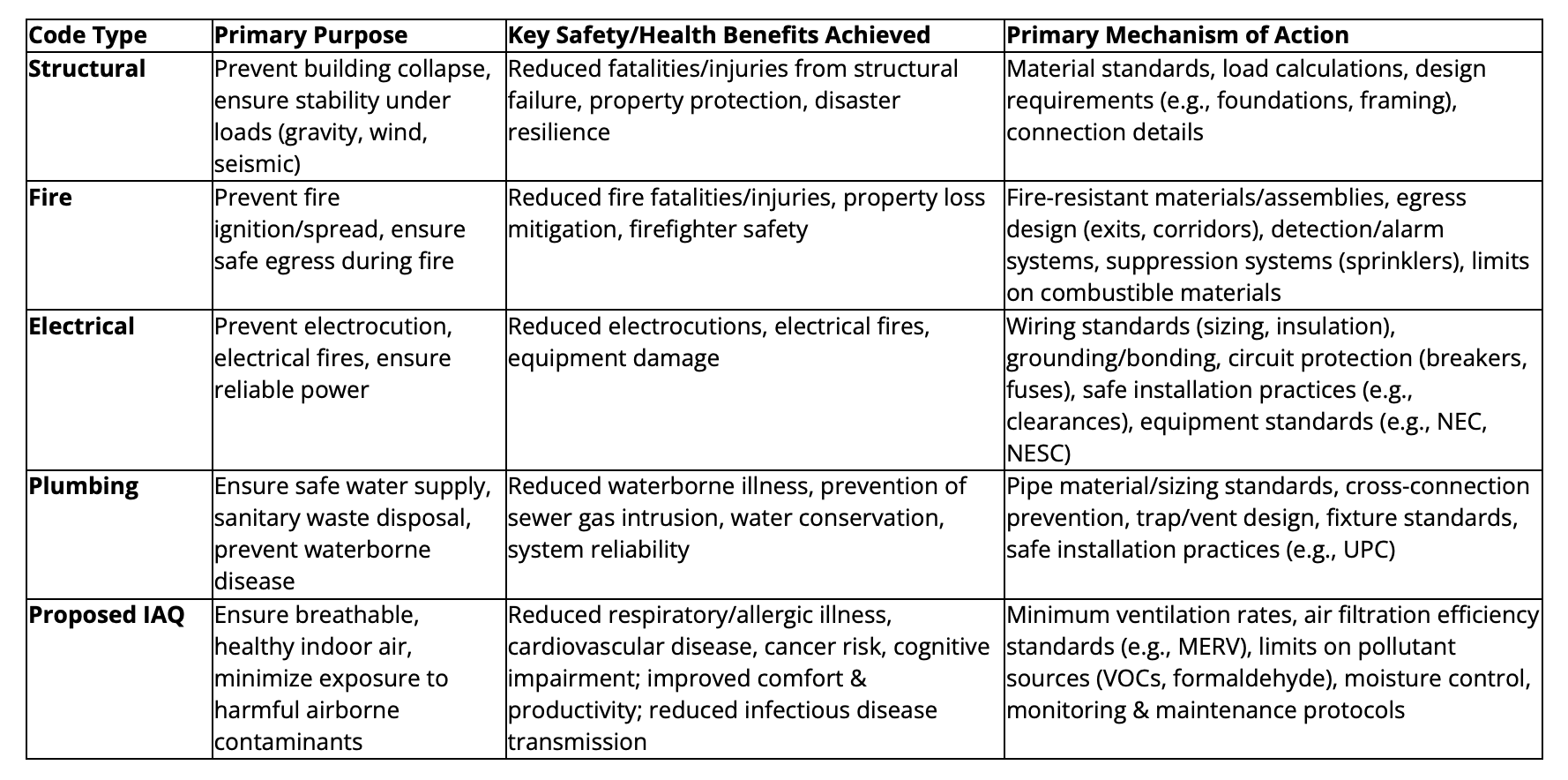
Table 3: Comparison of Existing Building Codes and Proposed IAQ Code
Envisioning a National Indoor Air Quality Code: Core Pillars and Key Components
Developing a national IAQ code requires establishing clear principles and defining specific, actionable components. Such a code should not be created in a vacuum but should build upon existing knowledge, consensus standards, and successful practices, both domestically and internationally. The goal is to create a robust yet adaptable framework that effectively protects public health while remaining technically feasible and economically viable.
Foundational Principles: Learning from EPA, ASHRAE, and International Best Practices
A national IAQ code should be grounded in several key principles:
Health-Based Targets: The primary goal must be the protection of human health. Standards and requirements should be based on the best available scientific evidence linking exposures to health outcomes, aiming to minimize adverse effects.(13) This involves referencing health guidelines from authoritative bodies like the World Health Organization (WHO) where applicable for specific pollutants (15) and moving beyond older standards based solely on odor control.(61)
Multi-Layered Strategy (Source Control, Ventilation, Filtration): Recognizing that no single strategy is sufficient, the code must integrate the EPA's recommended three-pronged approach.(14) This involves:
Source Control: Minimizing the introduction of pollutants at their origin (e.g., low-emitting materials, proper appliance venting).
Ventilation: Diluting and removing indoor pollutants with sufficient outdoor air.
Filtration/Air Cleaning: Removing particles and contaminants from recirculated indoor air and incoming outdoor air. An effective code must address all three layers synergistically.
Leveraging Consensus Standards: The technical foundation of the code should leverage widely recognized, consensus-based standards, particularly those developed by ASHRAE (American Society of Heating, Refrigerating and Air-Conditioning Engineers). ASHRAE Standards 62.1 (Ventilation and Acceptable Indoor Air Quality) and 62.2 (Ventilation and Acceptable Indoor Air Quality in Residential Buildings) provide detailed, peer-reviewed requirements for ventilation rates, system design, and procedures for achieving acceptable IAQ in various building types.(13) These standards are already referenced in many existing building codes (63) and provide a robust starting point.
Performance and Prescriptive Pathways: To allow for flexibility and innovation while ensuring baseline safety, the code should incorporate both prescriptive requirements (e.g., specifying minimum filter efficiency) and performance-based pathways (e.g., demonstrating achievement of target pollutant concentration levels).(13) This approach is common in modern building codes, including ASHRAE standards and California's Title 24.(25)
Adaptability and Continuous Improvement: IAQ science and technology are constantly evolving. The code must be a living document, incorporating mechanisms for regular review and updates based on new research findings, technological advancements, and lessons learned from implementation.(10) International experiences from regions like the EU, Canada, and various Asian nations can provide valuable insights and models for specific requirements and implementation strategies.(64)
Verification and Enforcement: The code's effectiveness hinges on ensuring that design intent translates into real-world performance. Requirements for commissioning, testing, balancing, ongoing monitoring, and regular maintenance are crucial to verify compliance and sustain IAQ benefits over time.(68)
Minimum Ventilation Standards for Healthy Air Exchange
Adequate ventilation is fundamental to maintaining acceptable IAQ by diluting and removing pollutants generated indoors, including CO2, bioeffluents, VOCs, and airborne pathogens. A national IAQ code must mandate minimum outdoor air ventilation rates.
These rates should be based on established standards like ASHRAE 62.1 for commercial/institutional buildings and 62.2 for residential buildings.(13) These standards typically specify rates based on factors like floor area, occupancy density, and space type/activity level (e.g., cfm per person or cfm per square foot).(61) For example, ASHRAE 62.2-2016 recommends residential homes receive 0.35 air changes per hour but not less than 15 cfm per person.60 ASHRAE 62.1 provides more complex calculations for diverse non-residential spaces.(13)
It is critical that these minimum rates are sufficient to protect health, not merely control odors or CO2 to minimally acceptable comfort levels, as was the focus of some older standards.(61) The code must also address the proper distribution of this outdoor air to ensure it reaches all occupied zones effectively.(61) Provisions may be needed to ensure ventilation systems can operate effectively during all occupied hours and potentially during pre- and post-occupancy flushing periods, especially during times of higher risk.(69) The National Association of Home Builders (NAHB) supports research to better quantify IAQ conditions and the impact of ventilation changes, but opposes increases in ventilation rates unless justified by health-based field studies.(71) This highlights the need for the code's ventilation requirements to be clearly linked to health evidence.
Advanced Filtration Requirements: Targeting Particulate Matter and Pathogens
Filtration plays a critical role in removing harmful particulate matter (especially PM2.5) and airborne pathogens from both incoming outdoor air and recirculated indoor air. A national IAQ code should mandate minimum filtration efficiencies for HVAC systems.
Based on recommendations from the EPA, ASHRAE's Epidemic Task Force, and best practices emerging from the COVID-19 pandemic, a minimum efficiency of MERV 13 (Minimum Efficiency Reporting Value) or higher is appropriate for most commercial, institutional, and potentially residential settings.16 MERV 13 filters are significantly more effective than typical MERV 8 filters at capturing smaller airborne particles in the 1-3 μm range and demonstrate at least 50% efficiency for particles 0.3-1.0 μm, which includes respiratory aerosols that can carry viruses.16 California's Title 24 already mandates MERV 13 filtration in certain residential applications.(25)
The code must specify that filters be properly sized and installed within the HVAC system to prevent air bypass (air going around the filter rather than through it).16 It should also include requirements for regular filter inspection and replacement according to manufacturer recommendations or pressure drop indicators to ensure continued effectiveness.(16) Consideration should also be given to the HVAC system's capacity to handle the increased pressure drop associated with higher-efficiency filters.16 Where central system filtration is insufficient, the code might allow or recommend the use of appropriately sized portable air cleaners with HEPA filters.(16)
Controlling Pollutant Sources: Limits on VOCs, Formaldehyde, and Other Harmful Emissions
Source control is often the most effective and cost-efficient strategy for improving IAQ.(14) A national code should incorporate measures to limit the emission of harmful pollutants from materials used within buildings.
This could involve setting maximum allowable emission limits for VOCs, formaldehyde, and other known hazardous chemicals from building materials (e.g., flooring, insulation, paints, adhesives, sealants, engineered wood products) and furnishings.(2) The code could reference existing third-party certification programs (e.g., CRI Green Label Plus, FloorScore, GREENGUARD) or establish its own criteria based on health data.(18) International examples, such as France's mandatory labeling of construction products for VOC emissions (74) or Japan's guidelines for specific VOCs and TVOC levels (75), offer potential models.
Emphasis should be placed on selecting the least toxic options available that meet performance requirements, particularly in sensitive environments like schools and healthcare facilities.(18) The code should also address proper installation sequencing (e.g., allowing high-emitting materials to off-gas before installing porous "sink" materials like carpet) and require adequate ventilation during and after the installation of new materials or application of coatings.(18) Requirements for proper venting of combustion appliances (stoves, furnaces, water heaters) to the outdoors are also essential source control measures.(14)
Monitoring and Maintenance Protocols for Sustained Performance
To ensure that IAQ protections remain effective throughout a building's life, a national code must include requirements for ongoing monitoring and maintenance. Design specifications alone do not guarantee long-term performance.
The code should mandate regular inspection and maintenance schedules for HVAC systems, including filter changes, cleaning of coils and drain pans, duct inspection, and verification of damper and control operation.(68) This ensures that ventilation and filtration systems continue to operate as designed.
Furthermore, the code should incorporate requirements for IAQ monitoring, particularly in higher-occupancy or sensitive environments. This could involve periodic professional IAQ assessments or the installation of continuous monitoring systems for key indicators.(68) Carbon dioxide (CO2) sensors are commonly used as a proxy for ventilation adequacy, with target levels often recommended below 800-1000 ppm.(70) Real-time monitoring of PM2.5 may also be appropriate in certain settings. The code should specify sensor placement, calibration requirements, and potentially data logging or alert functionalities to enable proactive IAQ management.(39) Clear protocols for responding to elevated pollutant levels identified through monitoring would also be necessary.
Addressing Specific Environments: Schools, Healthcare Facilities, and Workplaces
While a national IAQ code should establish baseline requirements for all buildings, it is essential to include specific, potentially more stringent, provisions for environments where occupants may be more vulnerable or where occupancy density is high.
Schools: Given children's vulnerability and the impact of IAQ on learning and health 3, schools require particular attention. The code should incorporate recommendations from EPA's IAQ Tools for Schools program (18) and ASHRAE's guidance for schools (79), potentially requiring lower pollutant thresholds, higher ventilation rates per occupant, enhanced filtration, rigorous material selection protocols, and frequent monitoring.
Healthcare Facilities: These settings require strict IAQ control to protect vulnerable patients and prevent healthcare-associated infections. Specific standards (often referencing ASHRAE/ASHE Standard 170) address ventilation rates, filtration levels, pressure relationships between zones, and humidity control to minimize pathogen transmission and exposure to hazardous chemicals.(13) An IAQ code should ensure alignment with or incorporation of these specialized requirements.
Workplaces: Office buildings and other workplaces benefit significantly from good IAQ in terms of worker health, comfort, and productivity.(22) The code should ensure adequate ventilation and filtration based on occupancy density and activities, potentially incorporating provisions for occupant control or feedback mechanisms (76) and addressing specific pollutant sources common in offices (e.g., printers, furnishings). OSHA's guidance and the principles of occupational health and safety should inform workplace-specific requirements.(27)
By tailoring requirements to the specific needs and risks of different building types, a national IAQ code can provide more effective and targeted protection.
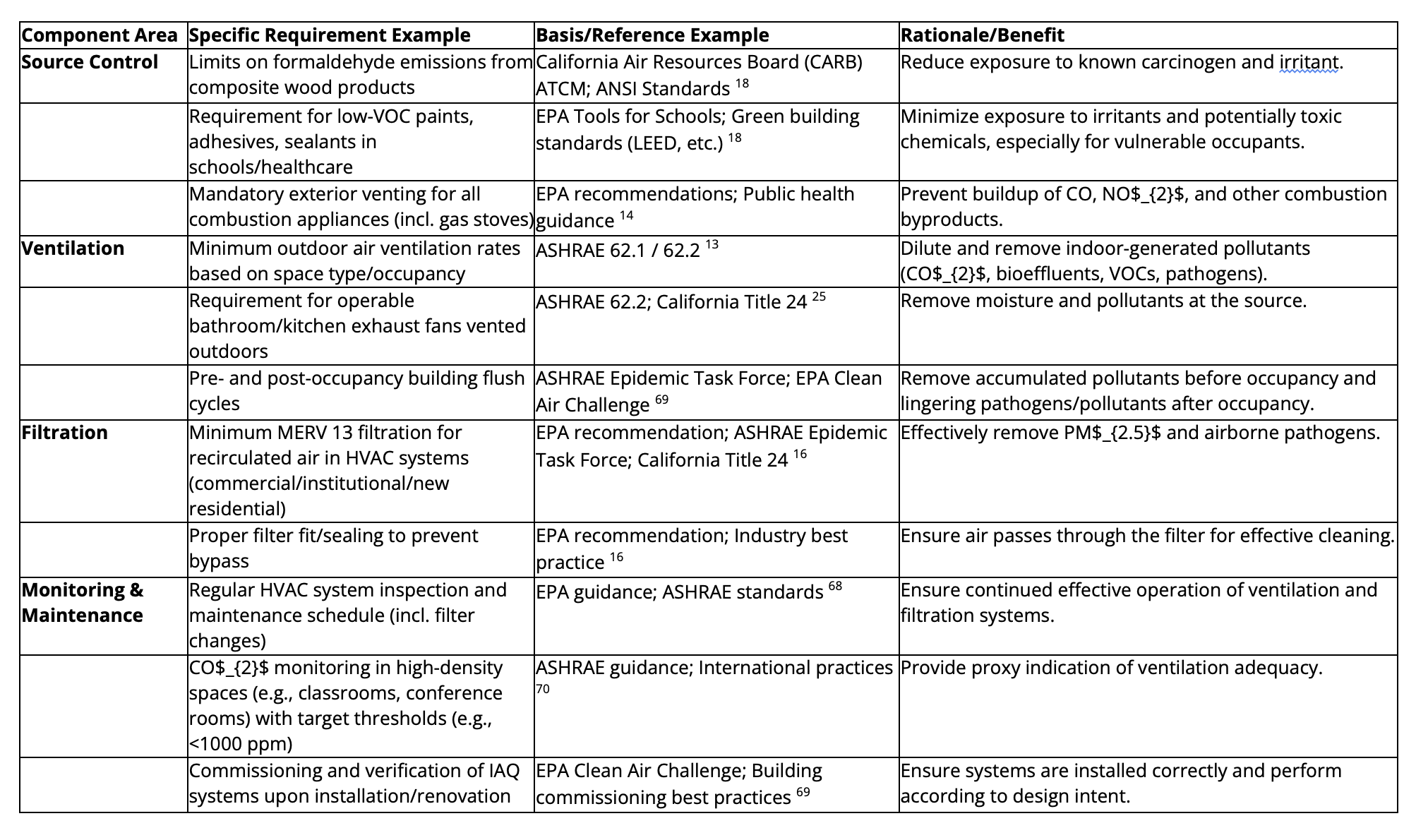
Table 4: Key Recommended Components for a National IAQ Code
Navigating the Path to Implementation: Challenges and Stakeholder Engagement
While the case for a national IAQ code is compelling based on public health and economic benefits, its successful implementation requires navigating significant technical, legislative, economic, and political challenges. Engaging diverse stakeholders and learning from international experiences will be crucial for developing a code that is both effective and practical.
Addressing Technical and Legislative Hurdles
Several technical complexities must be addressed in developing a national IAQ standard. Defining appropriate metrics and monitoring methods for the vast array of potential indoor pollutants is challenging.(19) While standards exist for pollutants like PM2.5 and CO, others like Total Volatile Organic Compounds (TVOCs) lack universally agreed-upon definitions and measurement protocols.(19) Monitoring biological contaminants like viruses and bacteria in real-time remains largely impractical for routine building management.(19) Furthermore, controlling sources like human occupants, who release CO2 and pathogens, presents unique difficulties.(19) These technical hurdles necessitate a focus on measurable indicators (like CO2 as a ventilation proxy, PM2.5), robust standards for ventilation and filtration, and source control measures targeting manageable sources like building materials.
Legislatively, establishing a national code requires careful consideration of federal versus state authority.(5) While the federal government could set a national baseline, implementation and enforcement would likely rely heavily on existing state and local building code infrastructure.(12) Defining the scope of the code—which building types are covered (new vs. existing, residential vs. commercial), and under what conditions (new construction, major renovation)—is critical.(57) Enforcement itself presents challenges, as IAQ conditions can fluctuate, and ensuring compliance across millions of diverse buildings requires significant resources and trained personnel.(19) The inherent variability of indoor spaces ("every space is different" (19)) suggests the need for flexible compliance pathways alongside clear minimum standards. Regulating non-occupational indoor environments, particularly private residences, also raises complex issues of privacy, personal liberty, and property rights that must be carefully navigated.(39)
Strategies to overcome these hurdles include:
Phased Implementation: Starting with public and commercial buildings, especially schools and healthcare facilities, where the public health justification is strong and enforcement may be more feasible.(19)
Leveraging Existing Frameworks: Integrating IAQ requirements into existing model building codes (like the I-Codes) and utilizing established state/local adoption and enforcement mechanisms.(12)
Building on Model Legislation: Adapting frameworks like the Model Clean Indoor Air Quality Act (MCIAA).(5)
Focusing on Performance and Prescriptive Options: Providing flexibility through performance-based compliance pathways while maintaining clear prescriptive minimums.(13)
Investing in Technology and Data: Supporting the development and standardization of reliable, low-cost IAQ sensors and data platforms to aid monitoring and compliance verification (39), while providing guidance on data interpretation to avoid misuse.
Economic Considerations: Costs, Benefits, and Incentives
The economic implications of a national IAQ code are a central concern for stakeholders. Opponents often highlight the potential for increased upfront costs associated with implementing stricter standards.(20) These costs can include higher expenses for advanced HVAC systems, higher-efficiency filters (e.g., MERV 13+), low-emitting building materials, IAQ monitoring equipment, and potentially more complex design and construction processes.(9) Concerns are particularly acute regarding the cost of retrofitting existing buildings and the potential impact on affordable housing development, where even modest cost increases can affect project viability.(9) The need for a larger, better-trained workforce of code officials and IAQ professionals also represents an implementation cost.(20)
However, a comprehensive economic assessment must weigh these costs against the substantial, often overlooked, costs of inaction and the significant benefits of improved IAQ. As detailed in Section 2.2.2, the current economic burden from poor IAQ—including healthcare expenditures and lost productivity—is estimated in the hundreds of billions of dollars annually.(7) Numerous cost-benefit analyses demonstrate that investments in IAQ improvements yield substantial returns. Studies show productivity gains in office workers far exceeding the increased energy and maintenance costs, with payback periods potentially under four months.(21) Research by Lawrence Berkeley National Laboratory estimates net annual economic benefits of $9 billion to $38 billion from various scenarios of increased ventilation in US offices, vastly exceeding energy cost increases.(22) The principle of focusing on lifecycle costs, rather than solely upfront costs, is crucial; the long-term savings from reduced illness, lower absenteeism, and enhanced cognitive function often dwarf the initial investments.
To address legitimate cost concerns and facilitate adoption, particularly for existing buildings and affordable housing, financial mechanisms are essential. Policy options include:
Federal Grants and Funding: Utilizing existing or new federal funding streams (e.g., programs funded by the American Rescue Plan (82), infrastructure bills, or dedicated EPA grants for schools (78)) to support IAQ assessments and upgrades in public buildings, schools, and low-income communities.(9)
Tax Incentives: Providing tax credits for building owners who conduct IAQ assessments or install compliant ventilation and filtration systems, similar to proposals like the Airborne Act.(72)
Utility Programs: Encouraging or requiring energy utilities to incorporate IAQ measures into their energy efficiency incentive programs.
Tiered Implementation: Phasing in requirements over time or setting different compliance deadlines for various building types or sizes to allow the market and workforce to adapt.
Furthermore, a national IAQ code can act as a market transformation mechanism. By creating consistent demand, it can drive innovation in IAQ technologies and materials, potentially leading to economies of scale and lower costs over time, similar to the trajectory observed with energy-efficient products following code advancements.
Engaging Key Stakeholders: Building Industry, Public Health Advocates, Labor, and Government
The successful development and implementation of a national IAQ code depend critically on engaging a wide range of stakeholders with diverse interests and perspectives. Building consensus and addressing concerns proactively are essential. Key stakeholder groups include:
Building Industry: This includes architects (AIA) (53), home builders (NAHB) (71), commercial building owners and managers (BOMA) (72), contractors, engineers (ASHRAE), and manufacturers of building materials and HVAC equipment. Concerns regarding code adoption often revolve around cost, technical feasibility, liability, and the desire for flexibility and regional variation.(20) Engagement requires acknowledging these concerns, involving industry representatives in the code development process (as AIA advocates for (53)), providing clear technical guidance, and demonstrating the business case for healthier buildings (e.g., tenant attraction/retention, productivity gains (38)). The COVID-19 pandemic increased industry awareness of IAQ (84), creating an opportunity for dialogue, although cost and operational impacts remain key discussion points.
Public Health and Environmental Health Professionals: Organizations like the American Medical Association (AMA) (33), the American Industrial Hygiene Association (AIHA) (86), and academic research centers (e.g., Harvard Healthy Buildings Program (38)) are crucial advocates, providing scientific evidence on health impacts and technical expertise. Their role includes educating policymakers and the public, translating research into policy recommendations, and advocating for strong, health-protective standards.
Labor Unions: Representing workers who build, maintain, and occupy buildings, unions are increasingly focused on IAQ as an occupational health and safety issue.(73) They advocate for standards that protect workers from airborne hazards, including pathogens and chemical exposures. Engaging unions can build a powerful coalition supporting IAQ codes, emphasizing worker safety and the need for a qualified, well-trained workforce to implement IAQ measures.(73)
Environmental Organizations: Groups focused on environmental protection and climate change (e.g., BlueGreen Alliance (73), Environmental Law Institute (4)) recognize the links between energy use, climate resilience, and IAQ. They can advocate for integrated solutions that improve IAQ while supporting decarbonization and resilience goals.
Consumer Advocacy Groups and Community Organizations: These groups represent the interests of building occupants, particularly vulnerable populations.(3) They can advocate for transparency, strong protections, and equitable implementation, ensuring that the benefits of improved IAQ reach all communities.
Government Agencies: Collaboration across federal agencies (coordinated through bodies like the Federal Interagency Committee on Indoor Air Quality - CIAQ (88)), as well as engagement with state and local government associations (e.g., National Governors Association 89, US Conference of Mayors (91), National League of Cities (78)), is vital for developing implementable policies and leveraging existing regulatory structures.
Effective engagement strategies include transparent code development processes, public comment periods, targeted outreach and education, development of clear compliance guidance, and fostering public-private partnerships to promote innovation and best practices.(26) Framing IAQ as a shared responsibility benefiting worker safety, public health, economic productivity, and community resilience can help bridge different stakeholder priorities.
Learning from International Models: Successes and Lessons from Other Nations
While the U.S. lacks a comprehensive national IAQ code, other developed nations and regions have implemented various regulatory approaches, offering valuable lessons.
European Union: The EU is increasingly integrating Indoor Environmental Quality (IEQ), which includes IAQ, into its building policies, notably through the recast Energy Performance of Buildings Directive (EPBD).(66) This directive mandates Member States to consider optimal IEQ when setting energy performance standards and requires IAQ monitoring (temperature, humidity, ventilation rate, contaminants, lighting) in new zero-emission non-residential buildings.(66) This approach highlights the synergy between energy efficiency and IAQ but relies on Member State implementation. Air quality monitoring across Europe shows progress but indicates that stricter WHO guidelines are often not met, particularly for PM2.5.(64)
Canada: Canada relies on the general duty clause in occupational health and safety legislation and references ASHRAE standards in building codes.(63) Health Canada provides specific guidance, such as recommending MERV 13 filtration in office buildings.(94) This model emphasizes guidance and existing standards but lacks strong, uniform national mandates.
South Korea: South Korea has a national Indoor Air Quality Control Act, but studies suggest its pollutant limits (e.g., for PM2.5) and enforcement are less strict compared to WHO guidelines and some other nations.(95) This illustrates that simply having a law is insufficient; its stringency and enforcement are critical.
Japan: Japan has established guidelines for 13 VOCs and a provisional target for TVOCs in buildings, which studies suggest are effective in reducing building-related symptoms.(75) However, challenges remain, particularly regarding ventilation practices and CO2 levels in residential buildings, highlighting the gap between regulation and occupant behavior.(67)
Singapore: Singapore utilizes specific codes like SS 553 (Code of Practice for Air-Conditioning and Mechanical Ventilation in Buildings) which sets requirements (e.g., 10 L/s per person ventilation for offices) and encourages compliance through programs like the BCA Green Mark certification.(65)
Lessons from these international models include: the importance of setting specific, health-based pollutant limits; the trend towards integrating IAQ with energy efficiency policies; the persistent challenge of ensuring effective implementation, compliance, and enforcement even where regulations exist; and the value of combining mandatory requirements with incentive programs and public education. While no single model is directly transferable, these experiences underscore the feasibility of national-level IAQ action and provide diverse strategies for consideration in the U.S. context.
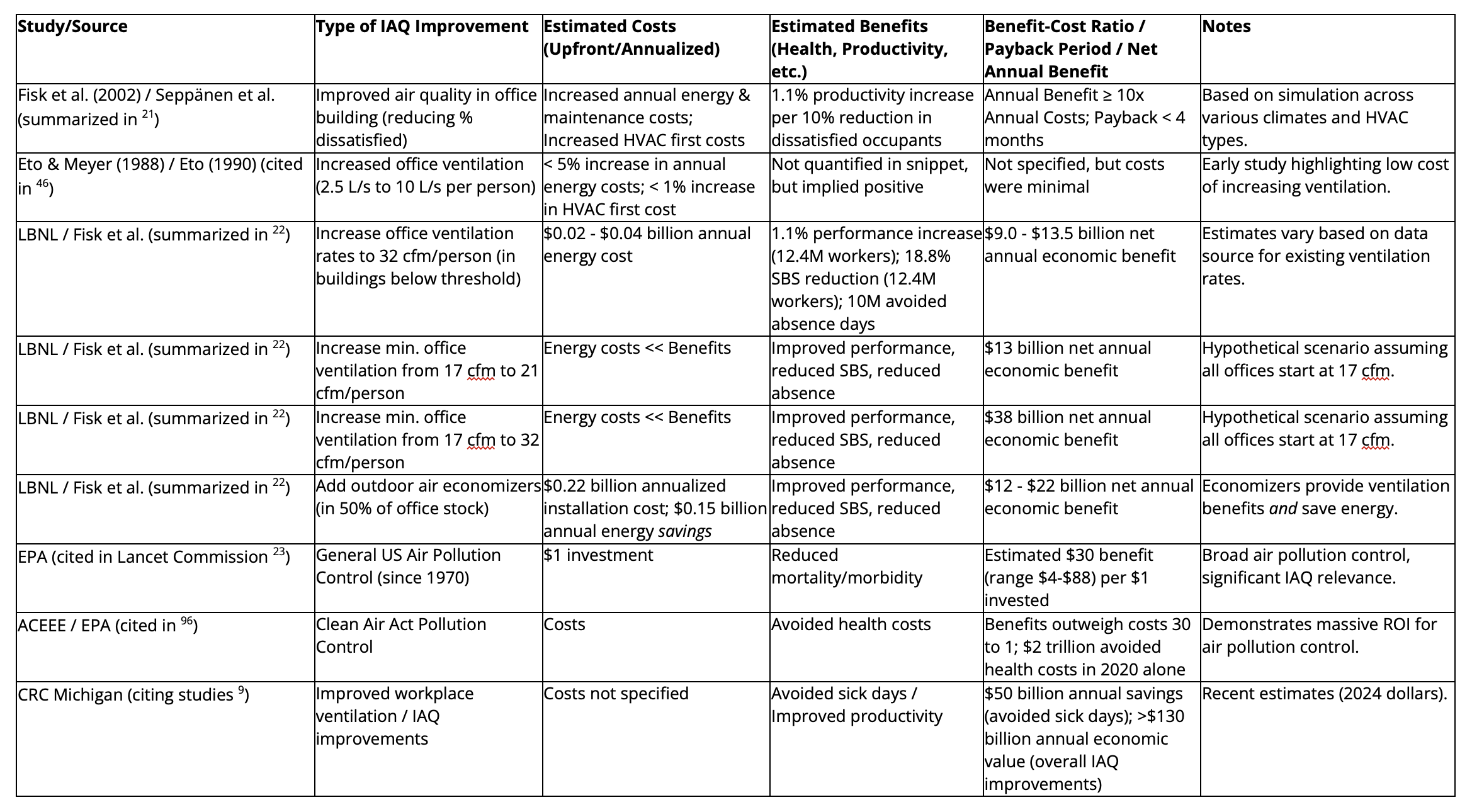
Table 5: Summary of Cost-Benefit Analyses for IAQ Improvements
Note: These analyses primarily focus on office/commercial settings where productivity gains are more easily monetized. Benefits in residential, school, and healthcare settings would include health cost savings, improved learning, reduced disease transmission, and enhanced quality of life, which are equally important but sometimes harder to quantify in purely economic terms.
Recommendations: Charting a Course for Healthier Indoor Environments in the U.S.
The evidence clearly indicates that poor indoor air quality poses a significant threat to public health and imposes a substantial economic burden on the United States. Learning from the success of existing building codes and drawing on established scientific principles and standards, it is imperative that the nation acts decisively to address this invisible threat. Establishing a comprehensive national IAQ code is the most effective path forward. The following recommendations outline a course for legislative action and implementation:
Legislative Action: Establishing a Federal Mandate for IAQ
Congress should enact legislation establishing a national Indoor Air Quality (IAQ) code. This code would create federally mandated minimum standards for IAQ in buildings across the United States, addressing the current regulatory gap 5 and inconsistent patchwork of state regulations.(5)
Scope: The initial mandate should apply to all new construction and substantial renovations of federal buildings, public buildings (including K-12 schools), healthcare facilities, and large commercial buildings. A clear pathway and timeline should be established for extending coverage to other commercial buildings and multi-family residential properties, with further study dedicated to effectively addressing single-family homes while respecting privacy concerns.(39)
Authority: The legislation should designate a lead federal agency (e.g., EPA) or establish an interagency council (building on the model of the CIAQ (88)) with the authority and resources to develop, promulgate, maintain, and oversee the national IAQ code. This body must work in close collaboration with ASHRAE, CDC, NIOSH, DOE, and other relevant federal agencies and standards development organizations.(53)
Foundation: The code should be based on the foundational principles outlined in Section 4.1, incorporating the multi-layered approach of source control, ventilation, and filtration (14), leveraging ASHRAE standards 62.1 and 62.2 (13), and aiming for health-based targets informed by WHO guidelines.(15)
Phased Implementation and Support Mechanisms
Recognizing the economic and logistical challenges, the national IAQ code should be implemented strategically and with robust support mechanisms.
Phased Rollout: Implement the code requirements in phases, prioritizing building types with vulnerable occupants (schools, healthcare) or high occupancy density (large workplaces) first. Allow reasonable timelines for states and localities to adopt and begin enforcing the code, potentially tied to existing building code update cycles.(20)
Financial Assistance: Establish dedicated federal funding programs, potentially through grants, low-interest loans, and tax incentives, to assist building owners with the costs of IAQ assessments, system upgrades, and retrofits necessary for compliance.(9) Priority should be given to public institutions (especially schools in low-income areas (78)), small businesses, and affordable housing developments to ensure equitable implementation and mitigate concerns about cost burdens.(9) Existing funds, such as those from the American Rescue Plan or infrastructure legislation, should be clearly designated as eligible for IAQ improvements.(82)
Technical Assistance: Create robust technical assistance programs through agencies like EPA and DOE to support state and local code officials, building designers, contractors, and facility managers in understanding and implementing the new IAQ code requirements. This includes developing clear guidance documents, compliance tools, and best practice manuals.
Investing in Research, Education, and Workforce Development
Sustained progress requires ongoing investment in knowledge generation and human capital.
Research Funding: Significantly increase federal funding for IAQ research through agencies like EPA, NIOSH, NIH, and NSF. Research priorities should include: health effects of emerging indoor pollutants and pollutant mixtures, efficacy and cost-effectiveness of various IAQ intervention strategies (including ventilation, filtration, and source control), development and validation of low-cost IAQ sensors, and long-term impacts of improved IAQ on health outcomes and economic productivity.(39)
Public Education: Launch national public awareness campaigns, led by agencies like EPA and CDC, to educate the public, building occupants, and employers about the importance of IAQ, common indoor pollutants and sources, and practical steps individuals and organizations can take to improve indoor air.(26)
Workforce Development: Invest in training and certification programs for building professionals, including architects, engineers, HVAC technicians, building inspectors, and facility managers, to ensure a qualified workforce capable of designing, installing, commissioning, inspecting, and maintaining buildings according to the new IAQ code.(20) Partner with technical colleges, unions, and professional organizations to develop curricula and apprenticeship programs.
Fostering Public-Private Partnerships for Innovation and Compliance
Addressing the IAQ challenge effectively requires collaboration across sectors.
Stakeholder Collaboration: Establish formal mechanisms for ongoing dialogue and collaboration between government agencies, standards bodies (ASHRAE, ICC), industry associations (AIA, BOMA, NAHB), labor unions, public health organizations, researchers, and community advocates throughout the code development, implementation, and revision processes.(5)
Promoting Innovation: Encourage innovation in IAQ technologies (e.g., energy-efficient ventilation with heat recovery, advanced filtration media, smart sensors and controls, low-emitting materials) through research grants, challenge prizes, and potentially performance-based code pathways that reward innovative solutions.
Voluntary Programs and Recognition: Support and expand voluntary programs like EPA's Indoor airPLUS and the Clean Air in Buildings Challenge (26) to recognize leadership and encourage adoption of best practices beyond minimum code requirements. Consider developing a public-facing IAQ rating or disclosure system for buildings to increase transparency and empower occupants.(69)
Conclusion
Implementing a national Indoor Air Quality code represents a monumental opportunity to improve the health, well-being, and productivity of the American people. It aligns with the historical progression of building safety standards and addresses a critical, overlooked environmental exposure. While challenges exist, the overwhelming evidence of harm from inaction, coupled with the demonstrated success of similar codes and the substantial documented benefits of improved IAQ, makes a compelling case for federal leadership. By establishing clear standards, providing necessary support, fostering collaboration, and investing in knowledge and workforce, the United States can ensure that the buildings where we spend our lives contribute to, rather than detract from, our health. This is not simply a matter of regulation; it is a fundamental investment in a healthier, more resilient, and more prosperous future.
Works Cited
Executive Summary - Indoor Allergens - NCBI Bookshelf, accessed May 8, 2025, https://www.ncbi.nlm.nih.gov/books/NBK236018/
Introduction to Indoor Air Quality | US EPA, accessed May 8, 2025, https://www.epa.gov/indoor-air-quality-iaq/introduction-indoor-air-quality
Indoor Air Quality Matters - National School Boards Association, accessed May 8, 2025, https://www.nsba.org/resources/feb-2025-indoor-air-quality-matters
Why is Indoor Air Quality Policy Important? | Environmental Law ..., accessed May 8, 2025, https://www.eli.org/buildings/about-the-program
States Are Innovating to Improve Indoor Air Quality | ASTHO, accessed May 8, 2025, https://www.astho.org/communications/blog/2025/states-innovating-to-improve-indoor-air-quality/
The Next Public Health Frontier with Indoor Air Quality - TU Law Digital Commons, accessed May 8, 2025, https://digitalcommons.law.utulsa.edu/cgi/viewcontent.cgi?article=3343&context=tlr
Economic impact of poor indoor air quality - Cleanfax, accessed May 8, 2025, https://cleanfax.com/economic-impact-of-poor-indoor-air-quality/
www.workdesign.com, accessed May 8, 2025, https://www.workdesign.com/2020/01/higher-productivity-out-of-thin-air/#:~:text=The%20National%20Oceanic%20and%20Atmospheric,associated%20with%20sick%20building%20syndrome.
Policymakers at All Levels Can Work Toward Better Indoor Air ..., accessed May 8, 2025, https://crcmich.org/policymakers-at-all-levels-can-work-toward-better-indoor-air-quality
The Evolution of U.S. Building Codes: History, Economics, and ..., accessed May 8, 2025, https://garynsmith.net/the-evolution-of-u-s-building-codes-history-economics-and-modern-impacts/
apps.usfa.fema.gov, accessed May 8, 2025, https://apps.usfa.fema.gov/pdf/efop/efo47056.pdf
sgp.fas.org, accessed May 8, 2025, https://sgp.fas.org/crs/misc/R47665.pdf
Standards 62.1 & 62.2 - ASHRAE, accessed May 8, 2025, https://www.ashrae.org/technical-resources/bookstore/standards-62-1-62-2
Improving Indoor Air Quality | US EPA, accessed May 8, 2025, https://www.epa.gov/indoor-air-quality-iaq/improving-indoor-air-quality
WHO air quality guidelines - C40 Knowledge Hub, accessed May 8, 2025, https://www.c40knowledgehub.org/s/article/WHO-Air-Quality-Guidelines?language=en_US
Guide to Air Cleaners in the Home | US EPA, accessed May 8, 2025, https://www.epa.gov/indoor-air-quality-iaq/guide-air-cleaners-home
The Role of Air Filters in Air Handling Units for Maintaining ..., accessed May 8, 2025, https://cleanair.camfil.us/2024/01/13/the-role-of-air-filters-in-air-handling-units-for-maintaining-commercial-and-public-building-indoor-air-quality/
Controlling Pollutants and Sources: Indoor Air Quality Design Tools ..., accessed May 8, 2025, https://www.epa.gov/iaq-schools/controlling-pollutants-and-sources-indoor-air-quality-design-tools-schools
Indoor Air Quality Standards: Challenges and Solutions - ActivePure ..., accessed May 8, 2025, https://activepure.com/blog/indoor-air-quality-standards-challenges-solutions/
neep.org, accessed May 8, 2025, https://neep.org/sites/default/files/media-files/final_systemic_barriers.pdf
(PDF) Cost-benefit analysis of improved air quality in an office building, accessed May 8, 2025, https://www.researchgate.net/publication/241837912_Cost-benefit_analysis_of_improved_air_quality_in_an_office_building
Increased Ventilation Rates | Indoor Air - Lawrence Berkeley ..., accessed May 8, 2025, https://iaqscience.lbl.gov/increased-ventilation-rates
Lancet Commission on Pollution & Health - Pure Earth, accessed May 8, 2025, https://www.pureearth.org/lancet-commission-on-pollution-health/
Criteria Air Pollutants | US EPA, accessed May 8, 2025, https://www.epa.gov/criteria-air-pollutants
Energy Code Ace - - Mandatory Requirements for Ventilation and ..., accessed May 8, 2025, https://energycodeace.com/content/section-1602-mandatory-requirements-for-ventilation-and-ind
Clean Air in Buildings | The White House - Joe Biden for President, accessed May 8, 2025, https://bidenwhitehouse.archives.gov/cleanindoorair/
Indoor Air Quality - Overview | Occupational Safety and Health Administration, accessed May 8, 2025, https://www.osha.gov/indoor-air-quality
Air Pollutants | Air Quality | CDC, accessed May 8, 2025, https://www.cdc.gov/air-quality/pollutants/index.html
Air Pollutants | Department of Natural Resources - Iowa DNR, accessed May 8, 2025, https://www.iowadnr.gov/environmental-protection/air-quality/air-pollutants
Nearly 3.2 million people die prematurely each year from diseases caused by household air pollution - World Health Organization (WHO), accessed May 8, 2025, https://www.who.int/teams/environment-climate-change-and-health/air-quality-energy-and-health/sectoral-interventions/household-air-pollution/health-risks
Household air pollution - World Health Organization (WHO), accessed May 8, 2025, https://www.who.int/news-room/fact-sheets/detail/household-air-pollution-and-health
Indoor Air Quality (IAQ) | US EPA, accessed May 8, 2025, https://www.epa.gov/indoor-air-quality-iaq
Informing Physicians, Health Care Providers, and the Public that Cooking with a Gas Stove Increases Household Air Pollution and the Risk of Childhood Asthma D-135.964 - AMA Policy Finder - American Medical Association, accessed May 8, 2025, https://policysearch.ama-assn.org/policyfinder/detail/gas%20stove?uri=%2FAMADoc%2Fdirectives.xml-D-135.964.xml
Air Pollution | Climate and Health | CDC, accessed May 8, 2025, https://www.cdc.gov/climate-health/php/effects/air-pollution.html
Effect of indoor air quality on the association of long-term exposure ..., accessed May 8, 2025, https://pubmed.ncbi.nlm.nih.gov/36791838/
Association between Indoor Air Pollution and Cognitive Impairment ..., accessed May 8, 2025, https://pmc.ncbi.nlm.nih.gov/articles/PMC6126300/
Worker Productivity and Safety | Industrial Maid, accessed May 8, 2025, https://industrial-maid.com/blogs/blog/worker-productivity-and-safety
Indoor Air Quality - Healthy Buildings, accessed May 8, 2025, https://healthybuildings.hsph.harvard.edu/research/indoor-air-quality/
National Academies of Sciences Report Highlights Indoor Air Quality ..., accessed May 8, 2025, https://www.insideenergyandenvironment.com/2022/05/national-academies-of-sciences-report-highlights-indoor-air-quality-issues-and-regulatory-considerations/
Control Indoor Allergens to Improve Indoor Air Quality, accessed May 8, 2025, https://aafa.org/allergies/prevent-allergies/control-indoor-allergens/
Effect of indoor air quality on potential risk of obstructive sleep apnea: results from Korea National Health and Nutrition Examination Survey - PubMed, accessed May 8, 2025, https://pubmed.ncbi.nlm.nih.gov/40197163/
The High Hidden Costs of Indoor Air Pollution - YourIAQ, accessed May 8, 2025, https://youriaq.com/hidden-costs-of-indoor-air-pollution/
The Hidden Cost of Air Pollution: Economic Impacts Beyond Health ..., accessed May 8, 2025, https://tisch-env.com/hidden-cost-of-air-pollution/
The price of air pollution on American's healthcare | World Economic ..., accessed May 8, 2025, https://www.weforum.org/stories/2021/06/air-pollution-cost-america-healthcare-study/
Indoor Air Quality: The Key To Higher Productivity Out Of Thin Air, accessed May 8, 2025, https://www.workdesign.com/2020/01/higher-productivity-out-of-thin-air/
Cost-benefit analysis of improved air quality in an office building - Comag IR, accessed May 8, 2025, https://www.comag-ir.com/download/Cost%20benefit%20from%20improved%20air%20quality.pdf
Changing ventilation rates in U.S. offices: Implications for health, work performance, energy, and associated economics - ResearchGate, accessed May 8, 2025, https://www.researchgate.net/publication/257171768_Changing_ventilation_rates_in_US_offices_Implications_for_health_work_performance_energy_and_associated_economics
What Is the History of NFPA?, accessed May 8, 2025, https://www.nfpa.org/news-blogs-and-articles/blogs/2024/11/06/history-of-nfpa
The History of Electrical Safety - CESnews, accessed May 8, 2025, https://blog.cityelectricsupply.com/history-electrical-safety/
standards.ieee.org, accessed May 8, 2025, https://standards.ieee.org/wp-content/uploads/import/documents/other/nesc_history.pdf
History of Plumbing Research at NIST | NIST, accessed May 8, 2025, https://www.nist.gov/el/energy-and-environment-division-73200/premise-plumbing-research-nist/history-plumbing-research
Uniform Plumbing Code (UPC) | IAPMO, accessed May 8, 2025, https://iapmo.org/codes-standards-development/code-development/uniform-plumbing-code
AIA Codes and Standards | The American Institute of Architects, accessed May 8, 2025, https://www.aia.org/advocacy/codes-standards
Building code - Wikipedia, accessed May 8, 2025, https://en.wikipedia.org/wiki/Building_code
www.bloomfieldtwp.org, accessed May 8, 2025, https://www.bloomfieldtwp.org/media/eobjudzy/brochure-buildingcodes.pdf
Household air pollution Commission - YouTube, accessed May 8, 2025, https://www.youtube.com/watch?v=yp4MiprLRrQ
www.epa.gov, accessed May 8, 2025, https://www.epa.gov/sites/default/files/2014-08/documents/building_codes_and_iaq.pdf
Existing Building Energy Efficiency Renovation, accessed May 8, 2025, https://www.energy.gov.au/sites/default/files/existing_building_energy_efficiency_renovation_-_international_review_of_regulatory_policies_-_september_2017_-_ipeec.pdf
Breathe Easy: A Guide to Improving Indoor Air Quality for a Safer, Healthier Working Space, accessed May 8, 2025, https://ohsonline.com/articles/2023/03/27/a-guide-to-improving-indoor-air-quality.aspx
How much ventilation do I need in my home to improve indoor air ..., accessed May 8, 2025, https://www.epa.gov/indoor-air-quality-iaq/how-much-ventilation-do-i-need-my-home-improve-indoor-air-quality
www.epa.gov, accessed May 8, 2025, https://www.epa.gov/sites/default/files/2014-08/documents/ventilation_factsheet.pdf
Compliant Ventilation System Design (OSHA, ANSI, ASHRAE, NFPA, EPA) - Eldridge USA, accessed May 8, 2025, https://eldridgeusa.com/blog/compliant-ventilation-system-design-osha-ansi-ashrae-nfpa-epa/
Indoor Air Quality - General - CCOHS, accessed May 8, 2025, https://www.ccohs.ca/oshanswers/chemicals/iaq/iaq_intro.html
Air quality steadily improving but EU standards still not fully met ..., accessed May 8, 2025, https://www.eea.europa.eu/en/newsroom/news/air-pollution-standards-still-not-fully-met-across-europe
Singapore IAQ Regulations: A Guide for Facility Managers - Initial, accessed May 8, 2025, https://www.initial.com/sg/blog/air-care/singapore-iaq-regulations-guide-for-facility-managers
Acceptable indoor environmental quality and energy efficiency ..., accessed May 8, 2025, https://build-up.ec.europa.eu/en/resources-and-tools/articles/acceptable-indoor-environmental-quality-and-energy-efficiency
Investigation of Indoor Air Quality in Residential Buildings by ... - MDPI, accessed May 8, 2025, https://www.mdpi.com/1424-8220/22/19/7331
How to Monitor Indoor Air Quality - TSI, accessed May 8, 2025, https://www.tsi.com/occupational-health-safety/learn/how-to-monitor-indoor-air-quality
www.epa.gov, accessed May 8, 2025, https://www.epa.gov/system/files/documents/2022-03/508-cleanairbuildings_factsheet_v5_508.pdf
Reliable solutions Complying with ASHRAE guidelines for ... - Belimo, accessed May 8, 2025, https://www.belimo.com/mam/americas/technical_documents/Support%20material/belimo_PF-53-iaq_brochure_fr-ca.pdf
Ventilation Standards | NAHB, accessed May 8, 2025, https://www.nahb.org/advocacy/nahb-policies/construction-and-codes/ventilation-standards
Beyer Reintroduces Airborne Act, accessed May 8, 2025, https://beyer.house.gov/news/documentsingle.aspx?DocumentID=6269
Key Questions - BlueGreen Alliance |, accessed May 8, 2025, https://www.bluegreenalliance.org/wp-content/uploads/2023/01/EPA-RFI-Buildings-IAQ-120522.pdf
Integrated Management of Residential Indoor Air Quality: A Call for ..., accessed May 8, 2025, https://pmc.ncbi.nlm.nih.gov/articles/PMC5750874/
Is indoor environment a risk factor of building-related symptoms ..., accessed May 8, 2025, https://pmc.ncbi.nlm.nih.gov/articles/PMC9876365/
An Office Building Occupant's Guide to Indoor Air Quality | US EPA, accessed May 8, 2025, https://www.epa.gov/indoor-air-quality-iaq/office-building-occupants-guide-indoor-air-quality
Indoor Air Quality for Commercial Spaces - Seeley International, accessed May 8, 2025, https://www.seeleyinternational.com/us/blog/indoor-air-quality-for-commercial-spaces/
Grant Funding to Address Indoor Air Pollution at Schools | US EPA, accessed May 8, 2025, https://www.epa.gov/iaq-schools/grant-funding-address-indoor-air-pollution-schools
Resources and Materials | Clean Indoor Air | The White House - Joe Biden for President, accessed May 8, 2025, https://bidenwhitehouse.archives.gov/cleanindoorair/resources-and-materials/
Indoor Air Quality in Commercial and Institutional Buildings - OSHA, accessed May 8, 2025, https://www.osha.gov/sites/default/files/publications/3430indoor-air-quality-sm.pdf
More Resilient Buildings Will Save Lives and Money, accessed May 8, 2025, https://www.governing.com/urban/more-resilient-buildings-will-save-lives-and-money
Clean Air in Buildings Challenge - SMACNA, accessed May 8, 2025, https://www.smacna.org/business-resources/industry-resources/clean-air-in-buildings-challenge
Air Quality | NAHB, accessed May 8, 2025, https://www.nahb.org/advocacy/industry-issues/environment/air-quality
covid prevention and implications for indoor air quality and energy usage - BOMA International, accessed May 8, 2025, https://boma.org/wp-content/uploads/2024/09/COVID-IAQ-FAQ-BOMA.pdf
AMA Position on Air Pollution H-135.998 - AMA Policy Finder, accessed May 8, 2025, https://policysearch.ama-assn.org/policyfinder/detail/pollution%20health?uri=%2FAMADoc%2FHOD.xml-0-369.xml
AIHA's Public Affairs, accessed May 8, 2025, https://www.aiha.org/public-resources/healthierworkplaces/healthier-community-resources/public-affairs
Trade Unions Push For Indoor Air Quality Pledge, accessed May 8, 2025, https://www.thebesa.com/besa-latest-news/trade-unions-push-for-indoor-air-quality-pledge
Federal Interagency Committee on Indoor Air Quality | US EPA, accessed May 8, 2025, https://www.epa.gov/indoor-air-quality-iaq/federal-interagency-committee-indoor-air-quality
Workforce Development & Economic Policy - National Governors Association, accessed May 8, 2025, https://www.nga.org/bestpractices/workforce-development-economic-policy/
Careers - National Governors Association, accessed May 8, 2025, https://www.nga.org/about/careers/
America's Beverage Companies & U.S. Conference of Mayors Award $745K to Nine Cities for Community Health & Sustainability Programs, accessed May 8, 2025, https://www.usmayors.org/2025/01/18/americas-beverage-companies-u-s-conference-of-mayors-award-745k-to-nine-cities-for-community-health-sustainability-programs/
United States Conference of Mayors - Wikipedia, accessed May 8, 2025, https://en.wikipedia.org/wiki/United_States_Conference_of_Mayors
Housing Preservation Practices That Benefit People and the Environment, accessed May 8, 2025, https://www.nlc.org/article/2025/01/23/housing-preservation-practices-that-benefit-people-and-the-environment/
Draft guidance on improving indoor air quality in office buildings ..., accessed May 8, 2025, https://www.canada.ca/en/health-canada/programs/consultation-draft-guidance-improving-indoor-air-quality-office-buildings/ventilation.html
Comparative Analysis of Indoor Air Quality Standards in Major ..., accessed May 8, 2025, https://www.e-jehs.org/journal/view.html?uid=2249&vmd=Full
www.aceee.org, accessed May 8, 2025, https://www.aceee.org/sites/default/files/proceedings/ssb24/assets/attachments/20240722163116359_5b9fd4a6-53b7-4e2f-9795-00bac5a7f1ff.pdf
The Damp Deception: How a Well-Intentioned Code Change is Fostering Mold in New Homes
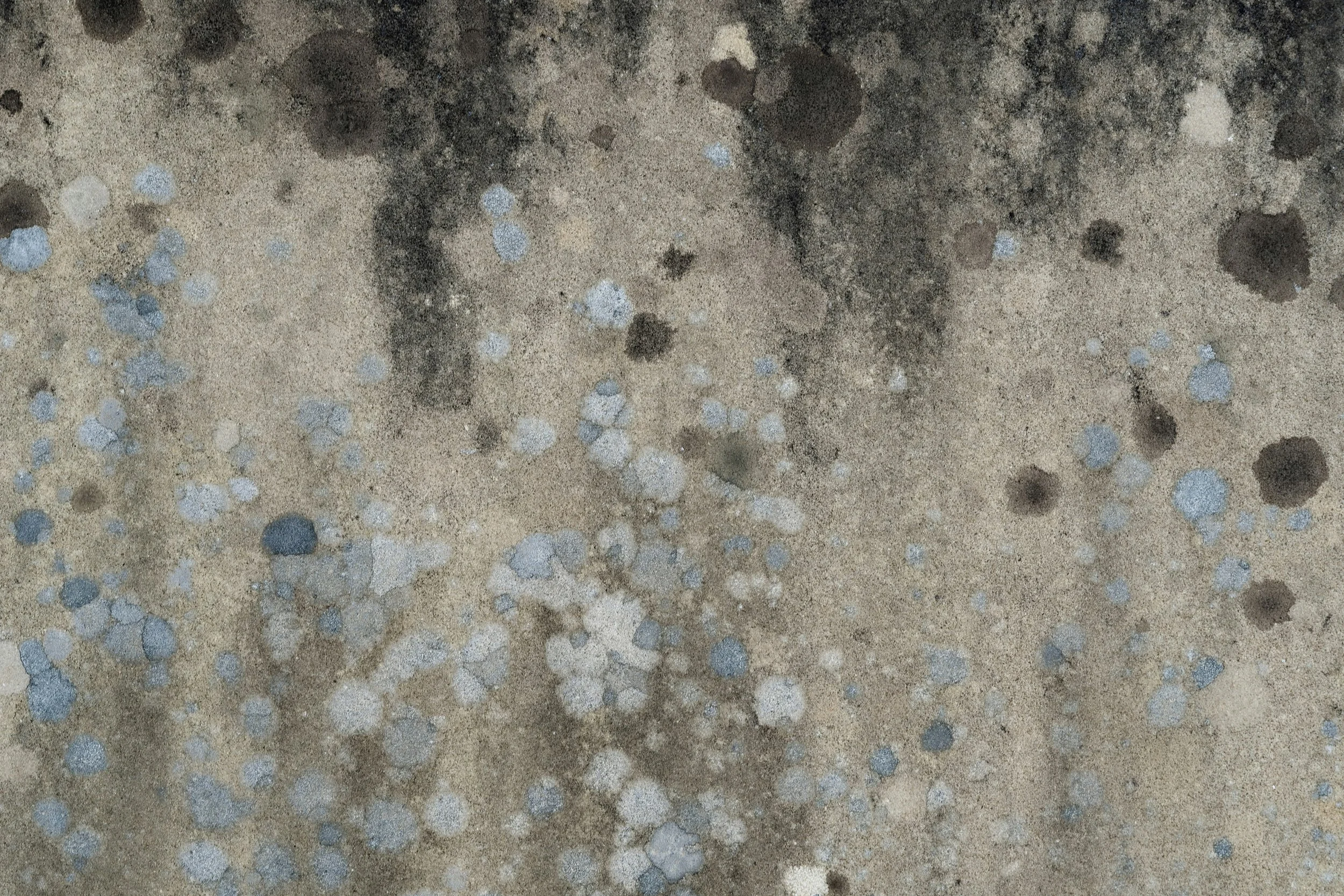
The promise of a new home often includes visions of a healthier, more energy-efficient living space. However, a subtle yet significant regulatory shift in U.S. building codes, particularly affecting hot-humid climate zones, may be inadvertently undermining this very promise. Before 2021, residential ventilation requirements were often loosely enforced; homes were typically required to have a ventilator, but the actual volume of air exchanged was not mandated to be measured. This frequently led to systems being ineffectively installed or even "sabotaged" by HVAC contractors, rendering them inoperable or improperly configured from the outset. Consequently, many homes, even in that period, did not achieve consistent fresh air exchange. Compounding this, most residential HVAC systems lacked any form of supplemental or dedicated dehumidification, a feature that building science experts have increasingly recognized as crucial, especially for high-performance homes in moisture-laden environments.
By Positive Energy staff
Introduction: The Air We Breathe – A Tale of Good Intentions and Unforeseen Consequences

The promise of a new home often includes visions of a healthier, more energy-efficient living space. However, a subtle yet significant regulatory shift in U.S. building codes, particularly affecting hot-humid climate zones, may be inadvertently undermining this very promise. Before 2021, residential ventilation requirements were often loosely enforced; homes were typically required to have a ventilator, but the actual volume of air exchanged was not mandated to be measured. This frequently led to systems being ineffectively installed or even "sabotaged" by HVAC contractors, rendering them inoperable or improperly configured from the outset.[1] Consequently, many homes, even in that period, did not achieve consistent fresh air exchange. Compounding this, most residential HVAC systems lacked any form of supplemental or dedicated dehumidification, a feature that building science experts have increasingly recognized as crucial, especially for high-performance homes in moisture-laden environments.[3]
The 2021 International Energy Conservation Code (IECC) sought to address ventilation deficiencies by introducing a pivotal change: a mandate for measured outside ventilation air, ostensibly in the name of improving indoor air quality (IAQ). Specifically, section R403.6.3 of the 2021 IECC added a new requirement for flow rate testing on mechanical ventilation systems, ensuring a prescribed amount of outdoor air is introduced into the home.[4] The intentions were sound; the 2021 IECC aimed to enhance both energy efficiency and IAQ, with proponents suggesting that homes built to this standard would be less prone to issues like mold and moisture.[5]
However, this well-intentioned advancement carried a critical oversight: the lack of a corresponding regulatory requirement for supplemental or dedicated dehumidification in these hot-humid climates. This omission has set the stage for an emerging crisis. By mandating a consistent intake of hot, humid outdoor air without ensuring a means to adequately remove the excess moisture, the code has inadvertently created conditions ripe for widespread problems. The historical ineffectiveness or "sabotage" of older ventilation systems, while detrimental in its own way, may have unintentionally masked the full impact of introducing large volumes of unconditioned humid air because, in many cases, these systems were not delivering significant ventilation. The 2021 code, by ensuring ventilation systems do operate as measured, has unmasked and amplified the underlying physics challenge of managing moisture in humid climates. The code addressed a symptom—inconsistent or non-existent airflow—but failed to holistically address the root challenge in humid regions: the quality and moisture content of that mandated incoming air.
The Science of Humidity – Why Standard AC Isn't a Silver Bullet in Hot-Humid Climates
Understanding the challenge requires a grasp of how buildings, particularly in hot-humid climates, manage heat and moisture. HVAC systems contend with two types of heat loads: sensible load (temperature) and latent load (moisture in the air). Standard residential air conditioners are primarily designed to tackle sensible loads. While they do remove some moisture as a byproduct of cooling, their capacity to do so is often limited and less efficient, especially during "shoulder seasons" (spring and fall) or under part-load conditions when outdoor temperatures are mild, but humidity remains high.[7] During these periods, the AC runs less frequently to meet the lower temperature demand, thereby performing less incidental dehumidification. Research indicates that optimizing dehumidification by central air-conditioning systems, particularly during part-load conditions, often requires modified control settings and specific airflow strategies, implying standard operation is insufficient.[7]

The drive towards greater energy efficiency, a cornerstone of modern building codes like the IECC 5, has led to tighter building envelopes and better insulation. These improvements reduce the sensible cooling load, meaning HVAC systems run less often. Paradoxically, this reduced runtime for cooling further diminishes the system's ability to remove moisture.[3] Building Science Corporation has explicitly noted that "most building efficiency improvements...are directed at lowering sensible gains while latent (moisture) gains remain mostly unchanged" and that "supplemental dehumidification was needed in high performance, low sensible heat gain homes in order to maintain indoor relative humidity below 60% year-round".[8]
Into this scenario, the 2021 IECC introduces the requirement for measured mechanical ventilation, forcing a specific volume (Cubic Feet per Minute, or CFM) of outdoor air into the home.4 In hot-humid climates, this outdoor air is inherently laden with moisture, directly increasing the latent load that the HVAC system must manage. Even before the 2021 mandate for measured ventilation, studies had identified that high-performance homes in hot-humid climates could experience elevated indoor humidity levels when ventilating to the rates prescribed by standards like ASHRAE 62.2.3 The 2021 IECC, by ensuring these ventilation rates are consistently met, likely exacerbates this pre-existing vulnerability. While ASHRAE 62.2 itself provides ventilation rate calculations and mentions potential exceptions for "extreme humidity" [10], the IECC's adoption of these rates without concurrently mandating a robust humidity control solution for these specific climates is the crux of the problem.
This reveals a significant regulatory blind spot. While the 2021 IECC stringently mandates and verifies ventilation airflow [4], it does not impose a corresponding requirement for supplemental or dedicated dehumidification systems in residential buildings in hot-humid climates.11 This is despite the scientifically established need for such systems to maintain healthy and durable indoor environments under these conditions.[3] This omission is particularly glaring when contrasted with specific commercial or specialized applications where dehumidification is considered essential and sometimes mandated, such as for controlled environment horticulture or swimming pool areas.[12] The regulatory framework appears to operate in silos: the energy code focuses on ventilation rates and energy metrics, but the crucial synergistic understanding of how ventilation interacts with humidity in specific climates—and the need for integrated solutions—seems to be lost. The responsibility for ensuring the entire system (house-as-a-system) functions correctly to manage both air exchange and moisture falls through the cracks of the primary energy code that drives widespread construction practices.
A Breeding Ground – How Unconditioned Ventilation Air Turns HVAC Systems into Mold Incubators

The consequences of introducing a continuous stream of hot, humid outdoor air into a home without adequate dehumidification are particularly acute within the HVAC system itself. As described by the user, this moisture-laden ventilation air is often "dumped directly into the return plenum of a standard HVAC system". Return plenums and associated ductwork, especially if constructed from porous materials like fiberboard-based duct board, become prime locations for condensation. When this warm, moist air encounters cooler surfaces within the HVAC system—such as the evaporator coil, or even the cooler conditioned air already in the return—its temperature can drop below the dew point, causing water vapor to condense into liquid.[14] Building science principles confirm that the highest relative humidity, and thus the first point of condensation, will occur next to the coldest surfaces.[15] The HVAC evaporator coil and the ductwork immediately surrounding it are classic examples of such surfaces.
These damp conditions create an ideal breeding ground for mold. Mold requires three primary ingredients to thrive: moisture, a food source (which includes organic materials like the paper facing on duct board, dust, and cellulose particles commonly found in HVAC systems), and suitable temperatures, which are typically the same temperatures humans find comfortable.[15] Introducing a constant supply of humid ventilation air directly threatens the ability to keep susceptible building materials below the moisture content thresholds that inhibit mold growth (e.g., below 20% moisture content for wood and wood-based products).[15] Faulty HVAC installations have long been associated with moisture and mold growth due to issues like condensation from improperly insulated ductwork.[1] The current code scenario effectively institutionalizes a system flaw that mimics such faulty installations by design. While HVAC systems themselves, with their metallic surfaces, are not typically initial generators of mold, they can readily support and distribute mold if organic debris accumulates and moisture is persistently present [16]—conditions which the new ventilation mandate can unfortunately create.
The choice of duct material, particularly porous duct board, exacerbates this vulnerability. Duct board can absorb and retain moisture, providing a sustained damp environment conducive to mold proliferation. Its fibrous nature can also trap dust and organic particulates, which serve as a nutrient source for mold. While specific research on "duct board mold" resulting directly from the 2021 code is nascent, the principles of building science and observations of mold growth in humid conditions strongly support this concern.[14] A material choice that might have been marginally acceptable before 2021 becomes a significant design flaw when combined with the new ventilation requirements that deliver a consistent moisture load directly into these materials. This points to a lack of holistic, systems-thinking in material specification guidelines relative to evolving code mandates. The code-mandated measured ventilation, intended to ensure fresh air distribution, ironically transforms the HVAC system into a highly efficient moisture distribution system when dehumidification is absent, delivering humidity precisely to the components most susceptible to mold growth.

Table 1: Common Mold Hotspots in Newer Homes (Hot-Humid Climates) due to Code Imbalance
This table synthesizes information from the user query and building science principles discussed in the cited sources to highlight areas particularly at risk.
The Fallout – IAQ in Decline and Reputations Tarnished
The proliferation of mold within the HVAC system inevitably leads to a significant decline in indoor air quality, directly contradicting the primary intention behind the 2021 IECC's enhanced ventilation requirements. As mold colonies mature, they release spores, mycotoxins (toxic compounds produced by some molds), and microbial volatile organic compounds (MVOCs) into the airstream.[18] The HVAC system, designed to distribute conditioned air, then becomes an efficient distributor of these harmful bioaerosols throughout the entire home.[18] Even if an HVAC system is designed to filter incoming outdoor air, if the system components themselves become contaminated, it transforms from a solution for IAQ into a source of indoor pollution.[20] This creates a scenario where the air intended to be "fresh" becomes foul and potentially hazardous.
This situation is compounded by the codified trend towards increased air tightness in modern homes, a crucial strategy for energy efficiency heavily promoted by codes like the IECC.[4] However, we need to caveat that we absolutely are in favor of air tight homes. While air tightness is beneficial for reducing energy consumption, it also means that homes don’t dry out like they used to when they were built to be leaky, making effective mechanical ventilation and, critically, humidity control even more important.[19] Tighter envelopes reduce the outdated poor strategy of uncontrolled exchange of indoor and outdoor air, meaning that internally generated pollutants or moisture can become trapped and concentrated if not actively managed. The American Society of Civil Engineers has noted that "energy-efficient buildings are so airtight that they can no longer breathe," and that "the main culprit to blame for mold problems in energy-efficient buildings...is insufficient ventilation".[21] The current predicament is not insufficient ventilation volume, but rather ventilation that is improperly conditioned for the climate.
A damaging consequence of this emerging problem is the potential for the air tightness standards themselves to be unfairly blamed for the resulting mold and IAQ issues. When homeowners in new, tight, and purportedly "efficient" homes experience musty odors, visible mold, and health complaints, they may erroneously conclude that air tightness is the problem. This can lead to a terrible reputation for even the basic air tightness stringencies of code minimum homes, fostering resistance to these beneficial energy-saving measures in the future. This misattribution occurs because the root cause—the imbalance between mandated ventilation and absent dehumidification—is less obvious than the visible symptom of mold in a tightly sealed home. Thus, compliance with one aspect of the energy code (measured ventilation for IAQ) can inadvertently undermine the goals and reputation of other vital aspects (energy efficiency through air tightness).
The focus within the 2021 IECC on quantifying ventilation (i.e., ensuring a certain CFM of air is delivered and tested for [4]) without equally robust requirements for qualifying that air (i.e., ensuring it is appropriately dry for hot-humid climates) represents a fundamental oversight in the regulatory approach to IAQ. The code prioritizes the delivery mechanism over the quality of the delivered product, which, in these specific climatic conditions, can lead to outcomes directly opposed to the stated goal of healthier indoor environments.
The Broad Ripple Effect – Public Health, Economic, and Environmental Tolls
The regulatory omission of mandatory dehumidification in conjunction with measured ventilation in hot-humid climates is not merely a technical misstep; it is sowing the seeds for significant public health consequences, substantial economic losses, and avoidable environmental damage.
Public Health Crisis in the Making:
Exposure to damp and moldy environments is unequivocally linked to a range of adverse health effects. Authoritative bodies like the U.S. Centers for Disease Control and Prevention (CDC) warn that such exposure can cause stuffy noses, sore throats, coughing or wheezing, burning eyes, and skin rashes. For individuals with asthma or mold allergies, reactions can be severe, and those with compromised immune systems or chronic lung disease may develop serious lung infections.[22] The National Institute for Occupational Safety and Health (NIOSH), part of the CDC, further associates damp buildings with respiratory symptoms, infections, the development or worsening of asthma, hypersensitivity pneumonitis, allergic rhinitis, and eczema.[23] An ASHRAE position document on limiting indoor mold underscores that "persistent dampness in buildings contributes to negative health outcomes" and that "public health authorities have documented consistent associations between damp buildings and increased risks of adverse health effects".[24] The document explicitly recommends humidity control to prevent such health-relevant dampness. This building code oversight, therefore, has direct negative public health externalities that extend beyond individual discomfort, potentially burdening healthcare systems and reducing productivity, with a disproportionate impact on vulnerable populations such as children, the elderly, and those with pre-existing respiratory conditions.
Economic Burdens on Families and Businesses:
The financial toll of addressing mold infestations is considerable. Homeowners face significant costs for mold remediation, repair of damaged building components like drywall and insulation, and replacement of contaminated HVAC ductwork. Professional mold remediation can average $2,365 to $3,500, with costs easily escalating to $9,000 or more depending on the extent and location of the infestation.[25] Remediation of mold within HVAC systems can range from $3,000 to $10,000, and whole-house remediation, which might become necessary in severe cases, can cost between $10,000 and $30,000.[25] Beyond direct remediation, there's the cost of repairing or replacing materials damaged by moisture and mold; for instance, extensive drywall replacement can run into many thousands of dollars.[26] These unexpected expenses represent a severe financial blow to families. For builders, this situation can lead to increased warranty claims, costly litigation, and significant reputational damage. The economic burden extends further, potentially affecting insurers through increased claims (if mold damage is covered) and even local governments, as widespread mold issues could lead to devalued properties and impact the tax base.

Table 2: Estimated Economic Impact of Mold Remediation and Repair per Household (Hot-Humid Climate, Post-2021 Construction)
This table illustrates potential cumulative costs based on data from cited sources and general construction cost knowledge. Actual costs will vary significantly based on the severity and specifics of each case.
The Carbon Footprint of Failure: Environmental Repercussions:
The cycle of damage and repair also carries a significant, often overlooked, environmental cost. The premature replacement of mold-damaged building materials—such as drywall, insulation, and ductwork—necessitates the manufacturing of new materials and the disposal of the old, both of which have associated embodied carbon emissions. Embodied energy, or embodied carbon, refers to the total energy consumed (and greenhouse gases emitted) during a material's lifecycle, from raw material extraction, manufacturing, and transportation to installation.[27] Studies indicate that it can take many years, even decades, for an energy-efficient new building to offset the negative climate change impacts stemming from the embodied energy of its initial construction.[27] When building components fail prematurely due to issues like mold, this payback period is effectively nullified for those components, and new embodied carbon is incurred with their replacement. For example, common materials like plasterboard have an embodied energy of around 15.1 MJ/kg, glasswool insulation around 57.5 MJ/kg, and various steel components used in HVAC or structures range from 38.8 to 79.6 MJ/kg.28 Repeated replacements amplify this environmental burden. This hidden environmental cost directly conflicts with the overarching energy conservation and carbon reduction goals of the IECC. The code, in its current iteration for these climates, may inadvertently reduce operational carbon at the expense of increased embodied carbon due to recurrent, avoidable repairs.
Rectifying the Oversight – A Call for Healthier, More Resilient, and Genuinely Efficient Homes
The issues stemming from the 2021 IECC's ventilation mandate in hot-humid climates are not an indictment of ventilation itself, nor of the pursuit of air tightness. Both are crucial components of modern, high-performance buildings. Instead, this situation highlights the urgent need for a more holistic, systems-based approach within our building codes—one that recognizes the intricate interplay between ventilation, air tightness, and moisture management, especially in challenging climates.
The most direct path to rectifying this oversight is through code reform. There is a compelling case for integrating mandatory supplemental or dedicated dehumidification requirements into the IECC and adopted state-level energy codes for all new residential construction in hot-humid climate zones (typically ASHRAE Climate Zones 1A, 2A, 3A, and potentially moisture-prone areas of 4A [11]). Building science organizations have already developed technical guidance and capacity recommendations for such systems, demonstrating that viable solutions exist and are well understood.[3] Mandating appropriate dehumidification is not an "additional burden" but rather a crucial correction to ensure that the primary IAQ and energy performance goals of the code are actually met, preventing the code from inadvertently causing harm. It is about making the entire building system work as intended in these specific, challenging environments.
Concerns about the upfront cost of installing dehumidifiers must be weighed against the far greater costs of inaction. While a supplemental dehumidification system might add $400 to $2,000 to the initial construction cost 8, this pales in comparison to the thousands, or even tens of thousands, of dollars required for mold remediation, structural repairs, and health-related expenses.[25] A life-cycle cost (LCC) analysis, which considers all costs and benefits over the lifespan of the building or equipment, would almost certainly demonstrate that the initial investment in dehumidification is highly cost-effective when the avoided downstream costs are factored in.[29] The Department of Energy already has established methodologies for evaluating the cost-effectiveness of code changes, providing a framework for assessing such a requirement.[30]
The benefits of a corrected approach are manifold:
Genuinely Protected IAQ: Homes will have consistently managed humidity levels, drastically reducing the risk of mold growth and the circulation of bioaerosols.
Enhanced Occupant Health and Comfort: Reduced exposure to mold and dampness will lead to fewer respiratory problems and allergic reactions, and greater thermal comfort.
Preservation of Building Durability and Value: Preventing moisture damage will protect the structural integrity of homes and maintain their market value.
Reduced Economic Losses: Families will be spared the financial burden of remediation and health costs, and builders will face fewer warranty issues and reputational risks.
Lowered Life-Cycle Carbon Emissions: Avoiding the premature replacement of building materials will reduce the overall embodied carbon footprint of these homes.
Restored Faith in High-Performance Building Standards: Demonstrating that air tightness and ventilation can be successfully implemented without adverse side effects will bolster confidence in modern building science.
The "vapor management declaration" discussed in proposed changes to the IECC, while a positive step toward documenting passive moisture control strategies like vapor retarders [31], is insufficient on its own. Passive measures primarily address moisture movement via diffusion and incidental air leakage; they cannot adequately manage the substantial bulk moisture loads actively introduced by mechanical ventilation systems in humid climates. A comprehensive solution requires both robust passive design and appropriate active mechanical moisture control.
Furthermore, addressing this regulatory gap could spur beneficial industry innovation. A clear code requirement for effective, integrated dehumidification and ventilation solutions would create market demand, encouraging manufacturers to develop more sophisticated systems and prompting better training for HVAC designers and installers.[2] This aligns with the IECC's stated intent to "provide flexibility to permit the use of innovative approaches and techniques".[32]
Conclusion and Call to Action:
The 2021 IECC's mandate for measured ventilation air was a step towards improving indoor air quality in new homes. However, its failure to concurrently require supplemental/dedicated dehumidification in hot-humid U.S. climate zones represents a critical oversight with escalating negative consequences. This regulatory gap is leading to widespread moisture issues, fostering mold growth within HVAC systems and living spaces, degrading IAQ, tarnishing the reputation of air-tight construction, and imposing significant public health burdens, economic losses, and environmental impacts from avoidable repairs and material replacements.
It is imperative that stakeholders—including building code officials at national and state levels, policymakers, the building industry, HVAC designers and contractors, and public health advocates—recognize the severity of this unintended consequence and act decisively. The path forward involves amending building energy codes to require effective mechanical dehumidification strategies as an integral part of the ventilation system in new homes constructed in hot-humid climates. Such a change is not merely about adding another piece of equipment; it is about ensuring that our pursuit of energy efficiency and fresh air does not inadvertently create unhealthy and unsustainable living environments. By adopting a truly holistic, systems-based approach to building design and regulation, we can ensure that new homes are genuinely healthy, comfortable, durable, and efficient for decades to come.
Works cited
The Top 10 Construction Defects Due to A Faulty HVAC Installation - Naumann Law Firm, accessed May 9, 2025, https://naumannlegal.com/2024/03/24/the-top-10-construction-defects-due-to-faulty-hvac-installation/
HVAC Contractors' Impact on Home Ventilation Systems - CCR-Mag.com, accessed May 9, 2025, https://ccr-mag.com/hvac-contractors-impact-on-home-ventilation-systems/
Evaluation of the Performance of Houses With and Without Supplemental Dehumidification in a Hot-Humid Climate - Department of Energy, accessed May 9, 2025, https://www.energy.gov/eere/buildings/articles/building-america-technology-solutions-new-and-existing-homes-evaluation-0
2021 IECC Code Adoption Kit | NAHB, accessed May 9, 2025, https://www.nahb.org/advocacy/top-priorities/building-codes/code-adoption-kits/2021-international-energy-conservation-code
2021 IECC National Model Energy Code (Base Codes) - New ..., accessed May 9, 2025, https://newbuildings.org/code_policy/2021-iecc-national-model-energy-code-base-codes/
Transcript – Energy Code Webinar Series: Introduction to the 2021 IECC - HUD Exchange, accessed May 9, 2025, https://files.hudexchange.info/resources/documents/Energy-Code-Webinar-Series-Introduction-to-the-2021-IECC-Transcript.pdf
Advanced HVAC Humidity Control for Hot-Humid Climates ... - OSTI, accessed May 9, 2025, https://www.osti.gov/biblio/2339946
BA-1310: Supplemental Dehumidification in Warm-Humid Climates | buildingscience.com, accessed May 9, 2025, https://buildingscience.com/documents/bareports/ba-1310-supplemental-dehumidification-warm-humid-climates/view
Preliminary Energy Savings Analysis: 2021 IECC for Residential Buildings, accessed May 9, 2025, https://energycodes.gov/sites/default/files/2021-07/2021_IECC_PreliminaryDetermination_TSD.pdf
ASHRAE 62.2 - Air King Indoor Air Quality Standards, accessed May 9, 2025, https://www.airkinglimited.com/ashrae-62-2/
files.hudexchange.info, accessed May 9, 2025, https://files.hudexchange.info/resources/documents/Energy-Code-Webinar-Series-Introduction-to-the-2021-IECC-Slides.pdf
California Title 24 FAQ on Dehumidification - Quest Climate, accessed May 9, 2025, https://www.questclimate.com/california-title-24-faqs/
CHAPTER 4 VENTILATION - 2021 INTERNATIONAL MECHANICAL CODE (IMC), accessed May 9, 2025, https://codes.iccsafe.org/content/IMC2021P1/chapter-4-ventilation
Practical Ventilation for a Warm, Humid Climate | JLC Online, accessed May 9, 2025, https://www.jlconline.com/how-to/hvac/practical-ventilation-for-a-warm-humid-climate_o
Building Science and Mold - International Association of Certified Indoor Air Consultants - IAC2, accessed May 9, 2025, https://iac2.org/building-science-and-mold/
ACCA Mold Brochure (web) - Superior Air, accessed May 9, 2025, https://www.superior-air.com/wp-content/uploads/2018/03/good_vs_bad_mold.pdf
Indoor Air Design Parameters of Air Conditioners for Mold-Prevention and Antibacterial in Island Residential Buildings - PMC, accessed May 9, 2025, https://pmc.ncbi.nlm.nih.gov/articles/PMC7579053/
How Mold Impacts Indoor Air Quality in Office Buildings - AMI Environmental, accessed May 9, 2025, https://amienvironmental.com/how-mold-impacts-indoor-air-quality-in-office-buildings/
The Down and Dirty about HVAC Systems in Apartment Buildings: What You Should Know About the Hazards, accessed May 9, 2025, https://rtkenvironmental.com/dust/the-down-and-dirty-about-hvac-systems-in-apartment-buildings-what-you-should-know-about-the-hazards/
A critical review of heating, ventilation, and air conditioning (HVAC) systems within the context of a global SARS-CoV-2 epidemic - PubMed Central, accessed May 9, 2025, https://pmc.ncbi.nlm.nih.gov/articles/PMC8450051/
An unintended consequence of energy-efficient structures: Mold ..., accessed May 9, 2025, https://www.asce.org/publications-and-news/civil-engineering-source/article/2025/02/11/an-unintended-consequence-of-energy-efficient-structures-mold
Mold - CDC, accessed May 9, 2025, https://www.cdc.gov/mold-health/about/index.html
Health Problems | Mold - CDC, accessed May 9, 2025, https://www.cdc.gov/niosh/mold/health-problems/index.html
ASHRAE Position Document on Limiting Indoor Mold and Dampness in Buildings, accessed May 9, 2025, https://www.ashrae.org/file%20library/about/position%20documents/pd_limiting-indoor-mold-and-dampness-in-buildings-2021.pdf
How Much Does Mold Remediation Cost? (2025 Guide) - This Old House, accessed May 9, 2025, https://www.thisoldhouse.com/foundations/reviews/mold-remediation-cost
How Much Does Mold Remediation Cost? [2025 Data] | Angi, accessed May 9, 2025, https://www.angi.com/articles/how-much-does-mold-remediation-service-cost.htm
Embodied Energy in the Home - Rise, accessed May 9, 2025, https://www.buildwithrise.com/stories/embodied-energy-in-the-home
Embodied energy | YourHome, accessed May 9, 2025, https://www.yourhome.gov.au/materials/embodied-energy
Are Energy Codes Exacerbating the Housing Affordability Crisis? - IMT, accessed May 9, 2025, https://imt.org/news/are-energy-codes-exacerbating-the-housing-affordability-crisis/
National Cost- Effectiveness of the Residential Provisions of the 2024 IECC - | Building Energy Codes Program, accessed May 9, 2025, https://energycodes.gov/sites/default/files/2025-01/2024_IECC_CostEffectiveness_Residential_Final.pdf
IECC - Residential - International Code Council, accessed May 9, 2025, https://www.iccsafe.org/wp-content/uploads/IECC-Residential-min-2019-upload-upload.pdf
IECC - Commercial - International Code Council, accessed May 9, 2025, https://www.iccsafe.org/wp-content/uploads/IECC-Commercial-min-2019-upload-upload.pdf