
The Ultimate Short-Term Rental Amenity: Breathing Easy on Your Next Getaway
Traveling is about stepping away from the daily grind, exploring new places, and having a safe haven to rest and recharge. Whether you’re a short-term rental host opening your doors, or a guest looking for that perfect home away from home, we share a common goal: creating a high quality, amenity rich, indoor environment.
But there is one invisible amenity that often gets overlooked in the hospitality world, even though it’s the most important material we interact with. We take it into our bodies 12 to 16 times a minute.
I’m talking about the indoor air (1).
As a society, we’re starting to wake up to the importance of Indoor Air Quality (IAQ) and the "indoor microbiome"—the invisible ecosystem of bacteria, fungal spores, and biology we share our spaces with. A typical home is filled with thousands of pounds of air that we live immersed in. The air we breathe indoors directly impacts our sleep, our cognitive function, and our long-term health.
This short blog is a high-level introduction to the basics of healthy indoor spaces, and is also a list of the easy upgrades that we commonly get wrong as a society.
In the big picture, this is a synergistic opportunity for us to support each other for mutual benefit.
Guests - If you aren't experiencing these upgrades on your travels, you can respectfully ask for them - or feel free to just forward this to your host!
Hosts - By focusing on these thoughtful details, you can differentiate your space, command a higher nightly rate, and help educate our community on what a truly healthy home looks and feels like.
Here are 8 straightforward ways we can upgrade our indoor environments for better health:
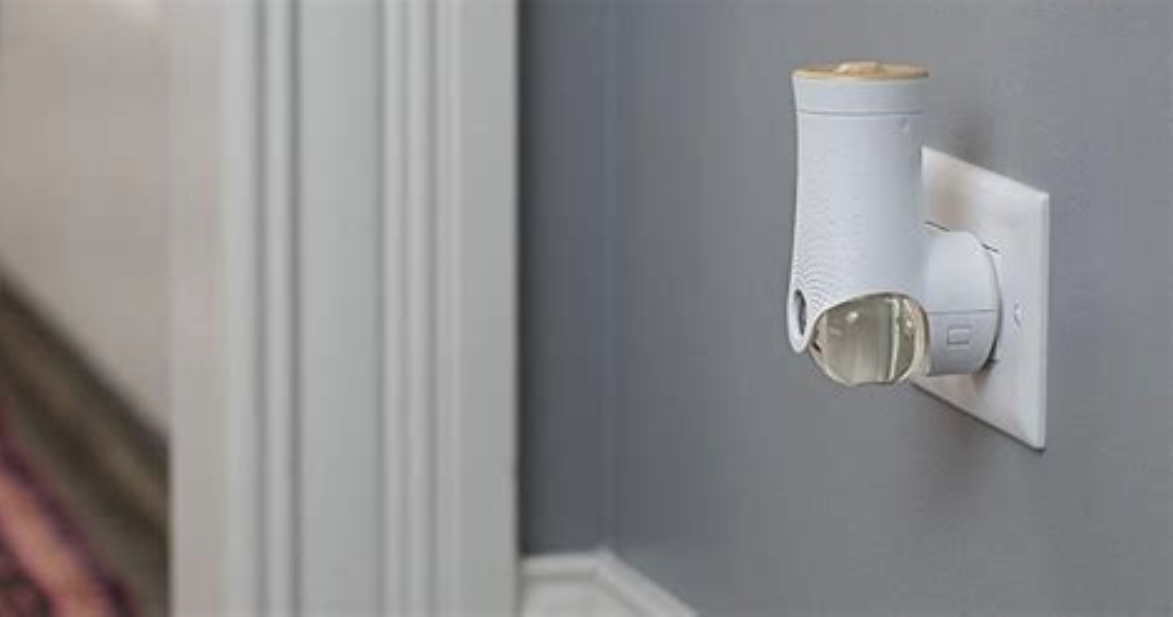
Plug in type Air “Fresheners” are commonly used. In reality, though the air will indeed smell different, adding chemical molecules to the air does not improve the indoor air quality from a health or wellbeing perspective.
Credit: Bustle.com
1. Say Goodbye to Chemical "Fresheners"
Arriving at a rental and immediately unplugging the synthetic plug-in air freshener has become a bit of a travel ritual for many of us. While they might smell like a "spring breeze,” or “morning dew”, these products actually emit a slew of volatile organic compounds (VOCs), many of which are known endocrine-disrupting chemicals and can morph into carcinogens. Let’s ditch the synthetic fragrances. Today’s standard for clean is not a home that smells like chemicals; it’s one that actually has fresh, clean, healthy air inside.
2. Keep it Dry and Fresh
If you look at common complaints for hotels and rentals, mustiness and lingering harsh cleaning chemicals top the list. Mustiness is a moisture problem, which leads to a compromised indoor microbiome (mold and mildew). The risk of unhealthy mold exposures can’t be overstated. Take this seriously by adding either stand-alone dehumidifiers, or better yet, use a whole-house ducted ventilating dehumidifier. Healthy indoor spaces need effective humidity control, natural or mild cleaning products, and a way to bring filtered, fresh outdoor air inside continuously.
3. Bring in a Portable Air Cleaner
This is one of the simplest, most affordable, and effective ways to improve health indoors. Capturing unhealthy chemicals and microbes in a filter before they can enter our lungs and bloodstream is a smart move. Adding a quiet, high-quality HEPA air purifier to the bedroom is a massive upgrade that shows you really care about your guests' rest.
Avoid any products that mention ozone, ions, ionizers (positive, negative, bipolar), photocatalytic oxidation (PCO), or UV. All of these represent “indoor air chemistry experiments” - where we are the guinea pigs (2). While harmful emissions have been measured, none of these have ever been shown to have net positive effects on indoor air quality by IAQ researchers - only by the manufacturers themselves. Think of it this way, we can filter out pollutants from indoor air, but there is nothing we can add to air that makes it healthier - this includes ozone, ions and UV, as well as chemical scents.
4. Show Off Your Air Quality
Imagine seeing a live snapshot of a home's air quality right on the listing! Adding a residential-grade IAQ sensor—like an Airthings View Plus or an AirGradient One —is a brilliant move. It allows guests to confidently book healthy spaces, while allowing owners to understand the reality of IAQ for their listing. Don’t wonder whether your guests are breathing unhealthy air. Prove to them, and yourself, that the space is healthy, low in CO2, and free of harmful chemicals and particulates.
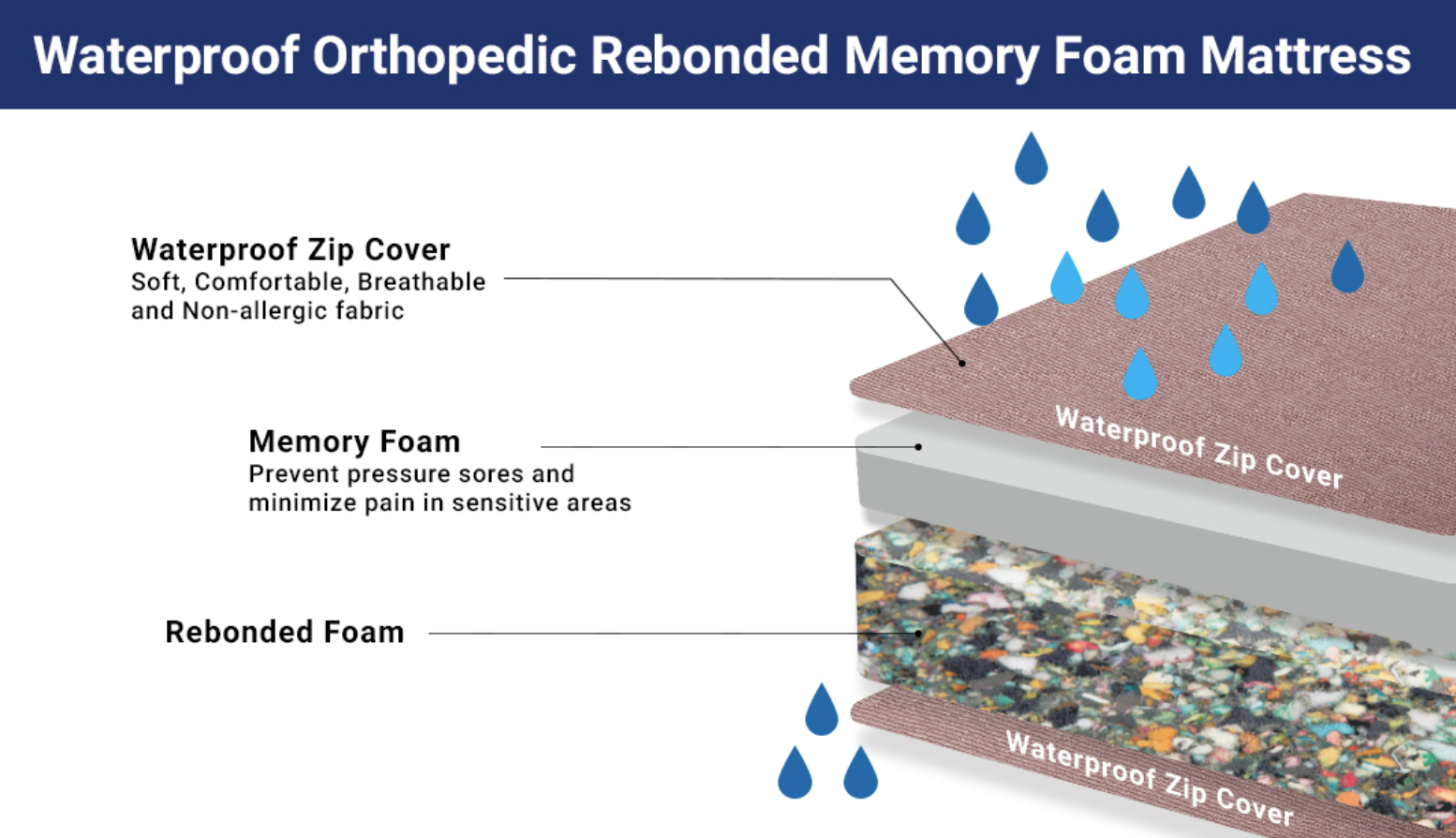
Modern memory foam mattresses let you sleep on a bed of unstable petrochemical foams that emit VOCs and sVOCs molecules that you get to be immersed in while you sleep - and all other times.
Credit: asleep.co.in
5. Opt for Natural Fibers Over Plastics
Nobody wants to sleep on a lump of petrochemical foam. Yet, many popular conventional mattresses, pillows, and blankets are just that —made of polyurethane and treated with diisocyanates and other chemicals that can off-gas into the bedroom air. Memory foam is about manufacturer profit; it is not the best latest sleep technology by any means. Instead, for health and comfort, we want "dumb”, OG fibers that come from plants. Investing in organic cotton, wool, coconut coir, hemp and flax ensures guests aren't breathing in chemical pollutants while they're trying to recharge.
6. Rethink the Paint
We all know latex gloves are plastic. Conventional latex paint essentially wraps the interior surfaces of a room in a thin layer of plastic, which off-gasses and traps moisture. Instead of surrounding ourselves with petrochemical plastic, switch to mineral-based paints and natural plasters. These options are breathable, zero-VOC, and inherently hostile to mold without using harsh biocides. Plus, they give walls a gorgeous look and natural depth.
7. Skip the Wall-to-Wall Carpet
Wall-to-wall carpeting made of petrochemicals like ethylene and propylene, and carpet pads made of polyurethane “rebond” are often active emitters of chemical pollutants like toluene, styrene, and phthalates. Floor covering does not have to emit unhealthy molecules and gases into the air you breathe. The healthiest floors are hard, cleanable surfaces like wood or tile, accented with washable, natural-fiber area rugs, like jute, sisal and wool, to keep things cushy and cozy.
8. Vent the Kitchen
Cooking is love and an important part of being in a home. It’s also a powerful source of indoor pollutants like VOCs and fine particulates, and, with gas stoves, nitrogen oxides. If there’s a stove or oven, it needs a real exhaust hood that vents outside. No ifs, ands, buts or exceptions. This is a foundational piece of building science and vital for keeping the indoor air healthy.
Moving Forward Together
Healthy indoor air for breathing is the ultimate amenity. By recognizing this reality, hosts can offer a truly restorative experience, and guests can enjoy a stay that actually supports their health and well-being.
Shifting our society toward truly healthy indoor environments is a journey, not an overnight fix. It starts with awareness—learning what actually makes a space healthy—and then moves into action, bringing those spaces to life through mindful, informed choices.
Our eyes and noses think they know best, but nearly all indoor air pollutants evade our native senses. Navigating invisible risks can be challenging, but armed with knowledge and understanding we can rise to the challenge.
Here’s to healthier indoor air on our next getaway!
Footnotes
Indoor air breathed at home is our generation's dominant pollution exposure. We breathe approximately 30 lbs of air each day, more than 10x what we eat. Are you paying attention to your diet but not your IAQ?
IAQ researcher Dr. Marwa Zaatari faced a $180 million defamation lawsuit from manufacturer GPS after publicly exposing the flawed, lab-based efficacy claims of their needlepoint bipolar air purifiers. The scientific community widely condemned the action as an intimidatory SLAPP suit, raising over $100,000 for her legal defense. For more details, see Allison’s blog at Energy Vanguard.
