

A Building Science Dive into the Hill Country Wine Cave
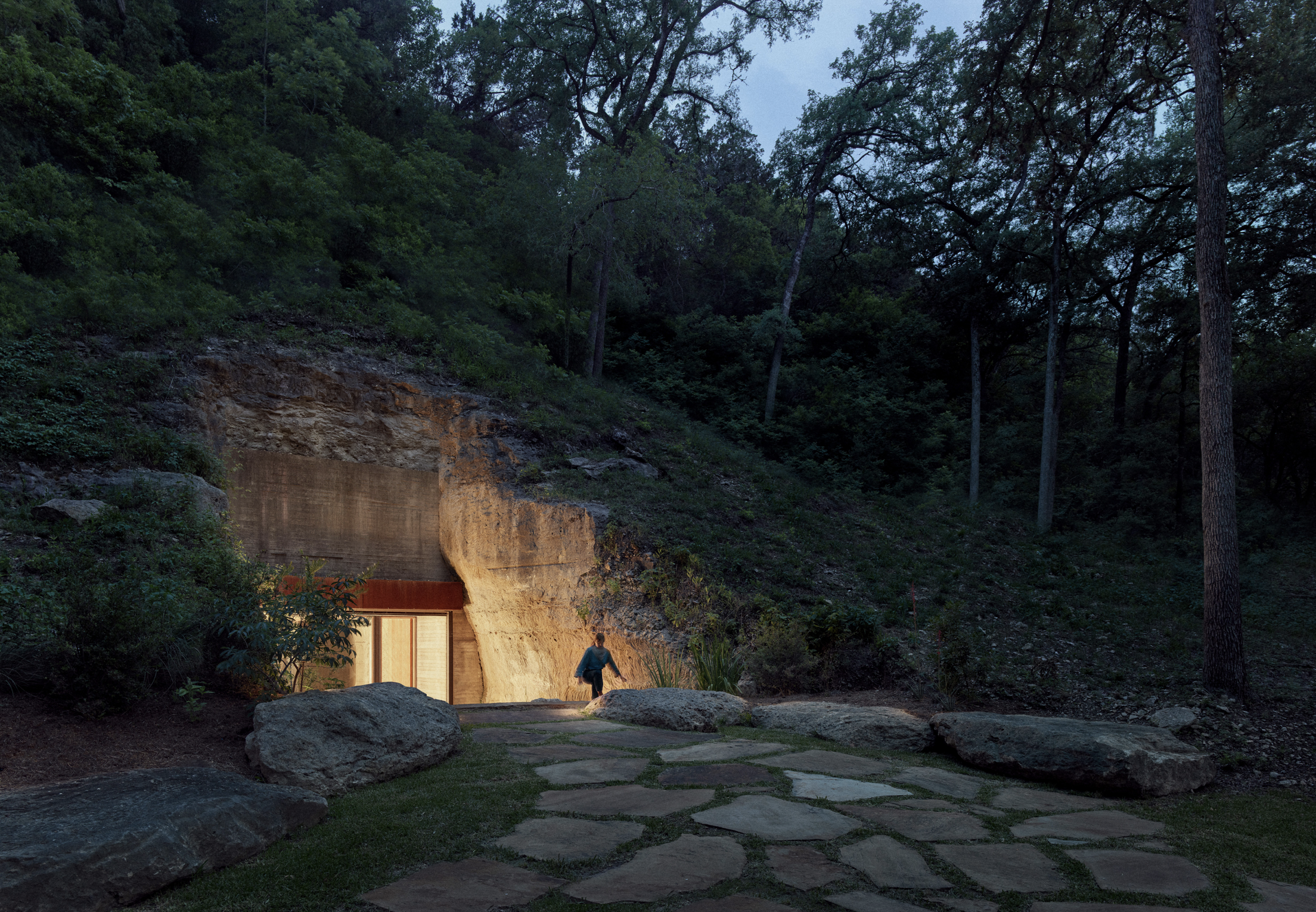
The Hill Country Wine Cave, a distinctive architectural endeavor by Clayton Korte Architects, is intricately integrated into the natural landscape of the Texas Hill Country. This private subterranean structure is carved into the north face of a solid limestone hillside, designed to nearly vanish into its surroundings. Completed in 2020, the 1,405 square meter facility encompasses a tasting lounge, a bar, a restroom, and a dedicated wine cellar capable of storing approximately 4,000 bottles.
by Positive Energy staff
Clayton Korte's Vision and the Subterranean Setting

The Hill Country Wine Cave, a distinctive architectural endeavor by Clayton Korte Architects, is intricately integrated into the natural landscape of the Texas Hill Country. This private subterranean structure is carved into the north face of a solid limestone hillside, designed to nearly vanish into its surroundings.[1] Completed in 2020, the 1,405 square meter facility encompasses a tasting lounge, a bar, a restroom, and a dedicated wine cellar capable of storing approximately 4,000 bottles.[3]
The project originated from an existing excavated tunnel, measuring 18 feet tall and 70 feet deep.[4] Clayton Korte's design philosophy for the cave emphasized a "minimal intervention into the landscape".[2] The exterior entry court is discreetly camouflaged by heavy limestone boulders, collected directly from the excavation, and further obscured by lush native vegetation.[2] The mouth of the cave is capped with a board-formed concrete portal, specifically designed to weather naturally over time, allowing native moss and ivy to cling to its surface and further blend the structure with the irregular limestone hillside.[3]
Inside, the interior spaces present a sophisticated interplay of materials. White oak, both raw and ebonized, along with vertical-grain Douglas fir, panels the walls and dropped ceilings, providing a warm and tactile contrast. This refined interior is strategically juxtaposed with the exposed, rugged shotcrete-lined walls of the original cave, which are deliberately left visible in certain areas, including the bathroom.[4] Custom insulated and thermally broken steel and wood windows are integral to the design, offering visual connections to the exterior while also serving to separate the internal zones, such as the lounge from the chilled cellar.[5]
The Imperative of Building Science in Unique Environments
Building science is an interdisciplinary field that examines the physical behavior of buildings and their dynamic interaction with both the indoor and outdoor environments. Its application is fundamental to ensuring the long-term durability, energy efficiency, and occupant health of any structure. In the context of subterranean environments, this scientific discipline becomes particularly critical.
While subterranean structures offer inherent advantages, such as significant thermal stability due to the earth's buffering capacity, they also present a distinct set of complex challenges. The Hill Country Wine Cave exemplifies this dual nature. The earth's large heat capacity allows it to absorb and store thermal energy, contributing to naturally cooler subterranean temperatures that benefit wine preservation.[6] However, the existing excavated cave was explicitly noted as "neither water-tight nor necessarily designed for this intent".[8] This condition implies that while the passive thermal benefits are substantial, they are not sufficient on their own to create a precisely controlled, durable environment suitable for sensitive contents like wine. Significant intervention is required to manage potential moisture intrusion and to achieve the specific, consistent climate control necessary for wine aging. This interplay between leveraging natural advantages and addressing inherent environmental challenges underscores the indispensable role of a rigorous building science approach in such projects.
Positive Energy's Role: Elevating Performance Through MEP Engineering
Positive Energy served as the Mechanical Engineer for the Hill Country Wine Cave project.[3] Positive Energy is an MEP engineering firm specializing in high-end residential architecture, driven by a commitment to leveraging building science and human-centered design to engineer healthy, comfortable, and resilient spaces.[17] Our approach is characterized by a deep level of design resolution and a focus on solving complicated building science challenges.[18] One of the firm principasl and co-founder, Kristof Irwin, has a background combining 12 years as a custom builder with 19 years as a building science consultant and MEP engineer, preceded by 14 years as an engineer, research scientist, and high-energy physicist.[19] This diverse and interdisciplinary expertise positioned Positive Energy as critical integrators in the design process with a diverse perspective. Our involvement extended beyond merely selecting mechanical equipment; it encompassed a deep understanding of the underlying physics of heat, air, and moisture flow within and around the structure. This comprehensive understanding ensures that the project's ambitious performance goals are met within the challenging subterranean context, effectively bridging the architectural vision with the intricacies of building physics.


Thermal Performance and Moisture Control
Leveraging Earth's Natural Stability
The earth's subsurface offers a remarkable thermal buffer, maintaining relatively constant temperatures year-round at depths typically ranging from 20 to 30 feet below grade.[13] This inherent thermal stability significantly reduces the energy required to maintain optimal indoor conditions compared to structures exposed directly to fluctuating ambient temperatures above ground.[13] The Hill Country Wine Cave directly benefits from these "naturally colder subterranean temperatures," which act as a primary passive thermal control mechanism for the wine cellar.[4]
Research from institutions such as Lawrence Berkeley National Laboratory (LBNL) and the National Renewable Energy Laboratory (NREL) consistently highlights the ground's substantial heat capacity, enabling it to absorb and store thermal energy—whether heat or cold—for extended periods.[11] This fundamental principle is actively leveraged in advanced technologies like Underground Thermal Energy Storage (UTES) and Aquifer Thermal Energy Storage (ATES), which aim to reduce cooling loads and enhance grid resilience by utilizing the earth as a thermal battery.[12]
While the subterranean environment provides a substantial passive thermal advantage, achieving the precise and stable conditions required for wine preservation (typically 55-60°F or 12.7-15.5°C) necessitates active, high-efficiency mechanical systems to refine and consistently maintain the indoor climate.[6] This demonstrates that the natural conditions serve as an excellent baseline, significantly reducing the overall energy burden, but they are not sufficient in isolation for sensitive applications like wine storage. The design strategy aimed to "lower the temperature delta between the building envelope and cave" [8], a strategic passive design move that effectively reduces the operational load on the active mechanical systems, thereby enhancing their energy efficiency rather than eliminating the need for them entirely.
To further illustrate the inherent thermal advantages of subterranean construction, a comparison with typical above-grade environments is presented below:

The "Ship in a Bottle" Enclosure Strategy for Durability and Resilience
The architectural solution employed by Clayton Korte for the Hill Country Wine Cave involved inserting a "wooden module like a 'ship in a bottle'" into the existing excavated tunnel.[4] This module was meticulously designed, informed by a detailed 3D scan of the irregular cave interior.[4]
The primary function of this interior module is twofold: to create a "waterproof and human-scale" environment within the cave and to "avoid physical interaction with the cave wall".[4] This deliberate separation is crucial for protecting the conditioned interior from potential moisture intrusion and the inherent darkness of the cave. The interior walls, clad in wood, offer a warm aesthetic that contrasts with the exposed shotcrete-lined cave walls, which are strategically revealed in certain areas.[4] This design approach successfully maintains a "sense of subterranean occupation without the overwhelming environmental conditions that would make one seek to leave".[4]
Controlling Moisture: Preventing Water Entry and Accumulation
A significant challenge in the Hill Country Wine Cave project was the inherent moisture conditions of the existing cave, which was explicitly noted as "neither water-tight".[8] Concrete, even when applied as shotcrete, can exhibit "sweating" [21], and all underground structures are susceptible to various forms of moisture ingress, including rainwater, groundwater, air transport, and vapor diffusion.[22] Effective moisture management was therefore paramount to the project's success and long-term durability.
Building science principles, as advocated by organizations like Building Science Corporation (BSC), Phius, and RDH, guided the strategies for moisture control:
Source Control: The most effective approach to moisture management begins by preventing water from ever reaching the building assembly.[21] This involves meticulous site grading to divert rainwater away from the foundation perimeter and the installation of sub-grade perimeter footing drains to manage groundwater before it can accumulate against the foundation wall.[24]
Dampproofing: This crucial measure protects foundation materials from absorbing ground moisture through capillary action.[24] It is distinct from waterproofing, which attempts to create an impermeable barrier—a task often deemed unachievable in practice, as "even boats need pumps".[24] Dampproofing typically involves applying a tar or bituminous coating to the exterior of the concrete foundation wall.[24]
Control Layers: Durable wall assemblies rely on a combination of integrated control layers:
Water Resistive Barrier (WRB): This inner layer serves as the final line of defense against liquid water that might penetrate the outer layers of the assembly.[25]
Air Barrier: An essential component that stops heat and moisture movement driven by air transport.[22] Phius emphasizes that airtight construction is critical to prevent warm, moist air from leaking into wall cavities, where it can condense on colder surfaces and lead to mold growth.[26] For subterranean applications, an air barrier is typically required on the concrete wall, connecting seamlessly to the above-grade wall assembly.[27]
Vapor Retarder/Barrier: This layer controls the movement of water vapor through diffusion, preventing its accumulation within the building assembly.[22] Its precise placement within the wall assembly is determined by the specific climate and the direction of moisture drive.[22]
Drainage Plane/Cavity: The "ship in a bottle" design inherently creates a strategic cavity between the natural shotcrete-lined cave wall and the inserted interior wooden module. This intentional gap functions similarly to a rainscreen system [25], allowing any bulk water seeping from the irregular cave surface to drain downwards and away, and enabling water vapor to dry into this space. This approach is a robust and forgiving method for managing moisture, as it does not rely on a single, potentially fallible "waterproof" layer applied directly to the irregular cave surface. Instead, it creates a controlled environment where moisture is actively managed and directed away from the conditioned space, ensuring the long-term durability of the interior assembly.
Continuous Insulation: Phius principles underscore the importance of continuous insulation to interrupt thermal bridges.[26] In subterranean applications, this is particularly vital to keep interior surfaces warm, thereby preventing condensation that can occur when humid interior air comes into contact with cold wall surfaces.[26]
The following table provides a clear, actionable framework for designing durable subterranean wall assemblies, bridging theoretical building science principles with practical application:

Supplemental Systems: High-Efficiency MEP for Precision Environmental Control
Despite the significant thermal stability provided by the surrounding earth, supplemental cooling is essential to maintain the precise optimal atmosphere required for wine preservation. The wine cellar is targeted for a temperature range of 55-60°F (12.7-15.5°C), while the lounge area is maintained at a comfortable 76°F (24.4°C).[6] This precise control is critical for the long-term aging and quality of the 4,000-bottle collection.[4]
Positive Energy's mechanical design incorporated high-efficiency 20 SEER/10.4 HSPF heat pump equipment.[7] This selection reflects a commitment to energy performance and sustainability, ensuring that the active systems operate with minimal energy consumption. The overall design strategy aimed to "lower the temperature delta between the building envelope and cave".[8] This approach intelligently leverages the passive benefits of the subterranean environment to reduce the overall load on the mechanical systems, thereby enhancing their operational efficiency and reducing energy consumption.
Maintaining optimal conditions for wine storage presents a unique environmental control challenge, often referred to as a "Goldilocks" scenario: the environment must be neither too hot, nor too cold, nor too humid, nor too dry, and crucially, it must be free from harmful airborne contaminants. This necessitates highly precise and integrated MEP systems that can perform both cooling and dehumidification, often simultaneously, to meet the stringent requirements for wine preservation.[6] ASHRAE guidelines emphasize the importance of humidity control for material preservation, preventing issues such as wood shrinkage and mold growth, which are particularly relevant in a space with extensive timber finishes and sensitive contents.[29] This holistic environmental control goes far beyond the scope of typical comfort conditioning, demanding a sophisticated understanding of psychrometrics and building physics.
Cultivating Optimal Indoor Air Quality for Wine and Occupants
The Science of Wine Preservation: Critical Parameters (Temperature, Humidity, VOCs)
Beyond temperature, the quality of the indoor environment, particularly humidity and air composition, is paramount for wine preservation. Optimal humidity levels are crucial to prevent corks from drying out, which could lead to excessive oxygen ingress and spoilage of the wine, while also mitigating the risk of mold growth at excessively high humidity levels.[29]
A significant concern in wine cellars is the presence of Volatile Organic Compounds (VOCs). These chemical compounds can originate from various sources, including building materials, finishes, and even components of the wine bottles themselves, such as label glues.[30] VOCs are explicitly recognized as "harmful to wine" and can cause "bad odours," potentially tainting the wine's flavor and aroma.[30] This is exacerbated by the fact that corks are not completely airtight, allowing for "nano infiltration" of these airborne molecules into the bottle.[30] In specialized environments like wine caves, indoor air quality extends beyond considerations for human health and comfort to become a critical factor in product preservation. This necessitates careful material selection and potentially advanced air treatment strategies to protect sensitive contents from degradation.
Designing for Healthy Air: Advanced Ventilation and Filtration Strategies
Maintaining acceptable indoor air quality (IAQ) is crucial for both the long-term preservation of the wine and the health and comfort of human occupants. Recognized standards, such as ASHRAE Standards 62.1 and 62.2, provide comprehensive guidelines for ventilation system design and acceptable IAQ, outlining minimum ventilation rates and other measures to minimize adverse health effects.[31] These standards underscore that IAQ is a multifaceted concept, encompassing not only ventilation but also the performance of mechanical equipment, filtration systems, and environmental controls.[31]
While specific details regarding the Hill Country Wine Cave's ventilation and filtration systems are not extensively provided in the available information, the involvement of Positive Energy, a firm deeply committed to building science and human-centered design, strongly suggests a sophisticated and performance-driven approach.[17] For environments highly sensitive to VOCs, effective strategies typically include the rigorous selection of low-emission building materials and finishes, as well as the potential deployment of advanced filtration systems specifically designed to capture and remove VOCs from the air.[30]
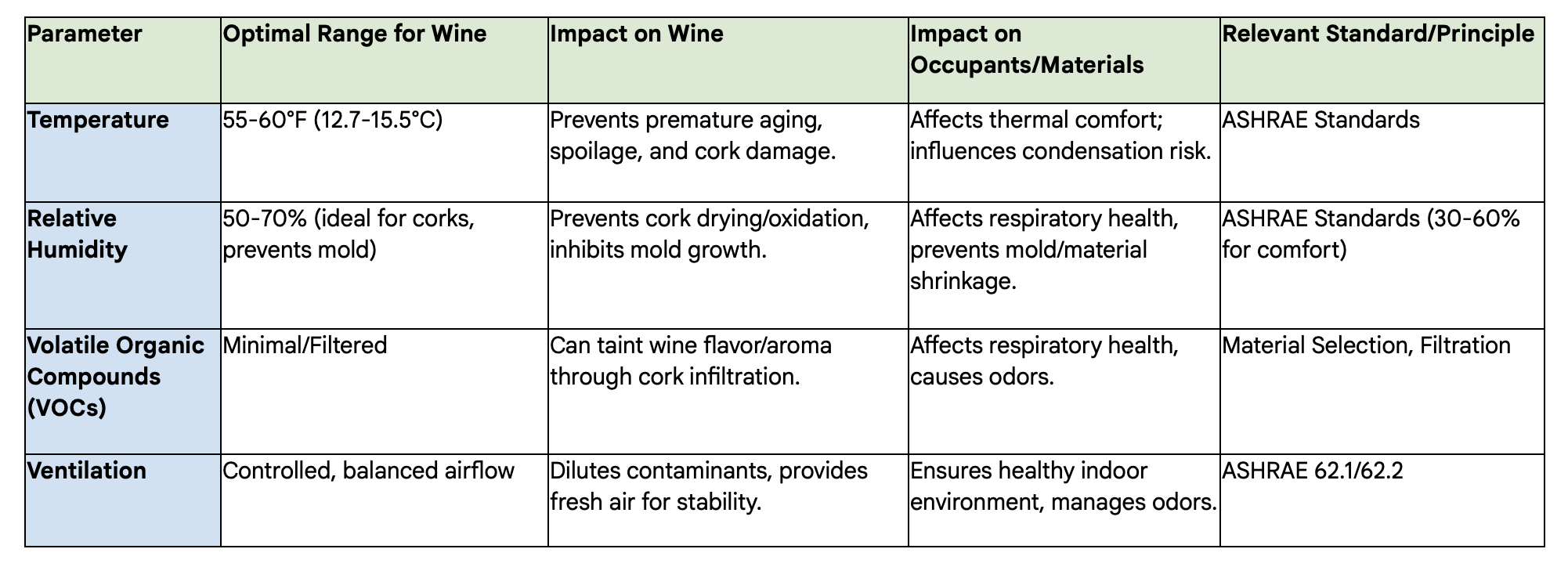
Humidity control is an integral component of overall IAQ, directly influencing human respiratory health, preventing the proliferation of mold, and preserving hygroscopic materials like the extensive wood finishes present in the cave.[29] The optimal relative humidity for human occupancy is generally considered to be between 30% and 60%.[29] The precise management of these parameters is essential for both wine preservation and human comfort. Optimal IAQ in a wine cave represents a complex interplay of temperature, humidity, ventilation, and contaminant control. Each of these parameters influences the others, requiring a finely tuned and integrated mechanical system to meet the dual demands of sensitive product preservation and a comfortable, healthy human experience.
The following table summarizes the key environmental parameters that define optimal IAQ in a wine cellar, highlighting their dual importance for wine preservation and human comfort:
Integrated Design for Enduring Performance
Key Takeaways for Architects
The Hill Country Wine Cave stands as a compelling illustration of how ambitious architectural vision, when deeply integrated with rigorous building science principles and expert MEP engineering, can successfully transform a challenging natural environment into a high-performance, durable, and aesthetically rich space. For architects navigating increasingly complex projects, several key lessons emerge from this endeavor:
Embrace System Thinking: A building, particularly a subterranean one, functions as a complex, interconnected system. Its overall performance is not merely the sum of isolated components but rather a direct result of how all elements—the site, the building envelope, and the mechanical systems—interact. The "ship in a bottle" concept employed in the Wine Cave is a prime example of this systemic approach, creating a precisely controlled interior environment within a naturally variable, uncontrolled exterior. This strategy acknowledges that the built environment is a dynamic system, where changes in one part can profoundly affect others.
Moisture Management is Paramount: For subterranean structures, moisture control cannot rely on a single, infallible "waterproof" layer. Instead, it demands a multi-layered, comprehensive strategy that addresses bulk water intrusion, capillary action, air-transported moisture, and vapor diffusion. This involves strategic site drainage, effective dampproofing, robust air barriers, appropriately placed vapor retarders, and continuous insulation. Crucially, the deliberate creation of a drainage and ventilation gap—akin to a subterranean rainscreen—provides a forgiving and effective mechanism for managing incidental moisture and promoting drying, ensuring the long-term integrity of the interior assembly.
Leverage Passive, Refine Actively: Maximizing the inherent benefits of the site, such as the earth's significant thermal mass, can substantially reduce the energy load on mechanical systems. This passive conditioning provides a stable baseline. However, for applications requiring precise environmental control, such as wine preservation, high-efficiency active mechanical systems are indispensable. The optimal design integrates these passive and active strategies, allowing the natural environment to do the heavy lifting while sophisticated systems provide the necessary fine-tuning.
Indoor Air Quality Extends Beyond Comfort: In specialized environments, the considerations for indoor air quality (IAQ) must encompass not only human health and comfort but also the preservation of sensitive contents. This necessitates meticulous material selection to minimize off-gassing, robust ventilation strategies to dilute contaminants, and potentially advanced filtration systems to mitigate specific airborne pollutants like Volatile Organic Compounds (VOCs) that could compromise product integrity. The precise management of temperature, humidity, and air purity becomes a critical factor in the success of the space.
The success of the Hill Country Wine Cave demonstrates that integrating building science expertise, such as that provided by Positive Energy, from the earliest design stages is crucial. This proactive engagement allows project teams to anticipate and effectively mitigate complex environmental challenges inherent in unique projects, ultimately leading to superior performance, enhanced durability, and long-term value.
The Value of Expert MEP and Building Science Collaboration in High-Performance Design
The Hill Country Wine Cave stands as a powerful testament to the efficacy of collaborative design. The architectural vision of Clayton Korte was not only supported but profoundly enhanced by the specialized building science and MEP engineering expertise of Positive Energy. This partnership was instrumental in ensuring that the ambitious aesthetic and experiential goals of the project were achieved without compromising on critical performance metrics related to thermal stability, comprehensive moisture management, and optimal indoor air quality.
For architects navigating an increasingly complex built environment and facing growing demands for high-performance structures, engaging with specialized MEP and building science consultants is no longer a supplementary consideration but a fundamental component of delivering truly high-performance, durable, and healthy built environments. This project vividly exemplifies how such deep collaboration leads to innovative and resilient solutions that thoughtfully respect both natural conditions and human needs.

Works cited
Hill Country Wine Cave: Clayton Korte - Amazon.com, accessed May 28, 2025, https://www.amazon.com/Hill-Country-Wine-Cave-Clayton/dp/1964490006
Hill Country Wine Cave - Clayton Korte - Oscar Riera Ojeda Publishers, accessed May 28, 2025, https://www.oropublishers.com/products/hill-cohill-country-wine-cave-clayton-korte
Hill Country Wine Cave Clayton Korte - World-Architects, accessed May 28, 2025, https://www.world-architects.com/ro/clayton-korte-austin/project/hill-country-wine-cave
Clayton Korte embeds hidden wine cave into Texas hillside - Dezeen, accessed May 28, 2025, https://www.dezeen.com/2021/03/23/clayton-korte-hill-country-wine-cave/
Clayton Korte Creates Private Wine Cave Embedded Into Native Landscape Of Texas Hillside - World Architecture Community, accessed May 28, 2025, https://worldarchitecture.org/architecture-news/evcmg/clayton-korte-creates-private-wine-cave-embedded-into-native-landscape-of-texas-hillside
Hill Country Wine Cave / Clayton Korte - ArchDaily, accessed May 28, 2025, https://www.archdaily.com/961988/hill-country-wine-cave-clayton-korte
Hill Country Wine Cave - Frame Magazine, accessed May 28, 2025, https://frameweb.com/project/hill-country-wine-cave
Hill Country Wine Cave - Texas Architect Magazine, accessed May 28, 2025, https://magazine.texasarchitects.org/2023/09/01/hill-country-wine-cave/
Hill Country Wine Cave by Clayton Korte - RTF | Rethinking The Future, accessed May 28, 2025, https://www.re-thinkingthefuture.com/architecture/hospitality/10332-hill-country-wine-cave-by-clayton-korte/
Hill Country Wine Cave | Clayton Korte | Archello, accessed May 28, 2025, https://archello.com/project/hill-country-wine-cave
UC Berkeley drills 400-foot borehole to explore geothermal heating on campus, accessed May 28, 2025, https://news.berkeley.edu/2022/03/30/uc-berkeley-drills-400-foot-borehole-to-explore-geothermal-heating-on-campus/
Digging Deep: How Berkeley Lab Advances Subsurface Research for Energy, Water, and More, accessed May 28, 2025, https://newscenter.lbl.gov/2025/05/27/digging-deep-how-berkeley-lab-advances-subsurface-research-for-energy-water-and-more/
Why More Wineries Are Building Underground Wine Caves, accessed May 28, 2025, https://fdc-comp.com/building-underground-wine-caves/
Got Wine Cave? Paso Robles has several you can enjoy!, accessed May 28, 2025, https://elitewinetourspaso.com/2022/07/wine-caves-paso-robles/
Building the Modern Wine Cellar: Green Guide to Bottle Storage - VintageView, accessed May 28, 2025, https://vintageview.com/blog/2023/09/wine-cellar-green-energy-guide/
Hill Country Wine Cave - AZ Awards, accessed May 28, 2025, https://awards.azuremagazine.com/article/hill-country-wine-cave/
Positive Energy | Building Science Focused MEP Engineering, accessed May 28, 2025, https://positiveenergy.pro/
What We Do - Positive Energy, accessed May 28, 2025, https://positiveenergy.pro/what-we-do
Kristof Irwin, PE, M. Eng. - Positive Energy, accessed May 28, 2025, https://positiveenergy.pro/kristof
Reducing Data Center Peak Cooling Demand and Energy Costs With Underground Thermal Energy Storage | NREL, accessed May 28, 2025, https://www.nrel.gov/news/detail/program/2025/reducing-data-center-peak-cooling-demand-and-energy-costs-with-underground-thermal-energy-storage
Moisture control : r/buildingscience - Reddit, accessed May 28, 2025, https://www.reddit.com/r/buildingscience/comments/1fhf5q7/moisture_control/
BSD-012: Moisture Control for New Residential Buildings | buildingscience.com, accessed May 28, 2025, https://buildingscience.com/documents/digests/bsd-012-moisture-control-for-new-residential-buildings
Moisture Control For Buildings, accessed May 28, 2025, https://buildingscience.com/sites/default/files/migrate/pdf/PA_Moisture_Control_ASHRAE_Lstiburek.pdf
Info-101: Groundwater Control | buildingscience.com, accessed May 28, 2025, https://buildingscience.com/documents/information-sheets/groundwater-control
How and Why Rainscreen Walls Work, or When They Don't: - A Deep Dive into the Building Science, accessed May 28, 2025, https://rainscreenassociation.org/wp-content/uploads/2024/11/RAiNA-Conference-RDH-How-Rainscreens-Work-or-Dont-GF_FINAL.pdf
Passive Building Design Guide - Phius, accessed May 28, 2025, https://www.phius.org/sites/default/files/2022-04/phius-commercial-construction-design-guide.pdf
www.phius.org, accessed May 28, 2025, https://www.phius.org/sites/default/files/2023-11/Actionable%2C%20Cost%20Effective%20Passive%20Building%20Strategies%20-%20Ryan%20Abendroth%20phiuscon%202023.pdf
Passive House Design and the Phius Standard - Fine Homebuilding, accessed May 28, 2025, https://www.finehomebuilding.com/2024/11/11/passive-house-3-0
www.ashrae.org, accessed May 28, 2025, https://www.ashrae.org/file%20library/technical%20resources/covid-19/i-p_s16_ch22humidifiers.pdf
Achieving optimal air quality inside a wine cabinet. | EuroCave expert advice, accessed May 28, 2025, https://www.eurocave.com/en/eurocave-expert-advice/achieving-optimal-air-quality-inside-a-wine-cabinet
Standards 62.1 & 62.2 - ASHRAE, accessed May 28, 2025, https://www.ashrae.org/technical-resources/bookstore/standards-62-1-62-2

Heat Pump Water Heater Technologies: Evolution and Innovation
The residential heat pump water heater market offers a growing array of system types, each with distinct operational principles and installation considerations. Understanding these variations is crucial for architects to specify the most appropriate solution for a given project.
By Positive Energy staff
System Types and Operational Principles
The residential heat pump water heater market offers a growing array of system types, each with distinct operational principles and installation considerations. Understanding these variations is crucial for architects to specify the most appropriate solution for a given project.
Integrated (Hybrid) HPWHs.
These are the most commonly encountered type of HPWH in residential settings. Their operational principle involves having the heat pump compressor and heat exchangers directly attached to the water heater's storage tank.[5] The system typically harvests heat from the surrounding indoor air, drawing it in with a fan, transferring it to a refrigerant, compressing it to increase temperature, and then transferring that heat to the water in the tank.5 Most integrated HPWHs are "hybrid" systems, meaning they also include conventional electric resistance heating elements as a backup to ensure hot water availability during periods of exceptionally high demand or when ambient air temperatures are too low for optimal heat pump operation.[5]
Key specifications for integrated HPWHs highlight their efficiency and evolving features. ENERGY STAR certified models are highly efficient, using up to 70% less energy than standard electric water heaters [5] and delivering hot water up to five times more efficiently than conventional electric resistance, gas, and propane water heaters.[5] Recent models boast Uniform Energy Factors (UEFs) as high as 4.07 to 4.2, demonstrating significant advancements in energy performance.[21] Sound levels, a historical concern, have been a key focus for improvement. While the fan and compressor generate some noise [32], ENERGY STAR Version 5.0 product specifications require sound levels less than 55 dBA, comparable to a background conversation. Newer models are even quieter, achieving 45 dBA (similar to a quiet dishwasher), with further advancements in development.[5] The ENERGY STAR NextGen program explicitly mandates a maximum sound rating of 55 dBA for HPWHs installed in occupiable spaces.[5]
For tank sizing, to maximize efficiency and minimize reliance on less efficient resistance heating, upsizing the tank beyond standard practice for electric resistance or fossil fuel-fired water heaters is recommended.[5] The ENERGY STAR NextGen program provides minimum rated tank volumes based on the number of bedrooms to ensure the heat pump handles the majority of water heating.[5] It is important to note that traditional ASHRAE Handbook hot water demand curves are based on decades-old data and may lead to oversized or undersized systems; demand-based sizing methods are proving more accurate and should be consulted.[34] Electrically, integrated HPWHs typically require a dedicated 208/240-volt circuit and 30-amp panel service for new construction.[5] Most new single-family homes with 200-amp or more service capacity at the main breaker generally have sufficient electrical capacity for these units.[5] Modern HPWHs offer advanced digital control panels and remote management applications, allowing users to control temperature setpoints and adjust operational modes for maximized efficiency. Many models also feature grid connectivity and interoperability options for participating in utility demand response programs, enabling users to leverage time-of-use electric rates for cost savings.[5] The ENERGY STAR NextGen program requires HPWHs to meet EPA “connected” criteria or be equipped with a CTA-2045 communication EcoPort.[5] Most HPWHs offer several operating modes, including Economy Mode (default, utilizes both heat pump and resistance elements for high volume/fast recovery), Heat Pump Only (maximizes efficiency, slower recovery), Resistance Only (backup/emergency), and Vacation Mode (minimal operation when unoccupied).[5]
Typical installation requirements for integrated HPWHs involve careful consideration of placement. These units require a minimum of 450 to 1,000 cubic feet of free air space around the unit for efficient operation, along with adequate space for installation and service.[4] An 8-ft by 12-ft room with an 8-ft ceiling, for instance, typically provides sufficient volume.[5] Due to noise from the fan and compressor, it is advisable to avoid locating HPWHs directly adjacent to bedrooms and primary living areas.[5] HPWHs exhaust cooled and dehumidified air 5, which can lower the ambient temperature of the installation space.[4] Infrequently occupied areas such as basements (conditioned or unconditioned, ideal in any climate), garages (especially in warmer climates above 50°F), and interior utility/laundry rooms (benefiting from waste heat) are often suitable locations.[5] Rooms outside the thermal envelope, like attached sheds, can work well in warm climates and even increase efficiency in hot climates.[5] If an integrated HPWH must be installed in a small mechanical closet or confined space, proper venting is crucial to ensure adequate air supply and manage cool exhaust air. Passive venting best practices involve providing a total minimum net-free area of 240 square inches or greater, utilizing both high and low openings (e.g., a fully louvered door, or a combination of high and low transfer grilles, or a high transfer grille with a ¾” door undercut) to allow air circulation.[5] Active venting (ducted) systems can also be employed, where HPWH intake air is ducted directly (with a louver/grille for exhaust), or HPWH exhaust is ducted out (with a louver/grille or door undercut for intake), or both intake and exhaust are ducted with balanced airflow.[5] Ducts must be short, unrestricted, and as straight as possible, designed to minimize the impact of cool exhaust air on occupant comfort.5 It is critical not to duct only the intake or exhaust air to the outside, as this creates pressure imbalances that can increase heating/cooling loads.[5]
Ducts should not run between a garage and the HPWH due to potential fume ingress.[5] Venting exhaust near a thermostat can lead to false readings.[5] In cold-climate regions, avoid ducting both intake and exhaust air to the outside or locating HPWHs outdoors, as intake air temperatures below approximately 40°F will trigger electric resistance elements, significantly reducing efficiency.[5] Improper handling of cold exhaust air can also lead to moisture damage and mold growth on cold surfaces if condensation occurs.[6] HPWHs produce benign condensate as they dehumidify the air, which must be properly drained.[5] The drain line should be gravity-fed and not located higher than the discharge port. Acceptable drainage points include floor drains, trench drains, mop sinks, hub drains, standpipes, utility sinks, or laundry sinks.5 If gravity drainage is impractical, a condensate pump may be required.[5] Other installation best practices include installing a thermostatic mixing valve (TMV) in the hot water supply line if not integrated, allowing for higher tank temperatures (e.g., 140°F to mitigate Legionella risk and increase thermal storage) while preventing scalding at fixtures.[5] Flexible piping connections on inlet/outlet can reduce vibrations.[5] A check valve or heat trap on both cold water inlet and hot water outlet piping helps reduce heat loss from natural convection.[5] A drain pan is best practice for leak mitigation.[5] Unlike older gas water heaters, HPWHs do not require a stand.[5] Insulating hot water piping is crucial for overall system performance.[5] Most HPWHs have internal tank insulation, so external blanket insulation is typically unnecessary and may void warranties.[5] Seismic strapping may be required by local codes.[5]
Split System HPWHs
The operational principle of split system HPWHs differs from integrated units in that the compressor unit is separated from the storage tank. The compressor is typically located outdoors, where it extracts heat from the ambient outdoor air. This heat is then transferred via refrigerant lines to the indoor storage tank.[41] A primary advantage of split systems is that they do not discharge cool air into the conditioned indoor space, which can be a significant benefit in colder climates or in homes where minimizing indoor temperature fluctuations is critical.[41] These systems can also achieve higher water temperatures (e.g., up to 176°F with CO2 refrigerant) and operate efficiently in a wider range of outdoor temperatures, with some advanced models functioning effectively down to -25°F.[41] Installation involves connecting the outdoor compressor unit to the indoor storage tank with refrigerant lines, similar to a mini-split HVAC system.[41] While initially designed for countries with milder winter temperatures, advancements are making them more viable in diverse climates.[41]
Emerging 120V Plug-in Models
These models represent a significant innovation aimed at overcoming a primary barrier to HPWH adoption in existing homes: limited electrical panel capacity and amperage.[33] Designed as "drop-in replacements" for existing water heaters, they can often plug into a standard 120-volt, 15-amp shared circuit, simplifying installation and reducing the need for costly electrical upgrades.[19] This "plug-and-play" solution makes HPWHs far more accessible, particularly in older homes, manufactured housing, and multifamily units with space and power constraints.[19] The performance of 120V HPWHs is more dependent on environmental factors like incoming water temperature and ambient air temperature due to their increased reliance on the heat pump compressor and potentially reduced backup heating elements.[33] To ensure adequate hot water supply, especially when replacing a gas water heater, upsizing the tank (sometimes by two sizes) is often a best practice.[33] Rheem is one of the manufacturers offering 120V plug-in HPWHs.[42]
The evolution of HPWH types, particularly the strategic development of 120V plug-in models and continuous improvements in integrated units (e.g., top water connections, quieter operation, duct-ready designs), directly addresses the historical installation complexities and high upfront costs that have been significant barriers to adoption. This demonstrates a clear industry response to market challenges, making electrification more feasible for a broader range of residential settings, especially in retrofit scenarios.
Advancements and Future Directions
The HPWH market is characterized by continuous innovation aimed at improving performance, reducing environmental impact, and simplifying installation. Manufacturers like Rheem and Bradford White are at the forefront of these advancements. Recent models achieve high Uniform Energy Factors (UEFs) of 4.07 to 4.2, indicating significant energy efficiency gains over earlier models.[21] Noise reduction has been a key focus, with new Rheem models achieving sound levels as low as 45 dB, comparable to a whisper, by minimizing compressor noise.[21] Installer-friendly features are becoming standard, such as the addition of top water connections (Rheem, Bradford White) to simplify replacement of existing water heaters that often have top-mounted pipes.[21] Many units are now "duct-ready," eliminating the need for separate adapters and saving time, space, and cost during installation in confined areas.[21] Built-in leak detection and prevention systems are also being integrated.[42] User interfaces are becoming more advanced, with touch screen controls, multi-lingual LED displays, and integrated Wi-Fi and Bluetooth for remote monitoring and control.[11]
A critical area of development is the progress in refrigerants with lower Global Warming Potential (GWP). The industry is actively responding to regulations like the U.S. AIM Act by integrating refrigerants with lower GWP, including R-32 [41] and non-synthetic, ultra-low GWP options like R290 (propane) or R744 (CO2).[44] A.O. Smith, for example, plans to introduce a HPWH using CO2 as a refrigerant by the fourth quarter of 2025.[44] The SANCO2 split system HPWH already utilizes CO2, allowing it to function efficiently across a wide temperature range, down to -25°F.[41]
Significant advancements are also being made in cold-climate performance. Next-generation cold-climate heat pumps (CCHPs) can now operate effectively at extremely low temperatures, down to -30°C (-31°F).[44] These improvements are attributed to innovations such as variable-speed compressors, new refrigerant cycles, and high-efficiency twin rotary inverter compressors.[44] The U.S. Department of Energy (DOE) has a cold-climate technology challenge program, with manufacturers like Midea, Bosch, Daikin, and Johnson Controls participating in prototype installations in cold-climate locations across the U.S. and Canada.[7] This research is directly leading to heat pumps that can cost-effectively and reliably heat homes even in America's coldest climates.[44]
The future of HPWHs is increasingly defined by their integration with smart home technology and grid services. Advanced controls, often leveraging artificial intelligence (AI), are optimizing energy usage and improving energy management.[45] HPWHs are being designed with digital control panels, remote management applications, and built-in Wi-Fi for enhanced user control and flexibility.[5] Crucially, they offer grid connectivity and interoperability, enabling participation in demand response programs and allowing users to optimize energy consumption based on utility time-of-use rates.[5] CTA-2045 communication capabilities are becoming standard, allowing utilities to send load shaping control signals.[11] Projects like Lawrence Berkeley National Laboratory's (LBNL) CalFlexHub are pioneering price-driven load flexibility by developing and deploying cost-minimizing controls for HPWH fleets.[46] The Pacific Northwest National Laboratory's (PNNL) Transactive Systems Program is researching how to coordinate distributed energy resources (DERs) with smart, responsive electricity loads like HPWHs through dynamic, automated transactions.[49] The ongoing advancements in HPWH technology are fundamentally shifting these appliances from simple water heaters to sophisticated, grid-interactive assets. The pervasive integration of advanced controls, Wi-Fi connectivity, and demand response capabilities is not merely a feature addition but a fundamental enabler for HPWHs to become active, intelligent participants in a flexible, decarbonized energy grid. This means architects should consider HPWHs not just as a plumbing fixture, but as a critical component of a building's energy management system. The combined advancements in HPWH technology, particularly in cold-climate performance and sophisticated smart controls, are enabling a more holistic and integrated approach to building performance. Architects can now design for comprehensive electrification in diverse climatic conditions with increased confidence in achieving optimal efficiency, occupant comfort, and significant grid benefits. This moves the design conversation beyond simple component replacement to integrated system optimization, where HPWHs play a critical role in the building's overall energy and environmental strategy.

Table 1: Residential HPWH System Comparison This table serves as a crucial tool for architects by providing a side-by-side comparison of the distinct HPWH system types. It allows for a rapid, structured understanding of their fundamental differences in operation, performance, and installation. This direct comparison is invaluable for simplifying complex technical information. By detailing key specifications (e.g., UEF, sound, electrical) and installation requirements (e.g., air space, venting, drainage), the table directly aids architects in selecting the most appropriate HPWH system for specific project constraints. For instance, a project with limited indoor space might favor a split system, while a retrofit with an older electrical panel might necessitate a 120V plug-in model. Architects can use this table as a clear and concise visual aid when discussing HPWH options with clients. It helps demystify the technology, highlight the pros and cons of each type, and justify design choices based on performance, cost implications, and site-specific conditions, thereby fostering informed decision-making and building confidence.
Works cited
Tracking the Heat Pump & Water Heater Market in the United States - RMI, accessed May 22, 2025, https://rmi.org/insight/tracking-the-heat-pump-water-heater-market-in-the-united-states/
U.S. Heat Pump Water Heater Market Size | Share Report, 2030 - Fortune Business Insights, accessed May 22, 2025, https://www.fortunebusinessinsights.com/u-s-heat-pump-water-heater-market-108864
Advanced Grid Technologies: Governor Leadership to Spur Innovation and Adoption, accessed May 22, 2025, https://www.nga.org/publications/advanced-grid-technologies-governor-leadership-to-spur-innovation-and-adoption/
Heat Pump Water Heaters | Department of Energy, accessed May 22, 2025, https://www.energy.gov/energysaver/heat-pump-water-heaters
www.energystar.gov, accessed May 22, 2025, https://www.energystar.gov/sites/default/files/2024-07/ENERGY%20STAR%20Heat%20Pump%20Water%20Heater%20Technical%20Guide%20508C.pdf
Insight - Building Science, accessed May 22, 2025, https://buildingscience.com/sites/default/files/document/BSI-150_Alice%20Cooper%20Does%20Heat%20Pump%20Hot%20Water%20Heaters_%C2%A9_0.pdf
Heat Pump Water Heaters To Boot Natural Gas From Buildings - CleanTechnica, accessed May 22, 2025, https://cleantechnica.com/2025/01/11/more-headaches-for-natural-gas-next-gen-heat-pump-water-heaters-are-here/
Heat Pump Water Heater Pilot Program - TRC Companies, accessed May 22, 2025, https://www.trccompanies.com/projects/heat-pump-water-heater-pilot-program/
HEAT PUMP WATER HEATER INSTALLATION GUIDE - Silicon Valley Clean Energy, accessed May 22, 2025, https://svcleanenergy.org/wp-content/uploads/2020/02/HPWH-Best-Practices-Guide-2024.pdf
ENERGY STAR® Certified - Heat Pump Water Heaters, accessed May 22, 2025, https://www.energystar.gov/sites/default/files/tools/ES_HPWH_Factsheet_082023.pdf
Top Heat Pump Water Heaters | Ruud Hybrid & Electric Models - Mar-Hy Distributors, accessed May 22, 2025, https://www.marhy.com/heat-pump-water-heaters/
Is your water heater old or outdated? Here's how to get the government to pay for a next-gen replacement - The Cool Down, accessed May 22, 2025, https://www.thecooldown.com/green-home/heat-pump-water-heater-energy-savings-incentives/
DOE Finalizes Efficiency Standards for Water Heaters to Save Americans Over $7 Billion on Household Utility Bills Annually | Department of Energy, accessed May 22, 2025, https://www.energy.gov/articles/doe-finalizes-efficiency-standards-water-heaters-save-americans-over-7-billion-household
Heat Pump Water Heater Home Electrification - Rewiring America, accessed May 22, 2025, https://homes.rewiringamerica.org/projects/heat-pump-water-heater-homeowner
Heat Pump Water Heater Guide | ENERGY STAR, accessed May 22, 2025, https://www.energystar.gov/partner-resources/residential_new/educational_resources/sup_program_guidance/heat_pump_water_heater_guide
Heat Pump Water Heater Market Size & Forecast Report 2033, accessed May 22, 2025, https://www.globalgrowthinsights.com/market-reports/heat-pump-water-heater-market-101259
Heat pump water heater sales soar - Environment America, accessed May 22, 2025, https://environmentamerica.org/center/updates/heat-pump-water-heater-sales-soar/
newbuildings.org, accessed May 22, 2025, https://newbuildings.org/hpwhmarkettransformersmorethanmeetsthegrid/#:~:text=Still%2C%20despite%20their%20environmental%20benefits,and%20fragmentation%20within%20the%20industry.
HPWH Market Transformers: More Than Meets the Grid - New Buildings Institute, accessed May 22, 2025, https://newbuildings.org/hpwhmarkettransformersmorethanmeetsthegrid/
Pace of Progress: Electrifying everything at the rate required to meet our climate goals, accessed May 22, 2025, https://www.rewiringamerica.org/research/pace-of-progress-home-electrification-transition
Two Leading Manufacturers Bring New Heat Pump Water Heater Updates To Market, accessed May 22, 2025, https://cleantechnica.com/2025/05/21/two-leading-manufacturers-bring-new-heat-pump-water-heater-updates-to-market/
www.energy.gov, accessed May 22, 2025, https://www.energy.gov/save/home-upgrades#:~:text=Pump%20Water%20Heater-,Amount%3A%20This%20tax%20credit%20is%20valued%20at%20up%20to%2030,of%20up%20to%20%241%2C750%2C%20or
Home energy tax credits | Internal Revenue Service, accessed May 22, 2025, https://www.irs.gov/credits-deductions/home-energy-tax-credits
25C Heat Pump Federal Tax Credits: A Guide - Rewiring America, accessed May 22, 2025, https://homes.rewiringamerica.org/federal-incentives/25c-heat-pump-tax-credits
Energy Efficient Home Improvement Credit | Internal Revenue Service, accessed May 22, 2025, https://www.irs.gov/credits-deductions/energy-efficient-home-improvement-credit
How much does a heat pump water heater cost? - Rewiring America, accessed May 22, 2025, https://homes.rewiringamerica.org/projects/how-much-does-a-heat-pump-water-heater-cost
Home Upgrades | Department of Energy, accessed May 22, 2025, https://www.energy.gov/save/home-upgrades
Home Energy Rebate Programs - TN.gov, accessed May 22, 2025, https://www.tn.gov/environment/program-areas/energy/state-energy-office--seo-/programs-projects/programs-and-projects/inflation-reduction-act/home-energy-rebate-programs.html
Accelerating Heat Pump Water Heater Adoption - Resource Innovations, accessed May 22, 2025, https://www.resource-innovations.com/resource/accelerating-heat-pump-water-heater-adoption
How Heat Pump Water Heaters Work, accessed May 22, 2025, https://heatwater.com/how-heat-pump-water-heaters-work/
Demand Flexibility of Water Heaters - ACEEE Report, accessed May 22, 2025, https://www.aceee.org/sites/default/files/pdfs/demand_flexibility_of_water_heaters_-_encrypt.pdf
Considerations for heat pump water heater installation - Energy Trust Insider, accessed May 22, 2025, https://insider.energytrust.org/location-location-location-considerations-heat-pump-water-heater-installation/
Retrofit Market Decarbonization with Plug-In HPWHs: California- wide Field Study Results and Market Commercialization Recommendations - American Council for an Energy-Efficient Economy (ACEEE), accessed May 22, 2025, https://www.aceee.org/sites/default/files/proceedings/ssb24/pdfs/Retrofit%20Market%20Decarbonization%20with%20Plug-In%20HPWHs%20-%20California-wide%20Field%20Study%20Results%20and%20Market%20Commercialization%20Recommendations.pdf
Right-Sizing Central Heat Pump Water Heaters & Building Decarbonization - 2050 Partners, accessed May 22, 2025, https://2050partners.com/blogs/central-heat-pump-water-heaters-building-decarbonization/
Heat Pump Water Heater Design Considerations - Energy Star, accessed May 22, 2025, https://www.energystar.gov/partner-resources/residential_new/educational_resources/sup_program_guidance/heat_pump_water_heater_guide/design_considerations
Do It Yourself Heat Pump Water Heater Installation Guide, accessed May 22, 2025, https://hotwatersolutionsnw.org/diy/
Water Heater - Rheem, accessed May 22, 2025, https://media.rheem.com/blobazrheem/wp-content/uploads/sites/36/2024/07/AP23657-Rev-01-Manual-HPWH-GEN-V-UNIVERSAL-CONNECT-ENGLISH_HALF-SIZE-3.pdf
BSI-150: Alice Cooper Does Heat Pump Hot Water Heaters© | buildingscience.com, accessed May 22, 2025, https://buildingscience.com/documents/building-science-insights/bsi-150-alice-cooper-does-heat-pump-hot-water-heatersc
Heat Pump Water Heaters, accessed May 22, 2025, https://www.hotwatercanada.ca/wp-content/uploads/2023/07/aos-commercial-heat-pump-cahp-spec-sheet-english.pdf
Heat Pump Water Heater Installation Best Practices | ENERGY STAR, accessed May 22, 2025, https://www.energystar.gov/partner-resources/residential_new/educational_resources/sup_program_guidance/heat_pump_water_heater_guide/installation_best_practices
Split System Heat Pump Water Heaters - Rise, accessed May 22, 2025, https://www.buildwithrise.com/stories/split-system-heat-pump-water-heaters
Heat Pump Water Heaters for your Home - Rheem, accessed May 22, 2025, https://www.rheem.com/products/residential/water-heating/heat-pump-water-heaters/
Residential Heat Pump Water Heater Cost Drivers and Opportunities for Compression, accessed May 22, 2025, https://www.advancedwaterheatinginitiative.org/s/NBI_CostCompressionFindings_202504.pdf
Heat Pumps Take Center Stage at the 2025 AHR Expo - Building Decarbonization Coalition, accessed May 22, 2025, https://buildingdecarb.org/heat-pumps-take-center-stage-at-the-2025-ahr-expo
Cold Climate Heat Pump Advancements – Can it Lead North America to Net Zero?, accessed May 22, 2025, https://www.walterfedy.com/cold-climate-heat-pump-advancements-can-it-lead-north-america-to-net-zero/
Lawrence Berkeley National Laboratory - eScholarship.org, accessed May 22, 2025, https://escholarship.org/content/qt4dc9p8qg/qt4dc9p8qg.pdf
Residential Thermal Battery System for Combined Heat Pump Heating and Hot Water, accessed May 22, 2025, https://calflexhub.lbl.gov/calflexhub_portfolio/residential-thermal-battery-system-for-combined-heat-pump-heating-and-hot-water/
DOE- Lawrence Berkeley National Laboratory - California Energy Commission, accessed May 22, 2025, https://www.energy.ca.gov/filebrowser/download/272?fid=272
Transactive Systems Program | PNNL, accessed May 22, 2025, https://www.pnnl.gov/projects/transactive-systems-program
A Transactive Grid Can Reduce Load Swings And Costs: PNNL Study | KPP Energy, accessed May 22, 2025, https://www.kpp.agency/a-transactive-grid-can-reduce-load-swings-and-costs-pnnl-study/
Demand Response in Residential Energy Code, accessed May 22, 2025, https://www.energycodes.gov/sites/default/files/2025-01/TechBrief_GEB_Demand_Response.pdf
Demand Response Benefits | Hawaiian Electric, accessed May 22, 2025, https://www.hawaiianelectric.com/products-and-services/customer-incentive-programs/benefits
Heat Pump Water Heater Load Shifting Pilot - TECH Clean California, accessed May 22, 2025, https://techcleanca.com/pilots/heat-pump-water-heater-load-shifting-pilot/
Detailed Evaluation of Electric Demand Load Shifting Potential of Heat Pump Water Heaters in a Hot Humid Climate | Journal Article | PNNL, accessed May 22, 2025, https://www.pnnl.gov/publications/detailed-evaluation-electric-demand-load-shifting-potential-heat-pump-water-heaters-0
Improve Your Home's Indoor Air Quality - nyserda - NY.Gov, accessed May 22, 2025, https://www.nyserda.ny.gov/Residents-and-Homeowners/Improving-Air-Quality
Indoor air quality: Combustion by-products | HealthLink BC, accessed May 22, 2025, https://www.healthlinkbc.ca/healthlinkbc-files/indoor-air-quality-combustion-products
The Health Impact of Combustion in Homes - American Lung Association, accessed May 22, 2025, https://www.lung.org/getmedia/da394c1a-200e-4c89-9947-7ecb1a26571a/The-Health-Impact-of-Combustion-in-Homes.pdf
Indoor Air Quality | US EPA, accessed May 22, 2025, https://www.epa.gov/report-environment/indoor-air-quality
Gas Stove Emissions - American Public Health Association, accessed May 22, 2025, https://www.apha.org/policy-and-advocacy/public-health-policy-briefs/policy-database/2023/01/18/gas-stove-emissions
Clearing the Air: Gas Stove Emissions and Direct Health Effects - EHP Publishing, accessed May 22, 2025, https://ehp.niehs.nih.gov/doi/10.1289/EHP14180
Smoke from Residential Wood Burning | US EPA, accessed May 22, 2025, https://www.epa.gov/indoor-air-quality-iaq/smoke-residential-wood-burning
UNVENTED COMBUSTION DEVICES AND INDOOR AIR QUALITY - ASHRAE, accessed May 22, 2025, https://www.ashrae.org/file%20library/about/position%20documents/unvented-combustion-devices-and-iaq-pd-6.28.2023.pdf
ASHRAE and residential ventilation - eScholarship.org, accessed May 22, 2025, https://escholarship.org/content/qt59p0m037/qt59p0m037_noSplash_3159baead838922571d51d7b64e0de6f.pdf?t=li4y40
Resources - Advanced Water Heating Initiative, accessed May 22, 2025, https://www.advancedwaterheatinginitiative.org/resources
Water Heater Innovations: What's New For 2025 - Environmental Heating & Air Solutions, accessed May 22, 2025, https://ehasolutions.com/water-heater-innovations-whats-new-for-2025/
Hot Water and Hot Air Forums, accessed May 22, 2025, https://www.aceee.org/sites/default/files/pdfs/Program%20-%202025%20Hot%20Water%20and%20Hot%20Air%20Forums_1.pdf
Hot Water and Hot Air Forums, accessed May 22, 2025, https://www.aceee.org/sites/default/files/pdfs/Program%20-%202025%20Hot%20Water%20and%20Hot%20Air%20Forums%20%283.4%29.pdf
How Much Does It Cost to Install a Heat Pump Water Heater? [2025 Data] | Angi, accessed May 22, 2025, https://www.angi.com/articles/cost-to-install-heat-pump-water-heater.htm
Heat Pumps for All? Distributions of the Costs and Benefits of Residential Air-Source Heat Pumps in the United States - NREL, accessed May 22, 2025, https://www.nrel.gov/docs/fy24osti/84775.pdf
Addressing Challenges in Heat Pump Water Heater Adoption - ILLUME Advising, accessed May 22, 2025, https://illumeadvising.com/2024/addressing-challenges-in-heat-pump-water-heater-adoption/
Field Validation Partnership | PNNL, accessed May 22, 2025, https://www.pnnl.gov/projects/field-validation-partnership