

The Electrification of Domestic Hot Water: Heat Pump Water Heater Adoption in U.S. Residential Construction
The residential construction market in the United States is undergoing a fundamental transformation, driven by the dual imperatives of grid modernization and enhanced indoor air quality. Central to this shift is the increasing adoption of Heat Pump Water Heaters (HPWHs). These highly efficient, all-electric systems represent a critical technology for decarbonizing buildings and fostering a more resilient energy infrastructure. While current national adoption rates remain modest, market dynamics indicate a significant acceleration, propelled by robust governmental policies, escalating consumer interest in new construction, and continuous technological advancements.

The residential construction market in the United States is undergoing a fundamental transformation, driven by the dual imperatives of grid modernization and enhanced indoor air quality. Central to this shift is the increasing adoption of Heat Pump Water Heaters (HPWHs). These highly efficient, all-electric systems represent a critical technology for decarbonizing buildings and fostering a more resilient energy infrastructure. While current national adoption rates remain modest, market dynamics indicate a significant acceleration, propelled by robust governmental policies, escalating consumer interest in new construction, and continuous technological advancements.
HPWHs function by moving heat rather than generating it, offering substantial energy savings and eliminating on-site combustion byproducts that compromise indoor air quality. The evolution of HPWH technology, including integrated, split, and emerging 120V plug-in models, directly addresses historical installation complexities and upfront costs. However, widespread adoption faces persistent barriers, notably the high initial investment and the challenge of emergency replacements, which often favor conventional, less efficient alternatives. Addressing these challenges requires a multi-faceted approach, emphasizing streamlined incentives, comprehensive workforce development, and enhanced consumer education to fully realize the environmental, economic, and health benefits of residential electrification.
The Electrification Imperative in Residential Construction
The transition to all-electric homes, particularly through the integration of technologies like Heat Pump Water Heaters (HPWHs), is emerging as a strategic imperative across the United States. This profound shift is driven by a two-fold objective: adapting to a rapidly evolving energy grid and significantly improving indoor air quality by eliminating combustion from residential spaces. HPWHs are increasingly recognized as a vital technology for the clean energy transition and for substantially lowering building emissions, primarily due to their ability to efficiently provide heating by replacing the use of onsite fossil fuels.[1] They are progressively acknowledged as a critical technology for heat decarbonization efforts.[2]
The broader transformation of the electric grid, which HPWH adoption directly supports, is propelled by several interconnected factors. These include a rising demand for electricity, the increasing economic and technical viability of diverse energy generation sources, the rapid growth of distributed energy resources (DERs), and ambitious state-level clean energy and decarbonization policy goals.[3] This context positions HPWH adoption as a fundamental component of a larger national energy strategy. The widespread adoption of HPWHs signifies more than just a technological upgrade; it represents a fundamental societal shift in how homes interact with the energy ecosystem. This transformation is deeply rooted in a collective commitment to decarbonization and grid modernization, driven by both environmental imperatives and significant economic opportunities. Architects designing for HPWHs are not merely specifying an appliance but are actively contributing to a national infrastructure and public health transformation.
At their core, Heat Pump Water Heaters operate on a principle distinct from conventional water heating methods. Unlike traditional water heaters that generate heat directly through the combustion of fossil fuels (e.g., natural gas) or through electric resistance, HPWHs utilize electricity to move existing thermal energy from one location to another. This process involves extracting heat from the surrounding air and transferring it to the water within a storage tank.[4] This "refrigerator in reverse" mechanism makes them remarkably energy efficient, typically two to three times more efficient than conventional electric resistance water heaters.[4] This superior efficiency directly translates into significant annual energy bill savings for homeowners, making them an economically attractive option over the appliance's lifespan.[4]
Current State of Heat Pump Water Heater Adoption in the U.S.
Market Dynamics and Growth Trajectory
The U.S. residential heat pump water heater market, while still maturing, exhibits a clear growth trajectory. In 2022, the market size was valued at USD 468.22 million and is projected to grow at a Compound Annual Growth Rate (CAGR) of 5.90% during the forecast period.2 Globally, the HPWH market reached $1.7 billion in 2024 and is expected to expand to $2.22 billion by 2033, reflecting a steady growth rate of 3%.[16] Historical data indicates a significant acceleration, with U.S. sales of HPWHs doubling from 2016 to 2020.[2] More recently, 2023 saw over 190,000 HPWHs shipped in the U.S., marking a substantial 35% increase over 2022 and representing the largest annual increase ever recorded for this technology.[17]
Despite these impressive growth rates, the overall national adoption rate of HPWHs remains relatively low, estimated at approximately 3% of all households.[18] In 2023, HPWHs constituted about 4% of residential electric water heater sales.1 Further data suggests that currently, only 1% of homes in the U.S. utilize electric heat pump water heaters for their hot water needs.[20] This presents a critical distinction between the low overall national adoption rate of HPWHs and the higher reported figures for consumer preference and integration in new construction. While the installed base is small, there are strong signals of growing consumer interest and integration in new construction. More than 40% of residential consumers are now reportedly opting for HPWHs over conventional systems, a choice driven by their energy-saving capabilities and reduced carbon emissions.[16] Furthermore, a significant trend in new residential construction indicates that over 45% of new builds are integrating heat pump systems.16 North America, particularly eco-conscious states, accounts for over 45% of residential units adopting heat pump technologies, with the U.S. and Canada experiencing over 38% growth in residential installations.[16] The higher figures for "consumers opting for HPWHs" and "new builds integrating heat pump systems" likely refer to new purchases or intent for water heaters, or the broader category of heat pump systems (including space heating) in new construction, rather than representing the total installed base of HPWHs. This nuance is crucial for understanding the true pace and potential of market transformation, indicating that while the momentum is strong, the existing housing stock still presents a vast opportunity for retrofits.
The American water heater market is largely dominated by three key manufacturers: Rheem, A. O. Smith, and Bradford White.[21] Rheem currently holds the largest HPWH market share in the U.S., benefiting from strategic partnerships with major retailers and homebuilders.[21] Bradford White ranks as the third-largest HPWH market player, with manufacturing operations located in Middleville, Michigan.2 Other notable U.S. manufacturers contributing to the residential HPWH market include Vaughn and Nyle Systems.[2]
Looking ahead, ambitious sales targets underscore the projected market shift. Rewiring America sets a target for HPWHs to comprise 100% of water heater sales by 2040, which would lead to a complete turnover of fossil fuel-based water heating stock by 2050.[20] To achieve this aggressive goal, HPWH sales need to increase more than tenfold over the business-as-usual scenario by 2032.[20] The U.S. Department of Energy (DOE) supports this trajectory, projecting that its 2024 efficiency standards, with compliance starting in 2029, will result in over 50% of newly manufactured electric storage water heaters utilizing heat pump technology, a substantial leap from the current 3%.[13] These ambitious sales targets and projected rapid market shifts for HPWHs are not organic growth projections alone; they are directly linked to, and in many cases, mandated by recent and upcoming policy changes. The DOE's efficiency standards and the Inflation Reduction Act are creating a powerful regulatory and financial tailwind that will fundamentally transform the HPWH market, pushing it towards dominance.
Policy and Incentives Catalyzing Adoption
Governmental policies and financial incentives are playing a pivotal role in accelerating HPWH adoption. The U.S. Department of Energy (DOE) finalized new energy-efficiency standards for residential water heaters on April 30, 2024. These standards are projected to save American households approximately $7.6 billion per year on energy and water bills and reduce 332 million metric tons of carbon dioxide emissions over 30 years of shipments.[13] This initiative represents the largest energy savings action by the Appliance Standards Program in history.13 Compliance with these new standards will be required starting in 2029, and they are expected to result in over 50% of newly manufactured electric storage water heaters utilizing heat pump technology, a substantial increase from the current 3%.[13] These standards are designed to more than double the efficiency of electric storage water heaters.[13]
Further catalyzing adoption is the Inflation Reduction Act (IRA), which significantly expands the accessibility and affordability of heat pump water heaters through various tax credits and rebates.[13] Homeowners can claim a federal tax credit valued at up to 30% of the HPWH project cost, capped at $2,000 per year.[12] This credit has no lifetime limit, enabling homeowners to claim it annually for eligible improvements until 2033.[23] To qualify for these tax credits, HPWHs must be ENERGY STAR certified.[24] In addition to tax credits, the Home Electrification and Appliance Rebate program, also under the IRA, offers up to $1,750 for ENERGY STAR-certified electric HPWHs.22 For low- to moderate-income (LMI) households, these rebates can be even more substantial, covering 50-100% of the HPWH costs, up to $1,750.[26] Eligibility for these rebates typically includes new construction, replacement of a non-electric water heater, or a first-time purchase of a HPWH for an existing home.[27]
Beyond federal initiatives, state and local programs, along with utilities, are actively managing their own energy efficiency and appliance upgrade rebate programs.[27] Examples include instant rebates offered in Massachusetts ($750-$1,500) and California ($500-$900).26 Utilities like TVA EnergyRight also provide residential rebates for qualifying HPWH systems.[28] Many programs are actively exploring time-of-use pricing structures to further incentivize HPWH adoption and maximize the benefits of off-peak energy consumption.[29] The comprehensive suite of government policies and incentives for HPWHs extends beyond purely environmental objectives; it acts as a significant economic stimulus for the burgeoning HPWH market. This stimulus drives manufacturing investment, fosters job creation across the supply chain [3], and accelerates consumer adoption. Furthermore, the tiered structure of IRA rebates, especially for low- and moderate-income households, directly addresses energy equity, ensuring that the benefits of clean energy technologies are accessible across all socioeconomic strata. The simultaneous implementation of stringent efficiency standards (a "push" from the supply side) and generous consumer incentives (a "pull" from the demand side) reveals a sophisticated and comprehensive market transformation strategy. This dual approach is designed to overcome the inherent inertia and initial cost barriers associated with new technology adoption, accelerating the shift away from conventional water heaters towards HPWHs across the entire market.

Table 1: U.S. Residential HPWH Market Overview (2022-2033)
This table provides a concise, quantitative overview of the HPWH market's current scale and its projected trajectory. For architects, this context is essential to understand the industry's momentum and the increasing relevance of HPWHs in residential design, moving beyond anecdotal evidence to present a data-driven overview. By outlining current adoption rates alongside future projections and policy impacts, the table helps architects make informed decisions about specifying HPWHs in their projects, highlighting that while current penetration is low, the market is on a steep growth curve, indicating that HPWHs are becoming a standard rather than a niche technology. The inclusion of CAGR and specific targets from authoritative sources visually reinforces the strong trend towards electrification in water heating, which can be invaluable for architects when advocating for HPWH integration to clients, demonstrating alignment with broader industry and policy directions.
Dual Benefits of HPWH Electrification: Grid Resilience and Indoor Air Quality
The widespread adoption of Heat Pump Water Heaters offers profound benefits that extend beyond individual household energy savings, directly addressing critical challenges in energy infrastructure and public health.
Playing A Role In Grid Stability and Efficiency
Heat pump water heaters are uniquely positioned to act as flexible loads within the electrical grid due to their inherent thermal storage capabilities.[31] The large storage tank allows them to optimize the timing of electricity consumption without compromising hot water delivery service to occupants.31 This ability to store thermal energy enables HPWHs to reduce strain on the electric grid during peak electricity demand periods.[8] The widespread adoption of grid-interactive HPWHs represents a significant, decentralized infrastructure investment that directly enhances overall grid reliability and resilience. For architects, understanding this benefit is paramount, as it positions their projects not merely as individual energy-efficient structures, but as active contributors to broader national energy security and sustainability goals. By integrating HPWHs, buildings become dynamic participants in grid management, offering a scalable solution for managing increasing electricity demands and integrating renewables.
HPWHs can actively participate in utility demand management programs.[8] This allows for strategic load shifting, where electricity consumption is moved from high-price or peak demand periods to low-price or off-peak times.[31] Strategies employed include pre-heating water when electricity is abundant and cheap, adjusting temperature setpoints, or temporarily preventing the use of less efficient electric resistance heating elements during peak events.[8] HPWHs can start or stop heating quickly, making them highly responsive to variable grid signals.[31] This demand flexibility is crucial for integrating intermittent renewable energy sources, such as solar and wind power, into the grid. By shifting demand to match periods of high renewable generation, HPWHs help balance supply and demand, improving grid stability and maximizing the utilization of clean energy.[31] They can effectively absorb excess renewable generation, preventing curtailment and enhancing grid efficiency.[48]
HPWHs are a key component of Grid-interactive Efficient Buildings (GEBs), which integrate energy efficiency, demand flexibility, and smart technologies to serve the grid as distributed energy resources (DERs).[47] National adoption of GEBs is projected to yield $100-200 billion in U.S. electric power system cost savings and contribute to a 6% annual reduction in CO2 emissions by 2030.[51] The concept of "transactive energy" further refines this, envisioning a system where DERs like HPWHs are coordinated with smart loads through dynamic, automated transactions. This approach has the potential to reduce daily load swings by 20-44% and generate billions in annual economic benefits by optimizing grid operations.[49] The transformation positions HPWHs as not just energy-efficient appliances, but as integral parts of a future-proof energy infrastructure, contributing to both local building performance and national energy security.
Improving Indoor Air Quality and Home Health
A direct and immediate benefit of electrifying water heating with HPWHs is the complete elimination of on-site combustion within the home.[9] This removes a major source of toxic combustion exhaust gases and associated pollutants that are typically generated by natural gas, propane, or oil-fired water heaters.9 Furthermore, by removing a fuel-fired appliance, HPWHs also eliminate the inherent risk of fire or explosion that can be caused by gas leaks or combustion malfunctions.[15]
Traditional fossil fuel-burning appliances, including water heaters, furnaces, and stoves, produce a range of harmful byproducts when fuel is incompletely burned.[56] It’s a proper panoply These include Carbon Monoxide (CO), an odorless, colorless, and highly toxic gas that reduces the blood's ability to carry oxygen. Acute exposure can cause fatigue, headaches, nausea, dizziness, and impaired vision, and at high levels, it can lead to loss of consciousness and death.[56] Another significant byproduct is Nitrogen Dioxide (NO2), a respiratory irritant that can cause airway inflammation, coughing, wheezing, and increased asthma attacks.[56] Scientific studies have consistently shown higher NO2 concentrations in homes with gas stoves, and exposure is linked to increased risk of asthma in children and more severe symptoms for those with respiratory illnesses.[59] Particulate Matter (PM, PM2.5), microscopic solids and liquids, can irritate eyes, nose, and throat, lodge in the lungs causing irritation or damage, lead to inflammation, heart problems, and increase the risk of premature death. Some particles may contain cancer-causing substances.[56] Other pollutants include carbon dioxide (CO2), sulfur dioxide (SO2), various hydrocarbons (e.g., benzene), and aldehydes.[56]
While furnaces and water heaters are typically vented to the outside, their emissions still contribute to outdoor air pollution.[57] Unvented combustion devices, such as gas stoves or unvented heaters, pose even higher risks by releasing pollutants directly into the living space.[59] ASHRAE's position emphasizes source control and adequate ventilation as key means to dilute indoor contaminants and improve indoor air quality.[62] By eliminating the combustion source entirely, HPWHs offer a proactive approach to mitigating these indoor air quality concerns. Electrifying water heating with HPWHs directly removes a significant and consistent source of harmful indoor air pollutants, leading to tangible and measurable health benefits for building occupants. This is particularly impactful for vulnerable populations such as children, older adults, and individuals with pre-existing respiratory conditions. This shifts the conversation from abstract "environmental benefits" to concrete "health and safety" improvements directly within the home, a powerful consideration for architects designing healthy living spaces.
Accelerating Broad Scale Adoption By Identifying Opportunities and Challenges
Key Advantages and Drivers
The momentum behind Heat Pump Water Heater adoption is driven by a confluence of compelling advantages and supportive market forces. Foremost among these are the significant energy and cost savings. HPWHs are remarkably energy-efficient, typically 3 to 4 times more efficient than conventional electric resistance water heaters.[10] This efficiency translates into substantial annual energy bill savings for homeowners, ranging from $80 to $550 per year, and over $5,600 in savings over the product's lifetime.[10]
Beyond economic benefits, HPWHs offer profound environmental advantages and a reduced carbon footprint. By consuming significantly less energy and operating on electricity (which is increasingly decarbonized through renewable sources), HPWHs dramatically reduce greenhouse gas emissions.[10] Replacing a single gas water heater with a HPWH can save over 2,000 lbs of CO2 emissions annually, an amount equivalent to growing more than 17 trees for 10 years.[64]
The technology itself is maturing rapidly. While HPWHs have existed since the 1970s, their mainstream adoption has primarily occurred in the past decade, indicating a shift from niche to proven technology.[38] They are now considered a reliable solution [10] and benefit from continuous innovation in efficiency, sound reduction, and installer-friendly features, such as top water connections and duct-ready designs.[7]
Finally, increasing governmental and utility support acts as a powerful accelerant. Strong policy drivers, including the DOE's finalized efficiency standards [13] and the comprehensive incentives provided by the Inflation Reduction Act [12], are significantly accelerating market growth. Utilities are also actively developing and implementing programs, including rebates and online platforms, to streamline HPWH adoption and educate consumers.[29]
Persistent Barriers and Areas for Improvement
Despite the clear advantages, several persistent barriers impede broad-scale HPWH adoption in the U.S. residential market.
The most significant barrier remains the high upfront and installation costs.[18] HPWHs frequently retail for at least $2,000, which is substantially higher than low-to-medium efficiency gas or electric resistance water heaters, often priced at $600 or less.[43] The installation cost often exceeds the equipment price itself; for contractor installations, the average cost was roughly $2,700, contributing to an overall average project cost of $3,200-$4,700.[43] This high upfront cost is critically exacerbated by the fact that approximately 85-90% of water heater replacements occur during emergency situations.[19] In these urgent, unplanned scenarios, homeowners are highly inclined to opt for quick, familiar, and seemingly cheaper conventional solutions, bypassing HPWHs despite their long-term energy and cost savings. This creates a cycle where the immediate need for replacement, driven by appliance failure, actively impedes the adoption of more efficient and environmentally beneficial technology.
Installation complexities also pose a significant hurdle. HPWHs are generally taller and heavier than conventional units [36], requiring significant air space (450-1000 cubic feet) for efficient operation.6 Replacing a gas water heater with a HPWH often necessitates a new 240V circuit or an electrical panel upgrade, adding to the cost and complexity.[14] Furthermore, HPWHs produce condensate that requires proper drainage, which may involve installing a new drain line or a condensate pump if a gravity drain is not readily available.[9] The cool, dehumidified air exhausted by HPWHs can lower the ambient temperature of the installation space, potentially causing discomfort or increasing heating loads in conditioned areas. If not properly vented or managed, this can lead to moisture damage and mold growth on cold surfaces.[4]
A critical bottleneck in the market transformation is workforce development and availability. A significant barrier is the skilled labor shortage in the HVAC and plumbing trades.[71] Workforce challenges, exacerbated by factors like the COVID-19 pandemic, have led to retention issues and staffing problems, complicating HPWH installations.[70] The insufficient supply of adequately trained and experienced HPWH installers directly translates into higher installation costs, slower project completion times, and a greater risk of improper installations that can undermine system performance and consumer satisfaction.[43] This workforce gap limits the ability to scale HPWH adoption despite growing demand and policy support. There is a clear need for clearer guidance for installers on the post-installation startup process, including diagnostic run times and electric element behavior.[70]
Finally, consumer awareness, while growing, remains low in many areas, with only 29% of households in some regions familiar with heat pump technology.[16] This lack of understanding of the long-term cost savings and environmental benefits contributes to a general installer and consumer bias towards conventional models.[33]
What Needs To Happen Next
The U.S. residential construction market is at a pivotal juncture, with Heat Pump Water Heaters emerging as a cornerstone of the electrification movement. The transition to HPWHs is not merely an appliance upgrade; it represents a fundamental societal shift towards a more resilient, decarbonized energy grid and healthier indoor environments. The technology is rapidly advancing, with innovations addressing efficiency, sound, cold-climate performance, and installation ease, including the critical development of 120V plug-in models that simplify retrofits. Furthermore, comprehensive policy support from the DOE and the Inflation Reduction Act is creating a powerful market transformation strategy, utilizing both regulatory mandates and financial incentives to accelerate adoption.
However, significant barriers persist, primarily the high upfront and installation costs, which are exacerbated by the prevalence of emergency replacements. The current shortage of skilled installers further compounds these cost and complexity issues, creating a bottleneck that hinders widespread deployment. To fully realize the profound environmental, economic, and health benefits of HPWHs, a concerted effort is required across all stakeholders.
For architects, the implications are clear: designing with HPWHs is no longer a niche consideration but a strategic imperative that contributes to a building's holistic performance and broader societal goals. To accelerate broad-scale adoption, the following recommendations are critical, even if not all are in each of our sphere of influence.
Streamline and Publicize Incentives: While federal incentives exist, their complexity and the emergency nature of most water heater replacements often prevent homeowners from leveraging them. Utilities and government agencies should collaborate to offer more point-of-sale rebates and direct-to-contractor incentives, simplifying the financial process at the moment of purchase. Clear, accessible communication about available tax credits and rebates is paramount.
Invest in Workforce Development: Addressing the skilled labor shortage is crucial. This requires increased funding and support for training programs specifically focused on HPWH installation, maintenance, and troubleshooting for plumbers and HVAC technicians. Programs should include practical, hands-on training to build installer confidence and efficiency, ultimately reducing labor costs and installation times. Exploring alternative licensing pathways for HPWH installers, separate from full plumbing licenses, could also expand the workforce, particularly in rural areas.
Enhance Consumer and Contractor Education: Despite growing interest, a significant portion of the population remains unaware of HPWH benefits or misinformed about installation requirements. Targeted educational campaigns, leveraging trusted sources like building science organizations and MEP firms, should highlight the long-term energy savings, improved indoor air quality, and grid benefits. For contractors, clearer guidance on installation best practices, particularly regarding air volume, venting, and condensate management, is essential to prevent performance issues and ensure customer satisfaction.
Promote "Retrofit-Ready" Solutions: The emergence of 120V plug-in HPWHs is a game-changer for the existing housing stock. Policy and incentive programs should specifically promote these "drop-in" solutions to address the electrical panel constraints common in older homes, making the transition from fossil fuels more accessible and affordable during emergency replacements.
Integrate HPWHs into Holistic Building Design: Architects should approach HPWH specification not as an isolated component, but as an integral part of a building's overall energy and environmental strategy. This includes designing spaces with adequate air volume and proper ventilation for optimal HPWH performance, considering the unit's sound profile relative to living areas, and planning for grid-interactive capabilities to maximize demand response benefits. Collaboration with MEP engineers and building science consultants from the earliest design phases can ensure seamless integration and optimized performance.
Works Cited
Tracking the Heat Pump & Water Heater Market in the United States - RMI, accessed May 22, 2025, https://rmi.org/insight/tracking-the-heat-pump-water-heater-market-in-the-united-states/
U.S. Heat Pump Water Heater Market Size | Share Report, 2030 - Fortune Business Insights, accessed May 22, 2025, https://www.fortunebusinessinsights.com/u-s-heat-pump-water-heater-market-108864
Advanced Grid Technologies: Governor Leadership to Spur Innovation and Adoption, accessed May 22, 2025, https://www.nga.org/publications/advanced-grid-technologies-governor-leadership-to-spur-innovation-and-adoption/
Heat Pump Water Heaters | Department of Energy, accessed May 22, 2025, https://www.energy.gov/energysaver/heat-pump-water-heaters
www.energystar.gov, accessed May 22, 2025, https://www.energystar.gov/sites/default/files/2024-07/ENERGY%20STAR%20Heat%20Pump%20Water%20Heater%20Technical%20Guide%20508C.pdf
Insight - Building Science, accessed May 22, 2025, https://buildingscience.com/sites/default/files/document/BSI-150_Alice%20Cooper%20Does%20Heat%20Pump%20Hot%20Water%20Heaters_%C2%A9_0.pdf
Heat Pump Water Heaters To Boot Natural Gas From Buildings - CleanTechnica, accessed May 22, 2025, https://cleantechnica.com/2025/01/11/more-headaches-for-natural-gas-next-gen-heat-pump-water-heaters-are-here/
Heat Pump Water Heater Pilot Program - TRC Companies, accessed May 22, 2025, https://www.trccompanies.com/projects/heat-pump-water-heater-pilot-program/
HEAT PUMP WATER HEATER INSTALLATION GUIDE - Silicon Valley Clean Energy, accessed May 22, 2025, https://svcleanenergy.org/wp-content/uploads/2020/02/HPWH-Best-Practices-Guide-2024.pdf
ENERGY STAR® Certified - Heat Pump Water Heaters, accessed May 22, 2025, https://www.energystar.gov/sites/default/files/tools/ES_HPWH_Factsheet_082023.pdf
Top Heat Pump Water Heaters | Ruud Hybrid & Electric Models - Mar-Hy Distributors, accessed May 22, 2025, https://www.marhy.com/heat-pump-water-heaters/
Is your water heater old or outdated? Here's how to get the government to pay for a next-gen replacement - The Cool Down, accessed May 22, 2025, https://www.thecooldown.com/green-home/heat-pump-water-heater-energy-savings-incentives/
DOE Finalizes Efficiency Standards for Water Heaters to Save Americans Over $7 Billion on Household Utility Bills Annually | Department of Energy, accessed May 22, 2025, https://www.energy.gov/articles/doe-finalizes-efficiency-standards-water-heaters-save-americans-over-7-billion-household
Heat Pump Water Heater Home Electrification - Rewiring America, accessed May 22, 2025, https://homes.rewiringamerica.org/projects/heat-pump-water-heater-homeowner
Heat Pump Water Heater Guide | ENERGY STAR, accessed May 22, 2025, https://www.energystar.gov/partner-resources/residential_new/educational_resources/sup_program_guidance/heat_pump_water_heater_guide
Heat Pump Water Heater Market Size & Forecast Report 2033, accessed May 22, 2025, https://www.globalgrowthinsights.com/market-reports/heat-pump-water-heater-market-101259
Heat pump water heater sales soar - Environment America, accessed May 22, 2025, https://environmentamerica.org/center/updates/heat-pump-water-heater-sales-soar/
newbuildings.org, accessed May 22, 2025, https://newbuildings.org/hpwhmarkettransformersmorethanmeetsthegrid/#:~:text=Still%2C%20despite%20their%20environmental%20benefits,and%20fragmentation%20within%20the%20industry.
HPWH Market Transformers: More Than Meets the Grid - New Buildings Institute, accessed May 22, 2025, https://newbuildings.org/hpwhmarkettransformersmorethanmeetsthegrid/
Pace of Progress: Electrifying everything at the rate required to meet our climate goals, accessed May 22, 2025, https://www.rewiringamerica.org/research/pace-of-progress-home-electrification-transition
Two Leading Manufacturers Bring New Heat Pump Water Heater Updates To Market, accessed May 22, 2025, https://cleantechnica.com/2025/05/21/two-leading-manufacturers-bring-new-heat-pump-water-heater-updates-to-market/
www.energy.gov, accessed May 22, 2025, https://www.energy.gov/save/home-upgrades#:~:text=Pump%20Water%20Heater-,Amount%3A%20This%20tax%20credit%20is%20valued%20at%20up%20to%2030,of%20up%20to%20%241%2C750%2C%20or
Home energy tax credits | Internal Revenue Service, accessed May 22, 2025, https://www.irs.gov/credits-deductions/home-energy-tax-credits
25C Heat Pump Federal Tax Credits: A Guide - Rewiring America, accessed May 22, 2025, https://homes.rewiringamerica.org/federal-incentives/25c-heat-pump-tax-credits
Energy Efficient Home Improvement Credit | Internal Revenue Service, accessed May 22, 2025, https://www.irs.gov/credits-deductions/energy-efficient-home-improvement-credit
How much does a heat pump water heater cost? - Rewiring America, accessed May 22, 2025, https://homes.rewiringamerica.org/projects/how-much-does-a-heat-pump-water-heater-cost
Home Upgrades | Department of Energy, accessed May 22, 2025, https://www.energy.gov/save/home-upgrades
Home Energy Rebate Programs - TN.gov, accessed May 22, 2025, https://www.tn.gov/environment/program-areas/energy/state-energy-office--seo-/programs-projects/programs-and-projects/inflation-reduction-act/home-energy-rebate-programs.html
Accelerating Heat Pump Water Heater Adoption - Resource Innovations, accessed May 22, 2025, https://www.resource-innovations.com/resource/accelerating-heat-pump-water-heater-adoption
How Heat Pump Water Heaters Work, accessed May 22, 2025, https://heatwater.com/how-heat-pump-water-heaters-work/
Demand Flexibility of Water Heaters - ACEEE Report, accessed May 22, 2025, https://www.aceee.org/sites/default/files/pdfs/demand_flexibility_of_water_heaters_-_encrypt.pdf
Considerations for heat pump water heater installation - Energy Trust Insider, accessed May 22, 2025, https://insider.energytrust.org/location-location-location-considerations-heat-pump-water-heater-installation/
Retrofit Market Decarbonization with Plug-In HPWHs: California- wide Field Study Results and Market Commercialization Recommendations - American Council for an Energy-Efficient Economy (ACEEE), accessed May 22, 2025, https://www.aceee.org/sites/default/files/proceedings/ssb24/pdfs/Retrofit%20Market%20Decarbonization%20with%20Plug-In%20HPWHs%20-%20California-wide%20Field%20Study%20Results%20and%20Market%20Commercialization%20Recommendations.pdf
Right-Sizing Central Heat Pump Water Heaters & Building Decarbonization - 2050 Partners, accessed May 22, 2025, https://2050partners.com/blogs/central-heat-pump-water-heaters-building-decarbonization/
Heat Pump Water Heater Design Considerations - Energy Star, accessed May 22, 2025, https://www.energystar.gov/partner-resources/residential_new/educational_resources/sup_program_guidance/heat_pump_water_heater_guide/design_considerations
Do It Yourself Heat Pump Water Heater Installation Guide, accessed May 22, 2025, https://hotwatersolutionsnw.org/diy/
Water Heater - Rheem, accessed May 22, 2025, https://media.rheem.com/blobazrheem/wp-content/uploads/sites/36/2024/07/AP23657-Rev-01-Manual-HPWH-GEN-V-UNIVERSAL-CONNECT-ENGLISH_HALF-SIZE-3.pdf
BSI-150: Alice Cooper Does Heat Pump Hot Water Heaters© | buildingscience.com, accessed May 22, 2025, https://buildingscience.com/documents/building-science-insights/bsi-150-alice-cooper-does-heat-pump-hot-water-heatersc
Heat Pump Water Heaters, accessed May 22, 2025, https://www.hotwatercanada.ca/wp-content/uploads/2023/07/aos-commercial-heat-pump-cahp-spec-sheet-english.pdf
Heat Pump Water Heater Installation Best Practices | ENERGY STAR, accessed May 22, 2025, https://www.energystar.gov/partner-resources/residential_new/educational_resources/sup_program_guidance/heat_pump_water_heater_guide/installation_best_practices
Split System Heat Pump Water Heaters - Rise, accessed May 22, 2025, https://www.buildwithrise.com/stories/split-system-heat-pump-water-heaters
Heat Pump Water Heaters for your Home - Rheem, accessed May 22, 2025, https://www.rheem.com/products/residential/water-heating/heat-pump-water-heaters/
Residential Heat Pump Water Heater Cost Drivers and Opportunities for Compression, accessed May 22, 2025, https://www.advancedwaterheatinginitiative.org/s/NBI_CostCompressionFindings_202504.pdf
Heat Pumps Take Center Stage at the 2025 AHR Expo - Building Decarbonization Coalition, accessed May 22, 2025, https://buildingdecarb.org/heat-pumps-take-center-stage-at-the-2025-ahr-expo
Cold Climate Heat Pump Advancements – Can it Lead North America to Net Zero?, accessed May 22, 2025, https://www.walterfedy.com/cold-climate-heat-pump-advancements-can-it-lead-north-america-to-net-zero/
Lawrence Berkeley National Laboratory - eScholarship.org, accessed May 22, 2025, https://escholarship.org/content/qt4dc9p8qg/qt4dc9p8qg.pdf
Residential Thermal Battery System for Combined Heat Pump Heating and Hot Water, accessed May 22, 2025, https://calflexhub.lbl.gov/calflexhub_portfolio/residential-thermal-battery-system-for-combined-heat-pump-heating-and-hot-water/
DOE- Lawrence Berkeley National Laboratory - California Energy Commission, accessed May 22, 2025, https://www.energy.ca.gov/filebrowser/download/272?fid=272
Transactive Systems Program | PNNL, accessed May 22, 2025, https://www.pnnl.gov/projects/transactive-systems-program
A Transactive Grid Can Reduce Load Swings And Costs: PNNL Study | KPP Energy, accessed May 22, 2025, https://www.kpp.agency/a-transactive-grid-can-reduce-load-swings-and-costs-pnnl-study/
Demand Response in Residential Energy Code, accessed May 22, 2025, https://www.energycodes.gov/sites/default/files/2025-01/TechBrief_GEB_Demand_Response.pdf
Demand Response Benefits | Hawaiian Electric, accessed May 22, 2025, https://www.hawaiianelectric.com/products-and-services/customer-incentive-programs/benefits
Heat Pump Water Heater Load Shifting Pilot - TECH Clean California, accessed May 22, 2025, https://techcleanca.com/pilots/heat-pump-water-heater-load-shifting-pilot/
Detailed Evaluation of Electric Demand Load Shifting Potential of Heat Pump Water Heaters in a Hot Humid Climate | Journal Article | PNNL, accessed May 22, 2025, https://www.pnnl.gov/publications/detailed-evaluation-electric-demand-load-shifting-potential-heat-pump-water-heaters-0
Improve Your Home's Indoor Air Quality - nyserda - NY.Gov, accessed May 22, 2025, https://www.nyserda.ny.gov/Residents-and-Homeowners/Improving-Air-Quality
Indoor air quality: Combustion by-products | HealthLink BC, accessed May 22, 2025, https://www.healthlinkbc.ca/healthlinkbc-files/indoor-air-quality-combustion-products
The Health Impact of Combustion in Homes - American Lung Association, accessed May 22, 2025, https://www.lung.org/getmedia/da394c1a-200e-4c89-9947-7ecb1a26571a/The-Health-Impact-of-Combustion-in-Homes.pdf
Indoor Air Quality | US EPA, accessed May 22, 2025, https://www.epa.gov/report-environment/indoor-air-quality
Gas Stove Emissions - American Public Health Association, accessed May 22, 2025, https://www.apha.org/policy-and-advocacy/public-health-policy-briefs/policy-database/2023/01/18/gas-stove-emissions
Clearing the Air: Gas Stove Emissions and Direct Health Effects - EHP Publishing, accessed May 22, 2025, https://ehp.niehs.nih.gov/doi/10.1289/EHP14180
Smoke from Residential Wood Burning | US EPA, accessed May 22, 2025, https://www.epa.gov/indoor-air-quality-iaq/smoke-residential-wood-burning
UNVENTED COMBUSTION DEVICES AND INDOOR AIR QUALITY - ASHRAE, accessed May 22, 2025, https://www.ashrae.org/file%20library/about/position%20documents/unvented-combustion-devices-and-iaq-pd-6.28.2023.pdf
ASHRAE and residential ventilation - eScholarship.org, accessed May 22, 2025, https://escholarship.org/content/qt59p0m037/qt59p0m037_noSplash_3159baead838922571d51d7b64e0de6f.pdf?t=li4y40
Resources - Advanced Water Heating Initiative, accessed May 22, 2025, https://www.advancedwaterheatinginitiative.org/resources
Water Heater Innovations: What's New For 2025 - Environmental Heating & Air Solutions, accessed May 22, 2025, https://ehasolutions.com/water-heater-innovations-whats-new-for-2025/
Hot Water and Hot Air Forums, accessed May 22, 2025, https://www.aceee.org/sites/default/files/pdfs/Program%20-%202025%20Hot%20Water%20and%20Hot%20Air%20Forums_1.pdf
Hot Water and Hot Air Forums, accessed May 22, 2025, https://www.aceee.org/sites/default/files/pdfs/Program%20-%202025%20Hot%20Water%20and%20Hot%20Air%20Forums%20%283.4%29.pdf
How Much Does It Cost to Install a Heat Pump Water Heater? [2025 Data] | Angi, accessed May 22, 2025, https://www.angi.com/articles/cost-to-install-heat-pump-water-heater.htm
Heat Pumps for All? Distributions of the Costs and Benefits of Residential Air-Source Heat Pumps in the United States - NREL, accessed May 22, 2025, https://www.nrel.gov/docs/fy24osti/84775.pdf
Addressing Challenges in Heat Pump Water Heater Adoption - ILLUME Advising, accessed May 22, 2025, https://illumeadvising.com/2024/addressing-challenges-in-heat-pump-water-heater-adoption/
Field Validation Partnership | PNNL, accessed May 22, 2025, https://www.pnnl.gov/projects/field-validation-partnership
Texas' First Radiant Cooling & Heating System (That We Know Of)
Greetings building science enthusiasts!
We're delighted to share with you all that we've completed the installation of the first radiant cooling & heating system installed in Texas (that we know of). You might be saying to yourself now "wait a minute, I've totally seen radiant heated floors in Texas before. What are you talking about?" and you'd be correct. The system we're talking about is a bit different for a few reasons - it's not in the floor AND it's not just a heating system. It's a cooling and heating system that sits in the ceiling of our office. If that sounds crazy to you, well... it is. Keep reading. This was a serious research and development project for Positive Energy and we felt like it was kind of a crazy endeavor too.
It all started when Kristof took a course on mechanical systems with a man named Robert Bean (who is a Canadian gentleman genius and founder of healthyheating.com), who referred us to a book by Kiel Moe called Thermally Active Surfaces In Architecture. It's a phenomenal book.
But don't just take my word for it. You'll find some beautiful excerpts and graphics from the book's introduction throughout the remainder of this post.
“Why do we heat and cool buildings with air? How did a thermodynamically and physiologically irrational medium of heat transfer - air - become the dominant method of heating and cooling buildings? ”

"Water is 832 times denser than air."
"Energy Density is directly related to the density of a material. Water can capture and channel far more energy per unit volume than air. Thermally active surfaces are built around this basic principle."
“The human body is a hydronic, thermally active surface system. Heat energy is transferred in and around a body through the hydronic circulatory system. The heart circulates heat through the blood back and forth between the core of the body to its skin, a thermally active surface. Its thermal system is decoupled from its ventilation system. ”

"Thermally active surfaces in buildings follow this logic, literally."
This alters energy consumption and amends human comfort. Thermally active surfaces in buildings are not metaphors for the body and do not mimic a natural system. Rather, they share the same thermo-dynamical system. In this century, building science and systems will follow how the body actually functions.
Obviously we were interested in exploring this kind of technology for many reasons. In fact, we did an entire podcast episode on the basic principles of radiant heating and cooling very early on in our podcast tenure. It was then that we saw the spark. We knew we were onto something. But given the fact that accommodating supply chains are virtually non-existent here in Texas, we looked west to California. That's where we found Messana. They're a manufacturer of radiant heating and cooling panels (thermally active surfaces) out of Italy and Santa Cruz, CA. We were so excited about meeting them that we did another podcast episode on radiant heating and cooling systems during our California visit a couple of years ago.

If you haven't subscribed to our podcast yet, shame on you. Get to it!
What was so immediately striking to me about this technology was the fundamental shift in thinking about how we heat/cool spaces. We've all seen radiators used in heating dominant climates and chilling beams used for commercial applications in cooling dominant climates, but never before had I conceived of turning the actual building surfaces into radiant surfaces. It took some time for me to wrap my mind around, especially the specifics of avoiding condensation, putting fluid in the ceiling, etc.
More from Kiel Moe on the matter:
“Cooling is a deceptive concept. If a building does not get hot, it does not need to be ‘cooled.’ Thermally active surfaces ‘cool’ by continuously removing heat energy. This is fundamentally different from air based approaches to cooling. If a surface is cooler than the bodies and objects in its space, it is removing heat from those objects and has the effect of cooling. There is no circumstance when the surface temperature should be near or at the dew point temperature to heat or ‘cool’ a space. As such, condensation is not an impediment to thermally active surfaces. ”
There is that fundamental shift - high temp cooling and low temp heating. It seems paradoxical, but it actually makes perfect sense when you take a look at the way heat transfer occurs.

Thermally active surfaces utilize low-supply temperature heating and high-supply temperature cooling to achieve human comfort.
This can save an immense amount of energy in the next century of building.
So there we were with all of this novel information about how the AEC industry is literally staring down the barrel of its own revolution, and we just couldn't let it lie. Gathering the chutzpah to pull this installation off was not exactly an easy process. Very early on, we were presented with a number of challenges that slowed us down and puzzled us. Were this an air-based VRF system, we would have had massive resources to leverage more or less at-will, but with a radiant technology, the local trade and manufacturing infrastructure to install is virtually non-existent in the Texas market right now. Add to this the fact that we had only theoretical expertise in how this could work and you have an installation requiring a significant amount of organization without a lot of organization. But we're suckers for a little bit of self inflicted pain so we rallied behind the general level of excitement to follow through. We worked with Messana, SpacePak, UltraAire, and assembled the "big pieces" of the installation.

Smiling Faces On Installation Day 1
With the help of our good friend Greg Cross out of Santa Cruz, CA (former Messana installer and wihz) we gathered the necessary equipment, ordered plenty of tacos, and got to work. There's a lot involved - sweating copper, running pex, hanging sheetrock, schematic layouts, system commissioning. Please don't try this at home unless you've got a professional on board or you're just averse to keeping your wallet full.
At this point you might be wondering "what the heck does a system like this even look like?" Well you're in luck - Matt Risinger came over to take a tour.
We also made a pretty geeky video walking you through the whole thing in more detail.
As you can see, it's a complicated system, but the benefits of a low exergy system like this are bountiful.
Incredibly Low Site Energy Usage
Simulated Mass
Quiet Operation
Improved Thermal Well Being

Heat Transfer
"How did a thermodynamically irrational medium of heat transfer -air- become the dominant method of heating and cooling buildings?
Here are some highlights of the installation:

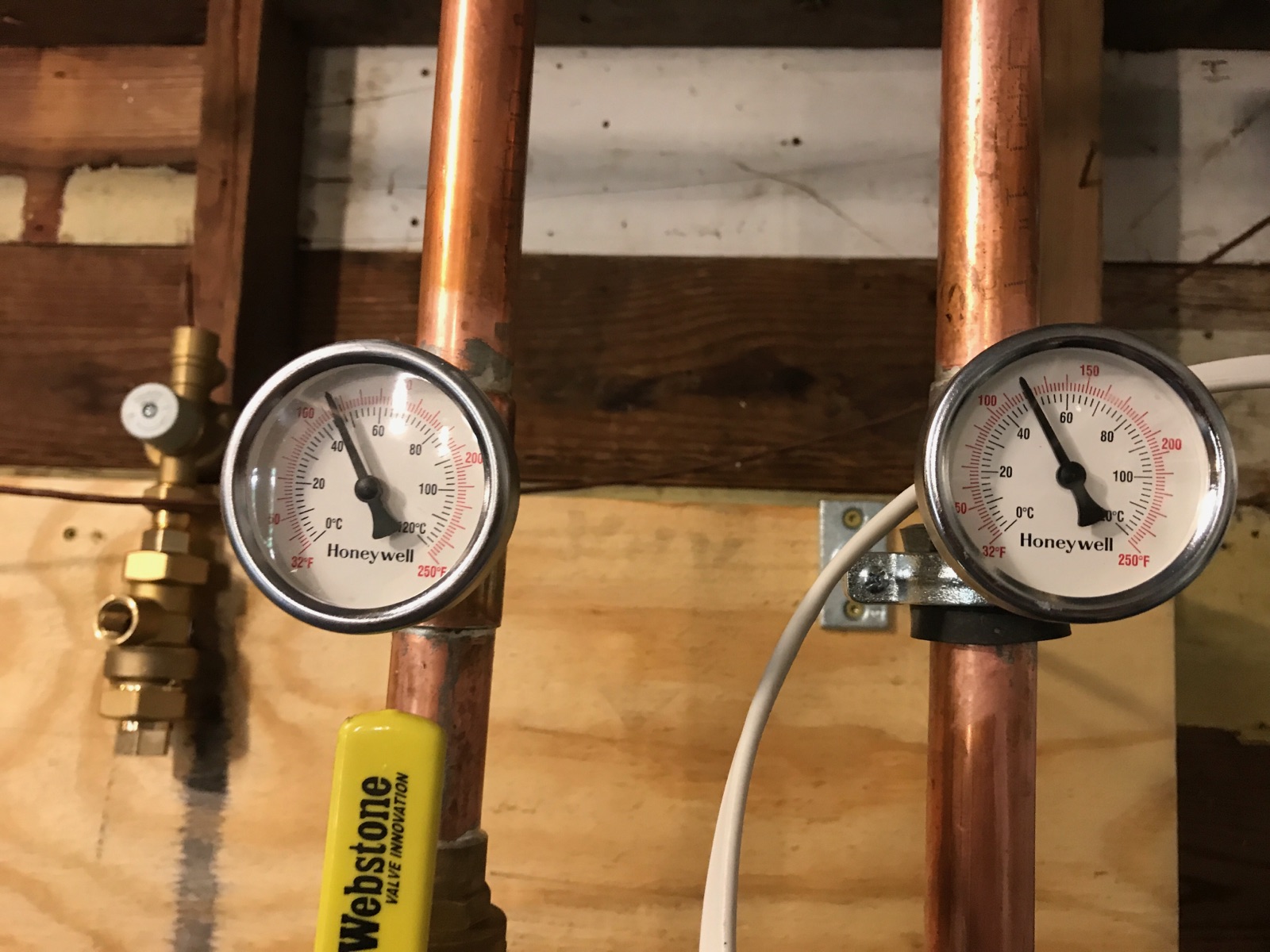


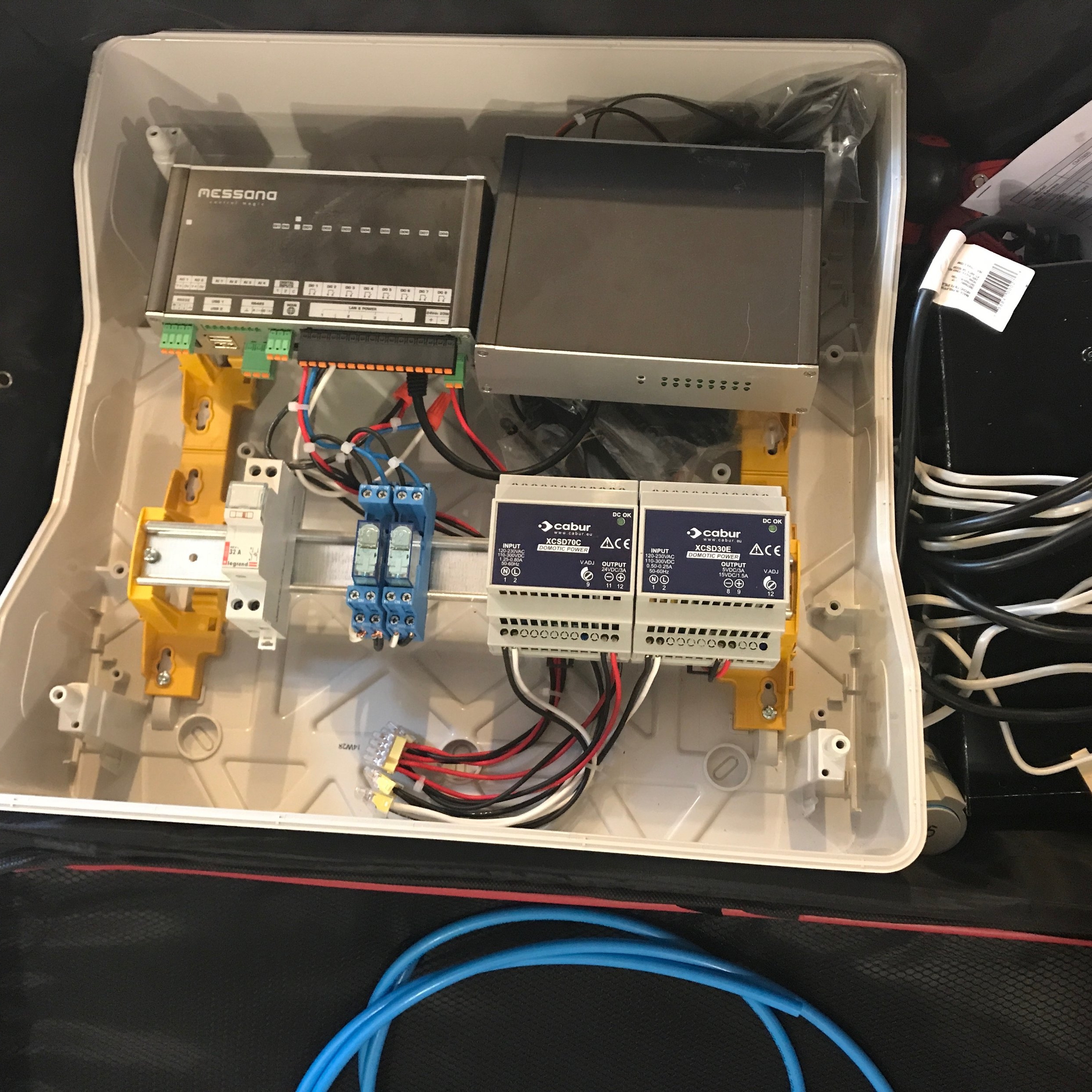





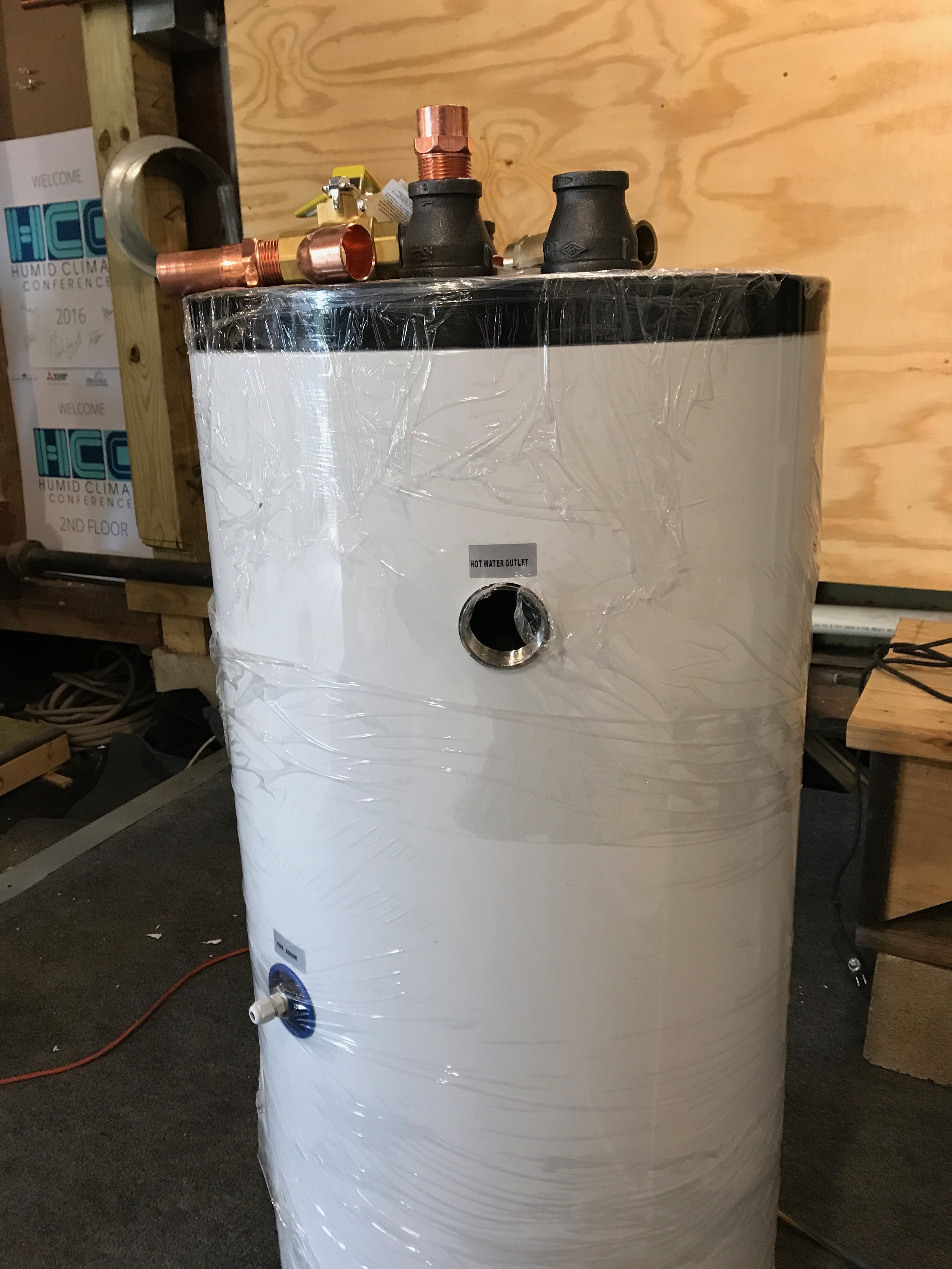

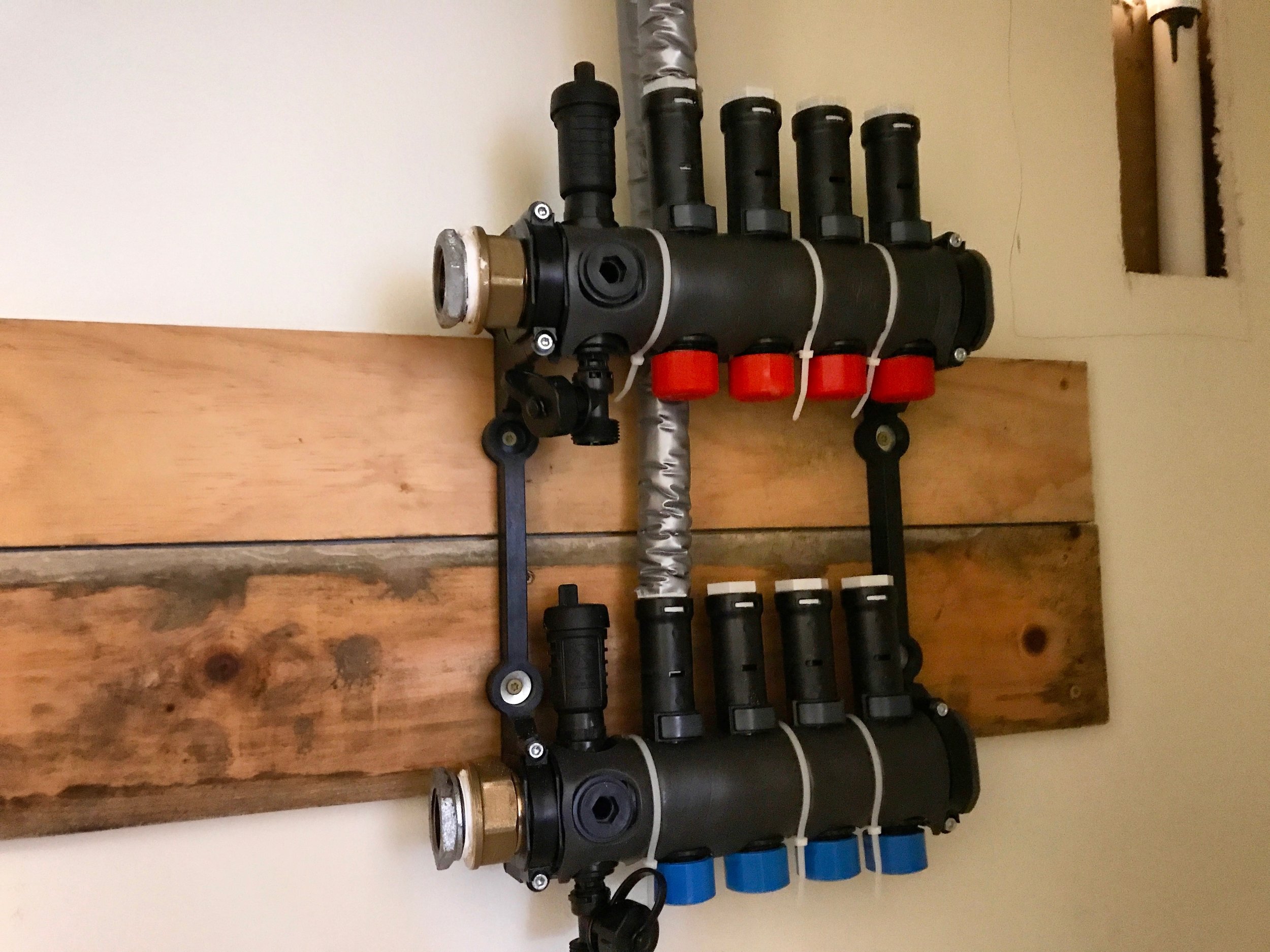

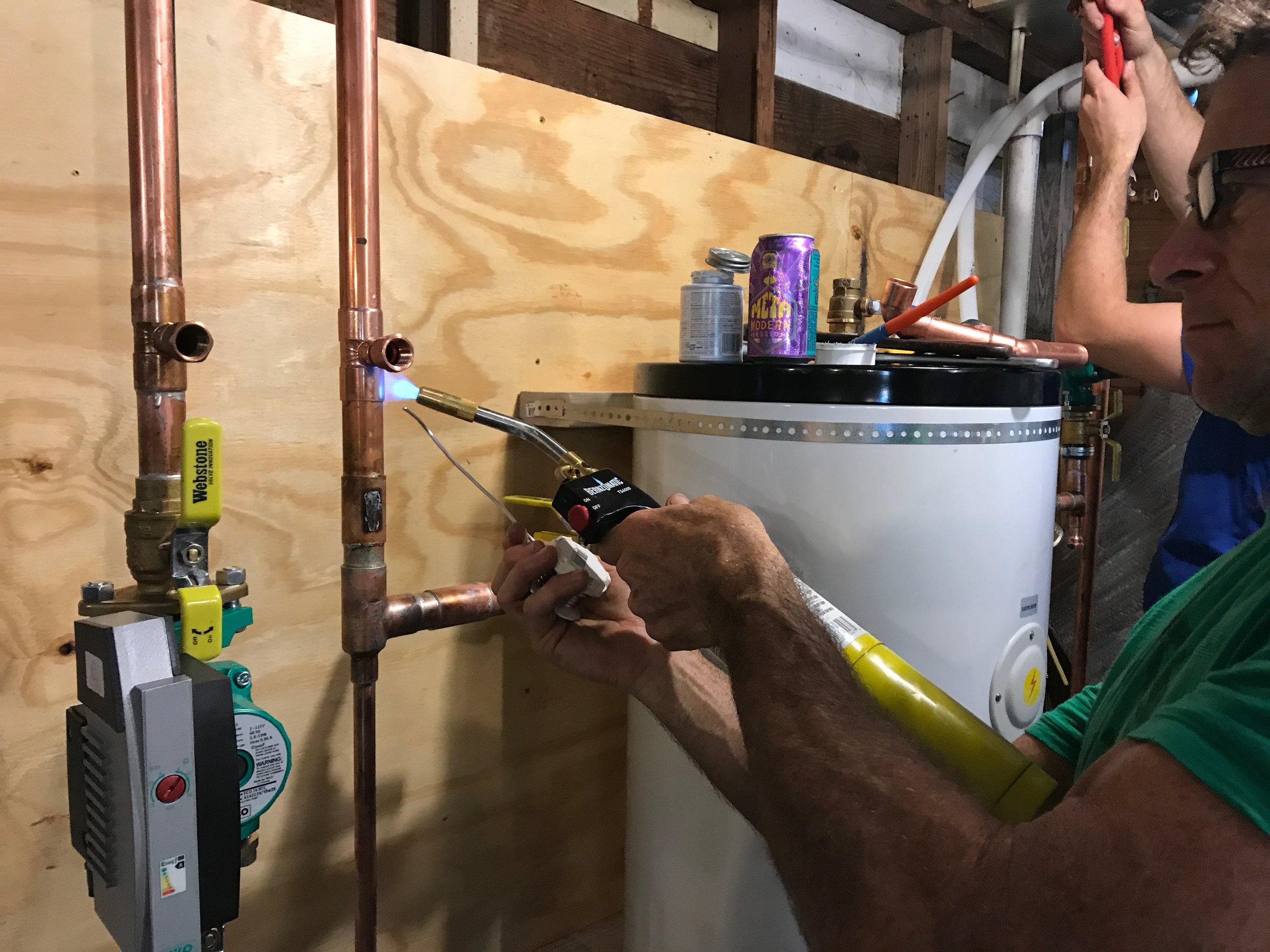

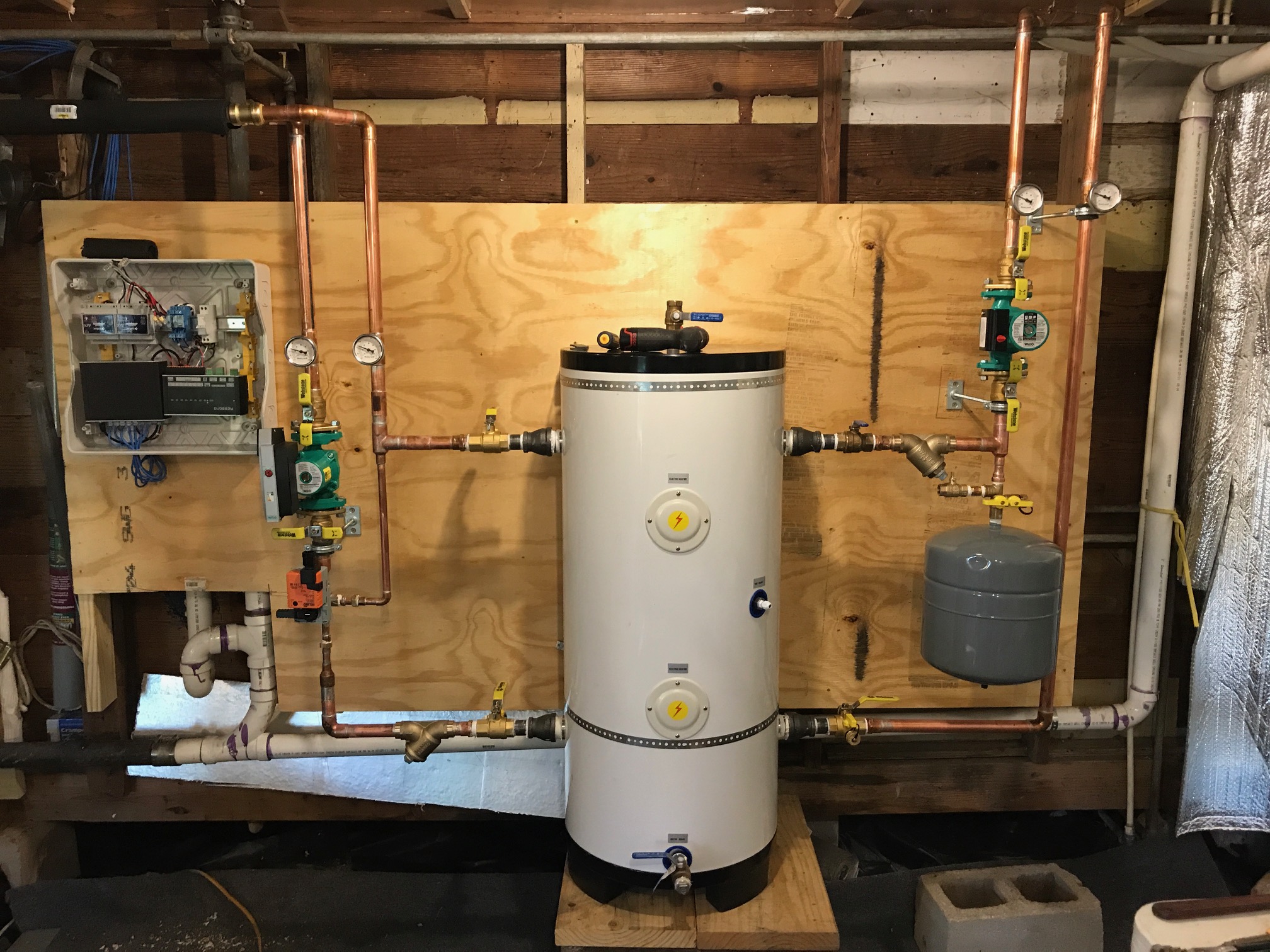
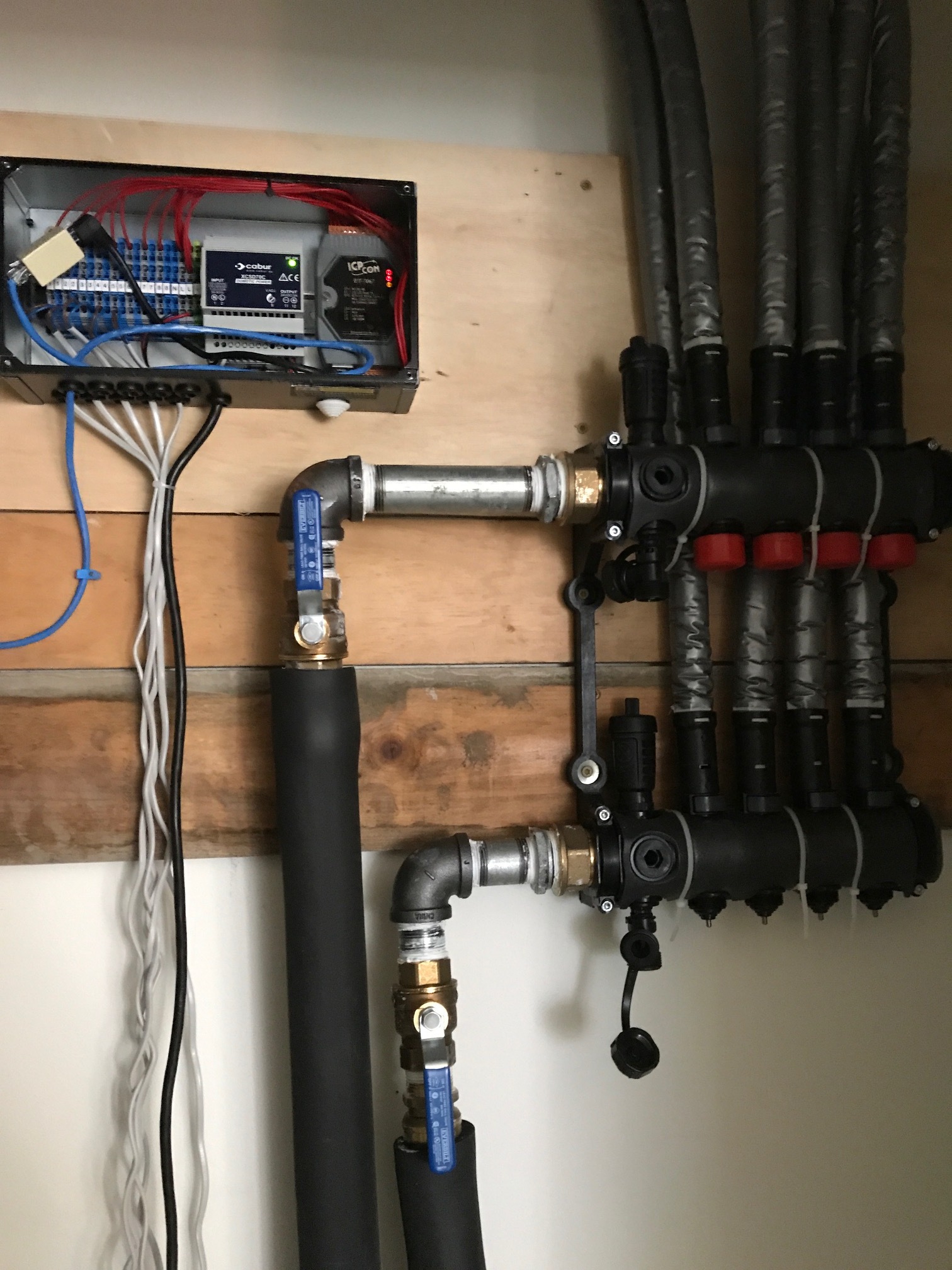
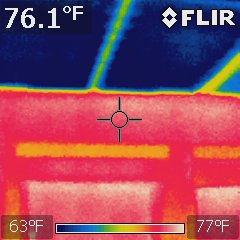
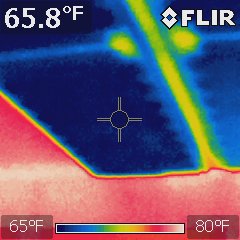
It fortuitously happened that day that the morning outdoor temps started in the 50s and climbed into the upper 80s by afternoon. We had opportunity to use both system modes after we finally got the system turned on. And of course, we got out the IR cameras in both heating and cooling modes.



What would change if we heated and cooled buildings with water rather than air?
Thermally active surfaces stand to advance architecture’s practices and performances: its techniques, technologies, professional and ecological sustainability, budgets, and formal possibilities.
“Thermally active building surfaces is a technique that promises to finally dissolve the fallacy of fragmented architectural design, building science, and their pedagogies.”
If this maxim holds true, then our office should be the coolest one on the block (pardon the pun). We're thrilled to have this system in our office and can't wait to have you over to check it out. Let us know next time you'll be in the neighborhood and we'll see about having you over to check out our 8th wonder of the world.
And remember, all of this madness is because we see the clear future for architecture and construction in one simple phrase:

Want To See It In Person?
Thursday, June 22
Please join us to get an in-person tour of our radiant system and discussion about the benefits and future of systems like this:
Bring the beer/wine you love along with an open mind.
Come to our office at 1206 B South 3rd, Austin, TX 78704
Please respect our neighbors by parking along 3rd street near the park
Show up at 4:30PM, leave at 6:00PM
Big thanks to our friends at Messana for their generous material, intellectual, and financial support of this system. Without their help, it wouldn't have been even remotely possible. Check out their amazing products yourself and don't hesitate to reach out to us with more questions about how it all works
