

Rethinking Moisture Control: The Primacy of Air Tightness Over an Outdated Fixation on Vapor Barriers in Building Envelope Design
For decades, the architecture and construction community has engaged in a persistent debate surrounding the role and necessity of vapor barriers in building envelope design. This discussion, while touching on critical aspects of moisture control, has often been characterized by an overemphasis on the ability of specific materials to resist vapor diffusion, sometimes to the detriment of addressing more significant moisture transport mechanisms. Within the building science community, however, the principles governing moisture movement are largely considered settled science. It is well-established that air leakage, rather than vapor diffusion, is the predominant pathway for moisture transport through most wall assemblies.
By Positive Energy staff
The Misplaced Emphasis in The Moisture Management Puzzle
For decades, the architecture and construction community has engaged in a persistent debate surrounding the role and necessity of vapor barriers in building envelope design. This discussion, while touching on critical aspects of moisture control, has often been characterized by an overemphasis on the ability of specific materials to resist vapor diffusion, sometimes to the detriment of addressing more significant moisture transport mechanisms. Within the building science community, however, the principles governing moisture movement are largely considered settled science. It is well-established that air leakage, rather than vapor diffusion, is the predominant pathway for moisture transport through most wall assemblies.[1]
We’d like to put forth a compelling case for a fundamental shift in focus within the design and construction industries, from an often-misplaced obsession with vapor barriers, to a prioritized emphasis on achieving comprehensive air tightness. This is not a new idea and unfortunately not the only time it will have to be re-asserted. But by examining the historical context, the fundamental mechanisms of moisture transport, the distinct roles of air and vapor control layers, and the extensive benefits of air tightness, this blog post will demonstrate why a continuous air barrier system is a much more appropriate system of focus for creating durable, energy-efficient, and healthy buildings. We will also clearly delineate the necessary caveats where specific vapor diffusion control strategies remain essential, as in extreme climate zones or when dealing with reservoir claddings like stucco, brick, etc.
Historical Context and the Evolution of "Vapor Barrier Science"
The concept and application of vapor barriers in construction have undergone a significant evolution, shaped by early research, practical experience, and an advancing understanding of building physics. Historically, vapor barriers were largely a cold climate artifact, introduced with the primary intention of preventing moisture from indoor sources from migrating into wall cavities and condensing on cold exterior components during winter.[9] This initial focus was driven by observations of condensation-related damage in insulated wood-frame buildings in northern climates. This dynamic has been true of a number of early building science lessons and, while the research and literature has advanced, the public understanding of the current state of the literature requires repeated emphasis in order to properly affect practices in design and in the field.
To this very day, there is still considerable confusion between controlling vapor diffusion and controlling airflow. Much of that confusion lies in a misunderstanding of the principles of moisture transportation. Early building science informed attempts to manage moisture often involved using materials like sheet polyethylene, which, while an effective vapor retarder, was also tasked with acting as an air barrier, leading to the term "air-vapor barrier".[11] This dual-function approach, notably employed in programs like Canada's R-2000, aimed to create a sealed interior plane. However, achieving effective air tightness with polyethylene sheets proved daunting in practice. It required meticulous, painstaking effort to seal all laps and penetrations, often using acoustical sealants that were messy and difficult to work with.[11] This method was not great for typical production building speeds and its long-term robustness was questionable, as the thin plastic sheets were susceptible to damage during construction and over the building's service life.[11] This interior "air-vapor barrier" approach was also inherently climate-sensitive; in air-conditioned buildings, it placed a vapor-impermeable layer on the wrong side of the assembly during cooling seasons, potentially trapping moisture.[11]
Throughout the post-war years, practitioners were often taught, incorrectly, that interior vapor barriers were universally necessary in cold climates to protect assemblies, leading to the widespread adoption of kraft-faced and foil-faced batt insulation.[11] These facings, however, were inherently discontinuous and proved largely ineffective in preventing moisture problems, primarily because the dominant transport mechanism – air leakage carrying vapor – was not adequately addressed.[11]
As building science matured, a more nuanced understanding emerged. It became clear that vapor diffusion, the slow movement of water molecules through materials, was often a minor contributor to moisture accumulation compared to the substantial quantities of moisture that could be transported by air leaking through gaps and cracks in the building envelope.[3] This realization led to a refinement in terminology, with "vapor retarder" becoming the preferred term over "vapor barrier," acknowledging that most materials slow down diffusion rather than completely stopping it.[13] The term "vapor barrier" is now generally reserved for Class I vapor retarders, which are highly impermeable.[9]
Our understanding of vapor retarders today, and whether or not they are appropriate in a given building’s assemblies, involves a sophisticated, climate-specific approach. This is a significant departure from the initial, often misapplied, concept of a universal interior vapor barrier or even the notion of having a vapor barrier in the assembly at all. This evolution itself highlights that the early fixation on impermeable interior barriers was based on an incomplete understanding of moisture dynamics. Modern building codes, such as the International Residential Code (IRC) and International Building Code (IBC), now reflect this more mature understanding by mandating vapor retarders based on climate zone, often not requiring them at all in warmer climates, or allowing for more permeable options when certain conditions like exterior continuous insulation are met.[16] While codes aren’t perfect, the codification of climate-dependent strategies is still important because it is a clear indicator of the general consensus within the building science community.
Understanding Moisture Transport Mechanisms in Wall Assemblies
To effectively manage moisture in building envelopes, it is essential to understand the primary ways in which water, in its various phases, can move into and through wall assemblies. Building science identifies four principal mechanisms of moisture transport [5]:
Bulk Water Intrusion: This refers to the movement of liquid water—primarily from rain, snowmelt, or groundwater—through openings, cracks, or defects in the building envelope.[5] Examples include leaks at roof-wall intersections, poorly sealed window and door penetrations, or inadequate foundation drainage. Bulk water has the potential to introduce the largest quantities of moisture in the shortest time and is often the most damaging mechanism, leading to rapid saturation of materials, structural decay, and mold growth.5 Controlling bulk water through proper design of drainage planes, flashing, and water-shedding surfaces is the first line of defense in any moisture management strategy.[23]
Capillary Action: Capillarity is the ability of liquid water to be drawn into and move through the fine pores of materials, even against the force of gravity.[5] This "wicking" effect is common in porous materials like concrete, masonry, wood, and soil. Examples include moisture rising from damp ground into a concrete foundation wall or water being drawn into the end grain of wood siding.[13] While often less dramatic than bulk leaks, capillary action can lead to persistent dampness and significant hidden damage over time if capillary breaks (non-porous materials or air gaps) are not incorporated into the assembly.[13]
Air-Transported Moisture: Air can carry significant amounts of water in vapor form. When air moves through unintended openings in the building envelope (air leakage), it transports this moisture with it.[5] If warm, moist air leaks into a cooler part of the wall assembly, or contacts a surface below its dew point temperature, the water vapor can condense into liquid water.[12] This mechanism is driven by air pressure differences across the envelope, caused by wind, stack effect, or mechanical ventilation imbalances.[12]
Vapor Diffusion: This is the movement of water vapor at a molecular level through a material, driven by a difference in vapor pressure (concentration) or temperature.[5] Water vapor naturally moves from an area of higher concentration to an area of lower concentration, and from warmer to colder regions. The rate of diffusion depends on the vapor pressure gradient and the permeability of the material to water vapor.[13]
Of these four mechanisms, air-transported moisture is quantitatively the most significant pathway for water vapor entry into typical building cavities, far exceeding the amount transported by vapor diffusion alone. Numerous sources confirm that air leakage can transport 50 to 100 times more water vapor than diffusion through the same area of building material over the same period.[1] For instance, one study illustrates that while about 0.3 liters (1/3 quart) of water might diffuse through an intact 4×8-foot sheet of gypsum board during a heating season, a mere 1-square-inch hole in that same sheet could allow approximately 28.4 to 30 quarts of water to be carried into the wall by air leakage under typical pressure differences.[6] Renowned building scientist Joe Lstiburek similarly quantifies this difference, stating that moisture transport via air leaks is typically two orders of magnitude (a factor of 100) greater than through diffusion, even through a compromised vapor retarder.[7]
This disproportionate impact of air leakage is a fundamental concept that underpins the argument for prioritizing air tightness. Even if a "perfect" vapor retarder is installed to address diffusion, its overall effectiveness in controlling moisture will be severely compromised if pathways for air leakage remain. The persistent debate or overemphasis on vapor barriers within some segments of the construction industry often appears to overlook or insufficiently appreciate this crucial quantitative distinction—a distinction that has been well-established in building science for many years.[3] An effective moisture control strategy must, therefore, primarily focus on eliminating or drastically reducing air leakage.
Defining the Layers: Air Barriers vs. Vapor Retarders
A clear understanding of the distinct functions, materials, and performance metrics of air barriers and vapor retarders is crucial to dispel confusion and correctly prioritize moisture control strategies. While both contribute to managing the building envelope, they address different physical phenomena and moisture transport mechanisms.
Air Barriers:
The primary function of an air barrier system is to control the unintended movement of air into and out of a building and through its assemblies.[1] By controlling airflow, an air barrier inherently helps to manage air-transported moisture, which, as established, is a dominant vector for moisture problems.[1] An effective air barrier must be continuous over the entire building envelope, encompassing walls, roofs, and foundations, and meticulously sealed at all joints, penetrations (windows, doors, pipes, wiring), and transitions between different building components.[1]
Typical materials used for air barriers include specially designed membranes (house wraps), sheathing materials (like plywood or OSB with sealed joints), fluid-applied membranes, spray foam insulation (specifically closed-cell, when applied continuously), and even meticulously detailed gypsum board (though this approach has limitations).[2]
The performance of an air barrier material is quantified by its air permeance, typically measured in liters per second per square meter at a pressure differential of 75 Pascals (L/(s⋅m2) @ 75 Pa). A common benchmark for an air barrier material is an air permeance not greater than 0.02L/(s⋅m2) @ 75 Pa, as per ASTM E2178.[1] Whole building air tightness is often measured in air changes per hour at 50 Pascals (ACH50) using a blower door test.[28]
Vapor Retarders:
The primary function of a vapor retarder is to reduce the rate at which water vapor moves through a material via diffusion.[1] It does not, by its primary definition, control airflow. Again, the term "vapor retarder" is more accurate than the older term "vapor barrier" because most materials only slow down the process of diffusion rather than stopping it completely.[3] The term "vapor barrier" is often colloquially used to refer to Class I vapor retarders, which are very impermeable.[9]
The performance of a vapor retarder is measured by its water vapor permeance, commonly expressed in "perms." Materials are classified by their perm rating according to standards like ASTM E96:
Class I Vapor Retarder: ≤0.1 perm (vapor impermeable). Examples include polyethylene sheeting, non-perforated aluminum foil, glass, and sheet metal.1
Class II Vapor Retarder: > 0.1 perm to ≤1.0 perm (vapor semi-impermeable). Examples include kraft-faced fiberglass batt insulation, unfaced expanded or extruded polystyrene, some plywoods, and bitumen-coated paper.1
Class III Vapor Retarder: > 1.0 perm to ≤10 perms (vapor semi-permeable). Examples include gypsum board, latex or enamel paint (some paints), unfaced fiberglass insulation, cellulose insulation, and many house wraps.1 Materials with a perm rating greater than 10 are generally considered vapor permeable.2 The placement of vapor retarders is highly dependent on climate and the specific wall assembly design, generally positioned on the warm-in-winter side in cold climates to control outward diffusion, or sometimes on the exterior in very hot-humid climates if used, though often omitted in such climates to promote inward drying.4
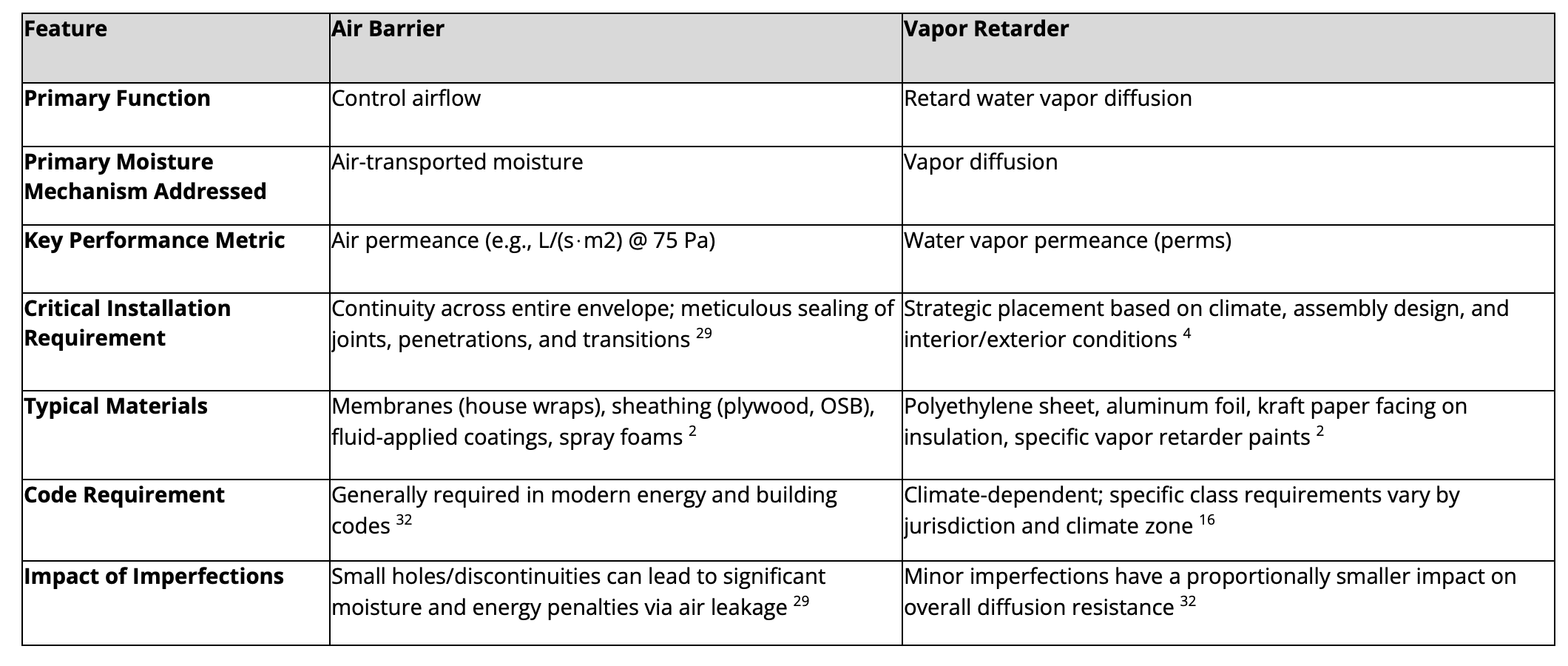
Table 1: Air Barrier vs. Vapor Retarder – A Functional Comparison
A critical source of ongoing confusion is the terminology itself. The term "vapor barrier," with its definitive "barrier" connotation, implies a more absolute and critical role in stopping all vapor movement than the more accurate term "vapor retarder," which reflects the function of managing diffusion rates.[13] This linguistic legacy subtly reinforces the notion that achieving a near-zero perm rating is a primary goal, overshadowing the more pressing need to stop air movement, which carries far more moisture.
The fact that some materials can function as both an air barrier and a vapor retarder (e.g., a meticulously sealed polyethylene sheet or continuous closed-cell spray foam) further blurs the functional distinctions in practice.[11] This can lead to the erroneous assumption that specifying a material for its vapor retarding properties automatically ensures adequate air barrier performance, or vice versa. However, the level of detailing and continuity required for an effective air barrier system is far more rigorous and unforgiving than what might be considered adequate for a vapor retarder whose primary role is to manage diffusion across its surface area.[29] A 10% discontinuity in a vapor retarder might mean it's 90% effective at retarding diffusion, but a 10% discontinuity in an air barrier system can lead to catastrophic failures in moisture and energy control.[32]
It is imperative for the design and construction industry to clearly separate the specification and performance targets for air control from those for vapor control. While integrated products and materials exist, the distinct functional requirements and, most importantly, the detailing for continuity of the air control layer, must be independently understood, specified, and meticulously executed to achieve desired building performance. Simply calling for a "vapor barrier" and hoping it also serves as an adequate air barrier is an approach fraught with risk.
The Primacy of Air Tightness: A Holistic Approach to Building Performance
Given that air leakage is overwhelmingly the dominant mechanism for moisture transport into and through building assemblies [1], the establishment of a continuous and robust air barrier system emerges as the single most critical strategy for effective moisture control. As building scientist Joseph Lstiburek succinctly states, "air barriers are a good idea everywhere, vapor barriers are not".[4] An effective air barrier minimizes the potential for condensation within the building envelope by preventing warm, moist air from reaching cold condensing surfaces.[12]
However, the importance of air tightness extends far beyond just moisture management. Achieving a high level of air tightness offers a multitude of interconnected benefits that contribute to overall building performance, occupant well-being, and long-term durability:
Energy Efficiency: This is perhaps the most widely recognized benefit. By minimizing uncontrolled air exchange (infiltration of outside air and exfiltration of conditioned inside air), air barriers significantly reduce heating and cooling loads. This translates directly to lower energy consumption, with potential reductions ranging from 10% to 40% in general buildings [29] and around 15% in homes designed to Zero Net Energy (ZNE) standards.31 Consequently, operational costs are lowered as HVAC systems do not have to work as hard to maintain desired indoor temperatures.[28]
Improved Comfort: Airtight buildings provide a more comfortable indoor environment by eliminating drafts and cold spots often associated with leaky envelopes.[31] This leads to more consistent and stable indoor temperatures throughout the conditioned space.
Enhanced Indoor Air Quality (IAQ): A continuous air barrier plays a crucial role in protecting IAQ by controlling the entry of outdoor pollutants such as dust, pollen, smoke, and soil gases like radon (which is primarily transported by air, not diffusion[7]).[29] Research indicates that airtight homes can reduce indoor concentrations of harmful PM2.5 particles by approximately 70% compared to conventional, leakier homes.[31] Furthermore, air tightness enables mechanical ventilation systems to operate much more effectively and predictably. Instead of relying on uncontrolled and often polluted air leakage paths, ventilation systems in tight buildings can provide the correct amount of fresh, filtered air from a known source, precisely managing indoor humidity and diluting internally generated pollutants.[31]
Building Durability: By significantly reducing the amount of moisture entering and moving through building assemblies via air leakage, air barriers mitigate the risk of moisture-related damage to building components. This includes preventing rot in wood framing, corrosion of metal components, and degradation of insulation materials, thereby extending the structure's lifespan and preventing premature failure of components.[28]
Acoustic Control: Well-sealed building envelopes can also contribute to improved sound isolation, reducing the transmission of exterior noise.[29]
The realization of these benefits hinges on one critical factor: the continuity and quality of workmanship of the air barrier system. Unlike vapor retarders, where minor imperfections might lead to a proportional decrease in diffusion resistance, the performance of an air barrier is fundamentally compromised by discontinuities.[32] As stated in one industry report, "The success of an air barrier system is highly dependent on skilled installation and adherence to detailed specifications. Because it is a barrier, any failure point can compromise the entire performance".[29] Many of you likely recognize the common failure points for air barriers, such as joints between materials, transitions between different assemblies (e.g., wall-to-roof, wall-to-foundation), and penetrations for windows, doors, pipes, and wiring.[29] Meticulous sealing of these areas using appropriate tapes, sealants, and gaskets is paramount, as is testing your results.[13] Achieving this level of continuity requires careful planning, coordination among trades, and a commitment to quality construction practices.[30]
The multiple, significant co-benefits derived from achieving superior air tightness—spanning energy savings, enhanced IAQ, improved durability, and greater occupant comfort—make it a far more impactful and cost-effective strategy to prioritize in building design and construction than a narrow focus on controlling vapor diffusion. Investing in a high-quality, continuous air barrier system yields substantial returns across a wide spectrum of building performance metrics. In contrast, an overemphasis on a specific class of vapor retarder primarily targets vapor diffusion, which is often a secondary moisture transport mechanism. When viewed through the broader lens of holistic building performance and lifecycle costs, the return on investment for achieving superior air tightness is demonstrably higher, making the historical "obsession" with vapor barriers appear even more disproportionate.
Interestingly, the very act of meticulously creating a continuous air barrier can often incidentally improve control over vapor diffusion, even if the primary air barrier material itself is vapor permeable (like many house wraps). Many pathways for air leakage, such as gaps at joints or around penetrations, also represent potential pathways for vapor diffusion if a vapor pressure differential exists across them. By diligently sealing these openings to achieve air control [29], one inherently reduces the surface area available for diffusion at these critical junctures. While the primary air barrier material might be designed to allow vapor to pass through it, the act of sealing its edges and integrating it continuously into the building envelope makes the overall assembly more resistant to all forms of gaseous transport through those specific, sealed leakage points. This implies that a dedicated focus on achieving comprehensive air tightness can indirectly bolster vapor control, whereas focusing solely on the perm rating of a vapor retarder does little to address the far more significant issue of air leakage.
This underscores the need for a shift in industry quality control and verification processes. While whole-building air leakage testing (e.g., blower door tests) is becoming more common and is mandated by some codes 28, the broader mindset shift towards viewing and executing "airtightness as a system" rather than merely installing an "air barrier product" is still developing. The emphasis on "construction quality and workmanship" 29 is far more critical for the successful performance of an air barrier system than it is for a vapor retarder.
The Importance of Dedicated Dehumidification
A core principle of durable building design is maintaining a moisture balance where the rate of moisture removal from an assembly consistently exceeds the rate of moisture entry. If wetting outpaces drying, moisture accumulation occurs, leading to degradation of materials, structural damage, and potential health issues from mold growth. While the strategies discussed previously—prioritizing air tightness and strategically using vapor retarders—are crucial for minimizing wetting, actively promoting drying is equally important, particularly in challenging conditions like a hot/humid climate.
In many modern, airtight homes, and especially in humid climates or buildings with high internal moisture loads (e.g., from occupants, cooking, construction moisture, etc.), relying solely on passive drying mechanisms (like vapor diffusion through permeable materials) or the incidental dehumidification provided by standard air conditioning systems may not be sufficient to ensure net drying. Air conditioning systems are primarily designed for sensible cooling (temperature control) and may not operate long enough or at optimal conditions to adequately remove latent moisture (humidity), especially during shoulder seasons or under partial load conditions.
This is where dedicated dehumidification systems play a critical role. These systems are designed specifically to remove excess moisture from the indoor air, thereby lowering the indoor relative humidity (RH). By maintaining a lower indoor RH (ideally between 30-60%, or even below 50%), a greater vapor pressure differential is established between the moist building materials and the drier indoor air. This enhanced differential significantly increases the drying potential of the assemblies towards the interior.
Benefits of Dedicated Dehumidification:
Enhanced Drying Capacity: Actively reduces indoor humidity, creating a more favorable gradient for moisture to move out of damp materials. This is crucial for drying incidental wetting from leaks, construction moisture, or even inward vapor drives that might bypass other defenses.
Improved Indoor Air Quality (IAQ) and Health: By maintaining lower RH, dedicated dehumidifiers help prevent conditions conducive to mold growth, dust mites, and other biological contaminants, which thrive in damp environments.
Occupant Comfort: Lower humidity levels are generally perceived as more comfortable, especially in warm weather.
Protection of Building Materials and Furnishings: Prevents moisture damage to structural components, insulation, finishes, and contents.
Complements Airtight Construction and Mechanical Ventilation: In highly airtight homes, where natural air exchange is minimal, mechanical ventilation (often with Energy Recovery Ventilators - ERVs) is essential for fresh air. While ERVs can help manage some moisture from incoming ventilation air, they do not actively dehumidify the interior space. Supplemental dehumidification works in tandem with these systems to ensure comprehensive moisture control.
Dedicated dehumidification systems can be whole-house units integrated with the HVAC system or standalone units. Their importance has become increasingly recognized, especially in high-performance building standards. Ensuring that the building can reliably dry out any moisture it encounters is a cornerstone of long-term durability (not to mention ensuring indoor air quality), and dedicated dehumidification provides a powerful tool to achieve this goal.
Strategic Use of Vapor Retarders: Necessary Caveats and Considerations
While air tightness is paramount, vapor retarders remain a necessary component of moisture control strategies in specific situations. Their use, however, must be guided by building science principles, particularly the critical need to facilitate drying. A fundamental principle of durable building envelope design is that assemblies should be designed to dry if they become wet, whether from incidental moisture intrusion or construction moisture.9 This necessitates the avoidance of "double vapor barriers"—impermeable layers on both the interior and exterior sides of an assembly—which can trap moisture and prevent drying in either direction.9 The building science consensus encourages "drying mechanisms over wetting prevention mechanisms" wherever feasible.[9]
The appropriate strategy for vapor control is highly dependent on climate and the type of cladding used.
Climate-Specific Needs for Vapor Control:
Extreme Cold Climates (e.g., ASHRAE/IECC Climate Zones 6, 7, 8, and Marine 4 in some instances):
Concern: Significant outward vapor drive from the warm, humidified interior to the cold exterior during winter, risking condensation on or within the cold exterior sheathing or other components of the wall assembly.[20]
Strategy: Typically, building codes mandate a Class I (e.g., polyethylene sheet, ≤0.1 perm) or Class II (e.g., kraft-faced insulation, > 0.1 to ≤1.0 perm) vapor retarder on the interior (warm-in-winter) side of framed walls.[10]
Nuances: Building scientist Joseph Lstiburek suggests that polyethylene (Class I) should generally be reserved for very cold hygro-thermal regions.[40] The addition of sufficient continuous exterior insulation can keep the wall cavity's condensing surfaces (like sheathing) warm enough to prevent condensation, potentially reducing or eliminating the need for a highly impermeable interior vapor retarder.[39] The IRC, for example, allows the use of Class III vapor retarders (e.g., latex paint, > 1.0 to ≤10 perms) in these cold zones if specific R-values of continuous exterior insulation are installed, or in some cases, with vented claddings.[17]
Hot-Humid Climates (e.g., ASHRAE/IECC Climate Zones 1A, 2A, parts of 3A):
Concern: Predominant vapor drive is from the hot, humid exterior to the cooler, air-conditioned interior during much of the year.[20]
Strategy: Interior vapor barriers (Class I or II) should generally be avoided to allow the wall assembly to dry towards the interior.[20] Some even emphatically claim that an interior polyethylene vapor barrier should "NEVER be installed" in these conditions if an exterior air/vapor barrier is present.[41] If an air/vapor barrier is used on the exterior (which can be beneficial for controlling bulk water and the strong inward vapor drive from outside), the wall assembly must be able to dry inwards. Lstiburek advocates for vapor-open assemblies in these climates, potentially with a vapor-permeable air control layer on the interior if masonry is part of the assembly.[44]
Mixed-Humid Climates (e.g., ASHRAE/IECC Climate Zones 3A, 4A, 4C):
Concern: Significant bi-directional vapor drive—outward in winter, inward in summer—makes the placement of a fixed, impermeable vapor barrier problematic.[4] A vapor barrier on the "wrong" side for part of the year can trap moisture.
Strategies:
"Smart" Vapor Retarders: These materials, such as CertainTeed MemBrain or ProClima Intello, have variable vapor permeance. They become more resistant to vapor diffusion (low perm) in dry conditions (typically winter interior) and more permeable (high perm) in humid conditions (typically summer, or if the cavity becomes wet).[45] For example, MemBrain is rated at ≤1 perm (dry cup) and > 10 perms (wet cup) [46], while Intello can range from < 0.13-0.23 perms to > 13 perms.[47] This adaptability allows drying in whichever direction is favored by the prevailing conditions.
Vapor-Open Assemblies: Designing walls to be generally vapor permeable on both sides of the insulation, often incorporating exterior continuous insulation. The primary moisture defense relies on the air barrier and bulk water management (flashing, drainage plane).[34]
Class II or Class III vapor retarders may be appropriate, as they allow a greater degree of drying than Class I materials.
Reservoir Claddings (e.g., Stucco, Brick, Stone, some Fiber Cement):
These claddings present a unique and critical challenge that demands specific attention beyond general climate-based rules.
The Challenge: Reservoir claddings absorb and store significant amounts of rainwater.24 When solar radiation subsequently warms the wet cladding, this stored moisture can be driven inward as a powerful vapor drive ("solar-driven inward vapor drive").[4] This inward pressure can overwhelm wall cavities, leading to condensation on interior layers, particularly if an impermeable interior vapor barrier like polyethylene is present and the building is air-conditioned.[55] This is a major caveat where focusing solely on controlling wintertime outward vapor drive from occupants is insufficient and potentially harmful.
Control Strategies for Inward Drive with Reservoir Claddings:
Ventilated Rainscreen/Cavity: A well-ventilated air space behind the cladding is a critical defense.[56] This gap (e.g., minimum 3/8 inch for many claddings, up to 1 inch or more for brick [56]) decouples the wet cladding from the rest of the wall assembly. It allows the inwardly driven moisture vapor to be carried away by airflow before it can penetrate the wall's weather-resistive barrier (WRB) and sheathing. Effective ventilation requires clear openings (vents) at both the top and bottom of the wall section.[56]
Appropriate WRB/Sheathing Permeance: The selection of the WRB and sheathing behind the ventilated cavity is crucial. In some designs, a WRB or sheathing with lower vapor permeance (acting as an exterior vapor control layer) might be used to "throttle" or resist the inward vapor drive.[56] However, this must be carefully balanced with the need for outward drying capability, especially in colder climates, to avoid creating a double vapor barrier situation.
Avoid Interior Impermeable Layers: In climates with significant air conditioning use, a Class I interior vapor retarder (like polyethylene) is generally contraindicated when reservoir claddings are present.[9] Such an interior barrier traps the solar-driven inward moisture, leading to condensation and potential damage. Lstiburek pointedly noted that the interior polyethylene sheets in many Vancouver condos in the 1980s and 1990s prevented the inward drying of rain-wetted stucco during the summer, contributing to widespread moisture problems.[40]
Additional Strategies: Reducing the reservoir capacity of the cladding itself by using paints or additives can lessen the inward drive potential.[58] Lstiburek advises that for reservoir claddings, one must either ventilate the airspace very effectively or use an exterior vapor throttle (like a dimple sheet behind the cladding) to intercept the inward drive; the key is that the air gap effectively uncouples the cladding from the wall assembly.[59]

Table 2: Vapor Retarder Strategies – Key Caveats and Considerations
The caveats for vapor retarder use are not minor exceptions. They represent common and critical construction scenarios, such as buildings with brick or stucco exteriors, or those located in the diverse climates across North America. In these situations, a simplistic "vapor barrier on the warm side" rule, often learned as a fundamental, can fail dramatically and cause significant harm if not critically assessed against the actual moisture physics at play.[14] The historical borderline obsession with vapor barriers may, in part, stem from an oversimplification of these complex interactions. When reservoir claddings are introduced, for example, solar-driven inward vapor drive becomes a powerful force that can overwhelm an assembly designed only to resist wintertime outward diffusion from occupant activities.[55] If the "warm side" rule is still rigidly applied with an interior polyethylene sheet in an air-conditioned building with a brick exterior, it inadvertently creates a moisture trap.[55] This demonstrates that the simple rule is insufficient for many common building types and that the borderline obsession might be with an incomplete rule itself, rather than a deep understanding of the building science that sometimes invalidates or modifies it.
The development and market presence of "smart" vapor retarders are a direct technological response to the documented failures of fixed-permeance vapor barriers in mixed climates or complex assemblies involving bi-directional vapor flow.[45] Their existence and promotion for challenging situations like mixed climates or unvented roof assemblies underscore that the "settled science" of moisture control includes acknowledging these complexities and providing advanced tools to address them. If traditional polyethylene (Class I) or kraft-facing (Class II) worked perfectly in all situations, there would be little impetus for materials that actively change their permeance in response to ambient humidity.[46] This reinforces that "settled science" does not equate to "simple science" in all applications of vapor control.
Ultimately, effective vapor control is less about finding a single perfect barrier material and more about understanding and managing vapor flow dynamics and drying potential within the entire building assembly, specific to its climate, materials, and operational conditions. This requires a significant shift from a product-centric thinking (i.e., "which vapor barrier product should I use?") to a system-centric, performance-based thinking (i.e., "how will this entire assembly manage all forms of moisture, including vapor, and ensure it can dry if it gets wet?").
Moving Forward: Prioritizing Air Tightness in Design and Construction
To align construction practices with established building science, the architecture and construction community must consciously shift its focus towards prioritizing air tightness. This requires changes in design philosophy, specification practices, on-site execution, and industry education.
Recommendations for the Architecture and Construction Community:
Prioritize Air Barrier System Design from Concept: The air barrier system should not be an afterthought or a layer simply added to the drawings. It must be a primary design consideration from the earliest conceptual stages. Designers need to clearly define the location of the continuous air control layer(s) and ensure this continuity is meticulously planned across all building assemblies and critical interfaces (e.g., wall-to-roof, wall-to-foundation, around penetrations).[29]
Specify for Air Tightness Performance, Not Just Products: Specifications should move beyond merely naming an air barrier material. They should include measurable air tightness targets for the whole building (e.g., a specific ACH50 value) and potentially for assemblies or components. Crucially, specifications must mandate verification through quantitative testing, such as whole-building blower door tests.[28] This shifts the focus from simply installing a product to achieving a verifiable performance outcome. Consider using the Phius performance standard for high levels of quality assurance and quality control.
Invest in Education and Training: Continuous education for design professionals, project managers, and construction crews is essential. This training should cover current building science principles related to air leakage, moisture transport mechanisms, the appropriate and strategic use of vapor retarders, and importantly, how to correctly detail and install air barrier systems.[30] Efforts should be made to actively address and debunk persistent misconceptions surrounding vapor barriers and air barriers.[40]
Develop and Implement Robust Detailing for Continuity: The success of an air barrier system lies in its continuity. Architects and designers must develop robust, practical, and buildable details for all penetrations, joints, and transitions between different air barrier materials or building assemblies. These details are where systems most commonly fail.[29]
Shift Mindset from "Vapor Barrier" to "Vapor Management": The industry needs to internalize that vapor control is about managing diffusion rates appropriate to the specific climate and assembly, not just about stopping all vapor movement with an impermeable layer. This involves embracing strategies like vapor-open assemblies or the use of smart vapor retarders where these approaches enhance the overall drying potential and resilience of the building envelope.[9]
Critically Evaluate "Rules of Thumb" and Historical Practices: Long-standing practices and simplified rules regarding vapor barrier placement should be critically examined against current building science. Decisions must be based on climate-specific, assembly-specific hygrothermal analysis rather than outdated or overly generalized guidelines.
The Role of Building Codes and Standards:
Building codes and industry standards play a vital role in driving practice. Continued advocacy for and support of code advancements that emphasize verifiable air tightness performance are necessary. Codes should also provide clear, science-based, and nuanced guidance on vapor retarder selection and placement, moving away from potentially problematic or overly simplistic blanket requirements. The evolution of codes to include mandatory air barrier requirements and air leakage testing is a positive development.[32] Standards like ASHRAE 90.1, which already mandate continuous air barriers with specific maximum air leakage rates for materials, assemblies, and whole buildings, provide a robust framework that can be more broadly adopted and rigorously enforced.[35]
Achieving a genuine shift in industry focus towards air tightness requires more than just better products; it demands better processes. From the initial design integration and clarity of specifications to the crucial inter-trade coordination and robust quality assurance/quality control (QA/QC) measures on the construction site, air tightness is a systems challenge.[29] It is not about a single product's performance in isolation but about how multiple components and materials are meticulously assembled by various trades to form a continuous, unbroken plane of air control. Therefore, simply specifying an "air barrier material" is insufficient. The design must explicitly show how this material connects and remains continuous across the entire envelope; trades must be trained in the specific techniques required for its correct installation; and site inspections, coupled with diagnostic testing, must verify that the intended performance is achieved.
This process-oriented approach is inherently more demanding than the simpler, often less critical, task of specifying and installing a sheet of polyethylene as a "vapor barrier."
The historical lack of widespread, rigorous air barrier verification (though this is improving with more stringent code requirements for testing [32]) has arguably allowed suboptimal air sealing practices to persist. Without consistent measurement and accountability for air tightness performance, the perceived urgency to perfect it may remain lower than its actual importance warrants. If air tightness is not consistently tested and failures are not identified and rectified [28], then the often severe consequences of poor air barrier detailing (e.g., hidden moisture damage, high energy bills, poor IAQ) are less immediately visible than, for instance, a bulk water leak from a poorly flashed window. This lack of immediate, obvious feedback can foster complacency or lead to a continued underestimation of air leakage's multifaceted impact, thereby allowing the "vapor barrier obsession" to continue as a more visible, albeit often less critical, focal point of moisture control discussions.
Ultimately, shifting the industry's predominant focus from vapor barriers to air tightness is a cultural transformation as much as a technical one. It will require a concerted and sustained effort involving designers (who must prioritize and detail for air continuity), builders and contractors (who must ensure meticulous execution and implement effective QA/QC), code officials (who must understand and enforce air tightness standards more rigorously), and even manufacturers (who should provide clearer guidance on system integration rather than focusing solely on individual product features).
A Call for a Science-Based Shift in Focus
The evidence from decades of building science research and field experience is unequivocal: air tightness is the most critical factor in controlling moisture transport through building assemblies in the majority of construction scenarios. The quantity of moisture carried by air leakage far surpasses that transported by vapor diffusion.[1] This fundamental understanding necessitates a paradigm shift in the architecture and construction community—a move away from an often disproportionate and historically rooted fixation on vapor barriers towards the primacy of designing and constructing robust, continuous air barrier systems.
This is not to say that vapor retarders have no role. They are indeed necessary tools, but their application must be strategic, nuanced, and firmly grounded in current building science. The "settled science" provides clear, climate-specific and assembly-specific guidance for their appropriate use, particularly in extreme cold climates and when dealing with the complexities of reservoir claddings and solar-driven inward vapor drive.[14] This modern understanding moves far beyond outdated, overly simplistic blanket rules that can, in many common situations, lead to moisture-related building failures by trapping moisture or impeding necessary drying.
Adopting a holistic, science-informed approach that prioritizes a continuous air barrier system, coupled with intelligent and context-appropriate vapor management strategies, offers profound benefits. Such an approach leads to buildings that are significantly more durable, energy-efficient, and provide healthier indoor environments for their occupants.[28] This shift not only reduces the risk of costly moisture-related failures and repairs but also improves occupant comfort and optimizes the allocation of resources in both design and construction phases.
The near obsession with vapor barriers is not merely an academic debate; it has tangible real-world consequences, contributing to building failures, energy waste, and compromised occupant health when it distracts from the more pressing need for air tightness.[28] Therefore, the advocated shift in focus is not just a technical correction but a matter of professional responsibility for those involved in creating the built environment.
It is time for the architecture and construction community to collectively move beyond the prolonged and often misdirected preoccupation with vapor barriers. Instead, the industry must embrace the well-established primacy of air tightness as the cornerstone of effective moisture control and overall building performance. Successfully making this transition will not only prevent common building problems but will also enhance the reputation and value proposition of the AEC industry by consistently delivering buildings that perform better, last longer, and truly align with the robust body of knowledge developed by the building science community. This alignment is crucial for creating a more sustainable, resilient, and healthy built future.
Works cited
Air Barrier vs Vapor Barrier: What are The Differences, accessed May 12, 2025, https://barricadebp.com/news/air-barriers-vs-vapor-barriers
Air Barrier vs Vapor Barrier- What You NEED to Know - Healthy Building Science, accessed May 12, 2025, https://healthybuildingscience.com/2024/02/01/air-barrier-vs-vapor-barrier-what-you-need-to-know/
Vapor barrier - Wikipedia, accessed May 12, 2025, https://en.wikipedia.org/wiki/Vapor_barrier
buildingscience.com, accessed May 12, 2025, https://buildingscience.com/sites/default/files/migrate/pdf/RR-0004_Air_Barrier_Vapor_Barrier.pdf
ENERGY SERIES: What about Moisture? | VCE Publications ..., accessed May 12, 2025, https://www.pubs.ext.vt.edu/2908/2908-9020/2908-9020.html
Understanding Moisture Flow | CertainTeed, accessed May 12, 2025, https://www.certainteed.com/inspiration/case-studies/understanding-moisture-flow
Air Barrier or Vapor Barrier? - Building Science Podcast ..., accessed May 12, 2025, https://www.greenbuildingadvisor.com/article/air-barrier-or-vapor-barrier-building-science-podcast
Controlling condensation from air leakage and vapour diffusion ..., accessed May 12, 2025, https://www.constructioncanada.net/controlling-condensation-from-air-leakage-and-vapour-diffusion/
BSD-106: Understanding Vapor Barriers | buildingscience.com, accessed May 12, 2025, https://buildingscience.com/documents/digests/bsd-106-understanding-vapor-barriers
Understanding Vapor Barriers - VaproShield, accessed May 12, 2025, https://vaproshield.com/images/stories/pdf/joe%20lstiburek%20understanding%20vapor%20barriers%20ashrae%202004%2008.pdf
BSI-084: Forty Years of Air Barriers\*—The Evolution of the ..., accessed May 12, 2025, https://buildingscience.com/documents/insights/bsi-084-forty-years-of-air-barriers
Moisture Transfer through Walls, accessed May 12, 2025, https://web.ornl.gov/sci/buildings/conf-archive/1989%20B4%20papers/044.pdf
www.southface.org, accessed May 12, 2025, https://www.southface.org/wp-content/uploads/2019/08/N082-Building-Science-101.pdf
Vapor Barriers or Vapor Retarders - Department of Energy, accessed May 12, 2025, https://www.energy.gov/energysaver/vapor-barriers-or-vapor-retarders
Building Science Digest 106 Understanding Vapor Barriers - andrew.cmu.ed, accessed May 12, 2025, https://www.andrew.cmu.edu/course/48-400/pdfs/Understanding%20Vapor%20Barriers.pdf
Vapor Barrier Code Requirements: Crawl Space & Building… | Polyguard, accessed May 12, 2025, https://polyguard.com/blog/vapor-barrier-code-requirements
2021 International Building Code (IBC) - CHAPTER 14 EXTERIOR WALLS - 1404.3 Vapor retarders., accessed May 12, 2025, https://codes.iccsafe.org/s/IBC2021P1/chapter-14-exterior-walls/IBC2021P1-Ch14-Sec1404.3
2021 International Residential Code (IRC) - CHAPTER 7 WALL ..., accessed May 12, 2025, https://codes.iccsafe.org/s/IRC2021P3/chapter-7-wall-covering/IRC2021P3-Pt03-Ch07-SecR702.7
Moisture Control | Vapor Retarders, Residential, Installing - Insulation Institute, accessed May 12, 2025, https://insulationinstitute.org/im-a-building-or-facility-professional/residential/installation-guidance-2/moisture-management/vapor-retarders/
www.iccsafe.org, accessed May 12, 2025, https://www.iccsafe.org/wp-content/uploads/proclamations/TN06-Vapor-Retarders_pdf.pdf
i LABORATORY Moisture Control Handbook - UNT Digital Library, accessed May 12, 2025, https://digital.library.unt.edu/ark:/67531/metadc696747/m2/1/high_res_d/586594.pdf
Moisture Ingress in Building Envelope Materials: (II) Transport Mechanisms and Practical Mitigation Approaches - MDPI, accessed May 12, 2025, https://www.mdpi.com/2075-5309/15/5/762
buildingscience.com, accessed May 12, 2025, https://buildingscience.com/sites/default/files/migrate/pdf/BSD-106_Understanding%20Vapor%20Barriers_2013.pdf
Vapor Barriers and Wall Design - Building Science, accessed May 12, 2025, https://buildingscience.com/sites/default/files/migrate/pdf/RR-0410_Vapor_Barriers_Wall_Design.pdf
Building Science Digest 106 Understanding Vapor Barriers - revfoam insulation, accessed May 12, 2025, https://revfoam.com/wp-content/uploads/2015/01/BSD-106_Understanding-Vapor-Barriers_2013.pdf
Controlling Moisture Movement in Buildings - W. R. Meadows, accessed May 12, 2025, https://www.wrmeadows.com/data/cat-mm03.pdf
Moisture accumulation in walls due to air leakage, accessed May 12, 2025, https://publications-cnrc.canada.ca/eng/view/ft/?id=aebbca87-8deb-4f03-9ca9-ba27712f9297
The Role of Air Barriers in Modern Construction - Intertek, accessed May 12, 2025, https://www.intertek.com/blog/2025/02-25-air-barriers-in-modern-construction/
The impact of air barriers in meeting new energy codes - Salas O'Brien, accessed May 12, 2025, https://salasobrien.com/news/energy-code-air-barrier/
Common Air Barrier Failures and How to Avoid Them, accessed May 12, 2025, https://475.supply/blogs/design-construction-resources/common-air-barrier-failures-and-how-to-avoid-them
Benefits of Superior Airtightness - SVACH, accessed May 12, 2025, https://svach.lbl.gov/benefits-superior-airtightness/
The Last Word (We Hope) on Vapor Barriers | JLC Online, accessed May 12, 2025, https://www.jlconline.com/how-to/insulation/the-last-word-we-hope-on-vapor-barriers_o
Air Barrier vs Vapor Barrier: Key Differences, Benefits - METALCON 2025, accessed May 12, 2025, https://metalcon.com/blog/air-barrier-vs-vapor-barrier-how-do-they-differ/
BSC Information Sheet 311 Vapor Open Assemblies - Building Science, accessed May 12, 2025, https://buildingscience.com/sites/default/files/migrate/pdf/BSCInfo_311_Vapor_Open_Assemblies.pdf
ANSI/ASHRAE/IES Standard 90.1-2019: Envelope - Oregon.gov, accessed May 12, 2025, https://www.oregon.gov/bcd/codes-stand/Documents/90.1-2019-Envelope-training.pdf
Tight Air-Sealed Homes | Building Science Education, accessed May 12, 2025, https://bsesc.energy.gov/energy-basics/tight-air-sealed-homes
BSC Information Sheet 311 - Vapor Open Assemblies, accessed May 12, 2025, https://www1.eere.energy.gov/buildings/publications/pdfs/building_america/vapor_open_assemblies.pdf
PA-0401: Built Wrong from the Start | buildingscience.com, accessed May 12, 2025, https://buildingscience.com/documents/published-articles/pa-built-wrong-from-start/view
Is vapour barrier a bad idea for a house that has cold winters and hot humid summers?, accessed May 12, 2025, https://www.reddit.com/r/Homebuilding/comments/1gr4l4a/is_vapour_barrier_a_bad_idea_for_a_house_that_has/
Vapor Barrier Confusion : r/buildingscience - Reddit, accessed May 12, 2025, https://www.reddit.com/r/buildingscience/comments/1jhgu31/vapor_barrier_confusion/
www.carlisleccw.com, accessed May 12, 2025, https://www.carlisleccw.com/download.aspx?id=797&fileID=37
Vapor Barrier and humidity : r/buildingscience - Reddit, accessed May 12, 2025, https://www.reddit.com/r/buildingscience/comments/1784d5b/vapor_barrier_and_humidity/
The Truth About Vapor Permeability in High Humidity Environments - DuPont, accessed May 12, 2025, https://www.dupont.com/content/dam/dupont/amer/us/en/performance-building-solutions/public/documents/en/bsb-the-truth-about-vapor-permeability-43-d100849-enna.pdf
Building America Webinar: Stump the Building Science Chump — Joe Lstiburek (Text Version) | Department of Energy, accessed May 12, 2025, https://www.energy.gov/eere/buildings/building-america-webinar-stump-building-science-chump-joe-lstiburek-text-version
Vapour Barrier or Vapour Retarder? (Exposing important myths and ..., accessed May 12, 2025, https://litebox.ca/vapour-barrier-or-vapour-retarder-exposing-important-myths-and-misconceptions/
MemBrain™ | CertainTeed, accessed May 12, 2025, https://www.certainteed.com/products/building-insulation-products/membrain
Smart Vapor Retarders for Walls and Roofs - Fine Homebuilding, accessed May 12, 2025, https://www.finehomebuilding.com/project-guides/insulation/smart-vapor-retarders-for-walls-and-roofs
Understanding Air Barriers and Vapor Retarders: Why and Where to Place Them - Hypo Air, accessed May 12, 2025, https://hypoair.com/blogs/news/understanding-air-barriers-and-vapor-retarders-why-and-where-to-place-them
Reinforced all-round hydrosafe® high-performance vapour check - INTELLO X PLUS | pro clima international, accessed May 12, 2025, https://proclima.com/products/internal-sealing/intello-x-plus/technical-specs
Technical specs - INTELLO | pro clima international, accessed May 12, 2025, https://proclima.com/products/internal-sealing/intello/technical-specs
MemBrain™, The SMART Vapor Retarder - IDI: Insulation, accessed May 12, 2025, https://www.idi-insulation.com/wp-content/uploads/2020/06/MemBrain-SMART-Vapor-Retarder.pdf
Cetainteed MemBrain Vapor Retarder (All Sizes) - Shop Online - Insulation4US, accessed May 12, 2025, https://insulation4us.com/products/cetainteed-membrain-vapor-retarder-all-sizes
Pros and cons of a "vapor open" exterior wall assembly with/without rigid sheathing?, accessed May 12, 2025, https://www.greenbuildingadvisor.com/question/pros-cons-of-a-vapor-open-exterior-wall-assembly-with-without-rigid-sheathing
Joe Lstiburek Discusses Basement Insulation and Vapor Retarders - GreenBuildingAdvisor, accessed May 12, 2025, https://www.greenbuildingadvisor.com/article/joe-lstiburek-discusses-basement-insulation-and-vapor-retarders
RR-0104: Solar Driven Moisture in Brick Veneer | buildingscience.com, accessed May 12, 2025, https://buildingscience.com/documents/reports/rr-0104-solar-driven-moisture-in-brick-veneer/view
www1.eere.energy.gov, accessed May 12, 2025, https://www1.eere.energy.gov/buildings/publications/pdfs/building_america/reservoir_cladding.pdf
Brick, Stucco, Housewrap and Building Paper, accessed May 12, 2025, https://buildingscience.com/sites/default/files/migrate/pdf/RR-0105_Brick_Stucco_Housewrap_Paper.pdf
BSI-091: Flow-Through Assemblies | buildingscience.com, accessed May 12, 2025, https://buildingscience.com/documents/building-science-insights-newsletters/bsi-091-flow-through-assemblies
How to Protect Stucco Buildings from Moisture | Dr. Joe Lstiburek - YouTube, accessed May 12, 2025, https://www.youtube.com/watch?v=fBj4l3pzmss
Vapor Barrier Myths and Facts - Basement Waterproofing by Al, accessed May 12, 2025, https://basementwaterproofingbyal.com/waterproofing/vapor-barrier-myths-facts/

Living Inside Anywhere: A Comprehensive Guide to Building Envelope Control Layers for Architects
The building enclosure, comprising the walls, roof, ceiling, and floor, serves as the fundamental separator between the outdoor and indoor environments. Far from being a static element, this enclosure is in a state of constant, dynamic regulation of heat, air, and moisture flow, influencing everything from the comfort and health of occupants to the long-term durability and energy efficiency of the structure. The aspiration for any building is to achieve a "high ideal" where these performance goals are met simultaneously, ensuring a comfortable, healthy, durable, low-maintenance, and energy-efficient interior space.
By Positive Energy staff. Based on The Building Science Podcast series “Living Inside Anywhere”
Introduction: The Dynamic Building Enclosure

The building enclosure, comprising the walls, roof, ceiling, and floor, serves as the fundamental separator between the outdoor and indoor environments. Far from being a static element, this enclosure is in a state of constant, dynamic regulation of heat, air, and moisture flow, influencing everything from the comfort and health of occupants to the long-term durability and energy efficiency of the structure.1 The aspiration for any building is to achieve a "high ideal" where these performance goals are met simultaneously, ensuring a comfortable, healthy, durable, low-maintenance, and energy-efficient interior space.1
Within this complex system, specific components, known as control layers, are tasked with managing particular environmental separation functions. These layers are critical for regulating the exchange of heat, air, and moisture, and their proper functioning is paramount for a building's overall performance, encompassing health, comfort, safety, durability, and energy efficiency.1 As energy codes evolve and construction practices continue to impact long-term building performance, a deep understanding of these control layers becomes increasingly vital.
The forces driving environmental exchange across the building envelope operate on a fundamental principle: movement from "more to less" or "high to low," akin to water flowing downhill.1 These driving forces are ever-present and include gravity (for liquid water), pressure gradients (for air movement due to wind or mechanical systems), vapor pressure gradients (for vapor diffusion), and temperature gradients (for heat flow).1 For instance, in a hot, humid climate, heat and humidity are perpetually "downhill" from the exterior to the interior, constantly challenging the enclosure's integrity.1
Building science, a field that emerged to rigorously study the physics of building performance, prioritizes these control layers based on their potential impact on building longevity and functionality.1 The established hierarchy of importance is clear: Bulk Water Control, followed by Air Control, then Thermal Control, and finally Vapor Control.1 As Joseph Lstiburek, a prominent figure at Building Science Corporation, succinctly states, "If you can't keep the rain out, don't waste your time on the air. If you can't keep the air out, don't waste your time on the vapor".2 This order underscores the foundational nature of water management, as failures at higher-priority layers can render efforts at lower-priority layers ineffective.
The current state of building construction often reflects an implicit "economic organizing principle" that prioritizes speed, repeatability, and price, often at the expense of long-term performance.1 This approach, prevalent since the post-war building boom of the 1950s, has led to a situation where even high-end custom homes frequently feature "exceedingly ordinary" wall construction and mechanical systems, akin to outdated 1970s technology.1 This cost-optimization, rather than performance-optimization, has contributed to a growing "wave of construction failures" in homes built from the 1990s through the mid-2000s. These issues are further compounded by evolving energy codes that inadvertently reduce the natural drying functions (heat and airflow) of walls, trapping moisture when older, less robust construction methods persist.1 This prevailing market dynamic, exemplified by movements focused on maximizing space and status for cost, represents a systemic challenge that architects must navigate.
In response to these systemic issues, the building science industry has emerged as a critical counter-movement. Described as still in its formative stages, building science seeks to understand and improve construction outcomes by focusing on building physics.1 Many builders and subcontractors, operating within established norms, may not even realize they are employing outdated technologies.1 While the green building movement has made strides, its emphasis on "product replacement solutions" often falls short of addressing fundamental shifts in construction processes and core building capabilities.1 However, increased access to information, acting as a "BS detector," is gradually shifting the industry towards better construction practices and more integrated design processes.1 Architects, by embracing and advocating for these principles, become crucial early adopters in this evolution, moving beyond mere product specification to influencing the entire construction process for enhanced durability, health, and energy efficiency.


Bulk Water Control: The Foremost Priority
Bulk water, defined as liquid water from sources such as rain, groundwater, melting snow, or dew, represents the most significant threat to a building's performance and longevity.1 Its uncontrolled intrusion can lead to severe consequences, including rot, mold growth, compromised indoor air quality, and even structural failures.5 The criticality of bulk water control is underscored by the fact that water intrusion accounts for over 70% of construction litigation, highlighting its "extremely deleterious" impact that can render other control layers ineffective.2
Primary Driving Forces: Gravity, Wind-Driven Rain, and Capillary Action
Liquid water is driven by several forces:
Gravity: The most intuitive force, causing water to flow "downhill" from higher elevations to lower ones, always seeking the path of least resistance.1 This is the primary mechanism for water movement on roofs and across ground surfaces.
Wind-Driven Rain: A more insidious force, wind can create significant pressure differentials across a building's exterior, forcing water "uphill" or laterally through minuscule cracks and openings, even against the pull of gravity.1 This phenomenon can cause leaks in buildings that were previously considered watertight for many years.1
Capillary Action: This powerful yet often "secretive" force allows water to travel against gravity through small pores in porous materials (like concrete, brick, or wood) or within the tight spaces between closely spaced non-porous materials (e.g., overlapping lap siding).1 Capillary action can lead to hidden damage, such as rot or mold, that remains unobserved until significant deterioration has occurred.9 This mechanism is distinct from bulk water flow, which is typically more overt.
Deflection and Drainage: Fundamental Principles for Keeping Water Out
Effective bulk water management begins with fundamental design principles focused on deflecting water away from the building and providing clear drainage pathways.
Roofs: The roof serves as the "primary rain control layer" and is the first line of defense against overhead precipitation.1
Simple Roof Lines: Designs that minimize valleys, dormers, and complex intersections are preferred. These simpler geometries reduce areas where water and debris (such as leaves and dirt) can accumulate, which can lead to localized moisture issues, rot, and pest infestations.1
Tilted Roofs: Sloped roofs are essential for harnessing gravity, allowing water to flow "downhill" and efficiently shed away from the building envelope.1 Flat roofs, generally defined as having a slope of less than 3:12 or 1/4 inch per foot, demand exceptionally meticulous design and installation of their water management systems due to their inherent challenge in promoting drainage.1
Overhangs: Functioning much like the brim of a baseball cap, roof overhangs provide crucial protection for walls and window/door openings from direct rain exposure and solar radiation.1 The absence of adequate overhangs significantly increases the risk of wind-driven rain penetration and prolonged wetting of wall assemblies.1
Site Drainage: Managing water once it reaches the ground is equally critical. Water must be directed "down, out, and away" from the building's foundation.1

This necessitates a positive slope away from the foundation (often a minimum of 10 feet is recommended by code), along with the strategic use of swales, French drains, or sump pumps in areas prone to water accumulation.1
Capillary Breaks: To counteract capillary action, it is essential to incorporate capillary breaks at critical interfaces, particularly where the building meets the ground.1 These breaks, which can be achieved with materials like plastic sheeting, metal, dampproofing compounds, or engineered air spaces, prevent water from wicking upward into the structure. Direct wood-to-ground contact is a significant design flaw that should be avoided.1
Managing Incidental Water: The Imperative of Drained Assemblies
Despite the best efforts in deflection, it is a fundamental principle of building science that some water will inevitably bypass the exterior cladding, even if it's as little as 1% of the total rainwater.1 Consequently, the strategy shifts from attempting to "face seal" every joint and opening with caulk – a practice from the 1970s that proved prone to failure as seals inevitably crack – to acknowledging this reality and providing robust pathways for incidental water to "get back out".1 This represents a crucial shift from an "impermeable barrier" mindset to a "managed drainage" approach, which is more resilient and minimizes long-term risks.
The Ventilated Rain Screen Assembly: This system is widely regarded as the "king" or "peak of the mountain" solution for effective rainwater management.1
It involves creating a continuous air gap, typically ranging from 1/4 inch to 3/4 inch or more, between the exterior siding (cladding) and the underlying water control layer (weather-resistive barrier) using furring strips or drainage mats.1
This cavity is designed with intentional openings at both the top and bottom, allowing any water that penetrates the cladding to drain freely by gravity and evaporate due to air circulation.1 This air gap also provides incidental benefits for air and thermal control.1 The concept of rain screens is not new, with historical precedents dating back to Vitruvius's architectural principles from 2000 years ago, emphasizing the need for a ventilated space behind exterior walls to manage moisture.12
To prevent pest entry, insect mesh with an aperture of 3-4mm should be installed at all ventilation openings.8
Critical Flashing Details: Flashing is often deemed "the most under-rated building enclosure component and arguably the most important".13 It is indispensable at all penetrations and intersections of the building envelope, including windows, doors, roof-to-wall junctions, chimneys, pipes, and electrical conduits. The guiding principle for flashing is consistently "down and out," ensuring that any water encountering these interfaces is directed away from the building's interior.1
Window Sills: Must be designed with a positive slope towards the exterior to prevent water from pooling and to encourage drainage.1
Pan Flashing: A continuous, seamless pan flashing (which can be metal, fluid-applied, or a peel-and-stick membrane) should be installed beneath every window and door opening. This flashing should extend across the full width of the rough opening and turn up at least 12 inches on each side, forming a "back dam" to prevent inward drainage and "end dams" to prevent lateral water movement into the wall assembly.1
Shingle Fashion: All layers of the water control system, including house wraps, membranes, and flashings, must be installed in a shingle-like, overlapping manner. This ensures that water flows continuously downward and outward, preventing it from being trapped or directed inward at any seam or joint.1
Kickout Flashings: These are specialized flashings crucial at roof-to-wall intersections, particularly where a sloped roof terminates against a vertical wall. They are designed to divert concentrated water flow away from the wall surface, preventing chronic wetting and subsequent rot.1
Water Control Layer Materials: From House Wraps to Fluid-Applied Barriers
The materials forming the water control layer, often referred to as the "drainage plane" behind the exterior cladding, are diverse and critical to performance.5
Sheet Goods (House Wraps): Not all house wraps offer equivalent performance. Non-woven materials made from high-density polyethylene (HDPE) or polypropylene are generally preferred due to their superior abrasion resistance, UV stability, chemical resistance, and overall strength.1 Conversely, woven, micro-perforated house wraps, often made from low-density polyethylene (LDPE) similar to landscaping fabric, are typically inferior. Their mechanical perforations render them flimsy and ineffective at resisting both air and bulk water intrusion.1
Self-Adhered Sheets (Peel and Sticks): These membranes function like "giant bandaids," offering a continuous, self-sealing barrier when installed correctly with appropriate primers and strict adherence to manufacturer guidelines.1
Fluid-Applied Coatings: These advanced materials are gaining significant traction in the market, applied as a liquid by spraying, rolling, or brushing.1 They cure to form a seamless, durable, and often multi-functional water and air control layer. Their ease of application over complex geometries can offer favorable economics when considering the installed outcome and long-term performance.1
The effectiveness of bulk water control is fundamentally interconnected with other control layers. For example, fluid-applied coatings often serve as both water and air control layers, demonstrating the synergistic relationship between these functions.1 A robust bulk water management strategy not only prevents direct leaks but also safeguards the integrity of the air, vapor, and thermal layers, as uncontrolled water can compromise the performance and durability of the entire building envelope. This highlights that investing in superior bulk water control is not merely about preventing immediate leaks but about ensuring the long-term health, efficiency, and structural integrity of the entire building system.

Table 1: Key Principles of Bulk Water Management
Air Control: The Unseen Carrier of Energy and Moisture

Buildings are immersed in a vast "sea of air," a fluid so substantial that it exerts approximately 15 pounds of force per square foot.1 Within a building, mechanical systems, such as a typical 3-ton air conditioner, can circulate over 40,000 pounds of air daily, underscoring air's immense mass and its potential as a powerful force.1 This pervasive air movement, even through seemingly insignificant openings, carries profound and often unintended consequences, influencing not only heat transfer but also moisture, gases, and particulate matter within the building envelope.1 Poor airtightness is directly correlated with increased energy consumption, diminished thermal comfort, compromised indoor air quality, and accelerated moisture-related damage.15
Driving Forces for Air Leakage: Mechanical Systems, Wind, and Stack Effect
Air leaks, fundamentally, result from the confluence of three elements: an opening, a driving force, and air as the substance to leak.1
Mechanical Systems: HVAC systems (furnaces, air handlers), along with exhaust fans like dryers, range hoods, and bath fans, actively create pressure differentials across the building envelope.1 A typical residential air handler, for instance, can generate pressure differences of up to 250 Pascals.1 Critically, duct leakage, particularly when supply-side dominated, can depressurize the conditioned space, drawing unconditioned, often humid and polluted, outdoor air into the building.1
Wind: External wind forces can impose substantial pressure differences on building surfaces, reaching 1000 to 2000 Pascals.1 These pressure gradients actively drive air infiltration through any available openings in the envelope.
Stack Effect and Reverse Stack Effect: Temperature differences between indoor and outdoor air create variations in air density (hot air is less dense and rises, while cold air is denser and falls).1 This buoyancy-driven phenomenon, known as stack effect (or reverse stack effect in cooling climates), generates inherent pressure differentials that drive vertical air movement through the building, exacerbating leakage through vertical pathways.1
Identifying Unintentional Openings: Common Leakage Pathways in Building Assemblies
Buildings are inherently "peppered full of holes" due to the necessities of construction and utility routing.1 While some openings are intentional (e.g., windows, doors), countless unintentional pathways facilitate air leakage. Even "small holes matter" significantly because air molecules are minuscule, allowing substantial air and moisture transfer through seemingly minor gaps.1
Common locations for unintentional air leaks include 1:
Ceiling Penetrations: Openings for light fixtures, exhaust fans, smoke detectors, and attic access points are particularly problematic due to the stack effect, which can draw air directly from unconditioned attics into the living space.1 This attic air often contains undesirable elements such as "pulverized, desiccated bug parts, critter poop," and microscopic glass fibers from insulation, all of which are potent allergens. Additionally, this uncontrolled air movement carries heat and moisture, compromising indoor air quality and comfort.1
Vertical Chases: Unsealed shafts for ducts, chimneys, or plumbing pipes create direct vertical pathways for air and moisture movement between different building zones.1
Roof-to-Wall Connections: These interfaces are notoriously difficult to seal effectively and are identified as a major source of air leakage, accounting for a substantial percentage of overall building envelope leaks (59% in one study).17
House-to-Garage Interface: This boundary is a critical health concern. If the house is depressurized (e.g., due to duct leakage), air from the garage, laden with vehicle exhaust fumes, volatile organic compounds (VOCs) from stored chemicals, and other pollutants, can be drawn directly into the living space.1 Proper blocking at rim and band joists, along with meticulous sealing, is essential here.1
Plumbing Fixture Cutouts: Large cutouts in floor sheathing for bathtubs and showers often remain unsealed, creating significant air leakage paths.1
Interior-to-Exterior Electrical Penetrations: Gaps around electrical outlets, light fixtures, and other wiring penetrations through the exterior envelope also contribute to air leakage.1
A critical misconception to dispel is the idea that "fluffy things filter air. They don't stop air".1 Materials like fiberglass batts, while providing thermal resistance, are inherently air-permeable and ineffective as air barriers. Wedging them into holes, while visually concealing the gap, does not prevent air movement.1
Air Barrier Systems: Achieving Continuity and Rigidity
An effective air barrier is a continuous system of materials designed to control airflow within the building enclosure, resisting air flow and pressure differences across the envelope.18 Key attributes of an air barrier include impermeability to airflow, continuity across the entire building enclosure, ability to withstand applied forces during and after construction, and long-term durability.18
Material Selection:
Rigid Materials: Plywood, oriented strand board (OSB), rigid insulation boards, and sheet metal are inherently effective air barriers, provided their joints and seams are meticulously sealed.1 The inherent rigidity of these materials is advantageous, preventing "ballooning" or fluttering with changes in air pressure.1
Flexible Barriers: Non-woven house wraps, such as Tyvek, can function as air control layers when their seams are thoroughly taped and they are installed in a shingle-lapped fashion to ensure continuity.1 In contrast, woven, micro-perforated house wraps are generally poor air barriers due to their inherent leakiness and flimsy nature.1
Fluid-Applied Air Barriers: These materials are applied as a liquid (sprayed, rolled, or brushed) and cure to form a seamless, durable, and often multi-functional water and air control layer.1 They are gaining popularity due to their ease of application over complex geometries and their ability to create a truly continuous barrier.1
Spray Foam Insulation: Both open-cell (requiring at least 5.5 inches of thickness) and closed-cell (at least 1.5 inches thick) spray foams can serve as effective air barriers.19 However, it is crucial to ensure continuity at all wood-to-wood connections and around penetrations, as gaps can compromise their performance.19
Interior Sheetrock: When properly installed with meticulously taped and floated seams, interior gypsum board can also function as an air control layer.1
Integration: The air sealing process should be carefully sequenced, ideally occurring after framing and sheathing are complete but before interior finishes conceal the critical interfaces.1 Building enclosure details must explicitly account for and integrate penetrations made by other trades (e.g., electricians, plumbers, HVAC installers) to ensure the air barrier's continuity is maintained.1
Verification and Quality Assurance: The Role of Performance Testing
Testing is an indispensable step to verify the effectiveness of the air control layer. This testing should ideally be performed before the building is fully enclosed with interior finishes, as remediation of leaks becomes significantly more difficult and costly once concealed.1
Blower Door Test: This is the primary method for measuring overall building airtightness. A calibrated fan is installed in an exterior doorway to either pressurize or depressurize the house, maintaining a constant pressure differential between the interior and exterior.1 The fan's airflow required to maintain this pressure directly indicates the building's overall air leakage rate. Results are typically expressed in Air Changes per Hour at 50 Pascals (ACH50).1 While current code minimums (e.g., 5 ACH50 in Austin) are considered a "low bar," high-performance standards like Passive House aim for significantly stricter targets (e.g., 0.6 ACH50, or 0.05 CFM50 per square foot of enclosure area).1 To contextualize, a house meeting a 5 ACH50 standard can have an uncontrolled leakage area equivalent to a 100-square-inch hole.1 Blower door tests also facilitate the use of smoke pencils or infrared cameras to visually pinpoint leakage locations.1
Duct Leakage Test: This test specifically assesses air leaks within the ductwork system, which is particularly critical when ducts are located in unconditioned spaces like attics.1 The test involves sealing all supply and return registers, then pressurizing or depressurizing the duct system with a calibrated fan to measure the rate of leakage.1
Zonal Pressure Diagnostics (ZPD): These diagnostic tests measure the relative pressure differences between various conditioned and unconditioned spaces (e.g., house to garage, house to attic, or even within wall cavities).1 ZPD helps to precisely identify the pathways and magnitudes of air leakage, especially in complex building geometries or where specific inter-zone air transfer is suspected.
The understanding that air leakage serves as a primary vector for moisture and pollutants is crucial. Air moving from unconditioned spaces like attics or garages into living areas carries not only thermal energy but also allergens, particulate matter (e.g., fiberglass, desiccated insect fragments, animal dander and feces), and chemical contaminants.1 This directly impacts occupant health and building durability. Therefore, effective air sealing transcends mere energy efficiency; it is a fundamental measure for safeguarding indoor air quality and preventing moisture-related damage.
Furthermore, the traditional construction sequencing often presents a "process problem" for air barrier installation. The practice of framing and sheathing a building, only for subsequent trades (electricians, plumbers, HVAC) to "cut everything full of holes," inherently compromises the air barrier's continuity.1 Research on actual leak locations consistently points to interfaces and penetrations (e.g., roof-to-wall intersections at 59% of leaks, exterior doors at 17%, windows at 7%) as primary failure points, rather than the air barrier material itself.17 This necessitates meticulous detailing, clear communication among trades, and, critically, early and rigorous performance testing (e.g., blower door tests before interior finishes) to ensure continuity and performance, shifting from reactive fixes to proactive quality assurance.
Finally, a common misconception is that "fluffy" insulation materials, like fiberglass batts, can serve as effective air barriers. However, these materials primarily filter air; they do not stop it.1 For fluffy insulation to perform optimally, it must be in continuous contact with a dedicated, continuous air barrier on all six sides of the cavity.1 If air is allowed to move through or around the insulation, its thermal performance is severely compromised.15 This distinction is vital: R-value does not equate to air impermeability. Relying on fluffy insulation for air control is a significant design and construction error that will lead to substantial uncontrolled air leakage, compromising energy efficiency, moisture management, and indoor air quality.

Table 2: Common Air Leakage Locations and Mitigation Strategies
Thermal Control: Resisting the Flow of Heat

The thermal control layer's primary objective is to slow down the rate of heat transfer between the interior and exterior environments, rather than attempting to halt it entirely.1 Even highly sophisticated enclosures, such as those found in a space shuttle, would eventually succumb to extreme thermal loads if parked in a desert environment, demonstrating that heat will always find a way to move.1
Heat transfer occurs simultaneously through three primary mechanisms 1:
Radiation: The transfer of heat via electromagnetic waves, often the most significant factor in a home's overall heat gain or loss.1
Convection: The transfer of heat through the movement of fluids, primarily air. This mechanism is directly and intimately linked to air leakage within the building envelope.1
Conduction: The direct transfer of heat through solid materials via molecular contact.1
Conventional approaches to thermal control often oversimplify these complex interactions, frequently assuming uniform surface temperatures and homogeneous insulation properties. This overlooks the dynamic nature of real-world conditions, such as fluctuating solar exposure and varying internal loads, leading to potentially inaccurate predictions of thermal performance.1
Radiation: The Impact of Glazing and Surface Properties
Radiation plays a substantial role in a building's thermal performance.
Windows ("Thermal Wounds"): Glazed surfaces, despite advancements, represent significant "thermal wounds" in the building envelope due to their inherently lower thermal resistance (R-value) compared to well-insulated opaque walls.1 For example, a single pane of glass may offer an R-value of only R1, while even high-performance double-pane windows typically achieve R3.1
Greenhouse Effect: Solar radiation, predominantly in the form of shortwave infrared, readily passes through glass. Once inside, this energy is absorbed by interior surfaces and re-radiated as longwave infrared, to which glass is largely opaque, effectively trapping heat within the building – the well-known greenhouse effect.1
Mitigation: To combat unwanted radiant heat gain, low-emissivity (low-e) coatings are meticulously applied to glass surfaces, effectively limiting the transmission of shortwave infrared radiation.1 Strategic shading elements also play a crucial role in reducing solar heat gain.24
Exterior Surface Color: The color of exterior surfaces significantly impacts radiant heat absorption. Dark-colored claddings, such as dark brick or painted siding, can absorb substantial solar radiation, reaching surface temperatures of 140-150°F or more. This absorbed heat is then driven inward through the building materials.1
Radiant Barriers: These materials are effective at blocking radiant heat transfer only if there is an air gap adjacent to them for the radiation to occur across. If insulation is installed in direct contact with a radiant barrier (e.g., spray foam applied directly against radiant barrier roof decking), the radiant barrier's function is negated, and heat transfer shifts to conduction through the insulation.1
Convection: The Direct Link to Air Leakage
Convection, particularly in the form of air leakage, is a primary driver of thermal energy transfer and significantly compromises the effectiveness of the thermal control layer.1 When air moves through or around insulation, it bypasses the material's intended thermal resistance, leading to a substantial reduction in its effective R-value.15
A common and often overlooked source of significant thermal loss is poorly insulated ductwork located in unconditioned spaces, such as attics.1 For instance, R6 insulated ducts in an attic with R38 insulation on the floor represent a substantial thermal bridge. The collective surface area of ductwork in an attic can rival the entire floor area of the attic, meaning a large portion of the building's thermal boundary is severely under-insulated.1 This inefficient practice is increasingly being phased out by modern building codes.1
Conduction: Heat Movement Through Materials
Conduction is the direct transfer of heat through physical contact between molecules in solid materials.1 Insulation materials primarily function by trapping air, which is a poor conductor of heat, thereby slowing down conductive heat transfer.1
Insulation Materials:
Fluffy Insulations (Fiberglass, Mineral Wool, Cellulose): These materials primarily rely on trapping air within their fibrous matrix to provide thermal resistance.1 For them to be effective, they must be in continuous contact with an air barrier on all six sides of the cavity to prevent air movement from bypassing their insulating properties.1
Foam Insulations: These rigid or semi-rigid materials offer higher R-values per inch due to their closed-cell or frothy structures that effectively trap gases.
Expanded Polystyrene (EPS): Typically provides approximately R5 per inch.1
Extruded Polystyrene (XPS): Offers slightly higher performance, around R6 per inch.1
Open-Cell Spray Foam: Provides approximately R6 per inch. Its frothy structure limits convection effectively, and it can serve as an air barrier when applied at a sufficient thickness (around 3.5 inches).1 However, careful installation is needed to avoid gaps, and indoor air quality concerns related to off-gassing require proper curing.1
Closed-Cell Spray Foam: Offers a higher R-value, typically around R7 per inch. It is denser, more rigid, and more effective at limiting convection, often acting as an air barrier at a thinner application (around 1.5 inches).1 It also exhibits lower permeability to water and vapor.28
Polyisocyanurate (Polyiso): A rigid board insulation, commonly providing around R7 per inch, often used for continuous insulation. Its performance is influenced by the inert gas trapped within its cells, leading to considerations for long-term thermal resistance.1
Aerogel: An ultra-high-performance material, offering R10 or more per inch, making it suitable for strategic applications where space is limited or extreme thermal resistance is required.1
Phase Change Materials (PCMs): These innovative materials go beyond merely slowing heat flow; they actively absorb and release significant amounts of thermal energy during phase transitions (e.g., solid to liquid).1 By storing latent heat, PCMs can effectively "shift peak energy demand to off-peak hours" and reduce indoor temperature fluctuations, offering a dynamic approach to thermal management.29
R-value and U-value:
R-value: This metric quantifies thermal resistance, indicating how well a material or assembly resists the flow of heat. A higher R-value signifies better insulation.1 R-values are additive when insulation layers are placed in series.31
U-value: Also known as U-factor, this metric measures thermal conductance or the rate of heat transfer through a material or assembly. It is the mathematical reciprocal of R-value. A lower U-value indicates better insulating performance.1
R-value per inch: This normalized value is particularly useful for comparing the insulating efficiency of different materials on a consistent basis.1
Air Films & Trapped Air: Even seemingly empty spaces contribute to thermal resistance. Stationary layers of air adjacent to surfaces (air films) provide some R-value (e.g., R0.1-0.2 on the exterior, R0.6-0.7 on the interior).1 Similarly, trapped airspaces within an assembly (between 0.5 and 4 inches thick) can contribute approximately R1 to the overall R-value.1
Addressing Thermal Bridging: The Importance of Continuous Insulation (CI)
Thermal bridging occurs when highly conductive materials, such as wood studs, steel framing, brick ties, or slab edges, penetrate or interrupt the insulation layer, creating direct pathways for heat flow.33 These "bridges" significantly reduce the effective R-value of the entire wall assembly, meaning the actual thermal performance is often much lower than the nominal R-value of the cavity insulation alone (e.g., a 2x6 "R-20" wall with steel studs might only achieve an R-8 net R-value).33
Continuous exterior insulation (CI) is therefore critical in high-performance buildings to mitigate thermal bridging and elevate overall wall R-values beyond what cavity insulation alone can achieve.33 CI acts as a "sweater for your building," wrapping the entire structure in an uninterrupted thermal layer.33 When cladding is attached through CI, the attachment methods must be carefully designed to minimize thermal bridging, often employing non-conductive clips, offset clip angles, or long screws with hat channels that reduce direct conductive paths.34
A critical observation is that focusing solely on the nominal R-value of insulation can be misleading, as radiation (especially through windows) and convection (air leakage) can be more significant heat transfer mechanisms than conduction through opaque assemblies.1 Building professionals often prioritize insulation without adequately considering windows or air control layers, which are actually higher on the list of factors that can compromise thermal performance.1 Air leakage through insulation, for instance, directly reduces its effective thermal resistance.15 This highlights a significant gap between theoretical insulation values and real-world thermal performance, emphasizing the need for architects to adopt a holistic view that prioritizes exceptional airtightness and addresses thermal bridging to achieve true energy efficiency and comfort.
The common practice of placing poorly insulated ducts (e.g., R6) in unconditioned attics, particularly in cooling-dominated climates, represents a significant thermal paradox.1 The large surface area of these ducts can rival the entire attic floor area, leading to substantial heat gain or loss that undermines the effectiveness of otherwise well-insulated attics (e.g., R38).1 This inefficient design choice is increasingly being phased out by building codes, underscoring the importance of bringing ductwork within the conditioned envelope or specifying significantly higher duct insulation values.
Finally, the dynamic nature of thermal control challenges the traditional, static view of building performance. Conventional energy models often assume simplified "steady-state" conditions, ignoring the fluctuating solar exposure that can drive exterior wall temperatures far above ambient air temperatures (e.g., 140-150°F for dark surfaces).1 The integration of Phase Change Materials (PCMs) into building envelopes represents a more sophisticated approach, as they actively absorb and release heat during phase transitions, effectively storing thermal energy and shifting peak loads.1 This dynamic thermal management allows for more intelligent and responsive envelope designs that can adapt to diurnal and seasonal temperature swings, optimizing both comfort and energy use.

Table 3: Comparative R-values per inch for Various Insulation Materials
Vapor Control: Managing Molecular Moisture Movement
Vapor control focuses on managing the movement of water vapor, an implicit constituent of air, into or through building assemblies.1 Water vapor molecules are exceedingly small, even smaller than air molecules, enabling them to move through materials that appear impermeable to liquid water.1 This phenomenon is evident when, for example, a newspaper placed inside a seemingly sealed plastic bag becomes damp due to solar-driven vapor diffusion.1 Like other environmental flows, moisture moves "downhill" from areas of high vapor pressure to areas of low vapor pressure.1
Moisture Transport Mechanisms: Air Transport vs. Vapor Diffusion
Moisture moves through a building assembly via four primary mechanisms, listed in their approximate hierarchical order of importance 1:
Air Transport: This is by far the most significant mechanism for moisture movement. Air leaks can carry many pounds of water vapor into a home daily.1 The principle is straightforward: if air cannot enter, it cannot deposit moisture.6 This underscores the critical importance of air sealing, often outweighing the concerns of vapor diffusion alone.
Capillary Action: The movement of moisture through porous materials or tight spaces due to surface tension, as discussed in bulk water control.1
Liquid Flow (Bulk Water): The direct flow of liquid water, which, despite best efforts, can still penetrate assemblies.1
Vapor Diffusion: The direct movement of water vapor through solid materials from an area of high vapor pressure to an area of low vapor pressure.1
Perm Rating Definition and Classification
A "perm rating" (or permeance) quantifies a material's ability to transmit water vapor. It is a specific physical property of a material at a defined thickness.1
The perm rating is determined through a standardized test protocol (ASTM) 1:
A one-square-foot sample of the material is subjected to a pressure difference of one inch of mercury for one hour.
The number of "grains" of moisture that pass through the material during this period defines its perm rating. For instance, if 50 grains of moisture pass through, the material has a permeance of 50 perms.1 A "grain" is a historical unit of measure, approximately 1/7000th of a pound of water.1
Perm ratings are classified into categories based on powers of 10, providing a framework for understanding a material's vapor permeability 1:
Class I Vapor Diffusion Retarder (Vapor Impermeable): Materials with a perm rating of less than 0.1. While not strictly zero, they are considered relatively impermeable to vapor. An example is 6-mil polyethylene sheeting, with a permeance of approximately 0.06.1
Class II Vapor Retarder (Vapor Semi-Impermeable): Materials with perm ratings between 0.1 and 1. Vapor movement through these materials is significantly retarded. Extruded polystyrene (XPS) without a foil coating, typically around 0.8 perms, falls into this category.1
Class III Vapor Diffusion Retarder (Vapor Semi-Permeable): Materials with perm ratings between 1 and 10. A measurable, "meaningful" amount of moisture can diffuse through these materials. Examples include OSB (around 2 perms) and plywood (slightly higher), as well as latex paint (typically 3 to 5 perms).1
Vapor Permeable: Materials with perm ratings greater than 10. These materials are designed to be vapor-open while remaining liquid water-closed. Tyvek, with a permeance around 60, is a common example. Open-cell spray foam, when applied at sufficient thickness (e.g., 3.5 inches), also falls into this range (in the tens).1 Historically, 30-pound felt is an interesting material as its permeance can dynamically adjust, becoming more vapor-open when wet (from 1-5 perms dry to 50-70 perms wet) to promote drying.1
Relationship Between Perm Ratings and Durability/Drying Potential
It is crucial to recognize that perm ratings alone are not a sufficient proxy for a building assembly's long-term durability.1 While they are a valuable metric, focusing solely on individual material permeance without considering the overall performance of the assembly can lead to flawed designs.
Durability, in the context of moisture, means that if building materials get wet, they must dry faster than they accumulate moisture.1 This drying process can occur seasonally, where an assembly might accumulate moisture during one period and then fully dry out during another.1 It is a reasonable assumption that building assemblies will inevitably be exposed to moisture, whether from indoor activities (cooking, breathing, plants, pets), incidental leaks, or wind-driven rain.1 Therefore, designing for effective drying potential is paramount for long-term durability.
If a vapor-closed layer (Class I or II, less than 1 perm) is incorporated into an assembly, it is vital to ensure that the materials on both sides of this vapor-closed plane have the ability to dry.1 This implies drying to the interior (if the interior side is vapor-open) and/or drying to the exterior. For example, in humid climates, applying a vapor-closed surface like vinyl wallpaper or hanging a large mirror directly onto a wall without providing drying potential behind it can trap moisture, leading to rot and mold.1
The "perfect wall" concept, advocated by Building Science Corporation, places all control layers (rain, air, vapor, thermal) on the exterior of the structural frame.4 This approach simplifies vapor control by clearly defining the interior and exterior boundaries and allowing for outward drying. For instance, in a system where a vapor-closed membrane is applied to the exterior sheathing, followed by exterior insulation and a ventilated rain screen, any incidental moisture between the membrane and the insulation can dry to the outside through the rain screen cavity.1 This contrasts with older practices that might place vapor barriers on the interior, potentially trapping moisture in cooling-dominated climates.36
The industry's historical emphasis on perm ratings has sometimes overshadowed the more critical role of air transport in moisture management. Air is "more important than perms" when considering moisture movement.1 If a building has significant air leaks, large quantities of water vapor can be carried directly into or through the assembly, potentially causing far greater moisture problems than vapor diffusion alone.1 Therefore, architects must prioritize robust air sealing, as neglecting it while meticulously calculating perm ratings can lead to significant moisture-related failures. The focus should always be on the overall performance of the assembly, ensuring that the rate of drying consistently exceeds the rate of wetting, regardless of the individual perm ratings of components.
What To Do With This Knowledge?
The building envelope is a complex, dynamic system, not merely an aesthetic shell. Its fundamental role as an environmental separator, managing heat, air, and moisture, directly dictates a building's comfort, health, durability, energy efficiency, and even its passive survivability during power outages.1 This report has systematically explored the four critical control layers—Bulk Water, Air, Thermal, and Vapor—in their established order of priority, demonstrating that effective performance at higher-priority layers is foundational for the success of subsequent ones. As Joseph Lstiburek's hierarchy emphasizes, addressing bulk water is paramount, followed by rigorous air control, then thermal resistance, and finally nuanced vapor management.2
A recurring theme is the inherent conflict between traditional construction's "economic organizing principle" (prioritizing speed and cost) and the imperative for long-term building performance.1 This historical bias has led to widespread underperformance and a "wave of construction failures," underscoring the need for a paradigm shift in the industry.1 Building science offers the necessary framework to move beyond mere "product replacement solutions" towards a holistic, physics-based approach that emphasizes integrated design and meticulous execution.1
Key takeaways for architects from this comprehensive review include:
Embrace the "Forgiveness Principle" for Bulk Water: Recognize that some water intrusion is inevitable. Design for drainage and drying (e.g., ventilated rain screens, meticulous flashing, capillary breaks) rather than relying on ultimately fallible "face seals".1 This proactive management of incidental water is crucial for long-term durability and mitigating litigation risks.
Prioritize Air Control as a Health and Durability Imperative: Air leakage is not just an energy efficiency concern; it is a primary vector for moisture, allergens, and pollutants from unconditioned spaces (attics, garages) into living environments.1 Architects must specify continuous, rigid air barriers and advocate for early, rigorous performance testing (e.g., blower door tests) to counteract the "process problem" of subsequent trades compromising the air barrier.1 Understanding that "fluffy" insulation does not stop air is critical; it requires a dedicated air barrier for effectiveness.1
Adopt a Holistic View of Thermal Performance Beyond R-Value: Nominal R-values can be misleading. Radiation (especially through windows) and convection (air leakage) can significantly undermine thermal performance.1 Addressing thermal bridging with continuous insulation is essential, as is bringing ductwork within the conditioned envelope to eliminate major thermal losses from unconditioned spaces.1 Furthermore, considering dynamic thermal behavior and innovative materials like Phase Change Materials can lead to more responsive and efficient designs.1
Contextualize Vapor Control within the Assembly's Drying Potential: Perm ratings are valuable but not a standalone indicator of durability. Air transport of moisture is often an order of magnitude more significant than vapor diffusion.1 The focus must be on ensuring that any moisture that enters an assembly can dry out, either to the interior or exterior, depending on the climate and assembly design. This means careful consideration of vapor-closed layers and ensuring adequate drying pathways, such as through ventilated rain screens.1
The increasing complexity of building science necessitates specialization. Architects, as key drivers of design and construction, are uniquely positioned to champion these advanced principles. By deepening their technical understanding of how building envelopes interact with the physical environment, they can confidently specify robust, integrated systems that deliver on the promise of durable, healthy, comfortable, and energy-efficient buildings for generations to come.
Works Cited
Living Inside Anywhere Series: The Building Science Podcast, accessed May 22, 2025, https://positiveenergy.pro/building-science-podcast
Designing Walls for Control of Air, Water, Thermal, and Vapor | gaf - CE Center, accessed May 22, 2025, https://continuingeducation.bnpmedia.com/architect/courses/gaf/designing-walls-for-control-of-air-water-thermal-and-vapor
The Perfect Wall. Finally. | buildingscience.com, accessed May 22, 2025, https://buildingscience.com/video/perfect-wall-finally
BSI-001: The Perfect Wall | buildingscience.com, accessed May 22, 2025, https://buildingscience.com/documents/insights/bsi-001-the-perfect-wall
BEST Building Education with SIPs Training – SIP Building Science - Structural Insulated Panel Association, accessed May 22, 2025, https://www.sips.org/documents/SIPA-BEST-4-SIP-Building-Science.pdf
Introduction to Building Science | gaf | CE Center - BNP Media, accessed May 22, 2025, https://continuingeducation.bnpmedia.com/architect/courses/gaf/introduction-to-building-science/2/
Building Envelope Science Fundamentals & Key Concepts - Pace Representatives, accessed May 22, 2025, https://www.pacerepresentatives.com/uploads/PACEBE012022_web.pdf
Rainscreen - Wikipedia, accessed May 22, 2025, https://en.wikipedia.org/wiki/Rainscreen
Building Science Introduction - Moisture Flow | Building America Solution Center, accessed May 22, 2025, https://basc.pnnl.gov/information/building-science-introduction-moisture-flow
BSI-125: Concrete Basement Foundations | buildingscience.com, accessed May 22, 2025, https://buildingscience.com/documents/building-science-insights-newsletters/bsi-125-concrete-basement-foundations
BSC Information Sheet 302 Pan Flashing for Exterior Wall Openings - Building Science, accessed May 22, 2025, https://buildingscience.com/sites/default/files/migrate/pdf/BSC_Info_302_Window_flashing_rev.pdf
Literature Review Report - Rainscreen Association in North America, accessed May 22, 2025, https://rainscreenassociation.org/wp-content/uploads/2023/07/D-188-011-rev-1-RAiNA-Literature-Review-Report.pdf
BSC Information Sheet 303 Common Flashing Details - Building Science, accessed May 22, 2025, https://buildingscience.com/sites/default/files/migrate/pdf/BSC_Info_303_Common_flashing.pdf
Fully Flashed Window and Door Openings: Flashing Details | Building Science Education, accessed May 22, 2025, https://bsesc.energy.gov/energy-basics/fully-flashed-window-and-door-openings-flashing-details
The Effects and Cost Impact of Poor Airtightness—Information for Developers and Clients, accessed May 22, 2025, https://web.ornl.gov/sci/buildings/conf-archive/2007%20B10%20papers/047_Sandberg.pdf
Characterization of Envelope Air Leakage Behavior for Centrally Air-Conditioned Single-Family Detached Houses - MDPI, accessed May 22, 2025, https://www.mdpi.com/2075-5309/13/3/660
Air Leakage Testing - Association of the Wall and Ceiling Industry, accessed May 22, 2025, https://www.awci.org/media/codes-standards/air-leakage-testing/
Air Barriers - Building Science, accessed May 22, 2025, https://buildingscience.com/sites/default/files/migrate/pdf/RR-0403_Air_barriers_BFG.pdf
Continuous Air Barrier in Exterior Walls - Building America Solution Center, accessed May 22, 2025, https://basc.pnnl.gov/resource-guides/continuous-air-barrier-exterior-walls
Insight Forty Years of Air Barriers - Building Science, accessed May 22, 2025, https://buildingscience.com/sites/default/files/document/bsi-084_forty_years_of_air_barriers.pdf
Air Barrier Materials - RDH Building Science, accessed May 22, 2025, https://www.rdh.com/blog/what-really-matters-for-air-barrier-materials-and-building-airtightness/
Whole Building Blower Door Testing - Phius, accessed May 22, 2025, https://www.phius.org/sites/default/files/2023-11/rater%20and%20verifier%20roundtable%20whole%20building%20blower%20door%20test%20phiuscon%202023.pdf
phius 2021 Standard Setting Documentation v1.1, accessed May 22, 2025, https://www.phius.org/sites/default/files/2022-04/Phius%202021%20Standard%20Setting%20Documentation%20v1.1.pdf
Heat Transfer Through Buildings | JLC Online, accessed May 22, 2025, https://www.jlconline.com/training-the-trades/heat-transfer-through-buildings_o
Passive Building Design Guide - Phius, accessed May 22, 2025, https://www.phius.org/sites/default/files/2022-04/phius-commercial-construction-design-guide.pdf
Chapter 2 Building Science Basics - Alaska Housing Finance Corporation, accessed May 22, 2025, https://www.ahfc.us/iceimages/manuals/building_manual_ch_02.pdf
buildingscience.com, accessed May 22, 2025, https://buildingscience.com/documents/building-science-insights-newsletters/bsi-116-interior-spray-foam#:~:text=%5B1%5D%20High%20density%20closed%20cell,as%20%E2%80%9Copen%2Dcell%E2%80%9D.
Open vs. Closed Cell Foam: Understanding Permeability - Polymer Technologies Inc., accessed May 22, 2025, https://blog.polytechinc.com/open-vs-closed-cell-foam-article/
Building Envelope Containing Phase Change Materials for Energy-Efficient Buildings, accessed May 22, 2025, https://library.ndsu.edu/ir/items/12eebf56-ff33-4ae7-ad9a-c831adbeb76e
Enhancing thermal performance of phase change materials in building envelopes in: Pollack Periodica Volume 20 Issue 1 (2024) - AKJournals, accessed May 22, 2025, https://akjournals.com/view/journals/606/20/1/article-p87.xml
R-value (insulation) - Wikipedia, accessed May 22, 2025, https://en.wikipedia.org/wiki/R-value_(insulation)
What's the Difference Between U‑Value and R‑Value? - Vitro Glass Education Center, accessed May 22, 2025, https://glassed.vitroglazings.com/topics/the-difference-between-r-value-and-u-value
Exterior Wall Insulation: Don't Eat Your Sweater! - Building Science, accessed May 22, 2025, https://buildingscience.com/sites/default/files/presentation-docs/2025-03%20NESEA%20Exterior%20Wall%20Insulation-Don%E2%80%99t%20Eat%20Your%20Sweater%20Handouts.pdf
BSI-132: More on Continuous Exterior Insulation… | buildingscience.com, accessed May 22, 2025, https://buildingscience.com/documents/building-science-insights/bsi-132-more-continuous-exterior-insulation%25E2%2580%25A6
Navigating the Moisture Control Guidelines (Appendix B) in the Phius Certification Guidebook, accessed May 22, 2025, https://www.phius.org/navigating-moisture-control-guidelines-appendix-b-phius-certification-guidebook
Moisture Control | Vapor Retarders, Residential, Installing - Insulation Institute, accessed May 22, 2025, https://insulationinstitute.org/im-a-building-or-facility-professional/residential/installation-guidance-2/moisture-management/vapor-retarders/
Vapor Barriers and Wall Design - Building Science, accessed May 22, 2025, https://buildingscience.com/sites/default/files/migrate/pdf/RR-0410_Vapor_Barriers_Wall_Design.pdf