
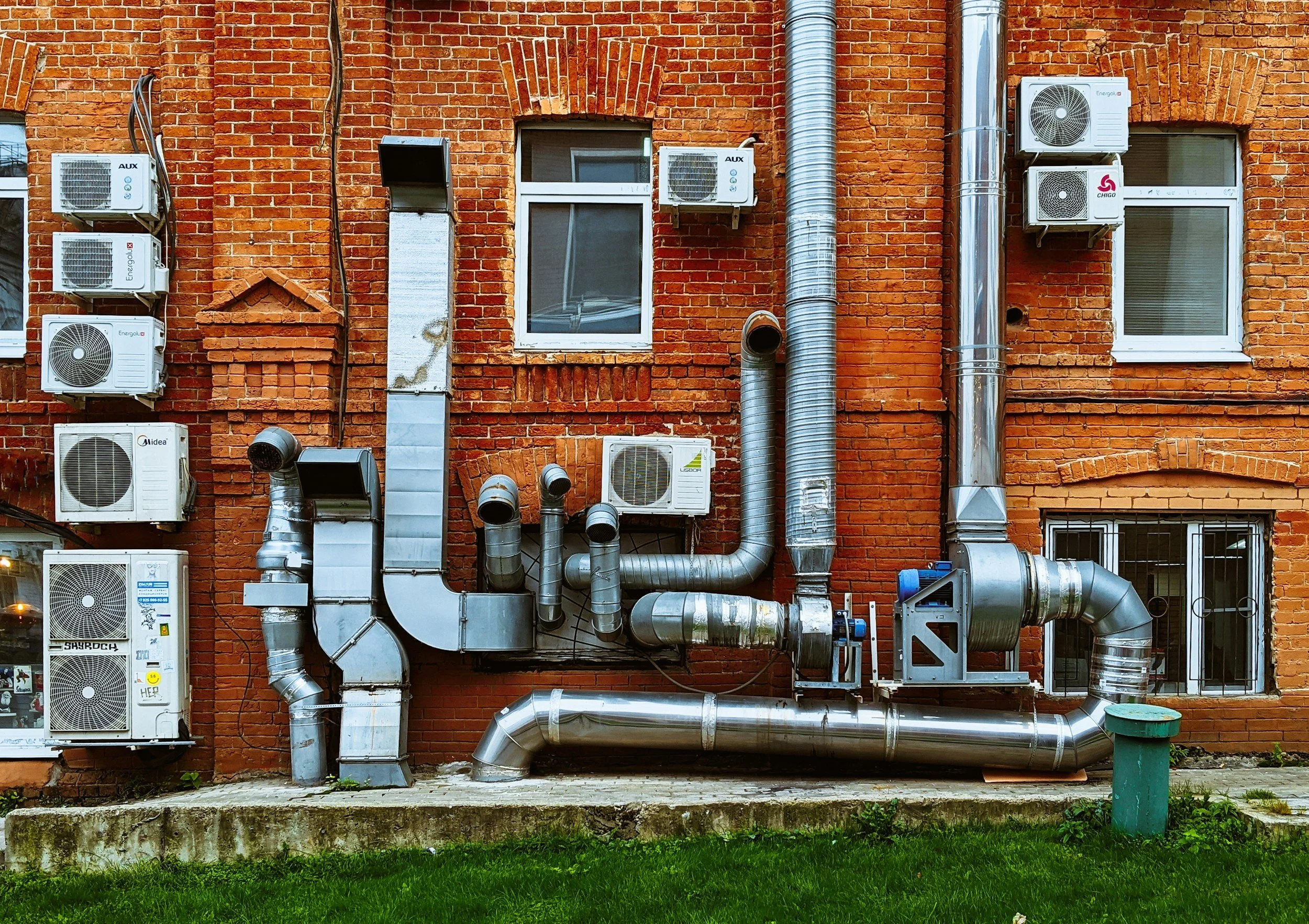
Navigating the HVAC Refrigerant Transition and the Promise of Hydronic Systems for Future-Ready Architecture
The global heating, ventilation, and air conditioning (HVAC) industry is undergoing a significant transformation driven by the phasedown of high-Global Warming Potential (GWP) refrigerants, primarily Hydrofluorocarbons (HFCs). This shift, mandated by international agreements like the Kigali Amendment and domestic legislation such as the U.S. American Innovation and Manufacturing (AIM) Act, presents both substantial challenges and unique opportunities for the Architecture, Engineering, and Construction (AEC) industry.
By Positive Energy staff
The global heating, ventilation, and air conditioning (HVAC) industry is undergoing a significant transformation driven by the phasedown of high-Global Warming Potential (GWP) refrigerants, primarily Hydrofluorocarbons (HFCs). This shift, mandated by international agreements like the Kigali Amendment and domestic legislation such as the U.S. American Innovation and Manufacturing (AIM) Act, presents both substantial challenges and unique opportunities for the Architecture, Engineering, and Construction (AEC) industry.
Challenges include navigating supply chain disruptions, rising costs, and the critical need for comprehensive technical training for new, mildly flammable refrigerants. However, this transition also creates a compelling opportunity to rethink traditional HVAC approaches. Hydronic systems, particularly those powered by air-to-water or ground source heat pumps, offer a robust, energy-efficient, and "technology-neutral" alternative. By leveraging water as the primary heat transfer medium, these systems can bypass the direct impact of future refrigerant changes, offering long-term resilience and enhanced building performance when integrated with a high-performance building envelope. This report explores these dynamics, providing architects with the insights needed to design truly future-ready buildings.
Understanding the Global HVAC Refrigerant Landscape
The HVAC industry is in the midst of a profound transformation, moving away from refrigerants that contribute significantly to global warming. This shift is not merely a technical upgrade but a regulatory imperative with far-reaching implications for building design and construction.
The Kigali Amendment and International Commitments
The Montreal Protocol, an international treaty established in 1987 to protect the stratospheric ozone layer by phasing out ozone-depleting substances (ODS) like chlorofluorocarbons (CFCs) and hydrochlorofluorocarbons (HCFCs), has evolved to address broader climate concerns.1 In a pivotal development, 197 countries adopted the Kigali Amendment in Rwanda on October 15, 2016, expanding the Protocol's scope to include a global phasedown of HFCs.1
The United States formally ratified the Kigali Amendment on October 31, 2022, signaling its commitment to these global environmental objectives.3 Under this amendment, developed nations initiated reductions in HFC consumption beginning in 2019. Most developing countries are slated to freeze their consumption by 2024, with a select few with unique circumstances following by 2028. The overarching goal is to achieve an 80% reduction in HFC consumption over the next 30 years, specifically by 2047.1 This ambitious phasedown schedule is projected to avoid up to 0.5°C of global warming by the end of the century, preventing over 80 billion metric tons of carbon dioxide equivalent emissions by 2050.2 The international consensus and broad participation underscore a collective commitment to mitigating climate change.
The global alignment on HFC reduction, as seen through the Kigali Amendment and its ratification by the U.S., creates a stable and predictable market for low-GWP technologies.1
This global framework provides a clear signal to manufacturers, incentivizing significant investment in research, development, and production of environmentally friendly alternatives for a worldwide market, rather than fragmented national ones. For architects and developers, this predictability reduces the inherent risk of designing and implementing HVAC systems that might quickly become obsolete due to unpredictable shifts in local regulations. The bipartisan support for the AIM Act in the U.S. further reinforces the stability of this regulatory direction, suggesting that a dramatic reversal of the phasedown is highly improbable.7 This consistent global and national policy environment encourages the adoption of advanced, sustainable HVAC solutions.
The U.S. American Innovation and Manufacturing (AIM) Act and EPA Regulations
In the United States, the American Innovation and Manufacturing (AIM) Act, enacted on December 27, 2020, as part of the Consolidated Appropriations Act, 2021, empowers the U.S. Environmental Protection Agency (EPA) to manage the HFC phasedown domestically.1 The AIM Act mandates an 85% reduction in HFC production and consumption from historic baseline levels by 2036.3
The EPA implements this mandate through an allowance allocation and trading program, established by the HFC Allocation Program in the Allocation Framework Rule.3 This program outlines a stepwise reduction schedule: an initial 10% reduction from 2020-2023 baseline levels, a further decrease to 60% of baseline levels for 2024-2028, 30% for 2029-2033, and a final reduction to 15% by 2036 and beyond.3 Restrictions on the use of higher-GWP HFCs in new refrigeration, air conditioning, and heat pump equipment began as early as January 1, 2025.3 The EPA's final rule, issued in October 2023, specifically sets a GWP limit of 700 for most new comfort cooling equipment, including chillers, effective January 1, 2025, effectively ending the production of most R-410A systems.8
Beyond production and consumption limits, the EPA's regulations under the AIM Act impose stringent requirements on existing HFC refrigerants to minimize leaks and maximize reuse.7 These include mandates for leak detection and repair, the use of reclaimed and recycled HFCs, and proper recovery of HFCs from disposable containers, along with meticulous recordkeeping, reporting, and labeling.7 For example, comfort cooling appliances containing more than 50 pounds of HFC refrigerant must be repaired within 30 days if their leak rate exceeds 10%.10 Furthermore, automatic leak detection (ALD) systems are required for large industrial process refrigeration and commercial refrigeration appliances (with a full charge at or above 1,500 pounds) installed on or after January 1, 2026, and by January 1, 2027, for existing systems installed between 2017 and 2026.10 The obligation to use reclaimed HFCs for servicing certain existing HVAC equipment begins January 1, 2029.10
These regulations, while crucial for environmental protection, introduce an "invisible" cost of compliance and an operational burden for building owners and managers. The requirements for leak detection, repair within strict timelines, and the eventual mandatory use of reclaimed refrigerants translate directly into increased operational complexity, labor costs, and potential fines for non-compliance.7 This means that even systems installed before the phase-out dates will incur higher total costs of ownership due to ongoing compliance efforts. Architects should proactively communicate these long-term operational implications to clients, advocating for HVAC system choices that minimize these burdens and offer greater long-term resilience. The emphasis on refrigerant reclamation also indicates that while older equipment can be serviced, the supply chain for servicing will shift, potentially affecting refrigerant availability and pricing.11

Table 1: Key HFC Phasedown Schedule and GWP Limits
The Transition to Low-GWP Refrigerants (A2L Class: R-454B, R-32)
The HVAC industry is rapidly transitioning from R-410A, which has been the industry standard for decades with a GWP of approximately 2,088, to next-generation refrigerants.8 The primary replacements are A2L-class refrigerants such as R-454B, with a GWP of 466, and R-32, with a GWP of 675.8 These new refrigerants offer significantly lower global warming potential, aligning with environmental goals.8
As of January 1, 2025, new air conditioning systems and heat pumps must be designed to use these A2L-class coolants, marking the cessation of R-410A system production.14 While existing R-410A systems can still be serviced, the supply of R-410A refrigerant is expected to become scarce, leading to increased prices for maintenance and repairs on older units.14
A critical difference with A2L refrigerants, unlike their non-flammable predecessors, is their mild flammability.8 This characteristic necessitates updated safety protocols for handling, installation, and servicing.14 This shift from non-flammable R-410A to mildly flammable A2L refrigerants represents a fundamental change in safety requirements for HVAC technicians.8 While "mildly flammable" might appear to be a minor distinction, it mandates entirely new training, specialized tools, and revised safety procedures.14 This is not merely an adjustment in GWP values; it requires a re-evaluation of established industry practices.
This alteration in refrigerant properties introduces a significant risk if not properly addressed through rigorous training and adherence to new standards. Architects specifying A2L systems must recognize that installation and maintenance demand specialized, certified professionals.17 This directly impacts labor availability, project timelines, and potentially liability. It underscores the critical need for robust training programs, such as the ACCA A2L training, which is developed based on ASHRAE Standards 15 (2019), 34 (2019), and UL Safety Standards 60335-2-40 (2019).19 Without adequate preparation, this could become a significant bottleneck in the industry as equipment rollout accelerates.

Table 2: Comparison of Common Refrigerant Types (GWP, Flammability)
Challenges and Disruptions for the Architecture, Engineering, and Construction (AEC) Industry
The refrigerant transition is not a distant concern but an immediate reality impacting every facet of the AEC industry. Architects must be prepared to address these disruptions in their projects, as they influence design decisions, project timelines, and overall costs.
Supply Chain Constraints and Rising Costs
The phasedown of HFC production, particularly the significant cuts in R-410A availability, has already exerted substantial upward pressure on costs for both servicing existing AC systems and installing new ones.15 As of 2024, R-410A production has been cut by 40%, directly contributing to these price increases.15 The ban on R-410A in new equipment, effective January 1, 2025, is anticipated to further tighten supply and drive up prices for any remaining stock, making it a less viable option for new installations or even major repairs on older units.14
The transition to new low-GWP refrigerants like R-454B and R-32, while environmentally beneficial, has not been without its challenges. There are already reports of severe shortages, particularly for R-454B, exacerbated by limited availability of refrigerant cylinders and a surge in demand as manufacturers convert their product lines.17 This has led to contractors experiencing delays of up to 10 weeks to receive orders, directly impacting project timelines, forcing rescheduling of jobs, and even causing companies to turn away new work.23 Such delays and material scarcity inevitably lead to increased project costs, as labor stands idle or expedited shipping becomes necessary. The requirement for reclaimed refrigerants to service existing systems by January 1, 2029 10, while promoting sustainability, could also lead to higher costs for these reclaimed products compared to virgin HFCs, further impacting the long-term operational expenses of buildings.7
Technical and Safety Training Requirements for New Refrigerants
The introduction of A2L refrigerants, which are mildly flammable, represents a significant shift in safety protocols compared to the non-flammable R-410A.8 This necessitates extensive and specialized training for HVAC technicians. Technicians can no longer apply the same handling and installation practices used for R-410A; they require a thorough understanding of proper handling, enhanced leak detection methods, adequate ventilation procedures, and safe evacuation techniques for A2L refrigerants.14
Industry organizations such as ACCA (Air Conditioning Contractors of America) and ASHRAE (American Society of Heating, Refrigerating and Air-Conditioning Engineers) have developed specific A2L safety training programs based on established standards like ASHRAE Standards 15 (2019), 34 (2019), and UL Safety Standards 60335-2-40 (2019).19 These courses cover critical topics such as refrigerant properties, system replacement considerations, refrigerant charge calculation, piping requirements, and charging/recovery procedures.19 The need for certified professionals to handle these new refrigerants means that a shortage of trained labor could impede the adoption and proper maintenance of compliant HVAC systems.17 This training requirement impacts the AEC industry by increasing labor costs, potentially extending project durations due to specialized labor availability, and demanding a higher level of oversight to ensure safety and compliance during installation and ongoing maintenance.
Regulatory Compliance and Enforcement
The EPA is tasked with implementing and enforcing the AIM Act, establishing regulations, and allocating allowances for HFC production and consumption to ensure compliance with the phasedown schedule.5 Failing to comply with these regulations can result in significant penalties and fines, directly impacting a company's ability to operate.7 The EPA has a robust compliance and enforcement system to prevent illegal activity and ensure adherence to the AIM Act's obligations.3
Beyond federal mandates, several U.S. states, including California, Washington, Vermont, and New York, have implemented or are in the process of implementing their own regulations to phase down higher-GWP HFCs.1 These state-level policies can be more stringent than federal requirements and can significantly impact HVACR equipment decisions and supply chains within those jurisdictions.12 For instance, New York's Part 494 regulation includes future prohibitions on HFCs in new HVACR equipment that will differ from EPA's Technology Transitions rule between 2027 and 2034, with new supermarket refrigeration systems requiring refrigerants with GWP less than 10 by January 2034.13 This patchwork of regulations adds complexity for HVACR industry stakeholders, requiring careful navigation to ensure compliance across different project locations.13 Architects and engineers must stay abreast of both federal and relevant state-specific regulations to ensure their designs meet all legal requirements and avoid costly non-compliance issues.
Equipment Availability and Compatibility
The rapid shift mandated by the 2025 deadline, which bans R-410A in new equipment, has compelled HVAC manufacturers to redesign and optimize their product lines for low-GWP refrigerants like R-454B and R-32.8 While major manufacturers like Carrier, Lennox, Johnson Controls, Trane, Mitsubishi Electric, Daikin, and Midea have introduced new compliant systems, the transition has not been entirely smooth.17
The industry has faced equipment shortages, with some manufacturers converting their lines to new refrigerants at different paces.24 This inconsistency can lead to challenges in sourcing specific units, particularly during peak cooling seasons.17 For example, while some manufacturers have adopted R-454B, others like Daikin and Goodman have focused on R-32, leading to regional variations in availability and potential supply chain bottlenecks.23 The need for A2L-compatible tools and equipment, including specialized refrigerant recovery machines, also presents an additional hurdle for contractors.14 Architects must recognize that equipment availability is a dynamic issue, requiring early engagement with manufacturers and suppliers to confirm the refrigerant type and ensure timely procurement for projects.17 This also means that existing R-410A units cannot simply be retrofitted with new A2L refrigerants due to fundamental differences in system design and component compatibility.8

Table 3: Key Challenges and Impacts for the AEC Industry
Hydronic Systems as a Future-Proof Solution
Amidst the challenges of refrigerant transition, a significant opportunity arises for the AEC industry to embrace hydronic systems. These systems offer a robust, energy-efficient, and inherently "technology-neutral" approach to heating and cooling, providing a pathway to long-term resilience and sustainability.
Water as the Heat Transfer Medium
Hydronic systems utilize water (or a water-glycol mixture) as the primary medium for transferring thermal energy throughout a building.25 Unlike traditional direct expansion (DX) systems that rely on refrigerants circulating directly to terminal units, hydronic systems separate the refrigerant cycle (contained within a heat pump or chiller) from the building's internal heat distribution network.25 This fundamental difference offers a distinct advantage: water is significantly more effective for energy storage and delivery than air, approximately 3500 times more so.29
The versatility of modern hydronics technology is unmatched by other heating or cooling methods.27 These systems can be tailored to provide precise climate control, including space heating, domestic hot water, and even specialized applications like snow melting or pool heating, often from a single heat source.25 By circulating heated or chilled water through pipes embedded in floors, walls, or ceilings (radiant systems), or through coils in air handlers or fan coil units, hydronic systems provide even and efficient heat distribution with minimal heat loss.25 This approach also minimizes air temperature stratification and reduces the rate of outside air infiltration or inside air exfiltration, leading to lower heat loss compared to forced-air systems.27 Furthermore, hydronic systems typically require significantly less electrical energy to move heat compared to forced-air systems.27

Table 4: Common Hydronic System Types and Their Applications
Air-to-Water Heat Pumps: Principles and Benefits
Air-to-water heat pumps (AWHPs) are a type of air-source heat pump that extracts heat from the outdoor air and transfers it to water, which is then circulated through a hydronic distribution system for space heating, cooling, or domestic hot water.28 The system typically consists of an outdoor unit and an indoor unit, which can be installed at significant distances from each other.28
AWHPs operate on the principle of a refrigeration cycle, moving heat from a cooler outdoor environment to a warmer indoor space during heating, and reversing the process for cooling.28 Even in cold air, heat energy is present, which the heat pump extracts and transfers indoors.28 The heated water (up to 130°F or ~55°C) can be used for underfloor heating, radiators, or direct hot water supply.28
AWHPs are gaining prominence in the U.S. for new residential construction due to their high efficiency, fully contained and factory-charged outdoor refrigeration systems, and their hydronic delivery capabilities, which facilitate zoning and integration with thermal energy storage.36 While installation costs for AWHPs can be higher than air-to-air systems due to the need for a water distribution system, their potential for long-term energy savings, especially when providing both heating and hot water, can offset this initial investment.35 Studies indicate that AWHPs can achieve significant energy savings compared to traditional heating systems, with some models offering high SEER2 ratings (up to 24).17 Their performance is particularly strong in moderate climates, though advancements are enabling operation in colder temperatures.18
Ground Source Heat Pumps: Principles and Advantages
Ground source heat pumps (GSHPs), also known as geothermal heat pumps, leverage the stable temperature of the earth as a heat source in winter and a heat sink in summer.28 This inherent stability of ground temperature, unlike fluctuating air temperatures, makes GSHPs exceptionally energy-efficient and environmentally sustainable.37
GSHP systems typically involve a ground loop—a network of pipes buried in the earth—through which water or a water-glycol solution circulates, absorbing or rejecting heat.28 This heat is then transferred to or from the building's hydronic distribution system via the heat pump unit.28 GSHPs can provide space heating, space cooling, and dedicated or simultaneous water heating.38 Modern GSHP designs often incorporate variable-speed compressors, blowers, and pumps, utilizing high-efficiency brushless permanent-magnet (BPM) motors to maximize performance and control flexibility.38
The key design considerations for GSHP systems involve a comprehensive understanding of the site's geological and hydrogeological conditions, as these factors critically impact system feasibility and efficiency.39 The design process must integrate lessons learned from past installations and leverage new ASHRAE and industry research to optimize system cost and performance.39 This includes careful equipment selection, proper piping design, and optimized installation practices.39
GSHPs offer substantial energy savings, often reducing heating and cooling energy costs by 50-70% compared to conventional HVAC systems.40 While the upfront cost of GSHP systems, including drilling and piping, is typically higher than traditional systems, significant financial incentives, such as the Investment Tax Credit (ITC) under the Inflation Reduction Act (IRA), can offset these costs, potentially making them less expensive than conventional HVAC systems in many cases.40 The long lifespan of ground loops (50 years or more) and the heat pump equipment (25 years or more) significantly contribute to lower lifecycle costs and reduced maintenance compared to conventional systems.41 This long-term cost-effectiveness and reduced environmental impact make GSHPs a compelling choice for sustainable building design.37
Hydronic Systems for "Technology Neutral" Homes
The concept of "technology neutral" homes, particularly in the context of HVAC, refers to building designs that are resilient to future technological shifts and regulatory changes. Hydronic systems inherently embody this principle, offering a robust solution that minimizes reliance on specific refrigerant types and their associated regulatory burdens.
Water, as a heat transfer medium, is stable and forgiving, making hydronic systems less susceptible to the direct impacts of refrigerant phasedowns.44 While heat pumps (air-to-water or ground source) still utilize refrigerants in their sealed circuits, the vast majority of the building's thermal distribution network relies on water, effectively isolating the building's interior climate control from the evolving refrigerant landscape.25 This means that as refrigerant regulations continue to evolve, the core hydronic infrastructure of a building remains viable, requiring only potential upgrades to the heat pump unit itself, rather than a complete overhaul of the distribution system.41
This inherent flexibility allows for easy upgrades as new technologies emerge, extending the lifecycle and usefulness of the HVAC system.41 For instance, a hydronic system initially paired with a gas boiler could be directly swapped with a water-sourced heat pump system, transitioning to an all-electric comfort system without the need for costly retrofitting of the distribution network.41 This adaptability makes hydronic systems a smart approach to future-proofing HVAC system designs for decarbonization and achieving net-zero emissions goals.41
Furthermore, hydronic systems, particularly radiant heating and cooling, contribute to technology neutrality by promoting superior indoor comfort and air quality without relying on high-velocity air distribution.27 They provide even warmth with no drafts or hot spots and minimize the circulation of dust and allergens, leading to cleaner indoor air.31 This focus on fundamental comfort and health, decoupled from specific refrigerant chemistries, ensures that the building's core environmental performance remains high regardless of future HVAC innovations.
Integrating Hydronic Systems with High-Performance Building Envelopes
The effectiveness of any HVAC system, particularly advanced hydronic solutions, is profoundly influenced by the performance of the building envelope. For architects, understanding this critical interplay is paramount to designing truly efficient, comfortable, and durable structures.
The Critical Interplay: Building Envelope and HVAC System Sizing
The building envelope—comprising the roof, walls, windows, and foundation—serves as the primary interface between the conditioned interior and the external environment.47 Its design directly dictates the heating and cooling loads a building experiences. A high-performance, integrated, and efficient building envelope, featuring optimized thermal insulation and high-performance glazing, can significantly reduce these loads.47 This reduction in thermal demand, in turn, allows for the specification of smaller, less costly, and more efficient HVAC systems.47
Conversely, an underperforming envelope with inadequate insulation or excessive air leakage will lead to higher heating and cooling demands, necessitating larger, more expensive, and less efficient HVAC equipment.48 This oversizing not only increases initial capital costs but also leads to less efficient operation, as HVAC systems are typically sized for peak conditions that occur only a small percentage of the time.48 Therefore, energy-efficient, climate-responsive construction requires a holistic, "whole building design" perspective that integrates architectural and engineering concerns from the earliest design stages.48 Commissioning the building envelope is crucial to identify and rectify issues like air infiltration, leakage, moisture diffusion, and rainwater entry, all of which negatively impact energy performance and indoor environmental quality.47
Optimizing Thermal Performance: Insulation and Airtightness
Achieving optimal thermal performance in conjunction with hydronic systems relies heavily on a well-insulated and airtight building envelope. Passive building principles, such as those advocated by Phius (Passive House Institute US), emphasize continuous insulation throughout the entire envelope without thermal bridging, and an extremely airtight building envelope to prevent outside air infiltration and loss of conditioned air.34
Super-insulation, combined with extreme airtightness, dramatically reduces temperature variation across building surfaces, which is critical for preventing condensation and mold issues.45 For example, Phius certification guidelines specify minimum sheathing-to-cavity R-value ratios for walls and outer air-impermeable insulation values for roofs, which increase in colder climates to maintain desirable interior surface temperatures and prevent interstitial moisture accumulation.49 An airtight envelope also prevents uncontrolled leakage, which cuts heat loss/gain and improves humidity control.49
With a highly insulated and airtight envelope, the building's heating and cooling loads are significantly minimized, allowing for a "minimal space conditioning system".45 This is where hydronic systems, with their ability to deliver heat and cooling precisely and efficiently, become ideal. For instance, hydronic radiant systems embedded in walls or floors can actively regulate heat exchange between interior and exterior environments, dynamically adapting to outdoor weather conditions.51 The integration of such active building envelope technologies with hydronic layers can significantly reduce building energy use while improving indoor thermal comfort.51 The inherent efficiency of hydronic systems is maximized when the building's thermal loads are already minimized by a superior envelope, creating a synergistic effect that drives down energy consumption.
Managing Moisture and Preventing Condensation in Radiant Systems
While hydronic radiant heating and cooling systems offer superior comfort and efficiency, their application, particularly for cooling, requires careful consideration of moisture management to prevent condensation on cold surfaces.30 Radiant cooling systems remove sensible heat primarily through radiation, meaning they cool objects and people directly rather than the air.30 This allows for comfortable indoor conditions at warmer air temperatures than traditional air-based cooling systems, potentially leading to energy savings.30 However, the latent loads (humidity) from occupants, infiltration, and processes must be managed by an independent system.30
The critical challenge for radiant cooling is to ensure that the temperature of the cooled surfaces (e.g., floors, walls, ceilings) remains above the dew point temperature of the room air to avoid condensation.30 Standards often suggest limiting indoor relative humidity to 60% or 70% to mitigate this risk.30 For example, for an indoor temperature of 75°F (23°C) and 50% relative humidity, the indoor air dew point is approximately 55.13°F (12.85°C).52 To prevent condensation, the radiant surface temperature must be maintained at least 5.4°F (3°C) above this dew point, typically around 69-70°F (20.55-21.11°C).52
Effective moisture control strategies, as outlined by Building Science Corporation and Phius, are essential. These include controlling moisture entry into the building envelope, managing moisture accumulation within assemblies, and facilitating moisture removal.53 For buildings with radiant cooling, this often means:
Airtight Construction and Pressurization: An extremely airtight building envelope is crucial to prevent hot, humid exterior air from infiltrating and contacting cold interior surfaces.49 Maintaining a slight positive air pressure within the conditioned space (e.g., 2 to 3 Pa) can further prevent moisture transport from the exterior into the building construction.53
Dedicated Dehumidification: Because radiant systems primarily handle sensible loads, a separate, dedicated outdoor air system (DOAS) or dehumidification system is necessary to manage latent loads and maintain indoor humidity levels below the condensation threshold.30 Phius guidelines, for instance, recommend ventilation systems capable of at least 0.3 air changes per hour (ACH) to bring in fresh air, which may then need to be dehumidified.55 Integrating a cooling coil from the radiant system into the dehumidifier's supply stream can pre-cool the dehumidified air, improving efficiency.55
Smart Controls: Advanced control systems are vital for monitoring both surface temperatures and indoor dew point temperatures. These controls can automatically adjust the chilled water supply temperature to maintain a safety margin (e.g., 5°F or 2.78°C) above the ambient air dew point, preventing condensation while maximizing cooling output.52
Material Selection: For radiant floor cooling, materials with low thermal resistance, such as bare concrete, are ideal to maximize cooling energy output.52 The R-value of flooring directly impacts the required chilled water temperature; higher thermal resistance necessitates colder water to achieve the same cooling flow.52
Architects must work collaboratively with mechanical engineers to design a building envelope that minimizes sensible cooling demand (e.g., 6-10 Btu/hr/ft²) and ensures that interior surfaces remain above the dew point.52 Overlooking moisture control requirements, particularly in humid climates, can lead to significant problems like mold growth and degraded building performance.50
Design Considerations for Architects: Walls, Floors, and Ceilings
The integration of hydronic systems, especially radiant elements, fundamentally alters architectural design considerations for walls, floors, and ceilings. These surfaces become active components of the HVAC system, influencing thermal comfort, energy performance, and even acoustic properties.
Walls: Hydronic piping can be embedded within wall assemblies to create radiant heating and cooling surfaces.25 This requires careful coordination with structural elements and finishes. Climate-adaptive opaque building envelopes with embedded hydronic layers are being developed to dynamically regulate heat exchange.51 Architects need to consider the thermal properties of wall materials, ensuring they are compatible with radiant heat transfer and do not impede the system's efficiency. The airtightness and insulation of walls are critical to minimize heat loss/gain and prevent condensation on the interior surface of the radiant wall.45
Floors: Radiant floor heating is a well-established application, where heated water circulates through tubing laid under the floor.26 For radiant cooling, the floor surface temperature must be carefully controlled to remain above the dew point.30 This implies careful consideration of flooring materials; bare concrete or materials with low thermal resistance are preferred for maximizing cooling output, as they allow for more effective heat transfer.52 The thermal mass of the floor system can also be leveraged for energy storage, especially with electric radiant systems.31 Architects must coordinate slab design, pipe spacing (e.g., minimum 6 inches center-to-center for infloor pipes), and floor finishes to optimize performance and prevent condensation.52
Ceilings: Radiant ceiling panels are another application for both heating and cooling.30 Similar to floors, chilled ceiling panels require meticulous humidity control to prevent condensation.30 Acoustical considerations also come into play; while radiant systems are inherently quiet, the hard surfaces often associated with them can impact indoor acoustics. Integrating free-hanging acoustical clouds can mitigate this, with only a minor reduction in cooling capacity.30
For all these applications, a comprehensive understanding of building physics, including heat transfer processes, moisture dynamics, and air movement, is essential.54 Architects, in collaboration with MEP engineers, must design for optimal thermal performance, moisture control, and indoor air quality, ensuring that the building envelope and hydronic systems work in concert to create a comfortable, healthy, and energy-efficient environment.47
Economic and Environmental Benefits of Hydronic Systems
Beyond bypassing refrigerant changes, hydronic systems offer compelling economic and environmental advantages that align with contemporary sustainability goals and long-term building performance.
Energy Efficiency and Reduced Operational Costs
Hydronic systems are consistently demonstrated to be highly energy-efficient, leading to significant reductions in operational costs. Water's superior heat absorption capacity and ability to transfer heat at a substantially lower cost than other technologies, including variable refrigerant flow (VRF) and forced-air systems, are key factors.32 For instance, a well-designed hydronic system, using a modern high-efficiency circulator, can deliver a given rate of heat transport using less than 10% of the electrical energy required by the blower of a forced-air heating system.27
Comparative studies consistently show hydronic systems outperforming refrigerant-based systems in terms of energy efficiency. An "apples-to-apples" comparison conducted at ASHRAE's Atlanta headquarters, where a geothermal ground source heat pump system served one floor and a VRF system served another, revealed that the VRF system had significantly higher electrical energy consumption, approaching three times that of the ground source heat pump system during winter months.59 On an annualized basis, the VRF system consumed 57% to 84% more energy than the hydronic system over several years.59 Another study evaluating HVAC systems in South Carolina school buildings found that hydronic systems (Water Source Heat Pumps, Ground Source Heat Pumps, Water Cooled Chillers) outperformed VRF and Direct Expansion (DX) rooftop units in terms of lower energy use and cost by as much as 24%.32
While the initial installation costs for some hydronic systems, particularly ground source heat pumps, can be higher due to geological work and piping 40, these are often offset by substantial operational savings over their long lifespan. The expected savings from heat pumps vary based on climate, local energy prices, and the type of fuel being replaced.60 In warm climates, heat pumps can be a cost-effective choice for both installation and long-term energy costs, often costing barely more than a central AC alone.60 In colder climates, while the upfront cost might be higher than a gas furnace or boiler, the long-term operational savings can still be significant, especially with favorable electricity pricing or renewable energy integration.35 The Investment Tax Credit (ITC) under the IRA can further reduce the effective upfront cost of geothermal systems by up to 50% of eligible expenses, making them economically competitive with conventional HVAC systems.40

Table 5: Lifecycle Cost Comparison: Hydronic vs. Refrigerant-Based Systems
Longer Lifespan and Lower Maintenance
Hydronic systems are renowned for their durability and longevity. Components of hydronic systems are designed for the life of the building, with an estimated operational lifecycle of 25 years or more, compared to a 15-year replacement estimation for many refrigerant-based systems like VRF.41 Ground loops for GSHP systems, for instance, can last 50 years or longer, often without requiring servicing.42 This extended lifespan significantly reduces the frequency and cost of equipment replacement over the building's lifecycle.43
Hydronic systems also generally incur lower maintenance costs. Their components are often interchangeable and readily available, and water as a medium is stable and forgiving, simplifying servicing.44 While heat pumps within hydronic systems still require maintenance, the overall system's reliance on water for distribution means that specialized refrigerant technicians are not as frequently needed for the core distribution network itself.44 This contrasts with refrigerant-based systems, where the entire network contains refrigerant, making leaks and specialized repairs a more frequent and costly concern.14 The simplicity of maintenance and the inherent durability of hydronic components contribute to lower long-term operational expenses and greater system reliability.35
Environmental Impact and Sustainability
The primary driver for the global HVAC refrigerant transition is the environmental impact of high-GWP HFCs. Hydronic systems, particularly when paired with heat pumps, offer a compelling solution for reducing a building's carbon footprint and advancing sustainability goals.
By utilizing water as the primary heat transfer medium, hydronic systems inherently reduce the total amount of high-GWP refrigerant required in a building, as the refrigerant is confined to the heat pump's sealed circuit.25 This minimizes the risk of refrigerant leaks, which are a direct source of greenhouse gas emissions.11 The phasedown of HFCs is projected to avoid 4.6 billion metric tons of carbon dioxide equivalent emissions between 2022 and 2050 in the U.S. alone, and a global HFC phasedown is expected to avoid up to 0.5°C of global warming by 2100.3 Hydronic systems contribute directly to achieving these targets.
When powered by air-to-water or ground source heat pumps, hydronic systems become an all-electric solution, enabling decarbonization by shifting energy consumption away from fossil fuels and towards renewable electricity sources.41 Heat pumps are highly efficient, moving heat rather than generating it, and can yield up to four units of heat for each unit of electricity consumed.28 Ground source heat pumps, in particular, are noted for their superior energy efficiency and lower long-term environmental impact compared to air-source heat pumps and conventional systems, especially during their operational phase.37
The ability of hydronic systems to integrate seamlessly with renewable energy sources like solar thermal and geothermal further enhances their environmental credentials.26 This integration reduces reliance on fossil fuels, lowers utility bills, and aligns buildings with net-zero energy and carbon neutrality objectives.41 By choosing hydronic systems, architects can design buildings that are not only compliant with current and future environmental regulations but also actively contribute to a more sustainable built environment.
Strategic Design for a Sustainable HVAC Future
The ongoing global and national HVAC refrigerant transition, driven by the imperative to mitigate climate change, presents a complex yet transformative landscape for the Architecture, Engineering, and Construction industry. The phasedown of high-GWP HFCs, mandated by the Kigali Amendment and the U.S. AIM Act, introduces significant challenges related to supply chain disruptions, rising costs, and the critical need for specialized training for new, mildly flammable refrigerants. These pressures underscore the limitations and increasing operational burdens associated with traditional refrigerant-based HVAC systems.
However, this period of disruption also unveils a profound opportunity for strategic innovation. Hydronic systems, particularly those leveraging air-to-water and ground source heat pumps, emerge as a compelling, future-proof solution. By utilizing water as the primary heat transfer medium, these systems inherently decouple the building's thermal distribution from the volatile refrigerant market, offering unparalleled resilience against future regulatory shifts and technological advancements. This "technology-neutral" approach ensures long-term viability and adaptability for building infrastructure.
The advantages of hydronic systems extend beyond regulatory compliance. They offer superior energy efficiency, leading to substantial reductions in operational costs over the building's lifespan, as evidenced by comparative studies demonstrating significantly lower energy consumption than VRF and DX systems. Their inherent durability and longer lifespan, coupled with simpler maintenance requirements, further contribute to a lower total cost of ownership. Environmentally, hydronic systems minimize refrigerant charge, reduce leak potential, and seamlessly integrate with renewable energy sources, aligning directly with decarbonization and net-zero goals.
For architects, this transition demands a proactive and integrated design approach. Understanding how a high-performance building envelope—characterized by superior insulation and airtightness—synergistically interacts with hydronic systems is paramount. A well-designed envelope minimizes thermal loads, allowing for smaller, more efficient hydronic systems. Crucially, architects must also master the nuances of moisture management, particularly with radiant cooling applications, to prevent condensation and ensure optimal indoor air quality and occupant comfort.
By embracing hydronic systems in conjunction with meticulously designed, high-performance building envelopes, architects can lead the industry towards a more sustainable, resilient, and comfortable built environment. This strategic shift is not merely about compliance; it is about designing buildings that are truly prepared for the future, offering enduring value and a reduced ecological footprint.
Works Cited
3 U.S. Environmental Protection Agency. (n.d.). Frequent Questions: Phasedown of Hydrofluorocarbons. Retrieved from https://www.epa.gov/climate-hfcs-reduction/frequent-questions-phasedown-hydrofluorocarbons
10 Dakota Software. (2024, December 20). EPA’s Phasedown of Hydrofluorocarbons (HFCs): A Guide for EHS Professionals. Retrieved from https://www.dakotasoft.com/blog/2024/12/20/epas-phasedown-of-hydrofluorocarbons-hfcs-a-guide-for-ehs-professionals
4 U.S. Environmental Protection Agency. (n.d.). Recent International Developments Under the Montreal Protocol. Retrieved from https://www.epa.gov/ozone-layer-protection/recent-international-developments-under-montreal-protocol
5 CoolSys. (n.d.). Everything you Need to Know About the AIM Act and HFC Phasedown. Retrieved from https://coolsys.com/resource/everything-you-need-to-know-about-the-aim-act-and-hfc-phasedown/
21 ASHRAE. (n.d.). ASHRAE Refrigerant Designations. Retrieved from https://www.ashrae.org/technical-resources/standards-and-guidelines/ashrae-refrigerant-designations
22 ASHRAE. (2018). Addendum h to ASHRAE Standard 15-2016. Retrieved from https://www.ashrae.org/file%20library/technical%20resources/standards%20and%20guidelines/standards%20addenda/15_2016_h_20190612.pdf
1 Opteon. (n.d.). Regulations. Retrieved from https://www.opteon.com/en/support/regulations
2 Wikipedia. (n.d.). Montreal Protocol. Retrieved from https://en.wikipedia.org/wiki/Montreal_Protocol
15 Service Experts. (n.d.). HVAC Refrigerants Will Be Phased Out: Here’s Why. Retrieved from https://www.serviceexperts.com/blog/hvac-refrigerants-will-be-phased-out-heres-why/
16 Burgesons. (n.d.). HVAC Refrigerant Changes. Retrieved from https://www.burgesons.com/blog/hvac-refrigerant-changes
8 Lennox. (n.d.). Making The Low GWP Transition Simple & Safe. Retrieved from https://www.lennox.com/commercial/resources/low-gwp
18 Mitsubishi Electric Trane HVAC US. (2025, April 17). Mitsubishi Electric Trane HVAC US Launches New Low GWP All-Electric, All-Climate Heat Pump Collection. Retrieved from https://www.businesswire.com/news/home/20250417230832/en/Mitsubishi-Electric-Trane-HVAC-US-Launches-New-Low-GWP-All-Electric-All-Climate-Heat-Pump-Collection
14 SMACNA. (n.d.). HVAC: Understanding Refrigerant Transitions. Retrieved from https://www.smacna.org/news/smacnews/issue-archive/issue/articles/smacnews-march-april-2025/hvac--understanding-refrigerant-transitions
24 ACHR News. (n.d.). Contractors Optimistic About Challenges Coming In 2025. Retrieved from https://www.achrnews.com/articles/164101-contractors-optimistic-about-challenges-coming-in-2025
13 ACHR News. (n.d.). New York's HFC Phasedown: What You Need to Know. Retrieved from https://www.achrnews.com/articles/164219-new-yorks-hfc-phasedown-what-you-need-to-know
11 Carrier Enterprise. (n.d.). How EPA Ruling on HFC Phasedown Impacts Businesses. Retrieved from https://www.carrierenterprise.com/hvac-news/how-epa-ruling-on-hfc-phasedown-impacts-businesses
17 The Furnace Outlet. (n.d.). Best R-454B and R-32 HVAC Systems in Stock: 2025 Buying Guide. Retrieved from https://thefurnaceoutlet.com/blogs/hvac-tips/best-r-454b-and-r-32-hvac-systems-in-stock-2025-buying-guide
23 Everyone Loves Bacon. (n.d.). R-454B Refrigerant Shortage. Retrieved from https://www.everyonelovesbacon.com/r-454b-refrigerant-shortage/
19 ACCA. (n.d.). A2L Training. Retrieved from https://www.acca.org/education/a2ltraining
20 HalfMoon Seminars. (n.d.). A2L Refrigerants: Characteristics and Applications. Retrieved from https://halfmoonseminars.org/product/webinars/a2l-refrigerants-characteristics-and-applications/
7 Pillsbury Law. (n.d.). EPA's New Rule on Hydrofluorocarbons. Retrieved from https://www.pillsburylaw.com/en/news-and-insights/epa-new-rule-hydrofluorocarbons.html
9 BCLP Law. (n.d.). HFC Regulation: Navigating Impacts to a Fast-Growing Climate Control Industry. Retrieved from https://www.bclplaw.com/en-US/events-insights-news/hfc-regulation-navigating-impacts-to-a-fast-growing-climate-control-industry.html
6 ASHRAE. (2025, April). Safety Technology Barriers to Adoption of Ultralow GWP Refrigerants. Retrieved from https://www.ashrae.org/technical-resources/ashrae-journal/featured-articles/april-2025-safety-technology-barriers-to-adoption-of-ultralow-gwp-refrigerants
63 ASHRAE. (n.d.). The New Refrigerants Landscape: Challenges & Opportunities (MENA). Retrieved from https://www.ashrae.org/professional-development/all-instructor-led-training/global-training/2025-the-new-refrigerants-landscape-challenges-opportunities
64 ASHRAE. (n.d.). Energy Recovery Ventilators. Retrieved from https://www.ashrae.org/file%20library/technical%20resources/covid-19/i-p_s20_ch26.pdf
28 CED Engineering. (n.d.). Heat Pumps for Heating and Cooling. Retrieved from https://www.cedengineering.com/userfiles/M06-047%20-%20Heat%20Pumps%20for%20Heating%20and%20Cooling%20-%20US.pdf
65 U.S. Department of Energy. (2025, January). LIFTOFF: Geothermal Heating & Cooling. Retrieved from https://liftoff.energy.gov/wp-content/uploads/2025/01/LIFTOFF_DOE_Geothermal_HC.pdf
38 Oak Ridge National Laboratory. (n.d.). Design and Simulation of a Ground Source Heat Pump System for Multifunctionality. Retrieved from https://web.ornl.gov/~jacksonwl/hpdm/Paper_No10149_GSIHP_r2.pdf
25 HECO Engineers. (n.d.). Hydronic Heating and Cooling System Design. Retrieved from https://hecoengineers.com/mechanical-engineering-service/hydronic-heating-and-cooling-system-design/
26 Energy.gov. (n.d.). Radiant Heating. Retrieved from https://www.energy.gov/energysaver/radiant-heating
66 Phius. (n.d.). What's New in Heat Pump Performance Estimator v25.1. Retrieved from https://www.phius.org/whats-new-heat-pump-performance-estimator-v251
67 Phius. (n.d.). Heat Pump Performance Estimator v25.1. Retrieved from https://www.phius.org/heat-pump-performance-estimator-v251
68 ASHRAE. (n.d.). Design of Affordable and Efficient Ground-Source Heat Pump Systems. Retrieved from https://www.ashrae.org/professional-development/all-instructor-led-training/catalog-of-instructor-led-training/design-of-affordable-and-efficient-ground-source-heat-pump-systems
39 ASHRAE. (n.d.). Geothermal Heating and Cooling: Design of Ground-Source Heat Pump Systems. Retrieved from https://www.ashrae.org/technical-resources/bookstore/geothermal-heating-and-cooling-design-of-ground-source-heat-pump-systems
69 Pride Industries. (n.d.). HVAC Technology. Retrieved from https://www.prideindustries.com/our-stories/hvac-technology
70 ACHR News. (n.d.). Simplifying the Shift to Hydronic Heat Pump Systems. Retrieved from https://www.achrnews.com/events/15879-simplifying-the-shift-to-hydronic-heat-pump-systems
29 Home Builders Association of Portland. (n.d.). Hydronic HVAC 101. Retrieved from https://www.hbapdx.org/uploads/1/1/6/8/116808533/hydronic_hvac_101.pdf
41 Xylem. (n.d.). Future-Proofing Hydronic HVAC System Designs. Retrieved from https://www.xylem.com/siteassets/brand/bell-amp-gossett/promotional-pages/building-better/bg_hydronicsebook_futureproofing_final-1.pdf
47 WBDG. (n.d.). HVAC Integration with the Building Envelope. Retrieved from https://www.wbdg.org/resources/hvac-integration-building-envelope
48 WBDG. (n.d.). High-Performance HVAC. Retrieved from https://www.wbdg.org/resources/high-performance-hvac
58 ASHRAE. (n.d.). TC 1.12 Moisture Management in Buildings. Retrieved from https://tpc.ashrae.org/Functions?cmtKey=6160cdee-aac9-4052-8fd0-9782949100ab
57 ASHRAE. (n.d.). Educational Resources. Retrieved from https://www.ashrae.org/communities/student-zone/educational-resources
45 Phius. (n.d.). Passive House/Building Frequently Asked Questions. Retrieved from https://www.phius.org/passive-building/what-passive-building/passive-building-faqs
34 Swegon. (n.d.). Passive House. Retrieved from https://www.swegon.com/na/knowledge-hub/technical-guides/passive-house/
27 Caleffi. (n.d.). Idronics 12: Hydronic Fundamentals. Retrieved from https://www.caleffi.com/sites/default/files/media/external-file/Idronics_12_NA_Hydronic%20fundamentals%20.pdf
12 ACHR News. (n.d.). Updated: EPA Reconsiders Refrigerant Rule. Retrieved from https://www.achrnews.com/articles/164288-updated-epa-reconsiders-refrigerant-rule
62 One Hour Air Dallas. (n.d.). Future of HVAC Technology. Retrieved from https://www.onehourairdallas.com/future-of-hvac-technology/
46 CPI Plumbing. (n.d.). Hydronic Heating Systems: Modern Applications and Future Trends. Retrieved from https://www.cpiplumbing.com/air-to-air-vs-air-to-water-heat-pumps/
71 YouTube. (n.d.). Building Envelope Design for Hydronic Systems. Retrieved from https://www.youtube.com/watch?v=ZppEzpCp88Y
51 RPI. (n.d.). A Climate-Adaptive Opaque Building Envelope. Retrieved from https://sites.ecse.rpi.edu/~vanfrl/documents/publications/conference/2022/CP215_YHwang_frog_ibpsa_conf_simbuild.pdf
56 ASHRAE. (n.d.). TC 6.5 Radiant Heating and Cooling. Retrieved from https://tpc.ashrae.org/Functions?cmtKey=b8428c0b-6366-4295-b7c4-a1d14451c0f0
30 Wikipedia. (n.d.). Radiant Heating and Cooling. Retrieved from https://en.wikipedia.org/wiki/Radiant_heating_and_cooling
44 Hydronics Industry Alliance. (n.d.). Lowest Costs. Retrieved from https://hydronicsindustryalliance.org/best-software/costs
43 HVAC Insider. (n.d.). Xylem Study Analyzes Life-Cycle Cost of HVAC Systems. Retrieved from https://hvacinsider.com/xylem-study-analyzes-life-cycle-cost-of-hvac-systems/
60 EnergySage. (n.d.). Can a Heat Pump Save You Money?. Retrieved from https://www.energysage.com/heat-pumps/heat-pump-save-money/
35 CPI Plumbing. (n.d.). Air-to-Air vs. Air-to-Water Heat Pumps. Retrieved from https://www.cpiplumbing.com/air-to-air-vs-air-to-water-heat-pumps/
40 Eide Bailly. (n.d.). Geothermal Heating & Cooling: An Exciting Option for Tax Savings. Retrieved from https://www.eidebailly.com/insights/blogs/2025/1/20250107-geothermal
42 Reddit. (n.d.). Calculation and Proof of Savings. Retrieved from https://www.reddit.com/r/geothermal/comments/1k5scwh/calculation_and_proof_of_savings/
59 Williams Comfort Products. (n.d.). ASHRAE Comparison. Retrieved from https://www.williamscomfort.com/wp-content/uploads/2023/09/ASHRAE_Comparison.pdf
43 HVAC Insider. (n.d.). Xylem Study Analyzes Life-Cycle Cost of HVAC Systems. Retrieved from https://hvacinsider.com/xylem-study-analyzes-life-cycle-cost-of-hvac-systems/
31 gb&d magazine. (n.d.). 7 Benefits of Radiant Heating & Cooling. Retrieved from https://gbdmagazine.com/benefits-of-radiant-heating-and-cooling/
72 Pacific Northwest National Laboratory. (n.d.). Energy Savings Potential of Radiative Cooling Technologies. Retrieved from https://www.pnnl.gov/main/publications/external/technical_reports/PNNL-24904.pdf
53 Building Science Corporation. (n.d.). BSD-012: Moisture Control for New Residential Buildings. Retrieved from https://buildingscience.com/documents/digests/bsd-012-moisture-control-for-new-residential-buildings
54 Building Science Corporation. (n.d.). Moisture Control For Buildings. Retrieved from https://buildingscience.com/sites/default/files/migrate/pdf/PA_Moisture_Control_ASHRAE_Lstiburek.pdf
50 Phius. (n.d.). Navigating the Moisture Control Guidelines (Appendix B) in the Phius Certification Guidebook. Retrieved from https://www.phius.org/navigating-moisture-control-guidelines-appendix-b-phius-certification-guidebook
49 Smart Energy Illinois. (n.d.). Passive House High Performance Design. Retrieved from https://smartenergy.illinois.edu/wp-content/uploads/2022/05/AIA-Illinois-Passive-House-Final.pdf
56 ASHRAE. (n.d.). TC 6.5 Radiant Heating and Cooling. Retrieved from https://tpc.ashrae.org/Functions?cmtKey=b8428c0b-6366-4295-b7c4-a1d14451c0f0
33 ASHRAE. (n.d.). TC 6.1 Hydronic and Steam Equipment and Systems. Retrieved from https://tpc.ashrae.org/Functions?cmtKey=9fd7aada-196f-48b7-9ecb-ac07ed5b5ed4
52 HydroSolar. (n.d.). How to Prevent Condensation in Radiant Cooling Applications?. Retrieved from https://hydrosolar.ca/blogs/advanced-technical-zone/how-to-prevent-condensation-in-radiant-cooling-applications
53 Building Science Corporation. (n.d.). BSD-012: Moisture Control for New Residential Buildings. Retrieved from https://buildingscience.com/documents/digests/bsd-012-moisture-control-for-new-residential-buildings
55 Phius. (n.d.). On the Path to Zero in the Sonoran Desert with David Brubaker phiuscon 2023. Retrieved from https://www.phius.org/sites/default/files/2023-11/On%20the%20Path%20to%20Zero%20in%20the%20Sonoran%20Desert%20with%20David%20Brubaker%20phiuscon%202023.pdf
50 Phius. (n.d.). Navigating the Moisture Control Guidelines (Appendix B) in the Phius Certification Guidebook. Retrieved from https://www.phius.org/navigating-moisture-control-guidelines-appendix-b-phius-certification-guidebook
32 Select Plumbing & Heating. (n.d.). Chilled Water vs. DX Cooling: Which Piping System Suits Your Building. Retrieved from https://www.selectplumbingandheating.ca/chilled-water-vs-direct-expansion-cooling-system/
73 Armstrong Fluid Technology. (n.d.). VRF versus HYDRONICS - Comparing HVAC technologies and associated costs. Retrieved from https://blog.armstrongfluidtechnology.com/vrf-versus-hydronics-comparing-hvac-technologies-and-associated-costs
74 University of Alaska Southeast. (n.d.). Life Cycle Cost Analysis. Retrieved from https://uas.alaska.edu/facilities_services/docs/fpc/residencehalllifecyclecostanalysis.pdf
37 ResearchGate. (n.d.). Comparative life cycle assessment of the ground source heat pump vs air source heat pump. Retrieved from https://www.researchgate.net/publication/358888899_Comparative_life_cycle_assessment_of_the_ground_source_heat_pump_vs_air_source_heat_pump
61 Building Energy Codes Program. (n.d.). National Cost-Effectiveness of ANSI/ASHRAE/IES Standard 90.1-2022. Retrieved from https://www.energycodes.gov/sites/default/files/2025-01/90.1-2022_National_Cost-Effectiveness.pdf
36 NREL. (n.d.). Modeling Assessment of Residential Air-to-Water Heat Pumps Coupled with Cooling Thermal Storage. Retrieved from https://docs.nrel.gov/docs/fy23osti/84990.pdf

Living Inside Anywhere: A Comprehensive Guide to Building Envelope Control Layers for Architects
The building enclosure, comprising the walls, roof, ceiling, and floor, serves as the fundamental separator between the outdoor and indoor environments. Far from being a static element, this enclosure is in a state of constant, dynamic regulation of heat, air, and moisture flow, influencing everything from the comfort and health of occupants to the long-term durability and energy efficiency of the structure. The aspiration for any building is to achieve a "high ideal" where these performance goals are met simultaneously, ensuring a comfortable, healthy, durable, low-maintenance, and energy-efficient interior space.
By Positive Energy staff. Based on The Building Science Podcast series “Living Inside Anywhere”
Introduction: The Dynamic Building Enclosure

The building enclosure, comprising the walls, roof, ceiling, and floor, serves as the fundamental separator between the outdoor and indoor environments. Far from being a static element, this enclosure is in a state of constant, dynamic regulation of heat, air, and moisture flow, influencing everything from the comfort and health of occupants to the long-term durability and energy efficiency of the structure.1 The aspiration for any building is to achieve a "high ideal" where these performance goals are met simultaneously, ensuring a comfortable, healthy, durable, low-maintenance, and energy-efficient interior space.1
Within this complex system, specific components, known as control layers, are tasked with managing particular environmental separation functions. These layers are critical for regulating the exchange of heat, air, and moisture, and their proper functioning is paramount for a building's overall performance, encompassing health, comfort, safety, durability, and energy efficiency.1 As energy codes evolve and construction practices continue to impact long-term building performance, a deep understanding of these control layers becomes increasingly vital.
The forces driving environmental exchange across the building envelope operate on a fundamental principle: movement from "more to less" or "high to low," akin to water flowing downhill.1 These driving forces are ever-present and include gravity (for liquid water), pressure gradients (for air movement due to wind or mechanical systems), vapor pressure gradients (for vapor diffusion), and temperature gradients (for heat flow).1 For instance, in a hot, humid climate, heat and humidity are perpetually "downhill" from the exterior to the interior, constantly challenging the enclosure's integrity.1
Building science, a field that emerged to rigorously study the physics of building performance, prioritizes these control layers based on their potential impact on building longevity and functionality.1 The established hierarchy of importance is clear: Bulk Water Control, followed by Air Control, then Thermal Control, and finally Vapor Control.1 As Joseph Lstiburek, a prominent figure at Building Science Corporation, succinctly states, "If you can't keep the rain out, don't waste your time on the air. If you can't keep the air out, don't waste your time on the vapor".2 This order underscores the foundational nature of water management, as failures at higher-priority layers can render efforts at lower-priority layers ineffective.
The current state of building construction often reflects an implicit "economic organizing principle" that prioritizes speed, repeatability, and price, often at the expense of long-term performance.1 This approach, prevalent since the post-war building boom of the 1950s, has led to a situation where even high-end custom homes frequently feature "exceedingly ordinary" wall construction and mechanical systems, akin to outdated 1970s technology.1 This cost-optimization, rather than performance-optimization, has contributed to a growing "wave of construction failures" in homes built from the 1990s through the mid-2000s. These issues are further compounded by evolving energy codes that inadvertently reduce the natural drying functions (heat and airflow) of walls, trapping moisture when older, less robust construction methods persist.1 This prevailing market dynamic, exemplified by movements focused on maximizing space and status for cost, represents a systemic challenge that architects must navigate.
In response to these systemic issues, the building science industry has emerged as a critical counter-movement. Described as still in its formative stages, building science seeks to understand and improve construction outcomes by focusing on building physics.1 Many builders and subcontractors, operating within established norms, may not even realize they are employing outdated technologies.1 While the green building movement has made strides, its emphasis on "product replacement solutions" often falls short of addressing fundamental shifts in construction processes and core building capabilities.1 However, increased access to information, acting as a "BS detector," is gradually shifting the industry towards better construction practices and more integrated design processes.1 Architects, by embracing and advocating for these principles, become crucial early adopters in this evolution, moving beyond mere product specification to influencing the entire construction process for enhanced durability, health, and energy efficiency.


Bulk Water Control: The Foremost Priority
Bulk water, defined as liquid water from sources such as rain, groundwater, melting snow, or dew, represents the most significant threat to a building's performance and longevity.1 Its uncontrolled intrusion can lead to severe consequences, including rot, mold growth, compromised indoor air quality, and even structural failures.5 The criticality of bulk water control is underscored by the fact that water intrusion accounts for over 70% of construction litigation, highlighting its "extremely deleterious" impact that can render other control layers ineffective.2
Primary Driving Forces: Gravity, Wind-Driven Rain, and Capillary Action
Liquid water is driven by several forces:
Gravity: The most intuitive force, causing water to flow "downhill" from higher elevations to lower ones, always seeking the path of least resistance.1 This is the primary mechanism for water movement on roofs and across ground surfaces.
Wind-Driven Rain: A more insidious force, wind can create significant pressure differentials across a building's exterior, forcing water "uphill" or laterally through minuscule cracks and openings, even against the pull of gravity.1 This phenomenon can cause leaks in buildings that were previously considered watertight for many years.1
Capillary Action: This powerful yet often "secretive" force allows water to travel against gravity through small pores in porous materials (like concrete, brick, or wood) or within the tight spaces between closely spaced non-porous materials (e.g., overlapping lap siding).1 Capillary action can lead to hidden damage, such as rot or mold, that remains unobserved until significant deterioration has occurred.9 This mechanism is distinct from bulk water flow, which is typically more overt.
Deflection and Drainage: Fundamental Principles for Keeping Water Out
Effective bulk water management begins with fundamental design principles focused on deflecting water away from the building and providing clear drainage pathways.
Roofs: The roof serves as the "primary rain control layer" and is the first line of defense against overhead precipitation.1
Simple Roof Lines: Designs that minimize valleys, dormers, and complex intersections are preferred. These simpler geometries reduce areas where water and debris (such as leaves and dirt) can accumulate, which can lead to localized moisture issues, rot, and pest infestations.1
Tilted Roofs: Sloped roofs are essential for harnessing gravity, allowing water to flow "downhill" and efficiently shed away from the building envelope.1 Flat roofs, generally defined as having a slope of less than 3:12 or 1/4 inch per foot, demand exceptionally meticulous design and installation of their water management systems due to their inherent challenge in promoting drainage.1
Overhangs: Functioning much like the brim of a baseball cap, roof overhangs provide crucial protection for walls and window/door openings from direct rain exposure and solar radiation.1 The absence of adequate overhangs significantly increases the risk of wind-driven rain penetration and prolonged wetting of wall assemblies.1
Site Drainage: Managing water once it reaches the ground is equally critical. Water must be directed "down, out, and away" from the building's foundation.1

This necessitates a positive slope away from the foundation (often a minimum of 10 feet is recommended by code), along with the strategic use of swales, French drains, or sump pumps in areas prone to water accumulation.1
Capillary Breaks: To counteract capillary action, it is essential to incorporate capillary breaks at critical interfaces, particularly where the building meets the ground.1 These breaks, which can be achieved with materials like plastic sheeting, metal, dampproofing compounds, or engineered air spaces, prevent water from wicking upward into the structure. Direct wood-to-ground contact is a significant design flaw that should be avoided.1
Managing Incidental Water: The Imperative of Drained Assemblies
Despite the best efforts in deflection, it is a fundamental principle of building science that some water will inevitably bypass the exterior cladding, even if it's as little as 1% of the total rainwater.1 Consequently, the strategy shifts from attempting to "face seal" every joint and opening with caulk – a practice from the 1970s that proved prone to failure as seals inevitably crack – to acknowledging this reality and providing robust pathways for incidental water to "get back out".1 This represents a crucial shift from an "impermeable barrier" mindset to a "managed drainage" approach, which is more resilient and minimizes long-term risks.
The Ventilated Rain Screen Assembly: This system is widely regarded as the "king" or "peak of the mountain" solution for effective rainwater management.1
It involves creating a continuous air gap, typically ranging from 1/4 inch to 3/4 inch or more, between the exterior siding (cladding) and the underlying water control layer (weather-resistive barrier) using furring strips or drainage mats.1
This cavity is designed with intentional openings at both the top and bottom, allowing any water that penetrates the cladding to drain freely by gravity and evaporate due to air circulation.1 This air gap also provides incidental benefits for air and thermal control.1 The concept of rain screens is not new, with historical precedents dating back to Vitruvius's architectural principles from 2000 years ago, emphasizing the need for a ventilated space behind exterior walls to manage moisture.12
To prevent pest entry, insect mesh with an aperture of 3-4mm should be installed at all ventilation openings.8
Critical Flashing Details: Flashing is often deemed "the most under-rated building enclosure component and arguably the most important".13 It is indispensable at all penetrations and intersections of the building envelope, including windows, doors, roof-to-wall junctions, chimneys, pipes, and electrical conduits. The guiding principle for flashing is consistently "down and out," ensuring that any water encountering these interfaces is directed away from the building's interior.1
Window Sills: Must be designed with a positive slope towards the exterior to prevent water from pooling and to encourage drainage.1
Pan Flashing: A continuous, seamless pan flashing (which can be metal, fluid-applied, or a peel-and-stick membrane) should be installed beneath every window and door opening. This flashing should extend across the full width of the rough opening and turn up at least 12 inches on each side, forming a "back dam" to prevent inward drainage and "end dams" to prevent lateral water movement into the wall assembly.1
Shingle Fashion: All layers of the water control system, including house wraps, membranes, and flashings, must be installed in a shingle-like, overlapping manner. This ensures that water flows continuously downward and outward, preventing it from being trapped or directed inward at any seam or joint.1
Kickout Flashings: These are specialized flashings crucial at roof-to-wall intersections, particularly where a sloped roof terminates against a vertical wall. They are designed to divert concentrated water flow away from the wall surface, preventing chronic wetting and subsequent rot.1
Water Control Layer Materials: From House Wraps to Fluid-Applied Barriers
The materials forming the water control layer, often referred to as the "drainage plane" behind the exterior cladding, are diverse and critical to performance.5
Sheet Goods (House Wraps): Not all house wraps offer equivalent performance. Non-woven materials made from high-density polyethylene (HDPE) or polypropylene are generally preferred due to their superior abrasion resistance, UV stability, chemical resistance, and overall strength.1 Conversely, woven, micro-perforated house wraps, often made from low-density polyethylene (LDPE) similar to landscaping fabric, are typically inferior. Their mechanical perforations render them flimsy and ineffective at resisting both air and bulk water intrusion.1
Self-Adhered Sheets (Peel and Sticks): These membranes function like "giant bandaids," offering a continuous, self-sealing barrier when installed correctly with appropriate primers and strict adherence to manufacturer guidelines.1
Fluid-Applied Coatings: These advanced materials are gaining significant traction in the market, applied as a liquid by spraying, rolling, or brushing.1 They cure to form a seamless, durable, and often multi-functional water and air control layer. Their ease of application over complex geometries can offer favorable economics when considering the installed outcome and long-term performance.1
The effectiveness of bulk water control is fundamentally interconnected with other control layers. For example, fluid-applied coatings often serve as both water and air control layers, demonstrating the synergistic relationship between these functions.1 A robust bulk water management strategy not only prevents direct leaks but also safeguards the integrity of the air, vapor, and thermal layers, as uncontrolled water can compromise the performance and durability of the entire building envelope. This highlights that investing in superior bulk water control is not merely about preventing immediate leaks but about ensuring the long-term health, efficiency, and structural integrity of the entire building system.

Table 1: Key Principles of Bulk Water Management
Air Control: The Unseen Carrier of Energy and Moisture

Buildings are immersed in a vast "sea of air," a fluid so substantial that it exerts approximately 15 pounds of force per square foot.1 Within a building, mechanical systems, such as a typical 3-ton air conditioner, can circulate over 40,000 pounds of air daily, underscoring air's immense mass and its potential as a powerful force.1 This pervasive air movement, even through seemingly insignificant openings, carries profound and often unintended consequences, influencing not only heat transfer but also moisture, gases, and particulate matter within the building envelope.1 Poor airtightness is directly correlated with increased energy consumption, diminished thermal comfort, compromised indoor air quality, and accelerated moisture-related damage.15
Driving Forces for Air Leakage: Mechanical Systems, Wind, and Stack Effect
Air leaks, fundamentally, result from the confluence of three elements: an opening, a driving force, and air as the substance to leak.1
Mechanical Systems: HVAC systems (furnaces, air handlers), along with exhaust fans like dryers, range hoods, and bath fans, actively create pressure differentials across the building envelope.1 A typical residential air handler, for instance, can generate pressure differences of up to 250 Pascals.1 Critically, duct leakage, particularly when supply-side dominated, can depressurize the conditioned space, drawing unconditioned, often humid and polluted, outdoor air into the building.1
Wind: External wind forces can impose substantial pressure differences on building surfaces, reaching 1000 to 2000 Pascals.1 These pressure gradients actively drive air infiltration through any available openings in the envelope.
Stack Effect and Reverse Stack Effect: Temperature differences between indoor and outdoor air create variations in air density (hot air is less dense and rises, while cold air is denser and falls).1 This buoyancy-driven phenomenon, known as stack effect (or reverse stack effect in cooling climates), generates inherent pressure differentials that drive vertical air movement through the building, exacerbating leakage through vertical pathways.1
Identifying Unintentional Openings: Common Leakage Pathways in Building Assemblies
Buildings are inherently "peppered full of holes" due to the necessities of construction and utility routing.1 While some openings are intentional (e.g., windows, doors), countless unintentional pathways facilitate air leakage. Even "small holes matter" significantly because air molecules are minuscule, allowing substantial air and moisture transfer through seemingly minor gaps.1
Common locations for unintentional air leaks include 1:
Ceiling Penetrations: Openings for light fixtures, exhaust fans, smoke detectors, and attic access points are particularly problematic due to the stack effect, which can draw air directly from unconditioned attics into the living space.1 This attic air often contains undesirable elements such as "pulverized, desiccated bug parts, critter poop," and microscopic glass fibers from insulation, all of which are potent allergens. Additionally, this uncontrolled air movement carries heat and moisture, compromising indoor air quality and comfort.1
Vertical Chases: Unsealed shafts for ducts, chimneys, or plumbing pipes create direct vertical pathways for air and moisture movement between different building zones.1
Roof-to-Wall Connections: These interfaces are notoriously difficult to seal effectively and are identified as a major source of air leakage, accounting for a substantial percentage of overall building envelope leaks (59% in one study).17
House-to-Garage Interface: This boundary is a critical health concern. If the house is depressurized (e.g., due to duct leakage), air from the garage, laden with vehicle exhaust fumes, volatile organic compounds (VOCs) from stored chemicals, and other pollutants, can be drawn directly into the living space.1 Proper blocking at rim and band joists, along with meticulous sealing, is essential here.1
Plumbing Fixture Cutouts: Large cutouts in floor sheathing for bathtubs and showers often remain unsealed, creating significant air leakage paths.1
Interior-to-Exterior Electrical Penetrations: Gaps around electrical outlets, light fixtures, and other wiring penetrations through the exterior envelope also contribute to air leakage.1
A critical misconception to dispel is the idea that "fluffy things filter air. They don't stop air".1 Materials like fiberglass batts, while providing thermal resistance, are inherently air-permeable and ineffective as air barriers. Wedging them into holes, while visually concealing the gap, does not prevent air movement.1
Air Barrier Systems: Achieving Continuity and Rigidity
An effective air barrier is a continuous system of materials designed to control airflow within the building enclosure, resisting air flow and pressure differences across the envelope.18 Key attributes of an air barrier include impermeability to airflow, continuity across the entire building enclosure, ability to withstand applied forces during and after construction, and long-term durability.18
Material Selection:
Rigid Materials: Plywood, oriented strand board (OSB), rigid insulation boards, and sheet metal are inherently effective air barriers, provided their joints and seams are meticulously sealed.1 The inherent rigidity of these materials is advantageous, preventing "ballooning" or fluttering with changes in air pressure.1
Flexible Barriers: Non-woven house wraps, such as Tyvek, can function as air control layers when their seams are thoroughly taped and they are installed in a shingle-lapped fashion to ensure continuity.1 In contrast, woven, micro-perforated house wraps are generally poor air barriers due to their inherent leakiness and flimsy nature.1
Fluid-Applied Air Barriers: These materials are applied as a liquid (sprayed, rolled, or brushed) and cure to form a seamless, durable, and often multi-functional water and air control layer.1 They are gaining popularity due to their ease of application over complex geometries and their ability to create a truly continuous barrier.1
Spray Foam Insulation: Both open-cell (requiring at least 5.5 inches of thickness) and closed-cell (at least 1.5 inches thick) spray foams can serve as effective air barriers.19 However, it is crucial to ensure continuity at all wood-to-wood connections and around penetrations, as gaps can compromise their performance.19
Interior Sheetrock: When properly installed with meticulously taped and floated seams, interior gypsum board can also function as an air control layer.1
Integration: The air sealing process should be carefully sequenced, ideally occurring after framing and sheathing are complete but before interior finishes conceal the critical interfaces.1 Building enclosure details must explicitly account for and integrate penetrations made by other trades (e.g., electricians, plumbers, HVAC installers) to ensure the air barrier's continuity is maintained.1
Verification and Quality Assurance: The Role of Performance Testing
Testing is an indispensable step to verify the effectiveness of the air control layer. This testing should ideally be performed before the building is fully enclosed with interior finishes, as remediation of leaks becomes significantly more difficult and costly once concealed.1
Blower Door Test: This is the primary method for measuring overall building airtightness. A calibrated fan is installed in an exterior doorway to either pressurize or depressurize the house, maintaining a constant pressure differential between the interior and exterior.1 The fan's airflow required to maintain this pressure directly indicates the building's overall air leakage rate. Results are typically expressed in Air Changes per Hour at 50 Pascals (ACH50).1 While current code minimums (e.g., 5 ACH50 in Austin) are considered a "low bar," high-performance standards like Passive House aim for significantly stricter targets (e.g., 0.6 ACH50, or 0.05 CFM50 per square foot of enclosure area).1 To contextualize, a house meeting a 5 ACH50 standard can have an uncontrolled leakage area equivalent to a 100-square-inch hole.1 Blower door tests also facilitate the use of smoke pencils or infrared cameras to visually pinpoint leakage locations.1
Duct Leakage Test: This test specifically assesses air leaks within the ductwork system, which is particularly critical when ducts are located in unconditioned spaces like attics.1 The test involves sealing all supply and return registers, then pressurizing or depressurizing the duct system with a calibrated fan to measure the rate of leakage.1
Zonal Pressure Diagnostics (ZPD): These diagnostic tests measure the relative pressure differences between various conditioned and unconditioned spaces (e.g., house to garage, house to attic, or even within wall cavities).1 ZPD helps to precisely identify the pathways and magnitudes of air leakage, especially in complex building geometries or where specific inter-zone air transfer is suspected.
The understanding that air leakage serves as a primary vector for moisture and pollutants is crucial. Air moving from unconditioned spaces like attics or garages into living areas carries not only thermal energy but also allergens, particulate matter (e.g., fiberglass, desiccated insect fragments, animal dander and feces), and chemical contaminants.1 This directly impacts occupant health and building durability. Therefore, effective air sealing transcends mere energy efficiency; it is a fundamental measure for safeguarding indoor air quality and preventing moisture-related damage.
Furthermore, the traditional construction sequencing often presents a "process problem" for air barrier installation. The practice of framing and sheathing a building, only for subsequent trades (electricians, plumbers, HVAC) to "cut everything full of holes," inherently compromises the air barrier's continuity.1 Research on actual leak locations consistently points to interfaces and penetrations (e.g., roof-to-wall intersections at 59% of leaks, exterior doors at 17%, windows at 7%) as primary failure points, rather than the air barrier material itself.17 This necessitates meticulous detailing, clear communication among trades, and, critically, early and rigorous performance testing (e.g., blower door tests before interior finishes) to ensure continuity and performance, shifting from reactive fixes to proactive quality assurance.
Finally, a common misconception is that "fluffy" insulation materials, like fiberglass batts, can serve as effective air barriers. However, these materials primarily filter air; they do not stop it.1 For fluffy insulation to perform optimally, it must be in continuous contact with a dedicated, continuous air barrier on all six sides of the cavity.1 If air is allowed to move through or around the insulation, its thermal performance is severely compromised.15 This distinction is vital: R-value does not equate to air impermeability. Relying on fluffy insulation for air control is a significant design and construction error that will lead to substantial uncontrolled air leakage, compromising energy efficiency, moisture management, and indoor air quality.

Table 2: Common Air Leakage Locations and Mitigation Strategies
Thermal Control: Resisting the Flow of Heat

The thermal control layer's primary objective is to slow down the rate of heat transfer between the interior and exterior environments, rather than attempting to halt it entirely.1 Even highly sophisticated enclosures, such as those found in a space shuttle, would eventually succumb to extreme thermal loads if parked in a desert environment, demonstrating that heat will always find a way to move.1
Heat transfer occurs simultaneously through three primary mechanisms 1:
Radiation: The transfer of heat via electromagnetic waves, often the most significant factor in a home's overall heat gain or loss.1
Convection: The transfer of heat through the movement of fluids, primarily air. This mechanism is directly and intimately linked to air leakage within the building envelope.1
Conduction: The direct transfer of heat through solid materials via molecular contact.1
Conventional approaches to thermal control often oversimplify these complex interactions, frequently assuming uniform surface temperatures and homogeneous insulation properties. This overlooks the dynamic nature of real-world conditions, such as fluctuating solar exposure and varying internal loads, leading to potentially inaccurate predictions of thermal performance.1
Radiation: The Impact of Glazing and Surface Properties
Radiation plays a substantial role in a building's thermal performance.
Windows ("Thermal Wounds"): Glazed surfaces, despite advancements, represent significant "thermal wounds" in the building envelope due to their inherently lower thermal resistance (R-value) compared to well-insulated opaque walls.1 For example, a single pane of glass may offer an R-value of only R1, while even high-performance double-pane windows typically achieve R3.1
Greenhouse Effect: Solar radiation, predominantly in the form of shortwave infrared, readily passes through glass. Once inside, this energy is absorbed by interior surfaces and re-radiated as longwave infrared, to which glass is largely opaque, effectively trapping heat within the building – the well-known greenhouse effect.1
Mitigation: To combat unwanted radiant heat gain, low-emissivity (low-e) coatings are meticulously applied to glass surfaces, effectively limiting the transmission of shortwave infrared radiation.1 Strategic shading elements also play a crucial role in reducing solar heat gain.24
Exterior Surface Color: The color of exterior surfaces significantly impacts radiant heat absorption. Dark-colored claddings, such as dark brick or painted siding, can absorb substantial solar radiation, reaching surface temperatures of 140-150°F or more. This absorbed heat is then driven inward through the building materials.1
Radiant Barriers: These materials are effective at blocking radiant heat transfer only if there is an air gap adjacent to them for the radiation to occur across. If insulation is installed in direct contact with a radiant barrier (e.g., spray foam applied directly against radiant barrier roof decking), the radiant barrier's function is negated, and heat transfer shifts to conduction through the insulation.1
Convection: The Direct Link to Air Leakage
Convection, particularly in the form of air leakage, is a primary driver of thermal energy transfer and significantly compromises the effectiveness of the thermal control layer.1 When air moves through or around insulation, it bypasses the material's intended thermal resistance, leading to a substantial reduction in its effective R-value.15
A common and often overlooked source of significant thermal loss is poorly insulated ductwork located in unconditioned spaces, such as attics.1 For instance, R6 insulated ducts in an attic with R38 insulation on the floor represent a substantial thermal bridge. The collective surface area of ductwork in an attic can rival the entire floor area of the attic, meaning a large portion of the building's thermal boundary is severely under-insulated.1 This inefficient practice is increasingly being phased out by modern building codes.1
Conduction: Heat Movement Through Materials
Conduction is the direct transfer of heat through physical contact between molecules in solid materials.1 Insulation materials primarily function by trapping air, which is a poor conductor of heat, thereby slowing down conductive heat transfer.1
Insulation Materials:
Fluffy Insulations (Fiberglass, Mineral Wool, Cellulose): These materials primarily rely on trapping air within their fibrous matrix to provide thermal resistance.1 For them to be effective, they must be in continuous contact with an air barrier on all six sides of the cavity to prevent air movement from bypassing their insulating properties.1
Foam Insulations: These rigid or semi-rigid materials offer higher R-values per inch due to their closed-cell or frothy structures that effectively trap gases.
Expanded Polystyrene (EPS): Typically provides approximately R5 per inch.1
Extruded Polystyrene (XPS): Offers slightly higher performance, around R6 per inch.1
Open-Cell Spray Foam: Provides approximately R6 per inch. Its frothy structure limits convection effectively, and it can serve as an air barrier when applied at a sufficient thickness (around 3.5 inches).1 However, careful installation is needed to avoid gaps, and indoor air quality concerns related to off-gassing require proper curing.1
Closed-Cell Spray Foam: Offers a higher R-value, typically around R7 per inch. It is denser, more rigid, and more effective at limiting convection, often acting as an air barrier at a thinner application (around 1.5 inches).1 It also exhibits lower permeability to water and vapor.28
Polyisocyanurate (Polyiso): A rigid board insulation, commonly providing around R7 per inch, often used for continuous insulation. Its performance is influenced by the inert gas trapped within its cells, leading to considerations for long-term thermal resistance.1
Aerogel: An ultra-high-performance material, offering R10 or more per inch, making it suitable for strategic applications where space is limited or extreme thermal resistance is required.1
Phase Change Materials (PCMs): These innovative materials go beyond merely slowing heat flow; they actively absorb and release significant amounts of thermal energy during phase transitions (e.g., solid to liquid).1 By storing latent heat, PCMs can effectively "shift peak energy demand to off-peak hours" and reduce indoor temperature fluctuations, offering a dynamic approach to thermal management.29
R-value and U-value:
R-value: This metric quantifies thermal resistance, indicating how well a material or assembly resists the flow of heat. A higher R-value signifies better insulation.1 R-values are additive when insulation layers are placed in series.31
U-value: Also known as U-factor, this metric measures thermal conductance or the rate of heat transfer through a material or assembly. It is the mathematical reciprocal of R-value. A lower U-value indicates better insulating performance.1
R-value per inch: This normalized value is particularly useful for comparing the insulating efficiency of different materials on a consistent basis.1
Air Films & Trapped Air: Even seemingly empty spaces contribute to thermal resistance. Stationary layers of air adjacent to surfaces (air films) provide some R-value (e.g., R0.1-0.2 on the exterior, R0.6-0.7 on the interior).1 Similarly, trapped airspaces within an assembly (between 0.5 and 4 inches thick) can contribute approximately R1 to the overall R-value.1
Addressing Thermal Bridging: The Importance of Continuous Insulation (CI)
Thermal bridging occurs when highly conductive materials, such as wood studs, steel framing, brick ties, or slab edges, penetrate or interrupt the insulation layer, creating direct pathways for heat flow.33 These "bridges" significantly reduce the effective R-value of the entire wall assembly, meaning the actual thermal performance is often much lower than the nominal R-value of the cavity insulation alone (e.g., a 2x6 "R-20" wall with steel studs might only achieve an R-8 net R-value).33
Continuous exterior insulation (CI) is therefore critical in high-performance buildings to mitigate thermal bridging and elevate overall wall R-values beyond what cavity insulation alone can achieve.33 CI acts as a "sweater for your building," wrapping the entire structure in an uninterrupted thermal layer.33 When cladding is attached through CI, the attachment methods must be carefully designed to minimize thermal bridging, often employing non-conductive clips, offset clip angles, or long screws with hat channels that reduce direct conductive paths.34
A critical observation is that focusing solely on the nominal R-value of insulation can be misleading, as radiation (especially through windows) and convection (air leakage) can be more significant heat transfer mechanisms than conduction through opaque assemblies.1 Building professionals often prioritize insulation without adequately considering windows or air control layers, which are actually higher on the list of factors that can compromise thermal performance.1 Air leakage through insulation, for instance, directly reduces its effective thermal resistance.15 This highlights a significant gap between theoretical insulation values and real-world thermal performance, emphasizing the need for architects to adopt a holistic view that prioritizes exceptional airtightness and addresses thermal bridging to achieve true energy efficiency and comfort.
The common practice of placing poorly insulated ducts (e.g., R6) in unconditioned attics, particularly in cooling-dominated climates, represents a significant thermal paradox.1 The large surface area of these ducts can rival the entire attic floor area, leading to substantial heat gain or loss that undermines the effectiveness of otherwise well-insulated attics (e.g., R38).1 This inefficient design choice is increasingly being phased out by building codes, underscoring the importance of bringing ductwork within the conditioned envelope or specifying significantly higher duct insulation values.
Finally, the dynamic nature of thermal control challenges the traditional, static view of building performance. Conventional energy models often assume simplified "steady-state" conditions, ignoring the fluctuating solar exposure that can drive exterior wall temperatures far above ambient air temperatures (e.g., 140-150°F for dark surfaces).1 The integration of Phase Change Materials (PCMs) into building envelopes represents a more sophisticated approach, as they actively absorb and release heat during phase transitions, effectively storing thermal energy and shifting peak loads.1 This dynamic thermal management allows for more intelligent and responsive envelope designs that can adapt to diurnal and seasonal temperature swings, optimizing both comfort and energy use.

Table 3: Comparative R-values per inch for Various Insulation Materials
Vapor Control: Managing Molecular Moisture Movement
Vapor control focuses on managing the movement of water vapor, an implicit constituent of air, into or through building assemblies.1 Water vapor molecules are exceedingly small, even smaller than air molecules, enabling them to move through materials that appear impermeable to liquid water.1 This phenomenon is evident when, for example, a newspaper placed inside a seemingly sealed plastic bag becomes damp due to solar-driven vapor diffusion.1 Like other environmental flows, moisture moves "downhill" from areas of high vapor pressure to areas of low vapor pressure.1
Moisture Transport Mechanisms: Air Transport vs. Vapor Diffusion
Moisture moves through a building assembly via four primary mechanisms, listed in their approximate hierarchical order of importance 1:
Air Transport: This is by far the most significant mechanism for moisture movement. Air leaks can carry many pounds of water vapor into a home daily.1 The principle is straightforward: if air cannot enter, it cannot deposit moisture.6 This underscores the critical importance of air sealing, often outweighing the concerns of vapor diffusion alone.
Capillary Action: The movement of moisture through porous materials or tight spaces due to surface tension, as discussed in bulk water control.1
Liquid Flow (Bulk Water): The direct flow of liquid water, which, despite best efforts, can still penetrate assemblies.1
Vapor Diffusion: The direct movement of water vapor through solid materials from an area of high vapor pressure to an area of low vapor pressure.1
Perm Rating Definition and Classification
A "perm rating" (or permeance) quantifies a material's ability to transmit water vapor. It is a specific physical property of a material at a defined thickness.1
The perm rating is determined through a standardized test protocol (ASTM) 1:
A one-square-foot sample of the material is subjected to a pressure difference of one inch of mercury for one hour.
The number of "grains" of moisture that pass through the material during this period defines its perm rating. For instance, if 50 grains of moisture pass through, the material has a permeance of 50 perms.1 A "grain" is a historical unit of measure, approximately 1/7000th of a pound of water.1
Perm ratings are classified into categories based on powers of 10, providing a framework for understanding a material's vapor permeability 1:
Class I Vapor Diffusion Retarder (Vapor Impermeable): Materials with a perm rating of less than 0.1. While not strictly zero, they are considered relatively impermeable to vapor. An example is 6-mil polyethylene sheeting, with a permeance of approximately 0.06.1
Class II Vapor Retarder (Vapor Semi-Impermeable): Materials with perm ratings between 0.1 and 1. Vapor movement through these materials is significantly retarded. Extruded polystyrene (XPS) without a foil coating, typically around 0.8 perms, falls into this category.1
Class III Vapor Diffusion Retarder (Vapor Semi-Permeable): Materials with perm ratings between 1 and 10. A measurable, "meaningful" amount of moisture can diffuse through these materials. Examples include OSB (around 2 perms) and plywood (slightly higher), as well as latex paint (typically 3 to 5 perms).1
Vapor Permeable: Materials with perm ratings greater than 10. These materials are designed to be vapor-open while remaining liquid water-closed. Tyvek, with a permeance around 60, is a common example. Open-cell spray foam, when applied at sufficient thickness (e.g., 3.5 inches), also falls into this range (in the tens).1 Historically, 30-pound felt is an interesting material as its permeance can dynamically adjust, becoming more vapor-open when wet (from 1-5 perms dry to 50-70 perms wet) to promote drying.1
Relationship Between Perm Ratings and Durability/Drying Potential
It is crucial to recognize that perm ratings alone are not a sufficient proxy for a building assembly's long-term durability.1 While they are a valuable metric, focusing solely on individual material permeance without considering the overall performance of the assembly can lead to flawed designs.
Durability, in the context of moisture, means that if building materials get wet, they must dry faster than they accumulate moisture.1 This drying process can occur seasonally, where an assembly might accumulate moisture during one period and then fully dry out during another.1 It is a reasonable assumption that building assemblies will inevitably be exposed to moisture, whether from indoor activities (cooking, breathing, plants, pets), incidental leaks, or wind-driven rain.1 Therefore, designing for effective drying potential is paramount for long-term durability.
If a vapor-closed layer (Class I or II, less than 1 perm) is incorporated into an assembly, it is vital to ensure that the materials on both sides of this vapor-closed plane have the ability to dry.1 This implies drying to the interior (if the interior side is vapor-open) and/or drying to the exterior. For example, in humid climates, applying a vapor-closed surface like vinyl wallpaper or hanging a large mirror directly onto a wall without providing drying potential behind it can trap moisture, leading to rot and mold.1
The "perfect wall" concept, advocated by Building Science Corporation, places all control layers (rain, air, vapor, thermal) on the exterior of the structural frame.4 This approach simplifies vapor control by clearly defining the interior and exterior boundaries and allowing for outward drying. For instance, in a system where a vapor-closed membrane is applied to the exterior sheathing, followed by exterior insulation and a ventilated rain screen, any incidental moisture between the membrane and the insulation can dry to the outside through the rain screen cavity.1 This contrasts with older practices that might place vapor barriers on the interior, potentially trapping moisture in cooling-dominated climates.36
The industry's historical emphasis on perm ratings has sometimes overshadowed the more critical role of air transport in moisture management. Air is "more important than perms" when considering moisture movement.1 If a building has significant air leaks, large quantities of water vapor can be carried directly into or through the assembly, potentially causing far greater moisture problems than vapor diffusion alone.1 Therefore, architects must prioritize robust air sealing, as neglecting it while meticulously calculating perm ratings can lead to significant moisture-related failures. The focus should always be on the overall performance of the assembly, ensuring that the rate of drying consistently exceeds the rate of wetting, regardless of the individual perm ratings of components.
What To Do With This Knowledge?
The building envelope is a complex, dynamic system, not merely an aesthetic shell. Its fundamental role as an environmental separator, managing heat, air, and moisture, directly dictates a building's comfort, health, durability, energy efficiency, and even its passive survivability during power outages.1 This report has systematically explored the four critical control layers—Bulk Water, Air, Thermal, and Vapor—in their established order of priority, demonstrating that effective performance at higher-priority layers is foundational for the success of subsequent ones. As Joseph Lstiburek's hierarchy emphasizes, addressing bulk water is paramount, followed by rigorous air control, then thermal resistance, and finally nuanced vapor management.2
A recurring theme is the inherent conflict between traditional construction's "economic organizing principle" (prioritizing speed and cost) and the imperative for long-term building performance.1 This historical bias has led to widespread underperformance and a "wave of construction failures," underscoring the need for a paradigm shift in the industry.1 Building science offers the necessary framework to move beyond mere "product replacement solutions" towards a holistic, physics-based approach that emphasizes integrated design and meticulous execution.1
Key takeaways for architects from this comprehensive review include:
Embrace the "Forgiveness Principle" for Bulk Water: Recognize that some water intrusion is inevitable. Design for drainage and drying (e.g., ventilated rain screens, meticulous flashing, capillary breaks) rather than relying on ultimately fallible "face seals".1 This proactive management of incidental water is crucial for long-term durability and mitigating litigation risks.
Prioritize Air Control as a Health and Durability Imperative: Air leakage is not just an energy efficiency concern; it is a primary vector for moisture, allergens, and pollutants from unconditioned spaces (attics, garages) into living environments.1 Architects must specify continuous, rigid air barriers and advocate for early, rigorous performance testing (e.g., blower door tests) to counteract the "process problem" of subsequent trades compromising the air barrier.1 Understanding that "fluffy" insulation does not stop air is critical; it requires a dedicated air barrier for effectiveness.1
Adopt a Holistic View of Thermal Performance Beyond R-Value: Nominal R-values can be misleading. Radiation (especially through windows) and convection (air leakage) can significantly undermine thermal performance.1 Addressing thermal bridging with continuous insulation is essential, as is bringing ductwork within the conditioned envelope to eliminate major thermal losses from unconditioned spaces.1 Furthermore, considering dynamic thermal behavior and innovative materials like Phase Change Materials can lead to more responsive and efficient designs.1
Contextualize Vapor Control within the Assembly's Drying Potential: Perm ratings are valuable but not a standalone indicator of durability. Air transport of moisture is often an order of magnitude more significant than vapor diffusion.1 The focus must be on ensuring that any moisture that enters an assembly can dry out, either to the interior or exterior, depending on the climate and assembly design. This means careful consideration of vapor-closed layers and ensuring adequate drying pathways, such as through ventilated rain screens.1
The increasing complexity of building science necessitates specialization. Architects, as key drivers of design and construction, are uniquely positioned to champion these advanced principles. By deepening their technical understanding of how building envelopes interact with the physical environment, they can confidently specify robust, integrated systems that deliver on the promise of durable, healthy, comfortable, and energy-efficient buildings for generations to come.
Works Cited
Living Inside Anywhere Series: The Building Science Podcast, accessed May 22, 2025, https://positiveenergy.pro/building-science-podcast
Designing Walls for Control of Air, Water, Thermal, and Vapor | gaf - CE Center, accessed May 22, 2025, https://continuingeducation.bnpmedia.com/architect/courses/gaf/designing-walls-for-control-of-air-water-thermal-and-vapor
The Perfect Wall. Finally. | buildingscience.com, accessed May 22, 2025, https://buildingscience.com/video/perfect-wall-finally
BSI-001: The Perfect Wall | buildingscience.com, accessed May 22, 2025, https://buildingscience.com/documents/insights/bsi-001-the-perfect-wall
BEST Building Education with SIPs Training – SIP Building Science - Structural Insulated Panel Association, accessed May 22, 2025, https://www.sips.org/documents/SIPA-BEST-4-SIP-Building-Science.pdf
Introduction to Building Science | gaf | CE Center - BNP Media, accessed May 22, 2025, https://continuingeducation.bnpmedia.com/architect/courses/gaf/introduction-to-building-science/2/
Building Envelope Science Fundamentals & Key Concepts - Pace Representatives, accessed May 22, 2025, https://www.pacerepresentatives.com/uploads/PACEBE012022_web.pdf
Rainscreen - Wikipedia, accessed May 22, 2025, https://en.wikipedia.org/wiki/Rainscreen
Building Science Introduction - Moisture Flow | Building America Solution Center, accessed May 22, 2025, https://basc.pnnl.gov/information/building-science-introduction-moisture-flow
BSI-125: Concrete Basement Foundations | buildingscience.com, accessed May 22, 2025, https://buildingscience.com/documents/building-science-insights-newsletters/bsi-125-concrete-basement-foundations
BSC Information Sheet 302 Pan Flashing for Exterior Wall Openings - Building Science, accessed May 22, 2025, https://buildingscience.com/sites/default/files/migrate/pdf/BSC_Info_302_Window_flashing_rev.pdf
Literature Review Report - Rainscreen Association in North America, accessed May 22, 2025, https://rainscreenassociation.org/wp-content/uploads/2023/07/D-188-011-rev-1-RAiNA-Literature-Review-Report.pdf
BSC Information Sheet 303 Common Flashing Details - Building Science, accessed May 22, 2025, https://buildingscience.com/sites/default/files/migrate/pdf/BSC_Info_303_Common_flashing.pdf
Fully Flashed Window and Door Openings: Flashing Details | Building Science Education, accessed May 22, 2025, https://bsesc.energy.gov/energy-basics/fully-flashed-window-and-door-openings-flashing-details
The Effects and Cost Impact of Poor Airtightness—Information for Developers and Clients, accessed May 22, 2025, https://web.ornl.gov/sci/buildings/conf-archive/2007%20B10%20papers/047_Sandberg.pdf
Characterization of Envelope Air Leakage Behavior for Centrally Air-Conditioned Single-Family Detached Houses - MDPI, accessed May 22, 2025, https://www.mdpi.com/2075-5309/13/3/660
Air Leakage Testing - Association of the Wall and Ceiling Industry, accessed May 22, 2025, https://www.awci.org/media/codes-standards/air-leakage-testing/
Air Barriers - Building Science, accessed May 22, 2025, https://buildingscience.com/sites/default/files/migrate/pdf/RR-0403_Air_barriers_BFG.pdf
Continuous Air Barrier in Exterior Walls - Building America Solution Center, accessed May 22, 2025, https://basc.pnnl.gov/resource-guides/continuous-air-barrier-exterior-walls
Insight Forty Years of Air Barriers - Building Science, accessed May 22, 2025, https://buildingscience.com/sites/default/files/document/bsi-084_forty_years_of_air_barriers.pdf
Air Barrier Materials - RDH Building Science, accessed May 22, 2025, https://www.rdh.com/blog/what-really-matters-for-air-barrier-materials-and-building-airtightness/
Whole Building Blower Door Testing - Phius, accessed May 22, 2025, https://www.phius.org/sites/default/files/2023-11/rater%20and%20verifier%20roundtable%20whole%20building%20blower%20door%20test%20phiuscon%202023.pdf
phius 2021 Standard Setting Documentation v1.1, accessed May 22, 2025, https://www.phius.org/sites/default/files/2022-04/Phius%202021%20Standard%20Setting%20Documentation%20v1.1.pdf
Heat Transfer Through Buildings | JLC Online, accessed May 22, 2025, https://www.jlconline.com/training-the-trades/heat-transfer-through-buildings_o
Passive Building Design Guide - Phius, accessed May 22, 2025, https://www.phius.org/sites/default/files/2022-04/phius-commercial-construction-design-guide.pdf
Chapter 2 Building Science Basics - Alaska Housing Finance Corporation, accessed May 22, 2025, https://www.ahfc.us/iceimages/manuals/building_manual_ch_02.pdf
buildingscience.com, accessed May 22, 2025, https://buildingscience.com/documents/building-science-insights-newsletters/bsi-116-interior-spray-foam#:~:text=%5B1%5D%20High%20density%20closed%20cell,as%20%E2%80%9Copen%2Dcell%E2%80%9D.
Open vs. Closed Cell Foam: Understanding Permeability - Polymer Technologies Inc., accessed May 22, 2025, https://blog.polytechinc.com/open-vs-closed-cell-foam-article/
Building Envelope Containing Phase Change Materials for Energy-Efficient Buildings, accessed May 22, 2025, https://library.ndsu.edu/ir/items/12eebf56-ff33-4ae7-ad9a-c831adbeb76e
Enhancing thermal performance of phase change materials in building envelopes in: Pollack Periodica Volume 20 Issue 1 (2024) - AKJournals, accessed May 22, 2025, https://akjournals.com/view/journals/606/20/1/article-p87.xml
R-value (insulation) - Wikipedia, accessed May 22, 2025, https://en.wikipedia.org/wiki/R-value_(insulation)
What's the Difference Between U‑Value and R‑Value? - Vitro Glass Education Center, accessed May 22, 2025, https://glassed.vitroglazings.com/topics/the-difference-between-r-value-and-u-value
Exterior Wall Insulation: Don't Eat Your Sweater! - Building Science, accessed May 22, 2025, https://buildingscience.com/sites/default/files/presentation-docs/2025-03%20NESEA%20Exterior%20Wall%20Insulation-Don%E2%80%99t%20Eat%20Your%20Sweater%20Handouts.pdf
BSI-132: More on Continuous Exterior Insulation… | buildingscience.com, accessed May 22, 2025, https://buildingscience.com/documents/building-science-insights/bsi-132-more-continuous-exterior-insulation%25E2%2580%25A6
Navigating the Moisture Control Guidelines (Appendix B) in the Phius Certification Guidebook, accessed May 22, 2025, https://www.phius.org/navigating-moisture-control-guidelines-appendix-b-phius-certification-guidebook
Moisture Control | Vapor Retarders, Residential, Installing - Insulation Institute, accessed May 22, 2025, https://insulationinstitute.org/im-a-building-or-facility-professional/residential/installation-guidance-2/moisture-management/vapor-retarders/
Vapor Barriers and Wall Design - Building Science, accessed May 22, 2025, https://buildingscience.com/sites/default/files/migrate/pdf/RR-0410_Vapor_Barriers_Wall_Design.pdf