

The Collaborative Legacy of Lake|Flato Architects and Positive Energy
The landscape of contemporary architecture is increasingly defined by the synergy between visionary design and rigorous building science. At the forefront of this evolution stands the enduring partnership between San Antonio based Lake|Flato Architects, renowned for their distinctive, context-responsive designs, and Positive Energy, an Austin, TX-based residential MEP engineering and building science firm. For over a decade, our collaboration has consistently yielded award-winning projects, particularly within the challenging environmental contexts of the Texas Hill Country and beyond. This blog post explores how our integrated approach to design has not only created beautiful and award winning architecture, but also offers invaluable lessons for the broader architectural community.
The landscape of contemporary architecture is increasingly defined by the synergy between visionary design and rigorous building science. At the forefront of this evolution stands the enduring partnership between San Antonio based Lake|Flato Architects, renowned for their distinctive, context-responsive designs, and Positive Energy, an Austin, TX-based residential MEP engineering and building science firm. For over a decade, our collaboration has consistently yielded award-winning projects, particularly within the challenging environmental contexts of the Texas Hill Country and beyond. This blog post explores how our integrated approach to design has not only created beautiful and award winning architecture, but also offers invaluable lessons for the broader architectural community.
The Power of Partnership: Lake|Flato and Positive Energy's Collaborative Legacy
The collaboration between Lake|Flato and Positive Energy transcends a typical client-consultant relationship; it represents a deep, integrated design collaboration. This partnership is founded on a shared commitment to creating buildings that are not only aesthetically remarkable but also inherently healthy, durable, and environmentally responsive.
We at Positive Energy have endeavored to clearly articulate our mission to leverage "building science and human-centered design to engineer healthy, comfortable, and resilient spaces". This commitment practically means that we work with architecture teams to create healthier indoor environments and electrify those homes, leveraging resilient systems that move our society forward and away from fossil fuel based solutions. This forward-thinking approach aligns with Lake|Flato's architectural ethos, which is rooted in fostering "meaningful connections to the landscape that inspire positive change and environmental conservation". Lake|Flato consistently aims to design “buildings that conserve water and other resources, use less energy, and reduce operational and embodied carbon". This shared philosophy forms the bedrock of our highly successful project history together.
When architectural vision, as exemplified by Lake|Flato, and engineering expertise, as provided by Positive Energy, are driven by a fundamental commitment to human well-being and resilience, it creates a dynamic wherein collaboration can occur on a deep level. In this model, the engineering team does not merely fulfill a design brief; it becomes an active partner in shaping the design itself from the earliest stages. This deep integration allows for proactive problem-solving, the selection of innovative materials and systems, and a holistic approach to building performance. Such comprehensive outcomes are significantly more challenging to achieve when the underlying philosophies of an architectural firm and our engineering team are disparate. For architects, selecting engineering partners whose values and approach to design are in strong alignment with their own is paramount. This can lead to more cohesive, higher-performing, and ultimately more impactful architectural outcomes. A shared vision is just as crucial as technical competence.
Collaborative Excellence in Action: Award-Winning Projects
The following case studies illustrate the practical application of building science principles and the profound benefits of integrated design.
Marfa Ranch: Rammed Earth, Thermal Mass, and Healthy Interiors
Situated in the remote and climatically challenging Chihuahuan Desert, the Marfa Ranch is a low-profile residential compound comprising eight structures organized around a central courtyard. This design consciously "borrows from the area's earliest structures", creating a cool respite from the sun-drenched desert. The defining feature of its architectural response to climate is its construction with two-foot-thick rammed earth walls , specifically chosen to protect its inhabitants from the extremes of the region, heat, cold, and wind. Lightweight breezeways and porches made of recycled oil field pipe connect the structures, allowing inhabitants to connect with the vast landscape.

Photography: Casey Dunn
Positive Energy served as both MEP Engineer and Building Envelope consultant for this project. This dual responsibility for an MEP firm is unusual compared to traditional project structures where an independent waterproofing consultant is also onboarded. It was helpful to the integrated design approach for us as the MEP engineer to have a deep understanding of the unique wall assembly behavior. This building-science-forward approach to MEP engineering led to a high quality experience for the occupants of the home.
The massive rammed earth walls at Marfa Ranch function as a passive heating and cooling system, a practical application of building science principles. In climates with high diurnal swings, like Marfa, TX, the thermal mass effect can be particularly useful. During the hot desert days, the walls slowly absorb and store heat. As external temperatures decline at night, this stored heat is gradually released back into the interior, contributing to a warmer indoor environment. Conversely, during cool nights, the walls release heat, and can be "regenerated" by absorbing cooler night air. This strategic use of thermal mass can significantly reduce the reliance on active heating and cooling systems, with some studies showing 20% to 52% reductions in heating and cooling loads compared to conventional buildings. The heavy thermal mass of the rammed earth walls can act as a natural, passive climate control system. Instead of relying solely on mechanical HVAC equipment to maintain indoor temperatures, the walls themselves temper the internal environment by buffering the large external temperature swings in the desert. This reduces the peak heating and cooling demands, allowing for smaller, more efficient mechanical systems. This is a fundamental principle of passive design in high desert climates that directly impacts energy consumption and resilience. Architects should view high-thermal-mass materials, when appropriate for the climate, as primary design elements that can dramatically reduce a building's energy footprint and enhance occupant comfort. This approach moves beyond simply insulating walls to actively engaging the building envelope in climate regulation, offering a key lesson in practical building science.
Beyond thermal performance, the crucial role of moisture management was addressed. For instance, maintaining a 75mm exposed slab edge above finished grade helps protect against moisture ingress. This detail highlights that even high-performing walls like rammed earth require careful attention to moisture, as even high-R walls can be susceptible to moisture problems. Every wall needs robust moisture management and rammed earth is no exception to the rule.
Marfa Ranch has garnered significant recognition, including the 2022 Texas Society of Architects Design Award, 2022 Dezeen’s Top 10 Houses of 2022, and featured in publications like Dwell and Architectural Digest.
The Prow: Off-Grid Resilience and Integrated Systems
The Prow is Lake|Flato’s first off-the-grid Porch House, nestled against a secluded bluff in the Davis Mountains of far west Texas. Its simple design is protected by a long-gable roof with a porch running the length of the building, offering expansive views. Positive Energy provided crucial Building Envelope and Energy Modeling/Consulting services for this net-zero project.

Photography: Casey Dunn
The Prow achieves net-zero energy consumption through a combination of active and passive systems. It utilizes a photovoltaic array for electricity generation, battery storage for energy independence, and solar thermal collectors for a radiant flooring heating system. A large cistern collects rainwater, which is used for potable purposes and fire protection, showcasing comprehensive resource management. The exterior is clad in rusting steel, chosen for its durability to withstand the harsh West Texas environment and its inherent fire resistance, a critical consideration in remote areas.
Energy modeling can be a powerful tool that allows engineers and architects to see the effects of design changes on a building's energy consumption. For an off-grid project like The Prow, this capability is paramount because the demand for energy cannot exceed the building’s ability to provide it. There is no energy grid to lean on if the home’s energy systems reach their limit. Positive Energy's modeling was used to inform how Lake|Flato would meticulously optimize the orientation, window-to-wall ratio, and insulation levels to reduce energy demand before sizing the renewable energy systems. A highly efficient building envelope is the foundation for achieving net-zero, as it minimizes the energy load that the solar array needs to meet, ensuring the off-grid system is robust and reliable. Energy modeling is not merely a compliance check; it can be used as a dynamic, predictive design tool. It allows architects and engineers to virtually simulate the building's performance under various conditions and with different design choices. This iterative process enables informed decision-making early in the design phase, identifying the most effective and cost-efficient strategies to achieve ambitious energy targets like net-zero. For an off-grid project, this predictive capability is critical for ensuring that the renewable energy systems are appropriately sized and the building can reliably meet its own energy demands. Architects should proactively integrate energy modeling into their design workflow from the conceptual stage. This empowers them to make evidence-based decisions that optimize building performance, reduce operational costs, and confidently pursue advanced sustainability goals, transforming theoretical ambitions into tangible realities.
The Prow received the 2016 AIA San Antonio Design Award.
Verde Creek Ranch: Self-Sustaining Design and Energy Independence
Verde Creek Ranch is a private family retreat nestled within a large creek bend, designed to evoke a "camp experience" with separate structures spaced apart to maintain the feeling of a hidden clearing. Positive Energy served as the MEP Engineer for this project.

Photography: Casey Dunn
The ranch features a 12.8 kW solar array on the carport roof and two Tesla batteries. This system is designed to allow the house to sustain itself through power outages and offset its energy use. This integration of solar and battery storage provides significant energy independence, a crucial feature in rural settings where grid reliability can be a concern. It ensures continuous comfort and functionality even during power disruptions. In an era of increasing climate variability, extreme weather events, and potential grid instability, designing for resilience is no longer a niche concern but a fundamental necessity. Integrating on-site renewable energy generation with battery storage directly addresses this by providing energy independence and ensuring critical systems remain operational during power outages. This moves beyond simply reducing environmental impact to actively safeguarding occupant well-being and property value in the face of external disruptions. Architects should increasingly consider resilience as a core design parameter, integrating passive and active strategies to ensure buildings can perform effectively and safely even under adverse conditions. This proactive approach adds significant long-term value for clients.
Confluence Park: A Living Laboratory of Sustainable Design
Located along the San Antonio River, Confluence Park is a public amenity transformed from a blighted industrial yard. It serves as a living laboratory designed to educate visitors on south Texas ecotypes and the impact of urban development on local watersheds. The design features a central pavilion with unique concrete petal structures and a multi-purpose education center. Positive Energy took a step outside of its conventional residential project typology to provide Energy Modeling and Consulting services for this ambitious public project.
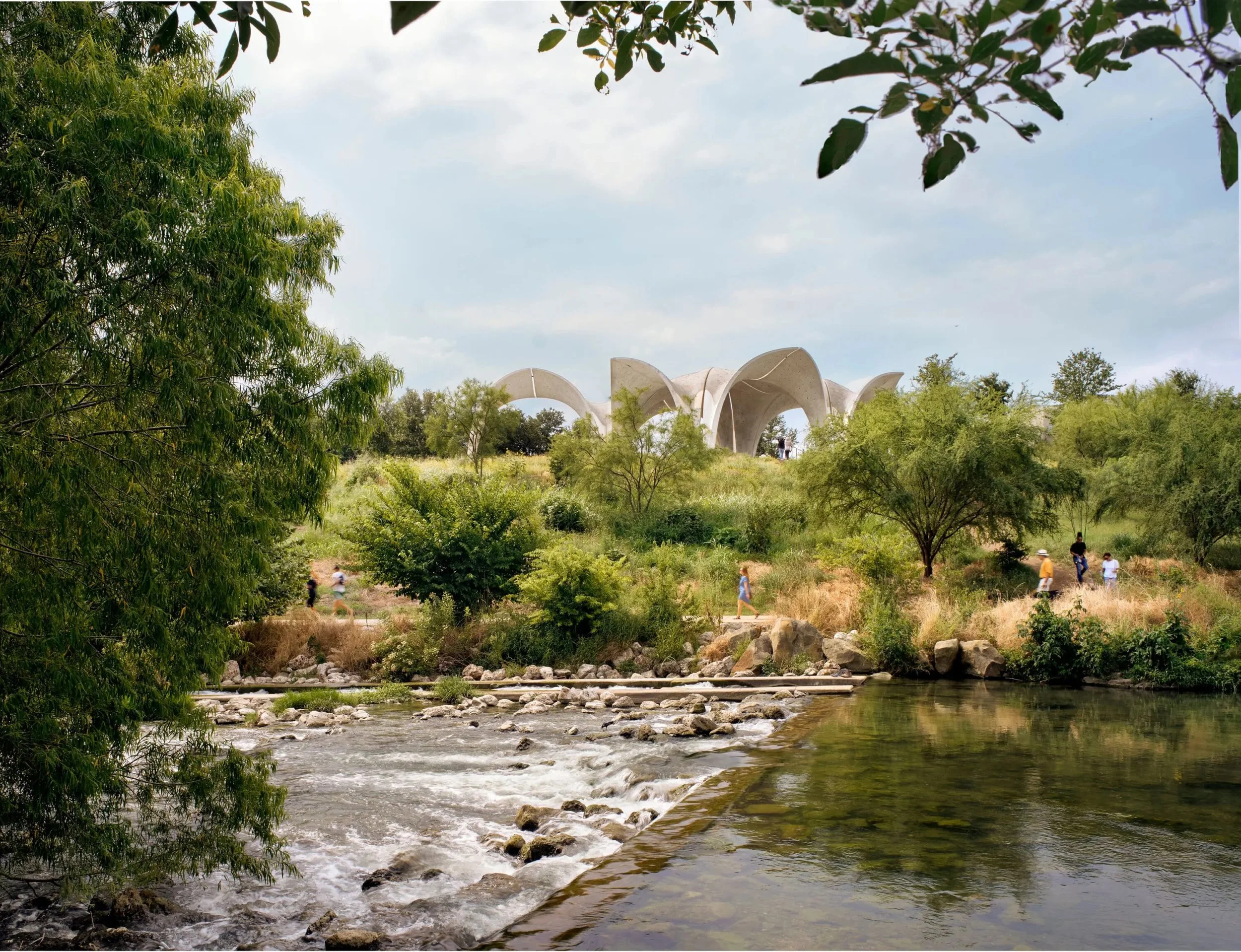
Photography: Casey Dunn
The park showcases an innovative biomimetic rainwater harvesting system: the central pavilion's concrete "petal" structures are "inspired by plants that funnel rainwater to their roots". These petals are formed to collect and funnel rainwater into a central underground catchment basin, predicted to collect around 825,000 gallons annually and capable of holding up to 100,000 gallons. The collected rainwater is filtered through alluvial soils, preventing contaminated runoff from entering the San Antonio River, and is then used for sewage conveyance and irrigation within the park. Instead of imposing purely technological or conventional solutions, the design team at Confluence Park looked to natural systems for elegant and efficient blueprints. This biomimetic approach resulted in a rainwater harvesting system that is not only highly functional but also aesthetically integrated and deeply meaningful to the park's educational mission. Building science and civil engineering expertise is crucial here to translate these natural inspirations into quantifiable performance, ensuring the system's efficiency, capacity, and durability. Architects should explore biomimicry as a powerful source of sustainable design inspiration. By studying how nature solves problems, they can uncover innovative, context-responsive solutions that are both environmentally effective and architecturally compelling. Collaboration with building science experts is key to translating these natural principles into engineered realities.
The Estela Avery Education Center features a green roof and a solar photovoltaic array intended to produce 100% of the park’s energy needs. Confluence Park transformed a blighted industrial site into a vibrant public amenity, welcoming over 32,000 students and registrants since its opening, serving as a powerful example of sustainable urban regeneration.
The park has received significant accolades, including the 2023 AIA Committee on the Environment Top Ten Award and the 2022 Metropolis Planet Positive Award Honoree.
Other Distinctive Projects: A Glimpse into Diverse Collaborations
The breadth of successful collaborations between Lake|Flato and Positive Energy demonstrates the universal applicability and necessity of building science expertise in architectural practice. These projects span diverse geographies (desert, rural Texas, urban Austin, San Antonio), project types (residential, public park), and scales. Positive Energy's scope also varies, from full MEP engineering to specialized building envelope and energy modeling. This diversity demonstrates that building science principles and integrated engineering are not niche disciplines applicable only to extreme climates or highly specialized projects. Instead, they are universally valuable tools for enhancing performance, comfort, durability, and sustainability across virtually any architectural challenge. Positive Energy's ability to adapt its deep expertise to the specific needs of each project—whether it is optimizing complex mechanical systems, fine-tuning a building envelope, or modeling energy flows—underscores the fundamental role of building science in achieving design excellence in varied contexts. Architects should recognize that engaging building science expertise is beneficial for all projects aiming for high performance, occupant well-being, and long-term value. It is not an optional add-on but an integral part of modern, responsible architectural practice, regardless of project type or location.
Madrone Mesa Ranch, for instance, is a multi-building family compound in the Texas Hill Country, designed as a retreat and later a full-time residence. Positive Energy provided MEP Engineering for this project, which is centered around a party barn and courtyard, thoughtfully integrated with large mature oak trees.
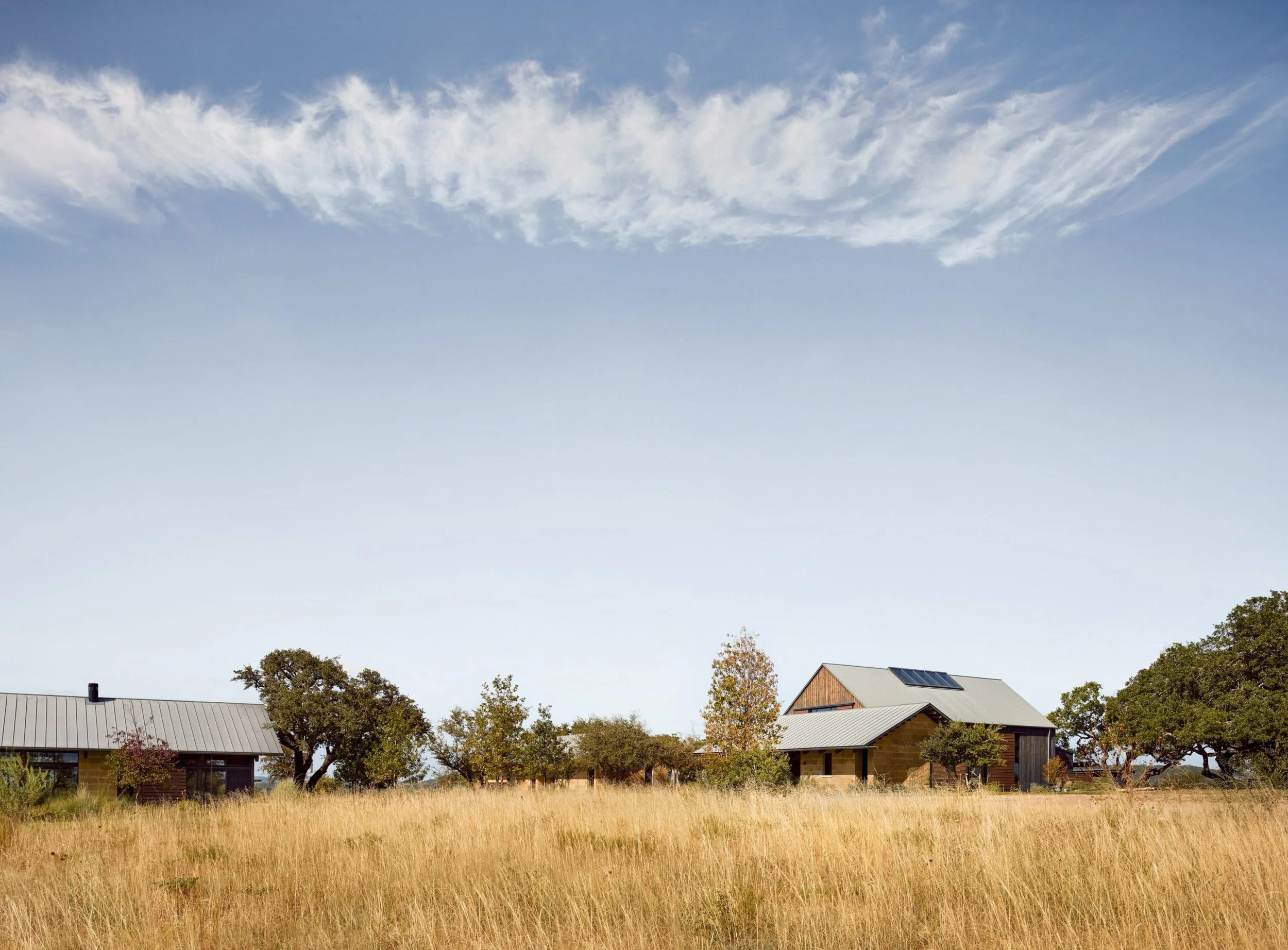
Photography: Casey Dunn
The Fall Creek Residence, for which Positive Energy also provided MEP Engineering, comprises a series of humble shed-roofed structures perched on a bluff. It features limestone walls and weathered steel, with a large porch designed to capture the sound of the falls and interiors using a "rich, truly native palette" of local materials. This project received the 2025 Residential Design Architecture Award.

Photography: Casey Dunn
The River Bend Residence, with MEP Engineering by Positive Energy, was designed to "sit lightly upon the land" overlooking the Guadalupe River, composed of multiple structures. Its orientation strategically takes advantage of prevailing winds for natural ventilation, and large skylights capture Northern daylight. The landscape is intentionally minimal and indigenous to reduce maintenance and environmental impact.
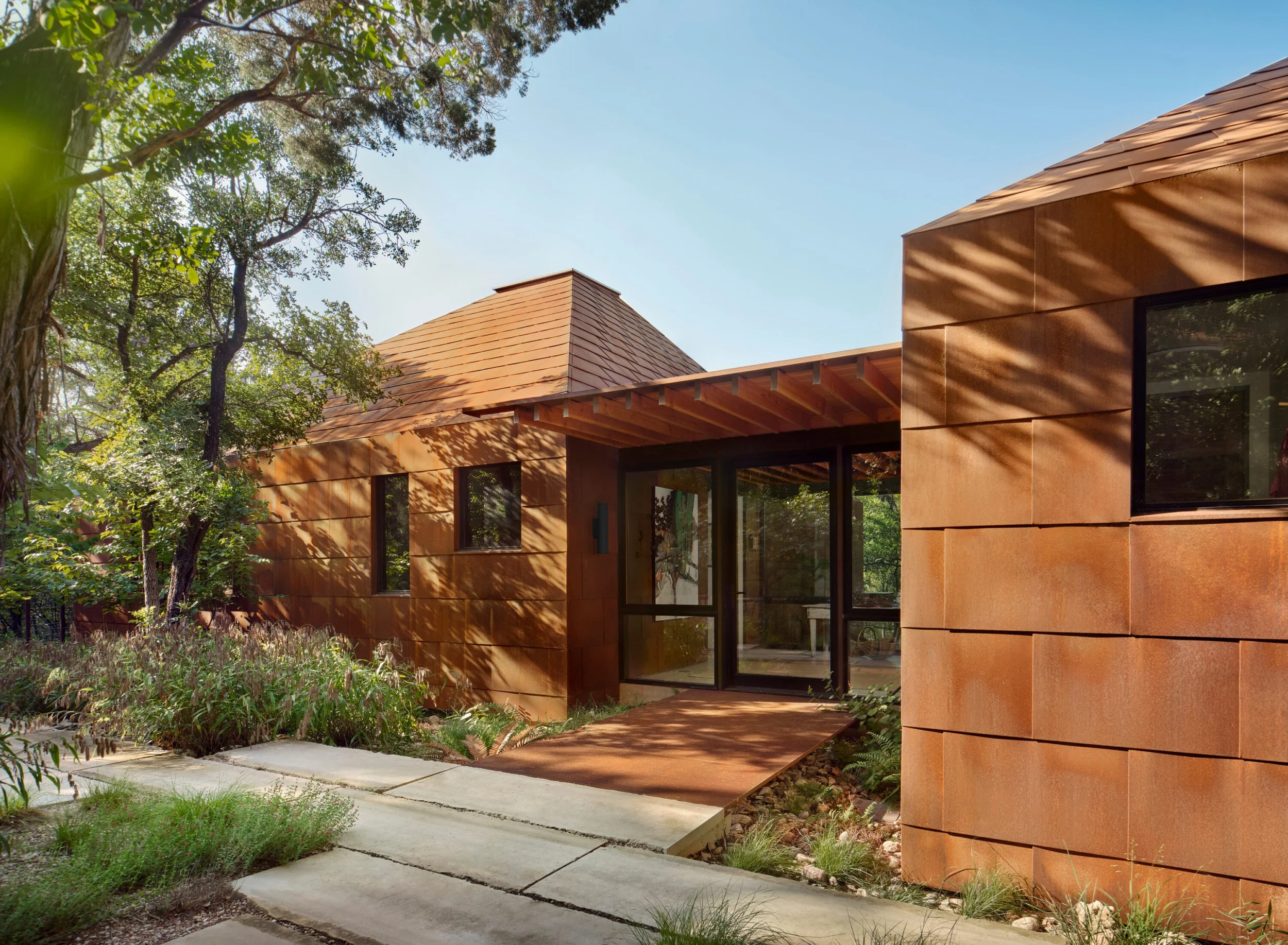
Finally, the Hog Pen Creek Residence, where Positive Energy provided Enclosure & Energy Modeling/Consulting, is situated at the confluence of Hog Pen Creek and Lake Austin. This residence emphasizes exterior living space. Its L-shaped footprint and orientation thoughtfully address challenging site constraints like towering oak trees and a steeply sloping site, featuring a boardwalk connecting structures down to a screened pavilion by the water's edge.

Inspiring the Next Generation of Architecture
The decade-plus-long collaboration between Lake|Flato Architects and Positive Energy stands as a powerful model for the architecture and construction industry. Their joint portfolio of distinctive, award-winning projects demonstrates that high-performance, durable, and healthy buildings are not abstract ideals but achievable realities. These buildings are realized through thoughtful, context-responsive design, the practical application of rigorous building science principles, and, most importantly, deep, early, and integrated collaboration between architectural visionaries and building science experts.
This partnership illustrates that by embracing building science and fostering similar integrated design relationships, architects can create buildings that not only stand the test of time but also profoundly respond to their environment, enhance the lives of their occupants, and inspire the next generation of truly sustainable and resilient architecture.
The Resurgence of Natural Building Materials in High-End Homes: A Building Science Perspective for Architects
The landscape of luxury residential architecture is undergoing a profound transformation, driven by an escalating demand for homes that embody both sophisticated elegance and profound environmental responsibility. This evolution is particularly evident in the growing emphasis on sustainable practices, personalization, and a deep, intrinsic connection to the natural world. By the end of this decade, it is anticipated that high-end homes will prominently feature biophilic design principles, seamlessly integrating elements such as optimized natural light, lush indoor gardens, and fluid indoor-outdoor living spaces. This is not merely a passing aesthetic trend but a fundamental redefinition of luxury, where well-being and ecological stewardship are as valued as opulence and exclusivity.
By Positive Energy staff
Redefining Luxury with Sustainable Materials
The landscape of luxury residential architecture is undergoing a profound transformation, driven by an escalating demand for homes that embody both sophisticated elegance and profound environmental responsibility. This evolution is particularly evident in the growing emphasis on sustainable practices, personalization, and a deep, intrinsic connection to the natural world.1 By the end of this decade, it is anticipated that more high-end homes will prominently feature biophilic design principles, seamlessly integrating elements such as optimized natural light, lush indoor gardens, and fluid indoor-outdoor living spaces.1 This is not merely a passing aesthetic trend but a fundamental redefinition of luxury, where well-being and ecological stewardship are as valued as opulence and exclusivity.
This paradigm shift is significantly influenced by global environmental imperatives, including the ambitious objectives set forth by the United Nations Sustainable Development Goals and the carbon reduction targets outlined in the Paris Agreement. These international accords are compelling industries worldwide, including real estate, to transition towards net-zero energy buildings and to drastically reduce their carbon footprints throughout the entire property lifecycle.2 Consequently, features such as eco-friendly building materials, thoughtful passive design strategies, and advanced smart home technologies are no longer considered optional enhancements in luxury residences. Instead, they have become expected standards, reflecting a sophisticated clientele's desire for residences that are both exquisitely designed and inherently sustainable.1 The high-end market, with its capacity for significant investment, is not simply adopting sustainable practices; it is actively propelling innovation in this sector. The demand for highly personalized climate control and advanced AI-driven systems in luxury homes indicates a willingness to invest in sophisticated solutions that optimize both comfort and energy efficiency.1 This financial leverage provides a unique opportunity to advance the research, development, and initial market penetration of cutting-edge sustainable materials and construction methodologies, which can then pave the way for broader adoption.
Natural building materials are at the forefront of this movement, characterized by their sourcing from renewable resources, inherently low carbon footprints, and their capacity for recyclability or biodegradability at the end of their lifecycle.6 Beyond their direct ecological advantages—such as conserving finite natural resources, significantly reducing greenhouse gas emissions, and minimizing construction waste—these materials offer a myriad of benefits crucial for high-end residential design. They provide superior energy efficiency through enhanced insulation and thermal properties, contribute to exceptional indoor air quality (IAQ) due to their low-VOC compositions and natural breathability, exhibit inherent durability, and possess a unique, organic aesthetic appeal.6 The appeal of natural materials in luxury homes extends beyond purely ecological metrics to encompass direct physiological and psychological benefits for occupants. The strong emphasis on biophilic design reinforces this, indicating a market shift towards architecture that actively nurtures the human connection with nature, leading to tangible improvements in stress reduction, cognitive function, and sleep quality.4 This means that architects can strategically position natural materials not merely as environmentally responsible choices, but as foundational components of a holistic wellness strategy for luxury homes, resonating deeply with clients seeking a healthy, restorative living environment. This report is designed to bridge the conceptual gap between aspirational architectural vision and the practical application of building science. It aims to equip architects with the necessary technical depth and practical understanding to confidently specify and implement durable, healthy, and high-performing wall assemblies utilizing natural building materials in high-end residential projects.
Foundational Building Science Principles for Natural Materials
A profound understanding of how building envelopes interact with their physical environment is fundamental for designing high-performance homes that are both durable and conducive to occupant well-being. This section delineates the core building science principles that are essential for the effective and enduring application of natural materials in construction.
Moisture Management and Durability
Moisture is consistently recognized as one of the most critical factors impacting a building's long-term service life. Its presence can lead to material degradation, mold proliferation, and significant health concerns for occupants.7 Effective moisture management in building enclosures relies on a comprehensive understanding of its various forms and movement mechanisms.
Understanding Bulk Water, Vapor Diffusion, and Air-Transported Moisture:
Bulk Water refers to liquid water, originating from sources such as precipitation (rain, snowmelt), flooding, groundwater, and condensation.7 The primary strategy for managing bulk water involves the "4 Ds": deflection (e.g., strategic use of flashings, drip edges, and extended roof overhangs), drainage (ensuring proper site grading and the implementation of perimeter drains), drying (designing assemblies that allow absorbed moisture to evaporate), and durability (selecting materials capable of withstanding periodic wetting without significant degradation).7
Vapor Diffusion describes the movement of water vapor through building materials from areas of higher vapor pressure to areas of lower vapor pressure.7 The rate at which this occurs is directly influenced by the vapor pressure differential and the material's inherent permeability.9
Air-Transported Moisture often poses a more significant and potentially damaging threat than vapor diffusion. This occurs when moist air infiltrates or exfiltrates through unintended gaps and pathways in the building envelope, driven by pressure differences caused by wind, stack effect, or leaky ductwork.8 Condensation forms when this humid air encounters a surface whose temperature falls below its dew point.9
Hygroscopic vs. Hydrophobic Materials and their Interaction with Moisture:
Building materials are broadly categorized by their interaction with water. Hygroscopic (or hydrophilic) materials possess an inherent ability to absorb and release water, encompassing many traditional building materials such as wood, concrete, brick, and plaster.7 In contrast, hydrophobic materials actively repel water, with examples including glass, metals, and plastics.7 For durable and long-lasting building assemblies, it is crucial to carefully consider the compatibility of constituent materials' water-absorbing or repelling properties and their capillarity—the ability to draw water through small pores and spaces.7
The Concept of Hygric Buffering and its Importance for Natural Materials:
Hygric buffering refers to a material's capacity for safely storing moisture.7 When moisture levels within a material remain below its hygric buffer capacity, the risk of moisture-related damage is significantly reduced.8 Materials that effectively "buffer" moisture prevent it from condensing within the building's interior or causing structural degradation.8 Different building materials exhibit varying hygric buffer capacities; for instance, a masonry house can absorb substantially more moisture (approximately 500 gallons) compared to a metal-sided house with gypsum sheathing (around 5 gallons) before saturation and deterioration.8
Natural building materials often possess a considerable hygric buffering capacity, enabling them to absorb excess moisture from indoor air and subsequently release it when humidity levels decrease. This intrinsic property effectively regulates indoor humidity, thereby preventing condensation and inhibiting mold growth.11 This active moisture management represents a fundamental departure from traditional approaches that often rely on impermeable barriers to block all moisture. The capacity of these materials to actively manage humidity by absorbing and releasing it, rather than merely resisting it, inherently prevents condensation and mitigates mold growth, fostering a healthier indoor environment. This indicates that a "flow-through" or "vapor-open" design strategy is often more appropriate for these materials, allowing them to dry effectively and contribute to a healthier indoor environment. Architects specifying hygroscopic natural materials should therefore adopt a moisture management paradigm that leverages the material's inherent ability to buffer humidity. This involves designing wall assemblies that are vapor-permeable, facilitating controlled moisture movement and drying, rather than attempting to completely block it with impermeable barriers, which can inadvertently trap moisture and lead to hidden damage.
Role of Vapor Permeability and Vapor Barriers in Different Climates:
Vapor retarders, often referred to as vapor barriers, are designed to impede, but not entirely halt, the movement of water vapor through a building assembly.8 Their optimal placement is critically dependent on the specific climate zone:
Cold Climates: In extreme cold environments, when vapor barriers are utilized, it is almost always imperative to install air and vapor barriers on the interior side of building walls. This prevents warm, moist indoor air from condensing as it migrates towards the colder exterior. Conversely, exterior materials should be vapor-permeable and detailed in such a way that allows any trapped moisture to drain and dry outwards.8
Hot and Humid Climates: The primary objective shifts to preventing moisture intrusion from the exterior. Buildings should facilitate drying towards the interior, relying on well designed HVAC systems with ample dehumidification capacity.
Mixed Climates: These climates present a more complex challenge due to seasonal reversals in moisture drive. A "flow-through" approach, utilizing permeable or semi-permeable materials on both interior and exterior surfaces, can be effective when coupled with meticulous air pressure and humidity control.8
While the general principles of moisture management, encapsulated by the "4 Ds," are universally applicable, their practical implementation with natural materials is profoundly influenced by the prevailing climate. For instance, rammed earth necessitates robust protection from driving rain 19, and unstabilized earthen walls are particularly vulnerable to rainfall exposure.20 Conversely, the optimal performance of hempcrete is intrinsically linked to its vapor permeability.11 This underscores that a generic, prescriptive approach to wall assemblies is insufficient. Architects must conduct a detailed analysis of the local climate's moisture profile (e.g., hot-dry, hot-humid, cold, mixed) to inform the appropriate material layering, vapor control strategies, and exterior protection, thereby ensuring long-term durability. This proactive approach ensures that the wall system is optimized for its specific environmental context, preventing moisture-related failures and maximizing performance.
Thermal Performance: Beyond R-Value
Understanding thermal performance in building design extends beyond a simple R-value, requiring a nuanced appreciation for how materials store, transfer, and resist heat.
Differentiating Thermal Mass and Insulation: Storing vs. Slowing Heat Transfer:
Thermal Mass refers to dense materials with high heat capacity that absorb and store thermal energy slowly, functioning as a "battery" for heat or cold, and subsequently releasing it over an extended period.22 Prominent examples include adobe, rammed earth, cob, concrete, brick, and stone.22 Thermal mass is a composite property derived from a material's heat capacity, thermal conductivity, and density.23 Its efficacy is maximized in climates characterized by significant diurnal (day-night) temperature swings, where it can absorb heat during the day and gradually release it during cooler nights.22
Insulation, conversely, comprises lightweight, airy materials with low thermal conductivity that primarily serve to slow down the rate of heat exchange between two distinct temperature regimes, such as the interior and exterior of a building.22 Examples include straw bale, light clay straw, hempcrete, cork, and wool.22 The fundamental role of insulation is to resist heat flow.23
Optimal Placement of Thermal Mass and Insulation for Energy Efficiency:
Generally speaking, for achieving optimal energy efficiency, thermal mass should invariably be exposed to the internal environment, with insulation strategically placed on the exterior of the building.23 This deliberate placement enables the thermal mass to effectively absorb and release heat from the conditioned indoor space, thereby passively moderating temperatures and diminishing reliance on mechanical heating and cooling systems. Placing insulation on the interior side of high thermal mass materials creates a barrier that prevents the thermal mass from effectively interacting with the indoor environment. This undermines its inherent benefits, potentially leading to increased energy consumption for heating or cooling, and can even contribute to overheating problems.23 The criticality of thermal mass placement for performance is a foundational, yet frequently misunderstood, principle. If thermal mass is insulated on the inside, it cannot effectively absorb or release heat from the conditioned space, thus failing to buffer temperature swings and potentially leading to increased energy consumption for heating or cooling. This directly impacts the building's energy efficiency and occupant comfort, and can even contribute to overheating. Architects designing with high thermal mass natural materials (like earthen walls) must meticulously detail their wall assemblies to ensure the mass is on the interior side of the insulation layer. This requires careful selection of exterior finishes and cladding that provide weather protection without impeding the thermal mass's ability to interact with the indoor environment. Energy performance modeling during the design phase is crucial to identify and mitigate potential solar heat gain issues. A critical design consideration is also the potential for overheating, particularly in well-sealed, energy-efficient buildings with excessive glazing. When such a building absorbs a substantial amount of heat during the day, the exterior insulation can inadvertently trap this heat inside, necessitating active cooling unless appropriate ventilation strategies are implemented.23
Specific Heat Capacity and Thermal Inertia in Natural Materials:
Specific heat capacity quantifies the amount of heat energy a material can store per unit mass for a given temperature change.23 Cross-Laminated Timber (CLT) exhibits a comparatively high specific heat capacity (thermal inertia) of approximately 1300 J/kg°C, which is notably higher than concrete's 880 J/kg°C, indicating CLT's superior ability to store heat.28 Similarly, hempcrete demonstrates a relatively high specific heat capacity, ranging from 1000 to 1700 J/(kg⋅K).11 This property is vital for materials intended to provide thermal mass, as it directly correlates with their capacity to moderate indoor temperature fluctuations.
Air Movement and Indoor Air Quality (IAQ): Creating Healthy Environments
The quality of indoor air is a critical determinant of occupant health and comfort, and natural building materials play a significant role in fostering healthier indoor environments through their impact on air movement and pollutant mitigation.
Sources and Health Effects of Volatile Organic Compounds (VOCs) and Off-Gassing:
Off-gassing is the process by which certain materials release volatile organic compounds (VOCs) and other chemicals into the air, significantly impacting indoor air quality.31 VOCs are organic chemicals that easily vaporize at room temperature, and many are human-made, used in thousands of products.31 Common sources in homes include:
Building Materials: Plywood, resins, laminates, paints, adhesives, sealants, medium-density fiberboard, veneers, insulation, engineered wood, and fire retardants. These can contain toxic VOCs like formaldehyde, benzene, and toluene.31
Furniture and Household Products: New furniture (especially pressed wood), memory foam mattresses, appliances, cabinetry, flame-retardant curtains, and plastics.32
Cleaning and Personal Care Products: Fragrances, preservatives, air fresheners, scented candles, and aerosols.32
Activities: Smoking, cooking, burning wood, and using printers.32
Health effects can be immediate or long-term. Short-term effects include unpleasant odors, headaches, dizziness, eye/nose/throat irritation, nausea, and allergic reactions.31 Prolonged exposure can lead to more severe issues such as respiratory problems, asthma exacerbation, neurological disorders, kidney/liver damage, and an increased risk of certain cancers.31 The EPA has identified formaldehyde as a probable human carcinogen with prolonged exposure.32 Concentrations of many VOCs are consistently higher indoors (up to ten times) than outdoors.34
How Natural Materials Contribute to Better IAQ and Mitigate VOCs:
Natural building materials inherently contribute to better indoor air quality by minimizing VOC emissions and actively managing indoor humidity via hygric buffering.
Low-VOC/VOC-Free Composition: Many natural materials, such as hemp insulation, are non-toxic and VOC-free, unlike synthetic alternatives like fiberglass or foam that can off-gas harmful chemicals.12 This significantly reduces the risk of respiratory issues and allergies, making them ideal for sensitive environments.13
Humidity Regulation and Mold Resistance: Materials like hempcrete and hemp batt insulation are highly hygroscopic, meaning they can absorb excess moisture when indoor humidity is high and release it when the air is dry.11 This natural moisture regulation prevents condensation and dampness, which are primary precursors to mold and mildew growth.12 By actively managing humidity, these materials contribute to a balanced and healthier indoor environment, free from common health risks associated with mold.12
VOC Neutralization (Hempcrete): Hempcrete has been shown to naturally absorb and neutralize VOCs present in the indoor environment, further improving air quality.17
No Toxic Fumes in Fire: Unlike some conventional building materials, hempcrete does not emit toxic gases when exposed to fire, enhancing occupant safety.17
By prioritizing materials with low-VOC content, excellent hygric buffering, and inherent mold resistance, architects can design high-end homes that not only look luxurious but actively contribute to the health and well-being of their occupants.
Earthen Homes: Timeless Elegance and Modern Performance
Earthen construction, encompassing traditional adobe, compressed earth block (CEB), and rammed earth, represents an ancient building tradition experiencing a modern resurgence, particularly in high-end residential applications. These materials offer a unique blend of aesthetic appeal, exceptional thermal performance, and profound environmental benefits.
Traditional Adobe, Compressed Earth Block (CEB), and Rammed Earth
Composition, Properties, and Historical Context:
Traditional Adobe: Composed of earth (clay, silt, sand) mixed with water and organic materials like straw or dung, sun-dried into bricks.24 The ideal soil composition is 15% clay, 10-30% silt, and 55-75% fine sand, with expansive clays limited to less than half the total clay content to prevent cracking.25 Adobe structures are notably durable in dry climates, with some of the oldest existing buildings globally being adobe.25
Compressed Earth Block (CEB): Similar in composition to adobe but mechanically compressed into blocks, often with minimal or no stabilization.20 This compression significantly increases density and mechanical properties, making them comparable to chemically stabilized bricks when sufficiently compacted.21 CEBs offer high hygrothermal comfort and air quality even with passive conditioning systems.37
Rammed Earth: Involves compacting a mix of sub-soil, sand, and aggregate into temporary forms to create solid, monolithic walls.24 Stabilizers like cement or lime (typically 5-10%) are often added to enhance strength and durability, particularly against erosion.19 Rammed earth walls are generally at least 12 to 18 inches (30-45 cm) thick for stability and structural integrity.39
These earthen materials are celebrated for their affordability, acoustic and thermal insulation, low environmental impact, and local accessibility.21 Their use reduces carbon emissions and transportation expenses due to local sourcing.21
Thermal Performance: Leveraging High Thermal Mass for Passive Climate Control:
Earthen materials are exceptional for their high thermal mass, a property that allows them to store and release heat slowly, effectively moderating indoor temperatures.24
Adobe: Possesses low thermal conductivity and high heat capacity, enabling thermal stability compared to concrete buildings.36 Adobe walls absorb significant heat from the sun and air over time, releasing it slowly to maintain warm interiors in cold seasons and cool interiors in hot seasons.25 A well-planned 10-inch (25 cm) adobe wall can have an effective R-value of R0=10 hr ft² °F/Btu, with thermal conductivity around 0.57 W/(m K).25
CEBs: Also exhibit high thermal mass, acting as natural heat reservoirs that stabilize indoor temperatures and reduce the need for active cooling systems.37 Their thermal conductivity typically ranges from 0.60–1.20 W/mK, higher than insulation but comparable to conventional materials, necessitating significant wall thicknesses for insulation.37 Incorporating natural materials like cork granules or ground olive stones can reduce thermal conductivity by 20-26% and bulk density by 3.8-5.4%, enhancing insulating potential.37
Rammed Earth: Provides excellent thermal mass, which is particularly beneficial in climates with large daily temperature swings, as it absorbs daytime heat and releases it at night.19
The inherent thermal inertia of these materials makes them ideal for passive design strategies, contributing to significant energy savings.
Structural Integrity: Compressive Strength, Seismic Considerations, and Reinforcement Techniques:
Earthen walls are load-bearing, meaning they carry their own weight into the foundation, requiring sufficient compressive strength.25
Compressive Strength: U.S. building codes typically require a minimum compressive strength of 2.1 N/mm² (300 lbf/in²) for adobe blocks.25 CEBs generally have compressive strength values in the 1.0–2.0 MPa range (unstabilized or slightly stabilized), suitable for one- or two-story constructions.37
Seismic Considerations: Adobe structures are particularly susceptible to earthquake damage if not adequately reinforced.25 Building codes mandate that structures withstand lateral acceleration earthquake loads, which induce tensile stresses.25 Traditional methods like bitumen-treated bamboo fiber textile reinforcement can significantly enhance seismic strength and ductile behavior.36
Reinforcement Techniques: To improve load-bearing capacity and durability against adverse environmental conditions, structural strengthening with timber elements within walls is recommended.20 Natural fiber reinforcements (e.g., straw, grass, rice husks) are crucial for increasing elasticity, mitigating cracking and shrinkage, and improving ductility in adobe and CEBs.21 Optimizing soil mixture proportions, especially clay content, is also vital for strength and water resistance.21
Moisture Management: Foundation, Drainage, and Wall Protection Strategies:
Earthen walls, being porous, require robust protection from driving rain and prolonged moisture exposure.19
Foundations: A solid foundation is critical, designed to evenly distribute the significant load of earthen walls.25 Footings should extend below the frost line, and modern codes often require reinforcing steel.25 Concrete or stone foundations are common for stability and moisture prevention, though alternatives like rubble trench foundations can minimize concrete use.39
Moisture Barriers and Drainage: A moisture barrier, such as plastic sheeting or a stabilized earthen layer, should be applied to prevent moisture seepage into the walls.39 Proper drainage around the foundation is essential to prevent water accumulation and erosion.39
Wall Protection: Continuous exposure to moisture can degrade earthen structures.19 While many modern rammed earth walls may not require additional waterproofing, new water-repellent additives can be used in very exposed conditions.19 Strategic architectural improvements like extended roof overhangs are crucial to shield walls from direct rainfall, significantly reducing degradation and erosion.21 Plastering, cladding, or rendering with sustainable materials (e.g., natural fiber-reinforced clay plasters) further protects against weathering and moisture penetration.21
Best Practices for Durable Wall Assemblies and Climate-Specific Detailing:
Achieving durable earthen wall assemblies necessitates an integrated design approach that considers climate, material properties, and construction techniques. For example, in hot-dry climates, thermal mass is highly prioritized, while hot-humid climates focus on maximizing cross-ventilation and avoiding water features that add humidity.26 In cold climates, insulation is often a better choice than thermal mass if solar gain is limited.22 The inherent low strength properties and susceptibility to moisture degradation of unstabilized earthen walls mean that design must account for these vulnerabilities through strategic architectural improvements and material enhancements.21 This includes optimizing soil mixture proportions, leveraging natural fiber reinforcements for improved mechanical properties and moisture resistance, and integrating structural timber elements for enhanced load-bearing capacity.20
Code Acceptance and Project Examples
Navigating Current Building Codes and Alternative Compliance Pathways:
Acceptance of earthen construction in U.S. building codes varies by state and county, often relying on local amendments to national standards like the International Building Code (IBC) or International Residential Code (IRC).40
Cob Construction: The 2021 & 2024 IRC Appendix AU (renumbered to Appendix BK in 2024) provides specific standards for cob design, construction, and structural requirements.40
Adobe and Rammed Earth: The 2021 New Mexico Earthen Building Code (NMAC 14.7.4) directly addresses adobe and rammed earth, ensuring structural and safety guidelines.40 IBC Chapter 21, Section 2109, provides empirical design guidelines for adobe masonry, which can also apply to CEBs.40 However, empirical design is restricted by limitations, often requiring engineered designs for structures exceeding these limits.40
Limitations: Adobe buildings are generally limited to one story unless professionally engineered for two.40 Unstabilized adobe units require specific compressive strength (min. 300 psi), modulus of rupture (min. 50 psi), and moisture content limits (max 4% by weight), with strict crack limitations.40 Exterior walls require a minimum thickness of 10 inches, and interior load-bearing walls 8 inches, with unsupported height not exceeding tenfold their thickness.40 Exterior walls, especially unstabilized adobe, need weather-protective finishes.40
Alternative Compliance: In areas where earthen materials are less common, approval may require adherence to local amendments or compliance through the IBC/IRC's "Alternative Materials, Design, and Methods of Construction and Equipment" provisions (Section 104.11). This allows non-standard materials if their safety and effectiveness are demonstrated through engineering design and testing, often requiring an "AMMR request" (Alternative Materials, Methods, and Requests).40 The Earthen Modular Masonry Committee (EMMC) of The Masonry Society (TMS) is actively developing a reference standard for earthen masonry to facilitate integration into building codes.40
Notable High-End Residential Projects Showcasing Earthen Construction:
Earthen construction has been successfully integrated into numerous high-end residential projects, demonstrating its versatility and aesthetic appeal:
Avila Adobe House (Los Angeles, CA): Built in 1818, this is the oldest sitting residence in Los Angeles, a testament to adobe's durability, though it required restoration after the 1971 Sylmar earthquake.42
Adobes at Sky Ranch (Dove Mountain, AZ): An ambitious modern project primarily built from adobe, balancing environmental soundness with economic viability across over 500 acres.43
Mud House (Alwar, India): Designed by Sketch Design Studio, this home features rammed earth walls made with on-site mud, mixed with natural binders like lime, fenugreek seeds, jaggery, and neem for insect repellency.44
Achioté (Playa Hermosa, Costa Rica): Designed by Formafatal, this project features rammed earth perimeter-bearing walls made from on-site clay soil, marking the first rammed earth implementation in Costa Rica.44
Casa Candelaria (San Miguel de Allende, Mexico): Cherem Arquitectos designed this contemporary Mexican hacienda with 12 volumes built using rammed earth from the site, known for its insulating properties. The 50-cm thick walls are mixed with natural mineral aggregates for pigmentation, maintaining fresh interiors during the day and warmth at night.44
Earth-Ship House (Sydney, Australia): Luigi Rosselli Architects revitalized an existing home with new rammed earth walls, constructed in a warm terracotta color, based on the Earthship architectural style.44
Jatobá House (Fazenda Boa Vista, Brazil): Studio Guilherme Torres designed this home with a large rammed earth wall surrounding its entirety, using sand and earth from the site, and incorporating high-quality adhesives for strength and durability.44
Casa Lasso (Lasso, Ecuador): Rama Estudio designed this house with five monolithic rammed earth walls that support the roof, with wooden beams resting on the 40-cm thick walls.44
These examples underscore the capacity of earthen materials to achieve both high performance and a sophisticated aesthetic in contemporary luxury homes.
Hemp-Based Materials: Insulation, Breathability, and Carbon Sequestration
Hemp-based building materials, including hempcrete and hemp batt insulation, are gaining significant traction in high-end residential construction due to their exceptional thermal performance, moisture-regulating properties, and substantial environmental benefits, particularly their carbon-negative nature.
Hempcrete and Hemp Batt Insulation
Composition and Unique Properties: Lightweight, Insulating, Carbon-Negative:
Hempcrete (Hemp-Lime): A biocomposite material typically made from hemp hurds (the woody core of the hemp plant, also known as shiv), mixed with a lime-based binder and water.11 It is a lightweight, insulating material that acts as a carbon sink throughout its lifetime, absorbing more CO₂ during its growth than is emitted during production, making it carbon-negative.6
Hemp Batt Insulation: Primarily composed of 90-92% hemp fibers, with 8-10% binders (polyester, lignin, or starch) to enhance durability.13 It is a clean, renewable resource requiring minimal water, no harmful pesticides or herbicides for cultivation.12 Its lightweight structure facilitates easier handling during installation.13
Thermal Performance: R-values, Thermal Conductivity, and Specific Heat Capacity:
Hemp-based materials offer excellent thermal properties, contributing to energy-efficient buildings.
Hempcrete: Provides good thermal insulation and thermal mass, with R-values ranging from 0.67/cm (1.7/in) to 1.2/cm (3.0/in).11 Its dry thermal conductivity typically ranges from 0.05 to 0.138 W/(m⋅K).11 The material's high specific heat capacity (1000 to 1700 J/(kg⋅K)) allows it to dynamically absorb temperature variations, eliminating the "cold wall effect" and reducing heating/cooling demands.11 This combination of insulation and thermal mass results in highly energy-efficient buildings that change temperature slowly.14
Hemp Batt Insulation: Boasts a thermal conductivity of 0.039 W/m.K at a density of 45kg/m³, effectively trapping air to regulate indoor temperatures and reduce energy consumption for heating and cooling.12
Exceptional Moisture Regulation and Breathability (Hygroscopic Nature):
A key advantage of hemp-based materials is their superior moisture management. They are highly hygroscopic, meaning they can absorb and release moisture, acting as a natural humidity regulator for the building envelope.11 This breathability allows moisture vapor to pass through, preventing condensation and mold formation, assuming that the building is also appropriately dehumidified via mechanical means, which can significantly improve indoor air quality and reduces the risk of respiratory problems.12
Fire Resistance: Inherent Properties and Char Layer Formation:
Hempcrete is naturally fire-resistant, making it a promising solution for homes in wildfire-prone regions.11
Inherent Fire Resistance: The lime binder in hempcrete is non-combustible and can withstand temperatures up to 1,000°F (537°C) without combusting.35 Even when directly exposed to flames, hempcrete does not catch fire.35
Char Layer Formation: When exposed to fire, the hemp hurds, in combination with the lime, form a protective char layer.45 This char layer significantly slows the spread of flames and enhances insulation, delaying heat penetration into the structure and providing critical time for evacuation and firefighting.35
Safety: Unlike some synthetic materials, hempcrete does not release harmful gases when exposed to high temperatures, making it a safer choice for occupants and firefighters.17 Hempcrete walls have withstood temperatures exceeding 1,700°F for over an hour in ASTM E119 tests without significant heat transfer.45
Indoor Air Quality Benefits: Non-Toxic, VOC-Free, Mold Resistance:
Hemp-based materials contribute significantly to healthy indoor environments.
Non-Toxic and VOC-Free: Hemp insulation is non-toxic and VOC-free, unlike traditional insulation materials that can off-gas harmful chemicals.13 This makes it safe for handling and installation and creates a healthier living space, particularly for sensitive individuals.13
Hypoallergenic: Hemp is naturally hypoallergenic.13
Mold and Pest Resistance: The high pH of air lime in hempcrete, combined with its moisture-regulating properties, makes it naturally resistant to mold, mildew, bacterial attacks, insects (like termites), and rodents.13 This resistance reduces the need for toxic chemicals and frequent repairs.13
VOC Neutralization: Hempcrete actively absorbs and neutralizes VOCs, further improving indoor air quality.17
Structural Considerations: Non-Load Bearing Applications and Framing Requirements:
It is crucial to understand that hempcrete typically has low mechanical performance, specifically compressive strength (around 0.3 MPa), and cannot be used for load-bearing elements in construction.11
Structural Frame: When used for walls, roofs, or screeds, hempcrete is cast around a primary or secondary structural frame, usually made of timber, metal, or concrete.14
Shear Strength: Hempcrete wall assemblies must remain vapor open, precluding the use of conventional shear panels like OSB or plywood. Therefore, diagonal bracing or moment frames are generally required to provide the building with shear and racking strength.48
Embedded Systems: All wiring must be run through conduit, and this conduit must be installed before the hempcrete is cast.46
Code Acceptance and Project Examples
Recent Advancements in U.S. Residential Building Codes for Hempcrete:
A significant milestone for hempcrete's adoption in the U.S. was its approval for the model U.S. residential building code by the International Code Council (ICC) in October 2022.45
2024 International Residential Code (IRC) Appendix BL (formerly BA): Hemp-lime (hempcrete) was approved as an appendix for the 2024 IRC, governing residential building codes in 49 out of 50 states.47 This approval specifically designates hempcrete as a non-structural wall infill system for one- and two-family dwellings and townhouses.47
Significance: This inclusion is expected to significantly increase the availability of hemp-based building materials and facilitate greener construction projects across the U.S..49 Prior to this, federal hemp prohibition had kept it out of official building codes for decades, despite its long-standing use in Europe and Canada.49
Limitations: While a major step for residential construction, hempcrete remains prohibited from commercial projects until at least 2025, when the International Building Code (IBC) is scheduled for renewal.49 For regions with higher seismic activity or taller buildings, engineered designs are still required.40
Examples of Luxury Homes Utilizing Hemp-Based Materials:
Hemp-based materials have been featured in a growing number of high-end and innovative residential projects globally:
Off-Grid Hempcrete Shed Home (Hartley Vale, Australia): A fully off-grid hempcrete shed home, highlighted as an inspiring example of sustainable architecture.50
Hempcrete Stargazing Dome Villa (Colorado, USA): An off-grid hemp villa blending sustainable design, astronomy, and natural building methods.50
Huon Hemp Home (Huon River, Tasmania): Featured on Grand Designs Australia, this off-grid home was largely constructed by the owner using hemp.50
Hemp House at Yaapeet (Australia): An owner-built hemp house, showcasing a personal journey in building with hemp.50
Nimtim Architects Hemp House extension (London): Features rough-hewn walls made of hempcrete and timber, focusing on low-carbon materials.50
Resilient Hempcrete Home (Malua Bay, Australia): Designed by Kirsty Wulf of Shelter Building Design, built for resilience and sustainability after bushfires.50
Melbourne Renovation: A high-end renovation showcasing hempcrete with a lime finish, demonstrating its versatility in luxury builds.50
Zac Efron's Planned Hempcrete Mansion (Australia): The actor is reportedly planning to build "the most sustainable home in the world" using hempcrete.50
Culburra Beach Hemp House (Australia): A stunning example of sustainable design and family living, utilizing hempcrete, plywood ceilings, and sheep's wool insulation.50
Flat House (UK): Developed by Practice Architecture and Margent Farm, this pioneering house used prefabricated hempcrete panels for its structural shell, erected in just two days, to demonstrate low embodied carbon construction.51
Ein Hod House (Israel): Designed by Tav Group, this hillside house uses hempcrete for its main-floor walls, covered in earth-based plaster, with a focus on sustainable, locally sourced materials.51
Geraardsbergen House (Belgium): A renovation by Martens Van Caimere Architecten left hempcrete exposed on the exterior walls, creating a textured finish.51
Clay Fields (UK): A development of 26 affordable homes, representing the first use of sprayed hempcrete in the UK in 2008.51
These projects illustrate the growing acceptance and creative application of hemp-based materials in diverse architectural contexts, from small extensions to ambitious residential developments.
Cross-Laminated Timber (CLT): Structural Innovation with Natural Aesthetics
Cross-Laminated Timber (CLT) represents a significant advancement in engineered wood products, offering a compelling alternative to traditional structural materials like steel and concrete. Its unique properties make it increasingly popular in high-end residential construction, where it provides both robust structural performance and a warm, natural aesthetic.
CLT as a Structural Alternative
Composition and Manufacturing Process: Engineered Wood for Strength and Stability:
CLT panels are fabricated from multiple layers of solid wood panels, typically softwood lumber, bonded together with structural adhesives at alternating right angles.29 This perpendicular layering creates exceptional structural rigidity and resilience in both directions, allowing CLT to handle high loads and transfer them effectively.29 Panels can range from three to nine layers of lumber, with maximum lengths up to 16 meters and thicknesses up to 320 mm.52 The manufacturing process is highly precise, often utilizing CNC (computer numerical control) technologies for custom cuts and minimal waste, leading to prefabricated components that are shipped ready-to-install.52
Structural Performance: Load-Bearing Capabilities, Strength-to-Weight Ratio, and Seismic Resistance:
CLT is renowned for its strong load-bearing qualities and ability to replace concrete, masonry, and steel in various building types.29
Strength-to-Weight Ratio: Mass timber, including CLT, boasts a 20% higher strength-to-weight ratio than steel and is four to five times stronger than non-reinforced concrete.55 This lightweight nature reduces the need for extensive foundations, potentially lowering costs and construction time, particularly on challenging sites.55
Load-Bearing: CLT panels are effectively used as load-bearing structural elements for walls, floors, and roofs, even in mid-rise buildings due to their high load capacity.29
Seismic Resistance: Solid wood buildings, including those made with CLT, perform exceptionally well in earthquakes due to wood's inherent flexibility, lightweight nature, and redundant load paths.29 Wood's ability to withstand high loads for short periods and retain elasticity is a significant asset in seismic zones.29 The fasteners and connection systems used in CLT construction provide multiple, redundant load paths for extreme forces, reducing the risk of structural collapse.29
Thermal Performance: Insulation Integration and Thermal Inertia:
Wood inherently possesses natural thermal advantages due to its low thermal conductivity (lambda value).29
Thermal Conductivity: CLT has relatively good thermal insulating characteristics, with a thermal conductivity of approximately 0.13 W/mK, which is comparable to lightweight concrete and substantially lower than concrete and steel.29
Thermal Inertia (Specific Heat Capacity): CLT exhibits a comparatively high specific heat capacity (thermal inertia) of around 1300 J/kg°C, significantly higher than concrete's 880 J/kg°C.28 This indicates CLT's superior ability to store heat energy per unit mass for a given temperature change.
Insulation Integration: To achieve the highest thermal performance standards, such as Passive House, CLT must be combined with appropriate insulation materials.28 For optimal performance, insulation should be applied to the outside face of the CLT panels, forming a continuous envelope, and should ideally be a breathable type protected by a breather membrane.59 This placement ensures the CLT is on the warm side of the insulation, allowing it to contribute to thermal mass effects if desired.59
Acoustic Properties: Sound Absorption and Strategies for Enhanced Insulation:
CLT offers advanced acoustic properties, contributing to comfortable indoor environments.29
Natural Sound Absorption: Wood has natural sound-absorbing qualities, which helps reduce noise transmission through walls and floors, making rooms feel more peaceful.60 CLT's layered and solid structure effectively blocks both airborne noise (e.g., voices) and impact noise (e.g., footsteps).60
Limitations and Enhancements: Despite its benefits, CLT's lower mass compared to concrete or masonry means it is generally less effective at insulating impact and airborne noise on its own.54 A 175mm thick CLT panel might have an Rw value of 35-45 dB, compared to 45-55 dB for a 150mm concrete slab.54 Therefore, additional layers of sound insulation are necessary, especially for areas requiring high noise isolation.54
Floating Floors: Acoustic floating floors, using resilient underlayment, are a common method to minimize airborne and impact sound transmission between CLT floors.54
Wall Soundproofing: Products like Rewall 40 or Trywall can be applied to CLT walls to improve acoustic and thermal insulation.54
Junctions: Decoupling elements like acoustic bearing strips are recommended at CLT junctions to reduce lateral noise transmissions.54
Fire Resistance: Charring Effect and Fire Ratings:
CLT construction has a proven safety and performance record for fire protection, often performing comparably to or even better than steel and concrete in fire safety.29
Charring Effect: CLT's inherent fire resistance is provided through "charring".61 When exposed to fire (temperatures exceeding 400°C), the timber surface ignites and burns at a steady, predictable rate, forming a black layer of char.56 This char layer acts as an insulating barrier, preventing excessive temperature rise within the unburnt core of the panel.56 The unaffected core continues to function structurally for the duration of the fire resistance period.61
Fire Ratings: CLT panels can be produced with fire resistances of 30, 60, and 90 minutes.61 A five-layer CLT floor panel can achieve a 1.5-hour fire rating, and a three-layer wall panel a 45-minute rating, based on standard fire resistance tests (e.g., ASTM E119, ISO 834).56 Adding gypsum board can further enhance fire resistance (e.g., 5/8-inch Type X gypsum adds 30 minutes).56
Structural Stability: Unlike steel, which can lose structural stability at high temperatures, CLT maintains its integrity due to the insulating char layer.52
Code Acceptance and Project Examples
Current Building Code Acceptance for CLT in Residential Applications:
CLT's acceptance in U.S. building codes has been evolving. The International Building Code (IBC) incorporated CLT in 2015, and new changes are expected to formalize acceptance of mass timber structures up to 18 stories tall.53
IBC 2021: Allows CLT not less than 4 inches (102 mm) thick in exterior wall assemblies with a 2-hour rating or less. The exterior surface of CLT and heavy timber elements must be protected by fire-retardant-treated wood sheathing (min. 15/32 inch thick), gypsum board (min. 1/2 inch thick), or a noncombustible material.62
Mass Timber Types: The 2021 IBC introduced three new types of construction (Types IV-A, IV-B, and IV-C) that allow mass timber buildings of taller heights, more stories, and greater allowable areas compared to previous heavy timber provisions.62
Prefabrication and Efficiency: CLT's prefabrication leads to faster construction (up to 25% quicker than concrete) and significantly reduced on-site labor and traffic.53
High-End Residential Projects Demonstrating CLT's Versatility:
CLT is increasingly being used in high-end single-family homes and luxury residential projects, showcasing its aesthetic appeal and performance benefits.
CLT House by Johnsen Schmaling (Hubertus, WI): Believed to be one of the first homes in the Midwest to use CLT, this 1,380 sq ft single-story home features a single CLT roof structure spanning the entire house, with exposed pine wood.63 The architects found the project similar in cost to conventionally wood-framed houses, with higher material costs offset by lower labor due to precision fabrication and speed.63
CLTHouse by atelierjones (Seattle, WA): One of the first completed Cross-Laminated Timber projects in the United States, this 1,500 sq ft residence showcases wood as both nostalgic and forward-thinking. Its precise geometric design was enabled by mass timber's digitally-enabled fabrication, with CNC cutting techniques allowing seamless connections for irregular angles.64 A Whole Building Life Cycle Assessment in 2019 confirmed its carbon sequestration benefits.64
Asumma Homes: These custom home builders utilize FSC-certified CLT structures with wood-fiber insulation, wooden window/door frames, and timber floors/roofs/terraces. They emphasize a predictable design process and direct contracting for cost-efficiency.58
Haywood Ranch Design Conversion (Evergreen CLT): A project that converted a typical light frame wood construction design to CLT, replacing traditional floor joists and stud walls with 4-inch thick CLT panels made of 2x6 yellow pine. The erection time for CLT floors, walls, and roof system for one home was an impressive 7-10 days.65
Mass Timber Residential Projects by Tabberson Architects and Bensonwood: These firms are pioneers in using mass timber for custom homes and renovations, highlighting its rapid assembly, superior energy efficiency, acoustic performance, and the aesthetic appeal of exposed wood.57
These examples demonstrate CLT's capacity to deliver high-performance, aesthetically rich, and sustainably built luxury homes, often with significant advantages in construction speed and efficiency.
Designing for Durability and Performance: Practical Considerations for Architects
Integrating natural building materials into high-end homes requires a holistic design approach that transcends conventional practices. Architects must move beyond a superficial understanding of "green" materials to a deep engagement with building science principles, ensuring long-term durability, optimal performance, and occupant well-being.
Integrating Building Science Principles from Concept to Completion:
The successful application of natural materials necessitates an early and continuous integration of building science. This means that moisture management, thermal performance, and indoor air quality considerations are not afterthoughts but foundational elements shaping the architectural design from its inception.48 For instance, hempcrete walls require planning from the earliest design stages, with wall sizing (e.g., 8” to 12” thickness) determined by climate zone for optimal thermal resistance.48 Similarly, the placement of thermal mass and insulation must be carefully considered during the design phase to maximize passive climate control and prevent issues like overheating.23 This proactive approach, rather than reactive problem-solving, is crucial for unlocking the full potential of these materials.
Importance of Climate-Specific Design and Material Selection:
As demonstrated throughout this report, the performance of natural materials is intrinsically linked to the local climate. A one-size-fits-all approach to wall assemblies or material selection is insufficient and can lead to significant failures. For example, earthen walls require robust protection from driving rain through extended roof overhangs and appropriate plasters, while hempcrete's breathability is a key performance characteristic that must be preserved.11 Architects must conduct thorough climate analyses to inform decisions regarding material layering, vapor control strategies, and exterior protection, ensuring the wall system is optimized for its specific environmental context.7 This includes understanding the interplay between thermal mass and insulation, and strategically placing them based on diurnal temperature swings and solar gain potential.22
Collaboration with Structural Engineers and Building Science Consultants:
Given the unique properties and evolving code acceptance of natural materials, interdisciplinary collaboration is paramount.
Structural Engineering: For materials like hempcrete, which are non-load-bearing, a qualified structural engineer is essential to design the shear and racking resistance, often requiring diagonal bracing or moment frames.11 Similarly, earthen walls, while load-bearing, may require timber elements for structural strengthening and seismic resistance.20 For CLT, the structural engineer works with the manufacturer to determine panel thickness and size based on loads and fire resistance.59
Building Science Consultants: These experts can provide invaluable guidance on complex hygrothermal behavior, condensation risk analysis, and optimal material layering to ensure long-term durability and energy performance.7 Their expertise is particularly critical for high R-value wall assemblies and for navigating the nuances of moisture management in different climates.67
Trade Briefing: All trades involved in construction, especially for materials like hempcrete, must be briefed on the specific building methods and nuances, such as pre-installing conduits for wiring before casting.46
Addressing Common Challenges and Misconceptions:
Architects must be prepared to address common misconceptions and challenges associated with natural building materials. For instance, the notion that mass timber is less fire-resistant than steel or concrete is often countered by its charring effect, which maintains structural integrity during a fire.55 Similarly, the perception that earthen materials are "primitive" or lack durability must be dispelled by highlighting modern stabilization techniques, strategic architectural improvements, and their proven longevity.20 The initial cost of some natural materials may be higher, but this is often offset by long-term energy savings, durability, and reduced maintenance.14 Furthermore, the lack of skilled professionals for some natural building methods can be a challenge, requiring careful selection of experienced builders or specialized training.15
The Future of Sustainable Luxury Homes
The integration of natural building materials into high-end homes represents a pivotal shift towards a more sustainable, resilient, and health-conscious built environment. This report has illuminated the profound benefits and intricate building science principles governing the performance of earthen constructions, hemp-based materials, and Cross-Laminated Timber (CLT).
Earthen homes, including traditional adobe, compressed earth blocks, and rammed earth, offer unparalleled thermal mass, passively regulating indoor temperatures and reducing energy demands. Their structural integrity, while requiring careful design and reinforcement, can be enhanced through modern techniques and natural fiber inclusions. Hempcrete and hemp batt insulation stand out for their exceptional thermal performance, remarkable moisture regulation, inherent fire resistance, and most notably, their carbon-negative footprint. These materials actively contribute to superior indoor air quality by being non-toxic, VOC-free, and resistant to mold growth. Cross-Laminated Timber provides a robust, lightweight structural alternative to steel and concrete, boasting impressive strength-to-weight ratios, excellent seismic performance, and inherent fire resistance through its charring effect. While requiring careful acoustic detailing, CLT offers significant advantages in construction speed and aesthetic appeal.
The evolving landscape of building codes, particularly the recent inclusion of hemp-lime in the 2024 International Residential Code and the expanding acceptance of mass timber in the IBC, signifies a growing recognition of these materials' viability and benefits. This regulatory progress is crucial for mainstreaming sustainable construction practices.
For architects, this presents an unparalleled opportunity to lead the industry. By deeply understanding the building science behind these natural materials—from the nuances of moisture management and hygric buffering to the strategic placement of thermal mass and insulation, and the critical factors influencing indoor air quality—architects can confidently design and specify high-performance wall assemblies. This requires a commitment to climate-specific design, meticulous detailing, and collaborative engagement with structural engineers and building science consultants. The future of luxury homes lies in their ability to seamlessly blend sophisticated design with profound environmental responsibility, creating spaces that are not only aesthetically captivating but also inherently healthy, durable, and truly sustainable.
Works Cited
2025 Luxury Architectural Trends: Redefining Elegance, accessed May 23, 2025, https://www.fratantonidesign.com/2025-luxury-architectural-trends-redefining-elegance-and-innovation
Sustainable Luxury Real Estate Trends In 2025 | The Luxury Playbook, accessed May 23, 2025, https://theluxuryplaybook.com/sustainable-real-estate-trends/
Five Key Trends in Sustainability and Real Estate - Spain Sotheby's International Realty, accessed May 23, 2025, https://www.spain-sothebysrealty.com/journal/five-key-trends-in-sustainability-and-real-estate
Integrating Nature-Inspired Elements to Elevate Luxury Homes, accessed May 23, 2025, https://aspirefinehomes.com/enhancing-luxury-custom-homes-with-biophilic-design-elements/
Biophilia in Luxury Residential Architecture: A Bridge Between ..., accessed May 23, 2025, https://spanisharchitect.info/biophilia-in-luxury-residential-architecture/
A Key Element of Sustainable Architecture | Mesh Design Projects, accessed May 23, 2025, https://www.meshdesignprojects.com.au/green-agriculture-sustainable-building-materials
Moisture Management Concepts | WBDG - Whole Building Design ..., accessed May 23, 2025, https://www.wbdg.org/resources/moisture-management-concepts
education.nachi.org, accessed May 23, 2025, https://education.nachi.org/coursemedia/course-59/documents/building-sci-internachi-1.pdf
Building Science 101 - Southface Institute, accessed May 23, 2025, https://www.southface.org/wp-content/uploads/2019/08/N082-Building-Science-101.pdf
Moisture Control for Residential Buildings | buildingscience.com, accessed May 23, 2025, https://buildingscience.com/bookstore/books/moisture-control-residential-buildings
Hempcrete - Wikipedia, accessed May 23, 2025, https://en.wikipedia.org/wiki/Hempcrete
Hemp Wool Insulation: Discover the Perfect Insulation Made of ..., accessed May 23, 2025, https://www.buyinsulationonline.co.uk/blog/hemp-wool-insulation-discover-the-perfect-insulation-made-of-hemp-yarn-and-wool
Hemp Insulation: A Comprehensive Guide | Ecomerchant, accessed May 23, 2025, https://www.ecomerchant.co.uk/news/hemp-insulation-a-comprehensive-guide/
Building with Hempcrete - UK Hempcrete, accessed May 23, 2025, https://www.ukhempcrete.com/building-with-hempcrete/
Addressing Misconceptions and Dispelling Myths about Hempcrete ..., accessed May 23, 2025, https://www.hempwellness.co.nz/blogs/hemp/addressing-misconceptions-and-dispelling-myths-about-hempcrete
The Environmental Benefits of Hemp Insulation - Ecomerchant, accessed May 23, 2025, https://www.ecomerchant.co.uk/news/the-environmental-benefits-of-hemp-insulation/
Hempcrete: Creating Healthy and Sustainable Living Spaces ..., accessed May 23, 2025, https://www.hempwellness.co.nz/blogs/hemp/hempcrete-creating-healthy-and-sustainable-living-spaces
What is Hempcrete and How to Use It for Construction ? - Weber ..., accessed May 23, 2025, https://www.fr.weber/en/hempcrete-insulating-lining
Rammed earth | YourHome, accessed May 23, 2025, https://www.yourhome.gov.au/materials/rammed-earth
Evaluating Sustainable Techniques for Earthen Wall ... - OPUS 4, accessed May 23, 2025, https://opus.bsz-bw.de/hft/frontdoor/index/index/docId/841
www.hochschule-biberach.de, accessed May 23, 2025, https://www.hochschule-biberach.de/sites/default/files/medien/dokumente/evaluating-sustainable-techniques-for-earthen-wall-construction-a-qualitative-study.pdf
Thermal Mass vs Insulation: Materials Choice - Permaculture Design ..., accessed May 23, 2025, https://treeyopermacultureedu.com/natural-building/thermal-mass-vs-insulation-materials-choice/
Building Science: Thermal Mass And Insulation's Roles Explained, accessed May 23, 2025, https://buildreview.org/thermal-mass-and-insulation-are-not-the-same/
Natural Building Materials: Top 5 Eco-Friendly Choices in 2024, accessed May 23, 2025, https://hutterarchitects.com/natural-building-materials/
Adobe - Wikipedia, accessed May 23, 2025, https://en.wikipedia.org/wiki/Adobe
Natural ventilation house design: 7 Powerful Benefits in 2025, accessed May 23, 2025, https://hutterarchitects.com/natural-ventilation-house-design/
Design for climate - | YourHome, accessed May 23, 2025, https://www.yourhome.gov.au/passive-design/design-climate
Technical Specification of CLT Panels | CLT Profi, accessed May 23, 2025, https://cltprofi.com/clt-panels-technical-information/#:~:text=CLT%20has%20a%20comparatively%20high,around%20880J%2Fkg%C2%B0C.&text=Combining%20CLT%20with%20proper%20insulation,performance%20of%20Passive%20building%20standards.
Technical Specification of CLT Panels | CLT Profi, accessed May 23, 2025, https://cltprofi.com/clt-panels-technical-information/
Natural Ventilation | WBDG - Whole Building Design Guide, accessed May 23, 2025, https://www.wbdg.org/resources/natural-ventilation
What is Off-Gassing and How It Affects Indoor Air Quality (IAQ) | uHoo, accessed May 23, 2025, https://getuhoo.com/blog/home/what-is-off-gassing-and-how-it-affects-indoor-air-quality-iaq/
Off-Gassing in Your New Home: What It Is and How to Stay Safe, accessed May 23, 2025, https://atmotube.com/blog/off-gassing-in-your-new-home-what-it-is-and-how-to-stay-safe
A Comprehensive Guide on Volatile Organic Compounds (VOCs) - TSI, accessed May 23, 2025, https://tsi.com/indoor-environments/learn/volatile-organic-compounds-guide
What are volatile organic compounds (VOCs)? | US EPA, accessed May 23, 2025, https://www.epa.gov/indoor-air-quality-iaq/what-are-volatile-organic-compounds-vocs
California Wildfires: How Hempcrete Can Provide Fire-Resistant ..., accessed May 23, 2025, https://honeysucklemag.com/california-wildfires-hempcrete-fire-resistant-sustainable-solutions/
(PDF) Adobe as a Sustainable Material: A Thermal Performance, accessed May 23, 2025, https://www.researchgate.net/publication/49591268_Adobe_as_a_Sustainable_Material_A_Thermal_Performance
Thermophysical Properties of Compressed Earth Blocks ... - MDPI, accessed May 23, 2025, https://www.mdpi.com/1996-1073/17/9/2070
(PDF) Thermophysical Properties of Compressed Earth Blocks ..., accessed May 23, 2025, https://www.researchgate.net/publication/380137065_Thermophysical_Properties_of_Compressed_Earth_Blocks_Incorporating_Natural_Materials
Exploration Of Rammed Earth Construction Techniques, accessed May 23, 2025, https://glsrammedearth.com/blog/rammed-earth-construction-techniques/
Earthen Building Codes and Standards - elizabeth hurtado, accessed May 23, 2025, https://www.hurtadohomedesign.com/earthen-building-codes-and-standards.html
How to get approved for local building codes in the US? : r/earthship - Reddit, accessed May 23, 2025, https://www.reddit.com/r/earthship/comments/1ks6ap7/how_to_get_approved_for_local_building_codes_in/
Avila Adobe House: Notable Los Angeles Architecture - ADG Lighting, accessed May 23, 2025, https://adglighting.com/blog/avila-adobe-house-notable-los-angeles-architecture-adg/
Mud Adobe Homes in Arizona: History, Architectural Style & Design Features, accessed May 23, 2025, https://gsrealestategroupaz.com/blog/mud-adobe-homes-in-arizona-history-architectural-style-and-design-features
10 residential projects making use of rammed earth walls - Archello, accessed May 23, 2025, https://archello.com/news/10-residential-projects-making-use-of-rammed-earth-walls
How Hemp Could Help Create More Fire-Safe Communities ..., accessed May 23, 2025, https://nationalhempassociation.org/how-hemp-could-help-create-more-fire-safe-communities/
Different Methods of Building with Hempcrete, accessed May 23, 2025, https://hempco.net.au/different-methods-of-building-with-hempcrete/blog
APPENDIX BL HEMP LIME HEMPCRETE CONSTRUCTION - 2024 ..., accessed May 23, 2025, https://codes.iccsafe.org/content/IRC2024P2/appendix-bl-hemp-lime-hempcrete-construction
www.hempitecture.com, accessed May 23, 2025, https://www.hempitecture.com/wp-content/uploads/2024/02/Hempitecture_HEMPBINDER_Manual_2023.pdf
Hempcrete Approved for U.S. Residential Construction, accessed May 23, 2025, https://www.globenewswire.com/news-release/2022/10/06/2529735/0/en/Hempcrete-Approved-for-U-S-Residential-Construction.html
Hempcrete Buildings | In progress and Complete | Hemp Building ..., accessed May 23, 2025, https://hempbuilding.au/hempcrete-buildings-structures/
Nine buildings constructed using hemp that show the biomaterial's ..., accessed May 23, 2025, https://www.dezeen.com/2023/01/06/hemp-hempcrete-buildings-architecture/
Cross-laminated timber (CLT) - Mass timber construction | Stora Enso, accessed May 23, 2025, https://www.storaenso.com/en/products/mass-timber-construction/building-products/clt
Cross Laminated Timber (CLT) in Home Building - Rise, accessed May 23, 2025, https://www.buildwithrise.com/stories/cross-laminated-timber-clt
CLT Sound Insulation - Buildtec Acoustics, accessed May 23, 2025, https://buildtecacoustics.co.uk/clt-sound-insulation/
Mass Timber: A Promising New Housing Technology - Chamber of ..., accessed May 23, 2025, https://progresschamber.org/research/mass-timber-promising-housing-tech/
Construction Concerns: Cross Laminated Timber - Fire Engineering, accessed May 23, 2025, https://www.fireengineering.com/fire-safety/construction-concerns-for-firefighters-cross-laminated-timber/
Mass Timber - Bensonwood, accessed May 23, 2025, https://bensonwood.com/professionals/mass-timber/
Asumma: Build a modern CLT or wooden house — by an award-winning design team., accessed May 23, 2025, https://asumma.com/
Technical Study: CLT Construction - Detail Library, accessed May 23, 2025, https://detail-library.co.uk/technical-study-clt-construction/
Acoustic Properties of Mass Timber in Building Design, accessed May 23, 2025, https://binkleyconstruction.com/acoustic-properties-of-mass-timber-structures/
Cross-Laminated Timber/CLT: Fire Resistance and Rating - GreenSpec, accessed May 23, 2025, https://www.greenspec.co.uk/building-design/crosslam-timber-fire-resistance-and-rating/
2021 International Building Code (IBC) - CHAPTER 6 TYPES OF ..., accessed May 23, 2025, https://codes.iccsafe.org/s/IBC2021P1/chapter-6-types-of-construction/IBC2021P1-Ch06-Sec602.4.4.2
Johnsen Schmaling's CLT House Is an Elegant Display of Mass Timber's Beauty, accessed May 23, 2025, https://www.thinkwood.com/construction-projects/johnsen-schmalings-clt-house-is-an-elegant-display-of-mass-timbers-beauty
CLTHouse - atelierjones, accessed May 23, 2025, https://www.atelierjones.com/house
Evergreen CLT Haywood Design Open House, accessed May 23, 2025, https://tightlinesdesigns.com/news/2024/02/27/evergreen-clt-haywood-design-open-house/
Mass Timber for Commercial & Residential - Tabberson Architects, accessed May 23, 2025, https://tabbersonarchitects.com/architectural-design-services/timber-frame-structure-type/mass-timber-commercial-and-residential/
BA-1316: Moisture Management for High R-Value Walls | buildingscience.com, accessed May 23, 2025, https://buildingscience.com/documents/bareports/ba-1316-moisture-management-for-high-r-value-walls/view
Couple builds first house entirely of hemp in Israel - YouTube, accessed May 23, 2025, https://www.youtube.com/watch?v=_5lDwBiQNc0