

A Path for California Architects to Easily Achieve Title 24 and Achieve Beyond-Code Performance
California has long been at the forefront of energy efficiency in the United States compared to its 49 counterparts, with its pioneering Building Energy Efficiency Standards, commonly known as Title 24, Part 6, first adopted in 1976. These standards are not static. They undergo rigorous updates every three years, serving as a dynamic benchmark for building energy performance and a critical mechanism for reducing greenhouse gas emissions during construction and operation. This continuous evolution is a deliberate policy strategy by the California Energy Commission (CEC) to systematically integrate the latest energy-saving technologies and construction practices into the built environment.
Designing for a Resilient California Future
The Evolving Mandate for Energy Efficiency in California Homes
California has long been at the forefront of energy efficiency in the United States compared to its 49 counterparts, with its pioneering Building Energy Efficiency Standards, commonly known as Title 24, Part 6, first adopted in 1976.[1] These standards are not static. They undergo rigorous updates every three years, serving as a dynamic benchmark for building energy performance and a critical mechanism for reducing greenhouse gas emissions during construction and operation.[1] This continuous evolution is a deliberate policy strategy by the California Energy Commission (CEC) to systematically integrate the latest energy-saving technologies and construction practices into the built environment.[2]
The state's ambitious climate objectives, including the goal of achieving net-zero buildings by 2030 and net-zero carbon pollution by 2045, underscore the profound importance and strategic direction of these regulations.[3] The 2022 Energy Code, which became effective on January 1, 2023, represents a significant leap forward in this trajectory. New single-family homes constructed under these standards are projected to consume approximately 7% less energy due to enhanced efficiency measures compared to those built under the 2019 code. When the impact of mandatory rooftop solar electricity generation is factored in, homes built to the 2019 standards are estimated to use about 53% less energy than those from 2016, illustrating the accelerating pace of energy reduction.2 This consistent and increasingly stringent progression of Title 24 updates signifies California's strategic commitment to driving the building sector toward its ambitious decarbonization targets. For architects, this means that compliance is not a fixed target but a moving one, necessitating continuous engagement with the latest code cycles. Proactive understanding and integration of advanced building science principles are therefore fundamental requirements for maintaining a competitive edge and ensuring designs are future-proof and aligned with state mandates for sustainability and reduced operational costs.
Bridging Design Vision with Technical Excellence
Architects, as the primary visionaries shaping California's built environment, hold a unique and powerful position to integrate these stringent energy standards into designs that are both aesthetically compelling and functionally superior. However, translating grand design concepts into the intricate technical realities of building science and mechanical, electrical, and plumbing (MEP) engineering can often present a formidable challenge. Many architects possess a strong general knowledge of construction but may lack the specialized technical depth required to confidently navigate the complexities of advanced building performance.
This blog post is crafted to bridge that very gap. It aims to demystify the technical intricacies of Title 24 compliance and beyond-code performance, offering practical strategies and evidence-based insights. By offering an understanding of the fundamental principles of building science and the pivotal role of robust MEP engineering, we hope to empower architects, enhancing their confidence and enabling them to create truly high-performance custom homes that not only meet but demonstrably exceed regulatory demands, contributing to a more resilient and sustainable future for California.
Decoding California's Title 24 Energy Code
Understanding the 2022/2023/2025 Updates: A Framework for Compliance
California's Title 24, Part 6, formally known as the Building Energy Efficiency Standards, is a comprehensive set of regulations that govern energy use in new residential construction across the state. These standards apply broadly to single-family homes, accessory dwelling units (ADUs), duplexes, and townhomes, as well as to significant renovations and additions.[2] The code is regularly updated to incorporate the latest energy-saving technologies and construction practices, reflecting California's aggressive climate goals.
The 2022 Energy Code, which took effect on January 1, 2023, introduced several pivotal advancements that architects must understand:
Heat Pumps: The code strongly encourages the use of efficient electric heat pumps for both space heating and water heating, marking a definitive policy shift away from reliance on fossil fuels in buildings.[1] This prioritization aligns with the state's broader decarbonization efforts.
Electric-Ready Requirements: New homes are now mandated to be "electric-ready," meaning they must be wired and plumbed in a way that facilitates the future installation of all-electric appliances and systems, even if gas appliances are initially installed.[5] This foresight minimizes future retrofit costs and accelerates the transition to an all-electric grid.
Solar PV and Battery Storage: Requirements for solar photovoltaic (PV) systems have been expanded, making them mandatory for most new homes to achieve net-zero electricity goals. There are, however, specific exemptions for solar PV based on factors such as significant shading, small building size (under 500 square feet), or conversions from existing structures like garages.[3] The 2023 Title 24 updates place increased emphasis on integrating battery storage systems, recognizing their role in enhancing demand flexibility and grid resilience by allowing excess solar generation to be stored and used during peak demand periods.[3]
Ventilation Standards: The 2022 code also strengthened ventilation requirements, a crucial step for improving indoor air quality in increasingly airtight homes.[5]
Looking ahead, the upcoming 2025 Title 24 updates are poised to introduce even higher performance margins for single-family homes, with specific targets varying by California's 16 climate zones.[6] This continuous and increasingly stringent progression of Title 24, particularly the consistent push towards all-electric homes and mandatory solar with encouraged battery storage, is in clear relationship with California's strategic direction towards grid-interactive, decarbonized buildings. This trajectory means architects must design not just for energy efficiency within the building's confines, but for how the building actively participates in the broader energy grid. This requires anticipating a future where homes are dynamic participants in energy management, optimizing for "demand flexibility" and "time-dependent valuation" (TDV) to support grid stability and reduce peak loads.[1] The shift to all-electric design also inherently improves indoor air quality by eliminating on-site combustion byproducts.[10]
Compliance Pathways: Mandatory Measures, Prescriptive, and Performance Approaches
Title 24 provides architects with distinct pathways to demonstrate compliance, offering a degree of flexibility while ensuring all projects meet fundamental energy efficiency benchmarks. Regardless of the chosen approach, a core set of mandatory measures must always be met.[1]
Mandatory Measures: These are foundational, non-negotiable requirements that apply to specific building features and systems across all projects. Examples include minimum insulation standards tailored to climate zones, the use of high-performance windows and doors equipped with adequate weather stripping to prevent air leakage, the installation of efficient HVAC systems paired with smart, programmable, or remotely controllable thermostats, and the exclusive use of LED lighting with automatic controls.[3] These measures form the baseline for energy-efficient construction.
Prescriptive Approach: This pathway offers the most straightforward route to compliance, functioning as a "recipe" or checklist. Architects can demonstrate compliance by ensuring each building component meets or exceeds predefined performance levels. This includes adhering to specific R-values for insulation (e.g., R-30 to R-49 for roofs/attics depending on climate zone) and U-factors for windows (e.g., between 0.3 and 0.4, with a prescriptive maximum of 0.30 for all fenestration).[1] While this approach simplifies the design and permitting process by providing clear, fixed targets, it inherently offers less design flexibility and may not allow for optimal performance tailoring to unique project conditions.
Performance Approach: This method provides significantly greater design freedom and encourages innovation. Instead of adhering to a rigid checklist, architects demonstrate compliance by proving that the proposed building achieves the same or better overall energy efficiency than an equivalent "standard design" building. This is accomplished through sophisticated energy modeling, which calculates Energy Design Ratings (EDR) based on source energy and time-dependent valuation (TDV) energy.[1] The EDR system allows for strategic trade-offs between different building components; for instance, a highly efficient envelope might offset less efficient HVAC components, provided the total energy budget is met or exceeded. Approved compliance software, such as EnergyPro, CBECC, or EnergyPlus, is used to simulate the building's energy performance and compare the proposed design's EDR against the standard design's budget.[3] This approach is particularly beneficial for complex custom homes, where unique architectural visions can be realized while still achieving high energy performance.
The availability of both prescriptive and performance compliance pathways presents a strategic choice for architects, allowing them to select an approach that best suits their project's complexity and design ambition. While the prescriptive path offers simplicity and predictability for straightforward projects, the performance path, though demanding advanced energy modeling expertise, unlocks greater design flexibility. This flexibility can lead to optimization for specific project goals beyond minimum compliance, potentially resulting in more cost-effective and innovative solutions in the long run. However, it is important to note that the performance path requires accurate modeling and the involvement of skilled MEP engineers and energy modelers to ensure compliance is robustly demonstrated and potential issues are mitigated early in the design process.[3]
This table offers a concise overview of typical prescriptive requirements for single-family homes under the 2022 Title 24 Energy Code. It provides a quick reference for architects to understand baseline energy efficiency targets for various California climate zones, facilitating early design decisions and material specifications. The variations across zones underscore the climate-specific nature of Title 24, guiding architects to tailor their designs to local environmental conditions.
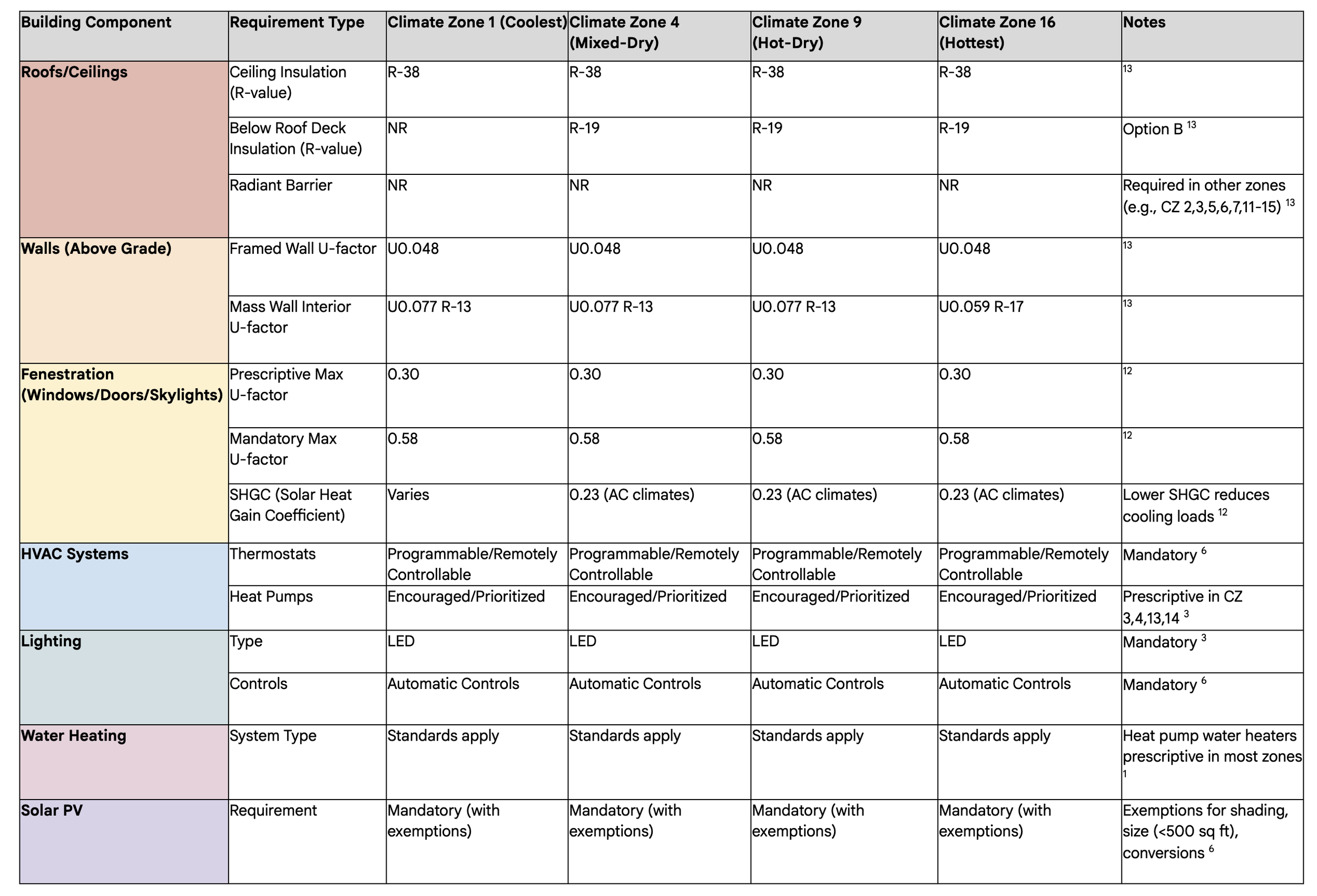
Table: Snapshot of Key Prescriptive Requirements for Single-Family Homes by Climate Zone (2022 Title 24, Part 6) Note: This table provides general prescriptive values. Actual requirements depend on the specific climate zone and project details. Architects should consult the full 2022 Single-Family Residential Compliance Manual and local Authority Having Jurisdiction for precise requirements.7
Architectural Design Strategies for Title 24 Compliance
Achieving Title 24 compliance and moving towards high-performance building begins with fundamental architectural design choices. These decisions, made early in the process, profoundly influence a home's energy consumption, occupant comfort, and long-term durability.
Optimizing the Building Envelope: Insulation, Fenestration, and Air Sealing
The building envelope—comprising walls, roofs, floors, windows, and doors—acts as the primary environmental separator between the conditioned interior and the external climate.[12] Its design is critical for managing heat transfer and overall energy performance.
Insulation: Strategic use of insulation materials with high R-values minimizes the energy required for heating and cooling.[6] Title 24 provides specific R-value requirements that vary significantly based on California's 16 climate zones and the particular building component. For instance, roof and attic insulation requirements can range from R-30 to R-49, while walls in some zones may require R-15 or R-30.[6] Architects must select insulation types and thicknesses appropriate for their project's climate zone to ensure optimal thermal resistance.
Fenestration: Windows, glazed doors, and skylights can account for up to 50% of a home's heating and cooling loads (and even more so in some heavily glazed homes).[12] High-performance fenestration is critical. This involves specifying products with low U-factors, which measure the rate of heat transfer—a lower U-factor indicates better insulation.[6] Equally important is the Solar Heat Gain Coefficient (SHGC), which quantifies how much solar radiation passes through the glass. In California's air-conditioning-dominated climates, a lower SHGC (e.g., below 0.23) is beneficial for reducing cooling loads.[12] Modern fenestration often incorporates double or triple glazing, low-emissivity (low-e) coatings, and inert gas fills (like argon or krypton) between panes to significantly enhance thermal performance.[12]
Air Sealing: A continuous and robust air barrier is fundamental to high-performance building. This barrier prevents uncontrolled air leakage, known as infiltration and exfiltration, which can significantly compromise the effectiveness of insulation and lead to substantial energy loss.[18] Beyond energy savings, effective air sealing improves occupant comfort by eliminating drafts and plays a critical role in moisture control and maintaining healthy indoor air quality.[17] Key areas for meticulous air sealing include penetrations through the building envelope such as attic hatches, electrical boxes, plumbing stacks, and the junctions between walls and ceilings.[25]
Moisture Management: A comprehensive moisture management strategy is essential for the long-term durability of the building and the health of its occupants. Moisture is a leading cause of building degradation and can lead to serious health issues.[27] This strategy involves a multi-pronged approach: controlling moisture entry (from rainwater, groundwater, air transport, and vapor diffusion), preventing its accumulation within building assemblies, and facilitating its removal.[27] Practical strategies include designing effective drainage planes, installing proper flashing at all openings and transitions, and making thoughtful decisions about vapor retarders based on climate conditions. For instance, in air-conditioned climates, avoiding interior vapor barriers is often recommended to allow building assemblies to dry inward, preventing moisture entrapment that could lead to mold and rot.[19]
The building envelope is not merely a collection of independent components but an integrated system where insulation, fenestration, air sealing, and moisture management work synergistically. A deficiency in one area, particularly air sealing, can undermine the performance of others and lead to significant durability and health issues, such as moisture accumulation and mold, even if individual R-values or U-factors meet code minimums. This highlights that "compliance" represents a baseline, and true "high-performance" demands a holistic, systems-thinking approach to the envelope, prioritizing the long-term health and resilience of the structure and its inhabitants.
Integrating Solar Photovoltaic (PV) Systems
Solar PV systems are a cornerstone of California's energy policy, now mandated for most new residential construction to help achieve the state's net-zero electricity goals.[3] For architects, this mandate translates into specific design considerations. It is essential to assess roof strength to support the weight of the panels, optimize roof orientation and pitch for maximum solar access throughout the year, and adhere to strict fire and safety codes regarding panel placement and spacing.[32]
Beyond simply generating electricity, the integration of battery storage systems is increasingly encouraged, particularly with the advancements in the 2023 Title 24 updates. This integration enhances demand flexibility and grid resilience by allowing excess solar generation produced during the day to be stored and then discharged during evening peak demand periods, or even during grid outages.[3] The mandate for solar PV, coupled with the strong encouragement for battery storage, signifies a shift in building performance expectations: homes are moving beyond merely generating renewable energy to actively managing it for grid stability. This implies that architects should design homes that are not just "solar-ready" but "grid-interactive." This involves considering how the home's energy profile can adapt to time-of-use electricity rates and contribute to the overall health and stability of the electrical grid. This is a higher-order consideration than simply sizing a PV array; it involves designing for demand flexibility and understanding the time-dependent valuation (TDV) of energy, anticipating a future where homes are active participants in energy management, optimizing for both homeowner cost savings and broader grid support.[1]
The Critical Role of MEP Engineering in Title 24 Compliance
MEP (Mechanical, Electrical, and Plumbing) engineering forms the functional backbone of any building, directly influencing its energy efficiency, occupant comfort, and safety.[18] For high-performance homes, the early and continuous involvement of MEP engineers in the design process is not merely beneficial but crucial. Their expertise allows for the optimization of building systems from the outset, identifying significant energy-saving opportunities and ensuring seamless integration with architectural plans. This proactive collaboration helps prevent costly redesigns, delays, and performance compromises that can arise from a fragmented design approach.[3]
High-Efficiency HVAC Systems: The Shift to Heat Pumps and Smart Controls
HVAC systems typically represent the largest energy consumers within a home.[18] Title 24 mandates increasingly higher efficiency ratings for HVAC equipment, driving innovation and adoption of appropriate technologies.[3]
Heat Pumps: California's energy policy explicitly prioritizes heat pumps over traditional gas heating systems, with the 2022 Energy Code actively encouraging their widespread adoption for both space heating and water heating.[1] Heat pumps are remarkably efficient because they operate by transferring heat rather than generating it through combustion, making them capable of providing both heating and cooling from a single system.[34] This technology offers substantial energy bill savings for homeowners, with average annual savings of $370 compared to gas heating, and potentially up to $3,260 when replacing propane or oil systems (mileage may vary).[10] Beyond economic benefits, heat pumps significantly reduce greenhouse gas emissions, aligning with California's decarbonization goals and improving indoor air quality by eliminating combustion byproducts.[10] Various types of heat pumps are available, including ground source heat pumps (GSHP), which are conventionally called “geothermal” systems, variable speed air source heat pumps (VRF), and air to water heat pumps (A2WHP), each offering different configurations and appraoches.[34]
Smart Controls: The integration of smart controls is a mandatory aspect of Title 24 compliance. Programmable or remotely controllable thermostats are required, enabling precise temperature management and significant energy reductions by optimizing heating and cooling schedules.[6] These smart thermostats and automated controls are essential tools for comprehensive HVAC system optimization, allowing homeowners and building management systems to fine-tune energy use based on occupancy patterns and external conditions.[18]
Ventilation: In the context of increasingly airtight, high-performance homes, mechanical ventilation systems become indispensable for maintaining healthy indoor air quality. Energy Recovery Ventilators (ERVs) and Heat Recovery Ventilators (HRVs) are designed to exchange stale indoor air with fresh outdoor air while simultaneously recovering a significant portion of the energy from the exhaust air.[20] HRVs primarily transfer heat, while ERVs transfer both heat and moisture. These systems are crucial for ensuring continuous fresh air supply without compromising the thermal performance of the building envelope.
Advanced Water Heating and Lighting Solutions
Beyond space conditioning, Title 24 also addresses other major energy consumers in residential buildings.
Water Heating: The code outlines specific standards for water heating systems, with the 2022 code introducing prescriptive requirements for heat pump water heaters in most climate zones.[1] This further reinforces the state's push towards all-electric solutions.
Lighting: Energy-efficient lighting, predominantly LED technology, is mandatory for new residential construction.[3] This is coupled with requirements for automatic controls, such as occupancy sensors and timers, to prevent energy waste in unoccupied spaces.[6] Architects also play a vital role in maximizing natural daylighting through thoughtful building orientation and fenestration design, which not only reduces reliance on artificial lighting but also contributes to lower HVAC loads.[18]
MEP engineering is not just about selecting efficient equipment; it is about orchestrating a cohesive system that interacts dynamically with the building envelope and occupant behavior. The widespread adoption of all-electric heat pumps, coupled with sophisticated smart controls and balanced ventilation systems, represents a fundamental re-thinking of how comfort and energy use are achieved in a home. Achieving "beyond-code" performance means leveraging MEP systems not just for minimum compliance, but for delivering superior occupant comfort, health, and long-term operational efficiency. This proactive approach addresses issues like indoor air quality, which are often secondary considerations in minimum code compliance, ensuring a truly high-performance living environment.
The Beyond-Code, Transformative Potential of Phius
What is Phius? A Performance-Based Standard for Optimal Living
While Title 24 establishes a robust foundation for energy efficiency, pushing California homes towards significant decarbonization, architects can aim higher. Simply meeting compliance ensures a baseline level of performance, but true innovation lies in exceeding it. If architects are already deeply engaged in the complex processes of adhering to stringent Title 24 requirements, it is a strategic next step to explore standards like Phius. These offer not just incremental improvements, but a transformative shift towards ultra-low energy use, superior indoor air quality, and enhanced resilience. Considering the effort already invested in achieving Title 24 compliance, delving into Phius represents an opportunity to leverage existing expertise and investment, ensuring that California's homes are not just code-compliant, but models of sustainable, high-performance living that set a new benchmark for the future.
Phius (Passive House Institute US) offers a robust, climate-specific passive building standard that guides the design and construction of buildings to achieve superior energy performance, exceptional indoor air quality, and enduring quality.[38] It provides a "quality-and-conservation-first framework for net zero building," emphasizing deep energy conservation measures as the primary strategy for achieving ultra-low energy consumption.[38]
Phius standards are globally applicable and are firmly rooted in rigorous building science principles and best practices, supported by comprehensive quality assurance protocols.[38] The core philosophy of Phius is to identify the "sweet spot where aggressive energy and carbon reduction overlap with cost effectiveness," taking into account a full range of variables including climate zone, source energy, building size, and construction costs.[38] This approach ensures that high performance is not only achievable but also economically viable over the building's lifecycle. Phius certification has emerged as the leading passive building certification program in North America, with thousands of certified units across numerous states, demonstrating its growing adoption and proven efficacy.[39]
Phius is not merely a set of energy efficiency targets; it is a holistic building science framework that optimizes for performance, occupant health, and long-term durability from the outset. Its rigorous third-party verification and design review processes serve as a powerful risk management tool. These comprehensive reviews identify potential design and construction issues early in the design stage, which is crucial for complex high-performance buildings. This proactive identification and resolution of potential problems significantly reduces the likelihood of post-occupancy performance gaps and costly rectifications, providing architects with a higher degree of certainty that the building will perform as intended. This shifts the focus from simply "meeting code" to actively verifying performance.
The Five Pillars of Passive Building
Phius standards are fundamentally built upon five interconnected design principles, which, when integrated holistically, enable the construction of ultra-low energy buildings [40]:
Continuous Insulation and Thermal Bridge-Free Design: This principle calls for an uninterrupted layer of insulation that completely envelops the building, minimizing heat transfer through the building shell. Crucially, it also requires the elimination of "thermal bridges"—points in the building envelope (such as framing members or connections) where heat can easily escape or enter due to breaks in the insulation layer or the use of highly conductive materials. Advanced framing techniques and the use of low-conductivity structural materials are employed to prevent these thermal bypasses.[40] This is a significant departure from conventional framed construction, where thermal bridging can substantially degrade overall thermal performance.
Achieving Exceptional Airtightness: This pillar mandates the creation of an extremely tight building envelope, designed to achieve very low air infiltration rates (e.g., a maximum of 0.6 air changes per hour at 50 Pascals pressure, as measured by a blower door test).[21] This level of airtightness is far more stringent than typical code requirements and is critical for several reasons: it dramatically reduces energy loss due to uncontrolled air leakage, eliminates drafts for superior occupant comfort, and provides precise control over moisture movement within the building assemblies. Achieving this requires meticulous attention to detail in sealing all penetrations and junctions in the building envelope using appropriate tapes, sealants, and caulks.[21]
High-Performance Windows and Doors: Glazed openings are inherently the weakest thermal points in conventional building envelopes.[21] Phius addresses this by requiring windows and doors with exceptionally low U-factors (indicating minimal heat transfer) and appropriate Solar Heat Gain Coefficients (SHGC). This typically involves the use of triple-glazed windows, often with advanced low-emissivity (low-e) coatings and inert gas fills between panes, combined with highly insulated frames.[12] These components are designed to prevent air leakage, minimize heat gain in summer, and retain heat in winter, contributing significantly to thermal comfort and energy efficiency. Beyond thermal performance, high-performance windows also offer superior acoustic insulation.[21]
Balanced Ventilation with Energy Recovery (HRV/ERV): In an exceptionally airtight building, a dedicated mechanical ventilation system is essential to ensure a continuous supply of fresh, filtered outdoor air while exhausting stale indoor air. This is achieved through Heat Recovery Ventilators (HRVs) or Energy Recovery Ventilators (ERVs).[21] HRVs primarily recover heat from the outgoing air and transfer it to the incoming fresh air. ERVs, on the other hand, transfer both heat and moisture. These systems are highly efficient, with some models capable of retaining over 80% of the heat energy during the air exchange process.[21]
Optimized Passive Solar Design & Internal Heat Gains: While not always explicitly listed as a standalone "pillar" in every Phius summary, the standard implicitly relies on intelligent architectural design to minimize active heating and cooling needs. This involves optimizing the building's orientation on the site to maximize beneficial passive solar gains during colder months, while strategically incorporating shading elements (such as overhangs, fins, or landscaping) to control unwanted solar heat gain during warmer periods.[40] The design accounts for internal heat gains generated by occupants, appliances, and lighting, leveraging these sources to further reduce the demand for supplemental heating.[40]
The five pillars of Phius are not independent features to be simply added to a design; rather, they are interconnected design principles that must be integrated from the earliest conceptual stages of a project. This integrated approach directly addresses the "performance gap" often observed in conventionally built "green" homes, where theoretical energy savings fail to materialize in practice due to poor execution of individual components or a lack of systemic thinking. The inherent interdependency of these principles means that exceptional airtightness, for instance, necessitates balanced mechanical ventilation for healthy indoor air quality, preventing issues like stuffiness or moisture accumulation.21 Similarly, continuous insulation and thermal bridge-free design are foundational to minimizing heat loads, which then allows for much smaller, more efficient HVAC systems. This holistic design methodology is precisely what enables Phius-certified buildings to consistently achieve their ambitious performance targets, delivering on promised energy savings and comfort levels.
The Phius Advantage: Unparalleled Comfort, Health, and Durability
Phius-certified buildings offer a comprehensive suite of benefits that extend far beyond mere energy savings, delivering a superior living environment and long-term value [38]:
Unparalleled Comfort: Due to superinsulation, high-performance windows, and precisely engineered mechanical systems, Phius homes maintain a remarkably consistent and comfortable indoor temperature throughout the year. This eliminates common issues like cold spots, drafts, and significant temperature fluctuations.[21] The robust building envelope also provides exceptional acoustic insulation, creating a quiet and peaceful indoor sanctuary, shielded from external noise.[44]
Superior Indoor Air Quality (IAQ): A hallmark of Phius design is its commitment to healthy indoor environments. The controlled ventilation systems (HRV/ERV) continuously supply fresh, filtered outdoor air while exhausting stale indoor air, significantly reducing the concentration of indoor pollutants, allergens, dust, and pollen.[36] By actively managing humidity levels, these systems also mitigate the risk of mold growth, contributing to a healthier living environment, particularly beneficial for individuals with allergies or respiratory sensitivities.[36]
Enhanced Durability and Resilience: The holistic design approach and meticulous attention to detail in constructing the Phius building enclosure result in structures that are uniquely built for the long haul. This inherent durability translates into reduced maintenance and repair costs over the building's lifespan.[38] Furthermore, Phius buildings have demonstrated enhanced resilience in the face of extreme weather events and natural disasters, including wildfires. Their exceptional airtightness, combined with the use of fire-resistant materials and robust envelope construction, provides a significant protective barrier against external threats.[26]
Long-Term Financial Value: While the initial construction costs for a Phius-certified home may be slightly higher than a traditional build (typically ranging from 3.5% to 8% more), the long-term financial benefits are substantial and compelling.[21] Phius homes achieve dramatic reductions in energy consumption—often 80-90% less for heating and cooling compared to conventional buildings, and approximately 30% less than typical new builds.[21] This translates directly into significantly lower utility bills and provides a hedge against future energy price increases, ensuring long-term operational cost savings.[44] Phius certification often automatically qualifies homes for other prestigious designations, including the U.S. Department of Energy (DOE) Zero Energy Ready Home status and the U.S. Environmental Protection Agency (EPA) Indoor airPLUS and ENERGY STAR certifications.[39] These additional certifications further enhance the marketability and resale value of Phius homes, appealing to an increasingly environmentally conscious buyer demographic.[46]
The comprehensive benefits of Phius certification extend beyond energy efficiency to encompass occupant well-being, building longevity, and enhanced market value. This broader value proposition shifts the conversation for architects from merely "meeting code" to delivering a superior, future-proof product that offers tangible, multi-faceted benefits to homeowners. The emphasis on comfort, health, and resilience, coupled with verified energy savings and recognized certifications, provides architects with a powerful narrative to articulate the advantages of investing in beyond-code performance.
This table quantifies the tangible improvements offered by Phius certification over standard Title 24 compliance, providing compelling evidence for architects to present to clients. It directly illustrates the concept of "beyond-code performance" by highlighting the significant differences in key metrics.
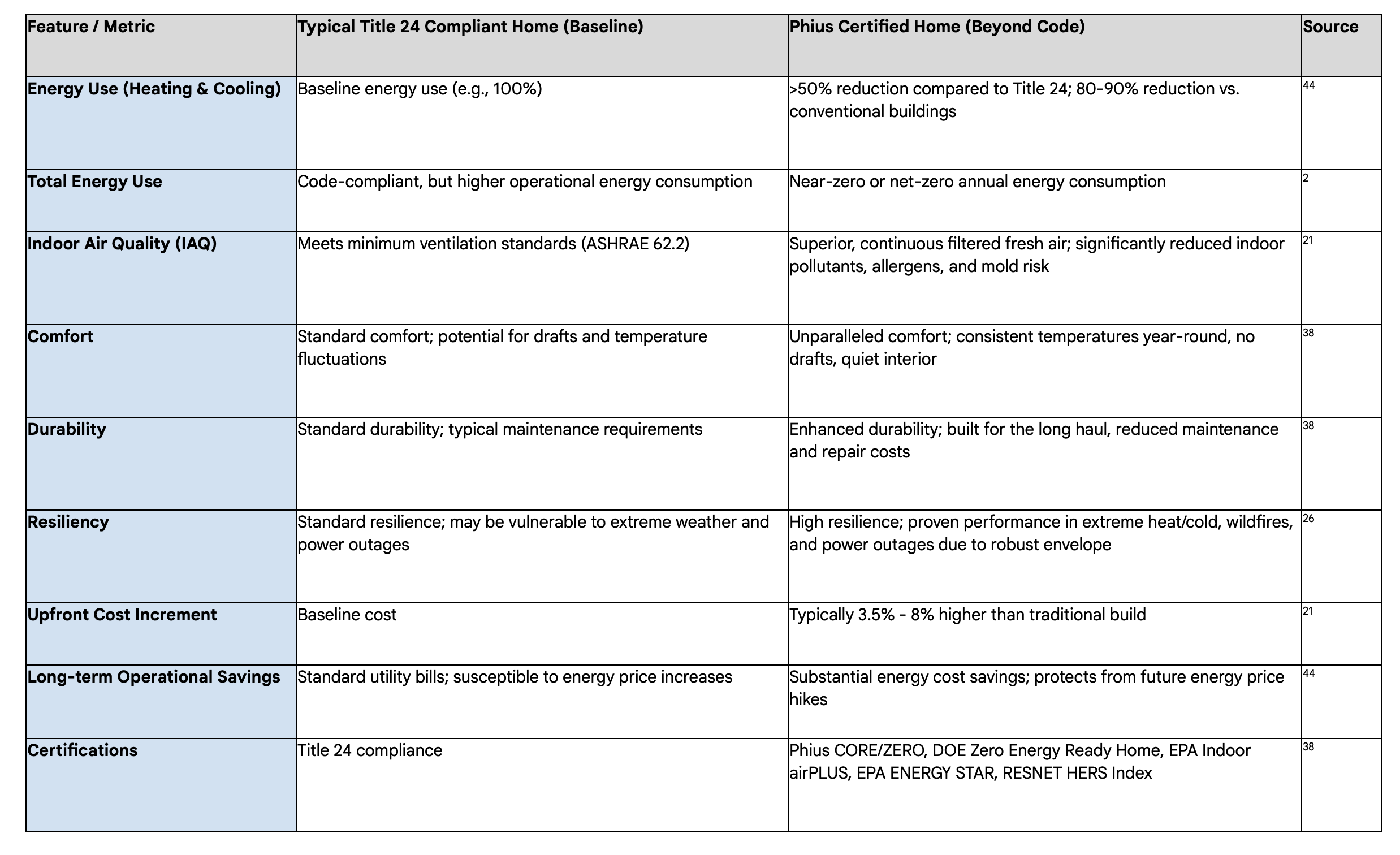
Table: Comparative Performance: Title 24 Compliant vs. Phius Certified Homes
Phius Certification Pathways: CORE and ZERO
Phius offers a structured approach to high-performance building through distinct certification levels, allowing architects and clients to select the ambition level that best aligns with their project goals and sustainability aspirations.[38]
Phius CORE: This is Phius's foundational or "legacy" certification. It focuses on meticulously optimizing both passive and active conservation strategies to achieve a superior level of performance and construction quality.[38] Phius CORE targets performance metrics that are challenging yet achievable primarily through robust conservation measures, such as superinsulation, airtightness, and high-performance windows. It offers a flexible performance path applicable to all building types, as well as a more streamlined, limited-scope prescriptive path specifically designed for single-family homes and townhomes, facilitating broader adoption.[38]
Phius ZERO: Building upon the rigorous framework of Phius CORE, the Phius ZERO standard elevates the ambition to achieve net-zero energy consumption. This certification sets the net source energy target at absolute zero, meaning the building is designed to produce as much energy as it consumes on an annual basis.[38] A key distinguishing feature of Phius ZERO is its strict prohibition of fossil-fueled combustion on site. To achieve the net-zero target, the standard provides options for integrating both on-site renewable energy generation (e.g., solar PV) and, where necessary, off-site renewable energy solutions.[38]
The existence of these tiered Phius certifications (CORE and ZERO) allows architects and clients to incrementally increase their sustainability ambition, providing a clear roadmap for achieving deeper decarbonization and energy independence. This structured approach not only makes high-performance building more accessible but also serves as a clear market signal for the direction of advanced building practices. It establishes recognized benchmarks for what "net-zero" truly means in a verified, performance-based context, distinguishing it from less rigorous "green" labels and guiding the industry towards increasingly sustainable and resilient construction.
The Synergy of Building Science and MEP Engineering
Fostering Collaboration from Concept to Completion
Achieving high-performance, beyond-code homes in California necessitates a fundamental shift from traditional linear design processes to a more collaborative and iterative approach. The Integrated Design Process serves as this essential framework, bringing together architects, MEP engineers, contractors, energy modelers, and other key stakeholders from the earliest conceptual stages of a project.[18]
The core elements of IDP include effective communication, integrated project management, shared goals, and cross-disciplinary knowledge exchange.[52] This holistic approach ensures that sustainability and high performance are embedded at the core of every design decision. By fostering early collaboration, the IDP allows the project team to identify synergies among different building components, leading to optimized performance, reduced lifecycle costs, and a significant minimization of costly change orders during construction.[18] An early-appointed design facilitator, ideally with expertise in energy and emissions reduction, is crucial to guide this interdisciplinary team through the complex decision-making process.[54]
The IDP is more than just a methodology; it represents a fundamental paradigm shift in architectural practice for high-performance buildings. It moves away from siloed disciplines where each consultant works independently, often leading to missed opportunities for optimization or, worse, conflicts that compromise performance. Instead, it promotes a unified vision where, for example, an architect's passive solar design choices directly inform the MEP engineer's sizing of heating and cooling systems, and the structural engineer's material choices consider thermal bridging. This collaborative environment ensures that the building operates as a cohesive, high-performing system, rather than a collection of disparate components. This integrated approach is what allows projects to consistently achieve their performance targets and avoid the "performance gap" often seen in conventionally built "green" homes, where theoretical energy savings do not materialize in practice due to poor integration or execution.
Overcoming Challenges in High-Performance Home Construction in California
While the benefits of high-performance homes are clear, their construction in California presents unique challenges that require strategic foresight and collaborative solutions.
Cost and Complexity: Building to standards like Phius often entails higher upfront costs (3.5-8% more than traditional builds) due to advanced materials, increased insulation, high-performance windows, and sophisticated ventilation systems.[21] The design process itself can be more complex, requiring specialized energy modeling tools (which may not be approved for Title 24 compliance, necessitating dual modeling) and meticulous detailing to achieve extreme airtightness and eliminate thermal bridges.[26] This complexity demands a higher level of expertise from architects, engineers, and contractors.[57]
Labor and Expertise Gaps: A significant barrier is the limited awareness, knowledge, and training within the broader building industry regarding high-performance principles.[57] Many new construction professionals, including custom builders, are reportedly reluctant to construct extremely airtight building envelopes due to past issues with mold and moisture problems, stemming from a lack of understanding of building science principles.[57] California also faces broader construction challenges, including labor shortages (exacerbated by wildfire rebuilding efforts and immigration policies) and rising material costs, which can impact the feasibility and timeline of high-performance projects.[58]
Permitting and Regulatory Hurdles: While California has streamlined permitting for solar PV and ADUs, navigating the permitting process for highly innovative, beyond-code homes can still be complex. Local jurisdictions may have varying interpretations or additional requirements, and the need for specialized energy modeling tools (like PHPP for Passive House) that are not currently approved for Title 24 compliance can add time and cost by requiring multiple energy models.[32] Legislative proposals to pause state building code changes, while intended to reduce costs, could also hinder the adoption of advanced energy-efficient practices.[61]
Contractor Resistance and Adoption: Overcoming contractor resistance to new building practices, particularly those that deviate significantly from long-standing methods, is a persistent challenge.[57] The "learning curve" associated with implementing Phius principles, though straightforward once understood, can be a deterrent.[21]
To overcome these challenges, several strategies are proving effective:
Early and Continuous Collaboration: The integrated design process is the best way to got through the learning curve, ensuring all stakeholders are aligned from the project's inception and have opportunity to learn along the way. This proactive approach identifies and resolves potential issues early, reducing costly changes and delays.[18]
Specialized Expertise: Engaging building science consultants and MEP engineers with deep expertise in high-performance standards (like Phius) is critical. These experts can guide architects through complex detailing, energy modeling, and system integration, ensuring optimal performance and compliance.[3]
Education and Training: Increased investment in workforce development and training programs for builders and tradespeople can close knowledge gaps and foster greater familiarity with high-performance construction techniques.[57]
Policy and Incentives: Advocating for legislative changes that streamline alternative compliance pathways (e.g., directly recognizing Passive House models for Title 24 compliance) and offering incentives for high-performance construction can accelerate adoption.[56] Examples from other states show that allowing Passive House as a compliance pathway and offering incentives can spur mass-scale adoption.[49]
Demonstration Projects and Case Studies: Showcasing successful high-performance homes in California provides tangible proof of their benefits and helps to demystify the construction process, inspiring broader adoption.[21]
The Role of Building Science Consulting and MEP Engineering Firms
Building science consulting and MEP engineering firms are indispensable partners for architects aiming to design and construct high-performance custom homes in California. These firms provide the specialized technical depth that complements an architect's design vision, translating ambitious performance goals into buildable realities.
Energy Modeling and Simulation: These firms utilize advanced energy modeling software (e.g., EnergyPro, CBECC, EnergyPlus) to simulate a building's energy performance under various conditions, allowing for optimization of systems for efficiency and cost-effectiveness.[3] This is crucial for navigating the performance approach of Title 24 and for verifying beyond-code standards like Phius, even if it currently means running dual models for compliance.[56]
Optimized MEP System Design: MEP engineers design HVAC, electrical, and plumbing systems that are not only functional but also highly energy-efficient and integrated. This includes selecting the most suitable high-efficiency equipment (e.g., heat pumps, ERVs/HRVs), designing zoning systems, and incorporating smart controls to minimize energy consumption and enhance occupant comfort.[18] Their expertise ensures proper sizing of systems, ductwork insulation, and adequate ventilation for indoor air quality.[18]
Building Envelope Expertise: These firms provide critical guidance on optimizing the building envelope, advising on appropriate insulation R-values, fenestration U-factors and SHGC, and robust air sealing strategies.[17] They also specialize in moisture management, designing systems that prevent water entry and accumulation, thereby enhancing durability and preventing health issues like mold.[27]
Code Compliance and Certification Support: Firms specializing in building science and MEP engineering are adept at navigating complex regulations and ensuring compliance with Title 24, including mandatory measures, prescriptive requirements, and performance pathway documentation.[3] They also provide invaluable support for achieving beyond-code certifications like Phius, DOE Zero Energy Ready Home, and EPA Indoor airPLUS, which require rigorous design verification and quality assurance.[39]
Risk Management and Problem Solving: By engaging these experts early in the integrated design process, architects can proactively identify and mitigate potential design flaws or technical challenges before they become costly construction issues.[18] Their ability to foresee problems and offer innovative solutions is invaluable for complex, high-performance projects.
The collaboration with building science consulting and MEP engineering firms transforms the architectural design process. It integrates deep technical knowledge into the creative vision, ensuring that high-performance goals are not just aspirations but achievable, verifiable outcomes. This partnership empowers architects to deliver homes that are not only beautiful and functional but also exceptionally energy-efficient, healthy, comfortable, and resilient for decades to come.
Recommendations
California's building energy landscape is characterized by a relentless drive towards decarbonization and superior building performance, spearheaded by the triennial updates to Title 24. These updates are a deliberate policy mechanism to systematically integrate advanced energy-saving technologies, pushing architects and the construction industry towards increasingly stringent standards. The consistent emphasis on all-electric homes, mandatory solar PV, and encouraged battery storage signifies a future where homes are not just energy consumers but active, grid-interactive participants in energy management. For architects, this means moving beyond static knowledge to embrace continuous learning and adaptation, anticipating a future where designs optimize for demand flexibility and contribute to broader grid stability.
The choice between Title 24's prescriptive and performance compliance pathways offers architects strategic flexibility. While the prescriptive path provides a clear, checklist-based route, the performance path, though demanding advanced energy modeling, unlocks greater design freedom and the ability to optimize for specific project goals beyond minimum compliance. This flexibility can lead to more innovative and cost-effective solutions in the long run, provided architects leverage the necessary technical expertise.
Achieving high-performance homes hinges on a holistic approach to architectural design, particularly in optimizing the building envelope and integrating advanced MEP systems. The building envelope—insulation, fenestration, air sealing, and moisture management—must be treated as an interconnected system. A failure in one aspect, especially air sealing, can compromise the performance of others and lead to significant durability and health issues. Similarly, the shift to all-electric heat pumps, smart controls, and balanced mechanical ventilation (HRV/ERV) represents a fundamental re-thinking of comfort and energy use. These MEP systems, when expertly integrated, deliver superior occupant comfort, health, and long-term operational efficiency, proactively addressing aspects like indoor air quality that often remain secondary in minimum code compliance.
Beyond Title 24, the Phius standard offers a transformative pathway to optimal living. It is a holistic building science framework that prioritizes deep energy conservation, health, and durability from the outset. Its five core pillars—continuous insulation, exceptional airtightness, high-performance windows, balanced energy recovery ventilation, and optimized passive solar design—are interdependent principles that must be integrated from the earliest conceptual stages. This integrated approach directly addresses the "performance gap" seen in many conventionally built "green" homes, ensuring that theoretical energy savings translate into real-world performance. The comprehensive benefits of Phius, including unparalleled comfort, superior indoor air quality, enhanced durability, and long-term financial value, elevate the conversation beyond mere compliance to delivering a truly future-proof product.
Recommendations for Architects in California:
Embrace the Integrated Design Process: Architects should proactively lead and participate in IDP from the earliest conceptual phases of every custom home project. This means fostering seamless collaboration with MEP engineers, building science consultants, and contractors to ensure a unified vision and optimize performance across all building systems. This approach is critical for identifying synergies and mitigating risks early, leading to more efficient project delivery and superior outcomes.
Deepen Building Science Acumen: While architects are visionaries, a confident understanding of building science fundamentals—particularly concerning thermal envelope design, advanced air sealing techniques, and comprehensive moisture management—is indispensable. This knowledge empowers architects to make informed design decisions that directly impact energy performance, durability, and occupant health.
Prioritize Electrification and Advanced MEP Systems: Design for all-electric homes, leveraging the latest heat pump technologies for space and water heating. Integrate smart controls for optimal energy management and specify balanced mechanical ventilation systems (HRVs/ERVs) to ensure superior indoor air quality in tightly sealed envelopes. Early engagement with MEP engineers is crucial for proper system sizing and integration.
Explore Beyond-Code Standards as a Baseline: Consider Phius certification as a target for custom homes. While Title 24 ensures compliance, Phius offers a verified pathway to unparalleled comfort, health, and long-term value. This commitment to beyond-code performance differentiates designs and positions architects as leaders in sustainable, resilient construction.
Leverage Expert Partnerships: Partner with reputable building science consulting and MEP engineering firms. Their specialized expertise in energy modeling, system optimization, and code compliance is invaluable for navigating the complexities of high-performance design, managing project risks, and achieving ambitious sustainability goals.
By adopting these strategies, architects can confidently navigate California's evolving energy landscape, transforming compliance challenges into opportunities to create homes that are not only beautiful and functional but also embody the highest standards of energy efficiency, comfort, and environmental responsibility for generations to come.
Works cited
www.energy.ca.gov, accessed June 4, 2025, https://www.energy.ca.gov/sites/default/files/2022-12/CEC-400-2022-010_CMF.pdf
What Is Title 24, Part6? - Energy Code Ace, accessed June 4, 2025, https://energycodeace.com/content/what-is-title-24-page
Title 24 and Beyond: Navigating California's New Energy Code in MEP Design, accessed June 4, 2025, https://gdiengdesign.com/title-24-and-beyond-navigating-californias-new-energy-code-in-mep-design-2/
California Releases World's First Plan to Achieve Net Zero Carbon Pollution, accessed June 4, 2025, https://www.gov.ca.gov/2022/11/16/california-releases-worlds-first-plan-to-achieve-net-zero-carbon-pollution/
2022 Building Energy Efficiency Standards - California Energy Commission - CA.gov, accessed June 4, 2025, https://www.energy.ca.gov/programs-and-topics/programs/building-energy-efficiency-standards/2022-building-energy-efficiency
Title 24 ADU Requirements - Better Place Design & Build, accessed June 4, 2025, https://betterplacedesignbuild.com/blog/title-24-adu-requirements/
Single-family Buildings: What's New in 2025 - Energy Code Ace, accessed June 4, 2025, https://energycodeace.com/download/254681/file_path/fieldList/ECA+SF+Whats+New+Fact+Sheet+WEB_1925.pdf
2022 Single-Family Residential Compliance Manual - Individual Chapters and Appendices, accessed June 4, 2025, https://www.energy.ca.gov/programs-and-topics/programs/building-energy-efficiency-standards/2022-building-energy-efficiency-6
Approaches to Zero Net Energy Cost Effectiveness in New Homes, accessed June 4, 2025, https://www.energy.ca.gov/sites/default/files/2021-05/CEC-500-2021-025.pdf
Heat Pumps Can Lower Energy Bills for Californians Today - RMI, accessed June 4, 2025, https://rmi.org/heat-pumps-can-lower-energy-bills-for-californians-today/
What is the difference between Prescriptive and Mandatory measures? - EnergySoft, accessed June 4, 2025, https://www.energysoft.com/faqs/what-is-the-difference-between-prescriptive-and-mandatory-measures/
Title 24 Windows & Skylights, accessed June 4, 2025, https://www.title24express.com/what-is-title-24/title-24-windows-skylights/
SUBCHAPTER 8 SINGLE FAMILY RESIDENTIAL BUILDINGS PERFORMANCE AND PRESCRIPTIVE COMPLIANCE APPROACHES - 2022 CALIFORNIA ENERGY CODE, TITLE 24, PART 6 WITH JAN 2023 ERRATA, accessed June 4, 2025, https://codes.iccsafe.org/content/CAEC2022P2/subchapter-8-single-family-residential-buildings-performance-and-prescriptive-compliance-approaches
www.energy.ca.gov, accessed June 4, 2025, https://www.energy.ca.gov/filebrowser/download/5130
2022 Single-Family Residential Compliance Manual: for the 2022 ..., accessed June 4, 2025, https://www.energy.ca.gov/publications/2022/2022-single-family-residential-compliance-manual-2022-building-energy-efficiency
Title 24 Compliance USA | Energy modeling & Calculations - Uppteam, accessed June 4, 2025, https://www.uppteam.com/mep-design/compliance/
Title 24 Energy Compliance Calculations, accessed June 4, 2025, https://title24energy.com/title-24-energy-compliance-calculations/
Key Factors for Energy-Efficient MEP Design in MEP Engineering ..., accessed June 4, 2025, https://gdiengdesign.com/key-factors-for-energy-efficient-mep-design-in-mep-engineering/
Building Envelope Science Fundamentals & Key Concepts - Pace Representatives, accessed June 4, 2025, https://www.pacerepresentatives.com/uploads/PACEBE012022_web.pdf
Energy-Efficient HVAC Design: ASHRAE 90.2 Guide - Innodez, accessed June 4, 2025, https://innodez.com/mep-hvac-design-efficiency-guide-to-ashrae-902-for-low-rise-residential-buildings/
Cost-Effective Passive House Single-Family Homes in California, accessed June 4, 2025, https://passivehousenetwork.org/news/cost-effective-passive-house-single-family-homes-in-california/
Attic Air Sealing Guide - BSC Draft - Building Science, accessed June 4, 2025, https://buildingscience.com/sites/default/files/migrate/pdf/GM_Attic_Air_Sealing_Guide_and_Details.pdf
BSD-104: Understanding Air Barriers | buildingscience.com, accessed June 4, 2025, https://buildingscience.com/documents/digests/bsd-104-understanding-air-barriers
Building Science Digest 104 Understanding Air Barriers, accessed June 4, 2025, https://buildingscience.com/sites/default/files/migrate/pdf/BSD-104_Understanding%20Air%20Barriers.pdf
Air Sealing and Insulating Ceilings in Vented Attics | Building America Solution Center, accessed June 4, 2025, https://basc.pnnl.gov/resource-guides/air-sealing-and-insulating-ceilings-vented-attics
Passive Houses and Fire Resistance - Carmel Building & Design, accessed June 4, 2025, https://www.carmelbuilding.com/2025/02/28/passive-houses-and-fire-resistance/
Home Page | buildingscience.com, accessed June 4, 2025, https://buildingscience.com/
Moisture Control for Residential Buildings | buildingscience.com, accessed June 4, 2025, https://buildingscience.com/bookstore/books/moisture-control-residential-buildings
BSD-012: Moisture Control for New Residential Buildings | buildingscience.com, accessed June 4, 2025, https://buildingscience.com/documents/digests/bsd-012-moisture-control-for-new-residential-buildings
BSD-106: Understanding Vapor Barriers | buildingscience.com, accessed June 4, 2025, https://buildingscience.com/documents/digests/bsd-106-understanding-vapor-barriers
Building Science Digest 106 Understanding Vapor Barriers - andrew.cmu.ed, accessed June 4, 2025, https://www.andrew.cmu.edu/course/48-305/pdfs/Understanding%20Vapor%20Barriers.pdf
Solar Panel Permitting in California, USA: Complete Guide 2025, accessed June 4, 2025, https://geckosolarenergy.com/solar-panel-permitting-guide-california/
What Clients Need to Know About MEP Engineering in New Construction - Innodez, accessed June 4, 2025, https://innodez.com/what-clients-need-to-know-about-mep-engineering-in-new-construction/
www.sce.com, accessed June 4, 2025, https://www.sce.com/sites/default/files/inline-files/Heat%20Pump%20Overview%20Fact%20Sheet_WCAG.pdf
Standards 62.1 & 62.2 - ASHRAE, accessed June 4, 2025, https://www.ashrae.org/technical-resources/bookstore/standards-62-1-62-2
ERV vs HRV: What's the difference? - Reimer Home Services, accessed June 4, 2025, https://reimerhvac.com/erv-vs-hrv-whats-the-difference/
Heat Recovery Ventilation | Improve Air Quality & Efficiency - Carrier, accessed June 4, 2025, https://www.carrier.com/residential/en/us/products/indoor-air-quality/ventilators/heat-recovery-ventilators/
Standards | Phius Phius Standards, accessed June 4, 2025, https://www.phius.org/standards
Phius Project Certification Overview, accessed June 4, 2025, https://www.phius.org/certifications/projects/project-certification-overview
Memorandum Phase I – Summary of the Existing Literature: Grid Benefits of Passive Houses - California Public Utilities Commission, accessed June 4, 2025, https://www.cpuc.ca.gov/-/media/cpuc-website/divisions/energy-division/documents/building-decarb/passive-house-phase-i-report.pdf
What is Passive House Design? | BKV Energy, accessed June 4, 2025, https://bkvenergy.com/blog/what-is-passive-house-design/
Passive House - Kömmerling USA, accessed June 4, 2025, https://www.kommerlingusa.com/passive-house/
Sustainable & Passive House Designers Carmel | Construction Specialists, accessed June 4, 2025, https://www.carmelbuilding.com/sustainable-design-build/
Build a Passive House with Oak Tree Homes, accessed June 4, 2025, https://oaktreehomesiowa.com/passive-house
Is Passivhaus Certification Worth It? - Allan Corfield Architects, accessed June 4, 2025, https://acarchitects.biz/self-build-blog/passivhaus-certification-worth-it
The Impact of Energy-Efficient Design on Long-Term Home Value - Carmel Building, accessed June 4, 2025, https://www.carmelbuilding.com/2024/09/13/passive-house-long-term-benefits/
High-Performance Homes Explained [+Is It Worth Building One?], accessed June 4, 2025, https://haslerhomes.ca/blog/high-performance-homes-explained/
Financing Options for High-Performance Homes, accessed June 4, 2025, https://buildingscience.org/financing-options-for-high-performance-homes/
New Report from Emu Shows Passive House Best for California ..., accessed June 4, 2025, https://passivehousenetwork.org/featured/emu-passive-house-california/
Bay Area High-Performance Custom Homes - Scott O'Hara Construction, Inc., accessed June 4, 2025, https://soconstruct.com/services/custom-homes/
Case Study: Successful Sustainable Home Projects in Solano County - Chelu Construction, accessed June 4, 2025, https://cheluconstruction.com/blog/case-study--successful-sustainable-home-projects-in-solano-county
The importance of interdisciplinary collaboration for successful engineering project completions: A strategic framework - ResearchGate, accessed June 4, 2025, https://www.researchgate.net/publication/387730457_The_importance_of_interdisciplinary_collaboration_for_successful_engineering_project_completions_A_strategic_framework
What Are the Benefits of Interdisciplinary Collaboration in Architecture? - Architect Today, accessed June 4, 2025, https://architecttoday.com/qa/what-are-the-benefits-of-interdisciplinary-collaboration-in-architecture/
Integrated Design Process: Best Practices for Commercial Facilities - Save on Energy, accessed June 4, 2025, https://saveonenergy.ca/-/media/Files/SaveOnEnergy/training-and-support/ee/The-Integrated-Design-Process-Best-Practice-Guide-for-Commercial-Buildings.pdf
Integrated Design Process Green Building: Top Steps in 2024 - Hutter Architects, accessed June 4, 2025, https://hutterarchitects.com/integrated-design-process-green-building/
Climate Action California Comments - Passive House standard ..., accessed June 4, 2025, https://efiling.energy.ca.gov/GetDocument.aspx?tn=256891&DocumentContentId=92704
Barriers to Incorporating Passive House Concepts in Residential New Construction - CALMAC.org, accessed June 4, 2025, https://www.calmac.org/publications/Passive_Home_Whitepaper_1_22_2020_Final.pdf
The Rise of Modular Homes in California: Are They Prone to Defects? - Naumann Law Firm, accessed June 4, 2025, https://naumannlegal.com/2025/03/07/the-rise-of-modular-homes-in-california-are-they-prone-to-defects/
California construction challenges amid rising demand and new administration, accessed June 4, 2025, https://www.nixonpeabody.com/insights/alerts/2025/02/11/california-construction-challenges-amid-rising-demand-and-new-administration
The State of California's Construction Industry: Challenges in the Rebuilding Effort, accessed June 4, 2025, https://www.letterfour.com/blog/the-state-of-californias-construction-industry-challenges-in-the-rebuilding-effort
California looks to put code updates on pause as it tries to amp up housing construction, accessed June 4, 2025, https://www.homes.com/news/building-codes-in-crosshairs-as-california-tries-to-amp-up-housing-construction/2119523918/
The Hidden Challenges of Building an ADU in California (Even With New Laws), accessed June 4, 2025, https://www.thecodesolution.com/post/the-hidden-challenges-of-building-an-adu-in-california-even-with-new-laws
Passive House architecture and design firm. | Passive House BB | California, accessed June 4, 2025, https://www.passivehousebb.com/
Passivworks, Inc. | Custom Home Builders and Remodelers Napa and Sonoma — Better Buildings., accessed June 4, 2025, https://passivworks.com/
Navigating the HVAC Refrigerant Transition and the Promise of Hydronic Systems for Future-Ready Architecture
The global heating, ventilation, and air conditioning (HVAC) industry is undergoing a significant transformation driven by the phasedown of high-Global Warming Potential (GWP) refrigerants, primarily Hydrofluorocarbons (HFCs). This shift, mandated by international agreements like the Kigali Amendment and domestic legislation such as the U.S. American Innovation and Manufacturing (AIM) Act, presents both substantial challenges and unique opportunities for the Architecture, Engineering, and Construction (AEC) industry.
By Positive Energy staff
The global heating, ventilation, and air conditioning (HVAC) industry is undergoing a significant transformation driven by the phasedown of high-Global Warming Potential (GWP) refrigerants, primarily Hydrofluorocarbons (HFCs). This shift, mandated by international agreements like the Kigali Amendment and domestic legislation such as the U.S. American Innovation and Manufacturing (AIM) Act, presents both substantial challenges and unique opportunities for the Architecture, Engineering, and Construction (AEC) industry.
Challenges include navigating supply chain disruptions, rising costs, and the critical need for comprehensive technical training for new, mildly flammable refrigerants. However, this transition also creates a compelling opportunity to rethink traditional HVAC approaches. Hydronic systems, particularly those powered by air-to-water or ground source heat pumps, offer a robust, energy-efficient, and "technology-neutral" alternative. By leveraging water as the primary heat transfer medium, these systems can bypass the direct impact of future refrigerant changes, offering long-term resilience and enhanced building performance when integrated with a high-performance building envelope. This report explores these dynamics, providing architects with the insights needed to design truly future-ready buildings.
Understanding the Global HVAC Refrigerant Landscape
The HVAC industry is in the midst of a profound transformation, moving away from refrigerants that contribute significantly to global warming. This shift is not merely a technical upgrade but a regulatory imperative with far-reaching implications for building design and construction.
The Kigali Amendment and International Commitments
The Montreal Protocol, an international treaty established in 1987 to protect the stratospheric ozone layer by phasing out ozone-depleting substances (ODS) like chlorofluorocarbons (CFCs) and hydrochlorofluorocarbons (HCFCs), has evolved to address broader climate concerns.1 In a pivotal development, 197 countries adopted the Kigali Amendment in Rwanda on October 15, 2016, expanding the Protocol's scope to include a global phasedown of HFCs.1
The United States formally ratified the Kigali Amendment on October 31, 2022, signaling its commitment to these global environmental objectives.3 Under this amendment, developed nations initiated reductions in HFC consumption beginning in 2019. Most developing countries are slated to freeze their consumption by 2024, with a select few with unique circumstances following by 2028. The overarching goal is to achieve an 80% reduction in HFC consumption over the next 30 years, specifically by 2047.1 This ambitious phasedown schedule is projected to avoid up to 0.5°C of global warming by the end of the century, preventing over 80 billion metric tons of carbon dioxide equivalent emissions by 2050.2 The international consensus and broad participation underscore a collective commitment to mitigating climate change.
The global alignment on HFC reduction, as seen through the Kigali Amendment and its ratification by the U.S., creates a stable and predictable market for low-GWP technologies.1
This global framework provides a clear signal to manufacturers, incentivizing significant investment in research, development, and production of environmentally friendly alternatives for a worldwide market, rather than fragmented national ones. For architects and developers, this predictability reduces the inherent risk of designing and implementing HVAC systems that might quickly become obsolete due to unpredictable shifts in local regulations. The bipartisan support for the AIM Act in the U.S. further reinforces the stability of this regulatory direction, suggesting that a dramatic reversal of the phasedown is highly improbable.7 This consistent global and national policy environment encourages the adoption of advanced, sustainable HVAC solutions.
The U.S. American Innovation and Manufacturing (AIM) Act and EPA Regulations
In the United States, the American Innovation and Manufacturing (AIM) Act, enacted on December 27, 2020, as part of the Consolidated Appropriations Act, 2021, empowers the U.S. Environmental Protection Agency (EPA) to manage the HFC phasedown domestically.1 The AIM Act mandates an 85% reduction in HFC production and consumption from historic baseline levels by 2036.3
The EPA implements this mandate through an allowance allocation and trading program, established by the HFC Allocation Program in the Allocation Framework Rule.3 This program outlines a stepwise reduction schedule: an initial 10% reduction from 2020-2023 baseline levels, a further decrease to 60% of baseline levels for 2024-2028, 30% for 2029-2033, and a final reduction to 15% by 2036 and beyond.3 Restrictions on the use of higher-GWP HFCs in new refrigeration, air conditioning, and heat pump equipment began as early as January 1, 2025.3 The EPA's final rule, issued in October 2023, specifically sets a GWP limit of 700 for most new comfort cooling equipment, including chillers, effective January 1, 2025, effectively ending the production of most R-410A systems.8
Beyond production and consumption limits, the EPA's regulations under the AIM Act impose stringent requirements on existing HFC refrigerants to minimize leaks and maximize reuse.7 These include mandates for leak detection and repair, the use of reclaimed and recycled HFCs, and proper recovery of HFCs from disposable containers, along with meticulous recordkeeping, reporting, and labeling.7 For example, comfort cooling appliances containing more than 50 pounds of HFC refrigerant must be repaired within 30 days if their leak rate exceeds 10%.10 Furthermore, automatic leak detection (ALD) systems are required for large industrial process refrigeration and commercial refrigeration appliances (with a full charge at or above 1,500 pounds) installed on or after January 1, 2026, and by January 1, 2027, for existing systems installed between 2017 and 2026.10 The obligation to use reclaimed HFCs for servicing certain existing HVAC equipment begins January 1, 2029.10
These regulations, while crucial for environmental protection, introduce an "invisible" cost of compliance and an operational burden for building owners and managers. The requirements for leak detection, repair within strict timelines, and the eventual mandatory use of reclaimed refrigerants translate directly into increased operational complexity, labor costs, and potential fines for non-compliance.7 This means that even systems installed before the phase-out dates will incur higher total costs of ownership due to ongoing compliance efforts. Architects should proactively communicate these long-term operational implications to clients, advocating for HVAC system choices that minimize these burdens and offer greater long-term resilience. The emphasis on refrigerant reclamation also indicates that while older equipment can be serviced, the supply chain for servicing will shift, potentially affecting refrigerant availability and pricing.11

Table 1: Key HFC Phasedown Schedule and GWP Limits
The Transition to Low-GWP Refrigerants (A2L Class: R-454B, R-32)
The HVAC industry is rapidly transitioning from R-410A, which has been the industry standard for decades with a GWP of approximately 2,088, to next-generation refrigerants.8 The primary replacements are A2L-class refrigerants such as R-454B, with a GWP of 466, and R-32, with a GWP of 675.8 These new refrigerants offer significantly lower global warming potential, aligning with environmental goals.8
As of January 1, 2025, new air conditioning systems and heat pumps must be designed to use these A2L-class coolants, marking the cessation of R-410A system production.14 While existing R-410A systems can still be serviced, the supply of R-410A refrigerant is expected to become scarce, leading to increased prices for maintenance and repairs on older units.14
A critical difference with A2L refrigerants, unlike their non-flammable predecessors, is their mild flammability.8 This characteristic necessitates updated safety protocols for handling, installation, and servicing.14 This shift from non-flammable R-410A to mildly flammable A2L refrigerants represents a fundamental change in safety requirements for HVAC technicians.8 While "mildly flammable" might appear to be a minor distinction, it mandates entirely new training, specialized tools, and revised safety procedures.14 This is not merely an adjustment in GWP values; it requires a re-evaluation of established industry practices.
This alteration in refrigerant properties introduces a significant risk if not properly addressed through rigorous training and adherence to new standards. Architects specifying A2L systems must recognize that installation and maintenance demand specialized, certified professionals.17 This directly impacts labor availability, project timelines, and potentially liability. It underscores the critical need for robust training programs, such as the ACCA A2L training, which is developed based on ASHRAE Standards 15 (2019), 34 (2019), and UL Safety Standards 60335-2-40 (2019).19 Without adequate preparation, this could become a significant bottleneck in the industry as equipment rollout accelerates.

Table 2: Comparison of Common Refrigerant Types (GWP, Flammability)
Challenges and Disruptions for the Architecture, Engineering, and Construction (AEC) Industry
The refrigerant transition is not a distant concern but an immediate reality impacting every facet of the AEC industry. Architects must be prepared to address these disruptions in their projects, as they influence design decisions, project timelines, and overall costs.
Supply Chain Constraints and Rising Costs
The phasedown of HFC production, particularly the significant cuts in R-410A availability, has already exerted substantial upward pressure on costs for both servicing existing AC systems and installing new ones.15 As of 2024, R-410A production has been cut by 40%, directly contributing to these price increases.15 The ban on R-410A in new equipment, effective January 1, 2025, is anticipated to further tighten supply and drive up prices for any remaining stock, making it a less viable option for new installations or even major repairs on older units.14
The transition to new low-GWP refrigerants like R-454B and R-32, while environmentally beneficial, has not been without its challenges. There are already reports of severe shortages, particularly for R-454B, exacerbated by limited availability of refrigerant cylinders and a surge in demand as manufacturers convert their product lines.17 This has led to contractors experiencing delays of up to 10 weeks to receive orders, directly impacting project timelines, forcing rescheduling of jobs, and even causing companies to turn away new work.23 Such delays and material scarcity inevitably lead to increased project costs, as labor stands idle or expedited shipping becomes necessary. The requirement for reclaimed refrigerants to service existing systems by January 1, 2029 10, while promoting sustainability, could also lead to higher costs for these reclaimed products compared to virgin HFCs, further impacting the long-term operational expenses of buildings.7
Technical and Safety Training Requirements for New Refrigerants
The introduction of A2L refrigerants, which are mildly flammable, represents a significant shift in safety protocols compared to the non-flammable R-410A.8 This necessitates extensive and specialized training for HVAC technicians. Technicians can no longer apply the same handling and installation practices used for R-410A; they require a thorough understanding of proper handling, enhanced leak detection methods, adequate ventilation procedures, and safe evacuation techniques for A2L refrigerants.14
Industry organizations such as ACCA (Air Conditioning Contractors of America) and ASHRAE (American Society of Heating, Refrigerating and Air-Conditioning Engineers) have developed specific A2L safety training programs based on established standards like ASHRAE Standards 15 (2019), 34 (2019), and UL Safety Standards 60335-2-40 (2019).19 These courses cover critical topics such as refrigerant properties, system replacement considerations, refrigerant charge calculation, piping requirements, and charging/recovery procedures.19 The need for certified professionals to handle these new refrigerants means that a shortage of trained labor could impede the adoption and proper maintenance of compliant HVAC systems.17 This training requirement impacts the AEC industry by increasing labor costs, potentially extending project durations due to specialized labor availability, and demanding a higher level of oversight to ensure safety and compliance during installation and ongoing maintenance.
Regulatory Compliance and Enforcement
The EPA is tasked with implementing and enforcing the AIM Act, establishing regulations, and allocating allowances for HFC production and consumption to ensure compliance with the phasedown schedule.5 Failing to comply with these regulations can result in significant penalties and fines, directly impacting a company's ability to operate.7 The EPA has a robust compliance and enforcement system to prevent illegal activity and ensure adherence to the AIM Act's obligations.3
Beyond federal mandates, several U.S. states, including California, Washington, Vermont, and New York, have implemented or are in the process of implementing their own regulations to phase down higher-GWP HFCs.1 These state-level policies can be more stringent than federal requirements and can significantly impact HVACR equipment decisions and supply chains within those jurisdictions.12 For instance, New York's Part 494 regulation includes future prohibitions on HFCs in new HVACR equipment that will differ from EPA's Technology Transitions rule between 2027 and 2034, with new supermarket refrigeration systems requiring refrigerants with GWP less than 10 by January 2034.13 This patchwork of regulations adds complexity for HVACR industry stakeholders, requiring careful navigation to ensure compliance across different project locations.13 Architects and engineers must stay abreast of both federal and relevant state-specific regulations to ensure their designs meet all legal requirements and avoid costly non-compliance issues.
Equipment Availability and Compatibility
The rapid shift mandated by the 2025 deadline, which bans R-410A in new equipment, has compelled HVAC manufacturers to redesign and optimize their product lines for low-GWP refrigerants like R-454B and R-32.8 While major manufacturers like Carrier, Lennox, Johnson Controls, Trane, Mitsubishi Electric, Daikin, and Midea have introduced new compliant systems, the transition has not been entirely smooth.17
The industry has faced equipment shortages, with some manufacturers converting their lines to new refrigerants at different paces.24 This inconsistency can lead to challenges in sourcing specific units, particularly during peak cooling seasons.17 For example, while some manufacturers have adopted R-454B, others like Daikin and Goodman have focused on R-32, leading to regional variations in availability and potential supply chain bottlenecks.23 The need for A2L-compatible tools and equipment, including specialized refrigerant recovery machines, also presents an additional hurdle for contractors.14 Architects must recognize that equipment availability is a dynamic issue, requiring early engagement with manufacturers and suppliers to confirm the refrigerant type and ensure timely procurement for projects.17 This also means that existing R-410A units cannot simply be retrofitted with new A2L refrigerants due to fundamental differences in system design and component compatibility.8

Table 3: Key Challenges and Impacts for the AEC Industry
Hydronic Systems as a Future-Proof Solution
Amidst the challenges of refrigerant transition, a significant opportunity arises for the AEC industry to embrace hydronic systems. These systems offer a robust, energy-efficient, and inherently "technology-neutral" approach to heating and cooling, providing a pathway to long-term resilience and sustainability.
Water as the Heat Transfer Medium
Hydronic systems utilize water (or a water-glycol mixture) as the primary medium for transferring thermal energy throughout a building.25 Unlike traditional direct expansion (DX) systems that rely on refrigerants circulating directly to terminal units, hydronic systems separate the refrigerant cycle (contained within a heat pump or chiller) from the building's internal heat distribution network.25 This fundamental difference offers a distinct advantage: water is significantly more effective for energy storage and delivery than air, approximately 3500 times more so.29
The versatility of modern hydronics technology is unmatched by other heating or cooling methods.27 These systems can be tailored to provide precise climate control, including space heating, domestic hot water, and even specialized applications like snow melting or pool heating, often from a single heat source.25 By circulating heated or chilled water through pipes embedded in floors, walls, or ceilings (radiant systems), or through coils in air handlers or fan coil units, hydronic systems provide even and efficient heat distribution with minimal heat loss.25 This approach also minimizes air temperature stratification and reduces the rate of outside air infiltration or inside air exfiltration, leading to lower heat loss compared to forced-air systems.27 Furthermore, hydronic systems typically require significantly less electrical energy to move heat compared to forced-air systems.27

Table 4: Common Hydronic System Types and Their Applications
Air-to-Water Heat Pumps: Principles and Benefits
Air-to-water heat pumps (AWHPs) are a type of air-source heat pump that extracts heat from the outdoor air and transfers it to water, which is then circulated through a hydronic distribution system for space heating, cooling, or domestic hot water.28 The system typically consists of an outdoor unit and an indoor unit, which can be installed at significant distances from each other.28
AWHPs operate on the principle of a refrigeration cycle, moving heat from a cooler outdoor environment to a warmer indoor space during heating, and reversing the process for cooling.28 Even in cold air, heat energy is present, which the heat pump extracts and transfers indoors.28 The heated water (up to 130°F or ~55°C) can be used for underfloor heating, radiators, or direct hot water supply.28
AWHPs are gaining prominence in the U.S. for new residential construction due to their high efficiency, fully contained and factory-charged outdoor refrigeration systems, and their hydronic delivery capabilities, which facilitate zoning and integration with thermal energy storage.36 While installation costs for AWHPs can be higher than air-to-air systems due to the need for a water distribution system, their potential for long-term energy savings, especially when providing both heating and hot water, can offset this initial investment.35 Studies indicate that AWHPs can achieve significant energy savings compared to traditional heating systems, with some models offering high SEER2 ratings (up to 24).17 Their performance is particularly strong in moderate climates, though advancements are enabling operation in colder temperatures.18
Ground Source Heat Pumps: Principles and Advantages
Ground source heat pumps (GSHPs), also known as geothermal heat pumps, leverage the stable temperature of the earth as a heat source in winter and a heat sink in summer.28 This inherent stability of ground temperature, unlike fluctuating air temperatures, makes GSHPs exceptionally energy-efficient and environmentally sustainable.37
GSHP systems typically involve a ground loop—a network of pipes buried in the earth—through which water or a water-glycol solution circulates, absorbing or rejecting heat.28 This heat is then transferred to or from the building's hydronic distribution system via the heat pump unit.28 GSHPs can provide space heating, space cooling, and dedicated or simultaneous water heating.38 Modern GSHP designs often incorporate variable-speed compressors, blowers, and pumps, utilizing high-efficiency brushless permanent-magnet (BPM) motors to maximize performance and control flexibility.38
The key design considerations for GSHP systems involve a comprehensive understanding of the site's geological and hydrogeological conditions, as these factors critically impact system feasibility and efficiency.39 The design process must integrate lessons learned from past installations and leverage new ASHRAE and industry research to optimize system cost and performance.39 This includes careful equipment selection, proper piping design, and optimized installation practices.39
GSHPs offer substantial energy savings, often reducing heating and cooling energy costs by 50-70% compared to conventional HVAC systems.40 While the upfront cost of GSHP systems, including drilling and piping, is typically higher than traditional systems, significant financial incentives, such as the Investment Tax Credit (ITC) under the Inflation Reduction Act (IRA), can offset these costs, potentially making them less expensive than conventional HVAC systems in many cases.40 The long lifespan of ground loops (50 years or more) and the heat pump equipment (25 years or more) significantly contribute to lower lifecycle costs and reduced maintenance compared to conventional systems.41 This long-term cost-effectiveness and reduced environmental impact make GSHPs a compelling choice for sustainable building design.37
Hydronic Systems for "Technology Neutral" Homes
The concept of "technology neutral" homes, particularly in the context of HVAC, refers to building designs that are resilient to future technological shifts and regulatory changes. Hydronic systems inherently embody this principle, offering a robust solution that minimizes reliance on specific refrigerant types and their associated regulatory burdens.
Water, as a heat transfer medium, is stable and forgiving, making hydronic systems less susceptible to the direct impacts of refrigerant phasedowns.44 While heat pumps (air-to-water or ground source) still utilize refrigerants in their sealed circuits, the vast majority of the building's thermal distribution network relies on water, effectively isolating the building's interior climate control from the evolving refrigerant landscape.25 This means that as refrigerant regulations continue to evolve, the core hydronic infrastructure of a building remains viable, requiring only potential upgrades to the heat pump unit itself, rather than a complete overhaul of the distribution system.41
This inherent flexibility allows for easy upgrades as new technologies emerge, extending the lifecycle and usefulness of the HVAC system.41 For instance, a hydronic system initially paired with a gas boiler could be directly swapped with a water-sourced heat pump system, transitioning to an all-electric comfort system without the need for costly retrofitting of the distribution network.41 This adaptability makes hydronic systems a smart approach to future-proofing HVAC system designs for decarbonization and achieving net-zero emissions goals.41
Furthermore, hydronic systems, particularly radiant heating and cooling, contribute to technology neutrality by promoting superior indoor comfort and air quality without relying on high-velocity air distribution.27 They provide even warmth with no drafts or hot spots and minimize the circulation of dust and allergens, leading to cleaner indoor air.31 This focus on fundamental comfort and health, decoupled from specific refrigerant chemistries, ensures that the building's core environmental performance remains high regardless of future HVAC innovations.
Integrating Hydronic Systems with High-Performance Building Envelopes
The effectiveness of any HVAC system, particularly advanced hydronic solutions, is profoundly influenced by the performance of the building envelope. For architects, understanding this critical interplay is paramount to designing truly efficient, comfortable, and durable structures.
The Critical Interplay: Building Envelope and HVAC System Sizing
The building envelope—comprising the roof, walls, windows, and foundation—serves as the primary interface between the conditioned interior and the external environment.47 Its design directly dictates the heating and cooling loads a building experiences. A high-performance, integrated, and efficient building envelope, featuring optimized thermal insulation and high-performance glazing, can significantly reduce these loads.47 This reduction in thermal demand, in turn, allows for the specification of smaller, less costly, and more efficient HVAC systems.47
Conversely, an underperforming envelope with inadequate insulation or excessive air leakage will lead to higher heating and cooling demands, necessitating larger, more expensive, and less efficient HVAC equipment.48 This oversizing not only increases initial capital costs but also leads to less efficient operation, as HVAC systems are typically sized for peak conditions that occur only a small percentage of the time.48 Therefore, energy-efficient, climate-responsive construction requires a holistic, "whole building design" perspective that integrates architectural and engineering concerns from the earliest design stages.48 Commissioning the building envelope is crucial to identify and rectify issues like air infiltration, leakage, moisture diffusion, and rainwater entry, all of which negatively impact energy performance and indoor environmental quality.47
Optimizing Thermal Performance: Insulation and Airtightness
Achieving optimal thermal performance in conjunction with hydronic systems relies heavily on a well-insulated and airtight building envelope. Passive building principles, such as those advocated by Phius (Passive House Institute US), emphasize continuous insulation throughout the entire envelope without thermal bridging, and an extremely airtight building envelope to prevent outside air infiltration and loss of conditioned air.34
Super-insulation, combined with extreme airtightness, dramatically reduces temperature variation across building surfaces, which is critical for preventing condensation and mold issues.45 For example, Phius certification guidelines specify minimum sheathing-to-cavity R-value ratios for walls and outer air-impermeable insulation values for roofs, which increase in colder climates to maintain desirable interior surface temperatures and prevent interstitial moisture accumulation.49 An airtight envelope also prevents uncontrolled leakage, which cuts heat loss/gain and improves humidity control.49
With a highly insulated and airtight envelope, the building's heating and cooling loads are significantly minimized, allowing for a "minimal space conditioning system".45 This is where hydronic systems, with their ability to deliver heat and cooling precisely and efficiently, become ideal. For instance, hydronic radiant systems embedded in walls or floors can actively regulate heat exchange between interior and exterior environments, dynamically adapting to outdoor weather conditions.51 The integration of such active building envelope technologies with hydronic layers can significantly reduce building energy use while improving indoor thermal comfort.51 The inherent efficiency of hydronic systems is maximized when the building's thermal loads are already minimized by a superior envelope, creating a synergistic effect that drives down energy consumption.
Managing Moisture and Preventing Condensation in Radiant Systems
While hydronic radiant heating and cooling systems offer superior comfort and efficiency, their application, particularly for cooling, requires careful consideration of moisture management to prevent condensation on cold surfaces.30 Radiant cooling systems remove sensible heat primarily through radiation, meaning they cool objects and people directly rather than the air.30 This allows for comfortable indoor conditions at warmer air temperatures than traditional air-based cooling systems, potentially leading to energy savings.30 However, the latent loads (humidity) from occupants, infiltration, and processes must be managed by an independent system.30
The critical challenge for radiant cooling is to ensure that the temperature of the cooled surfaces (e.g., floors, walls, ceilings) remains above the dew point temperature of the room air to avoid condensation.30 Standards often suggest limiting indoor relative humidity to 60% or 70% to mitigate this risk.30 For example, for an indoor temperature of 75°F (23°C) and 50% relative humidity, the indoor air dew point is approximately 55.13°F (12.85°C).52 To prevent condensation, the radiant surface temperature must be maintained at least 5.4°F (3°C) above this dew point, typically around 69-70°F (20.55-21.11°C).52
Effective moisture control strategies, as outlined by Building Science Corporation and Phius, are essential. These include controlling moisture entry into the building envelope, managing moisture accumulation within assemblies, and facilitating moisture removal.53 For buildings with radiant cooling, this often means:
Airtight Construction and Pressurization: An extremely airtight building envelope is crucial to prevent hot, humid exterior air from infiltrating and contacting cold interior surfaces.49 Maintaining a slight positive air pressure within the conditioned space (e.g., 2 to 3 Pa) can further prevent moisture transport from the exterior into the building construction.53
Dedicated Dehumidification: Because radiant systems primarily handle sensible loads, a separate, dedicated outdoor air system (DOAS) or dehumidification system is necessary to manage latent loads and maintain indoor humidity levels below the condensation threshold.30 Phius guidelines, for instance, recommend ventilation systems capable of at least 0.3 air changes per hour (ACH) to bring in fresh air, which may then need to be dehumidified.55 Integrating a cooling coil from the radiant system into the dehumidifier's supply stream can pre-cool the dehumidified air, improving efficiency.55
Smart Controls: Advanced control systems are vital for monitoring both surface temperatures and indoor dew point temperatures. These controls can automatically adjust the chilled water supply temperature to maintain a safety margin (e.g., 5°F or 2.78°C) above the ambient air dew point, preventing condensation while maximizing cooling output.52
Material Selection: For radiant floor cooling, materials with low thermal resistance, such as bare concrete, are ideal to maximize cooling energy output.52 The R-value of flooring directly impacts the required chilled water temperature; higher thermal resistance necessitates colder water to achieve the same cooling flow.52
Architects must work collaboratively with mechanical engineers to design a building envelope that minimizes sensible cooling demand (e.g., 6-10 Btu/hr/ft²) and ensures that interior surfaces remain above the dew point.52 Overlooking moisture control requirements, particularly in humid climates, can lead to significant problems like mold growth and degraded building performance.50
Design Considerations for Architects: Walls, Floors, and Ceilings
The integration of hydronic systems, especially radiant elements, fundamentally alters architectural design considerations for walls, floors, and ceilings. These surfaces become active components of the HVAC system, influencing thermal comfort, energy performance, and even acoustic properties.
Walls: Hydronic piping can be embedded within wall assemblies to create radiant heating and cooling surfaces.25 This requires careful coordination with structural elements and finishes. Climate-adaptive opaque building envelopes with embedded hydronic layers are being developed to dynamically regulate heat exchange.51 Architects need to consider the thermal properties of wall materials, ensuring they are compatible with radiant heat transfer and do not impede the system's efficiency. The airtightness and insulation of walls are critical to minimize heat loss/gain and prevent condensation on the interior surface of the radiant wall.45
Floors: Radiant floor heating is a well-established application, where heated water circulates through tubing laid under the floor.26 For radiant cooling, the floor surface temperature must be carefully controlled to remain above the dew point.30 This implies careful consideration of flooring materials; bare concrete or materials with low thermal resistance are preferred for maximizing cooling output, as they allow for more effective heat transfer.52 The thermal mass of the floor system can also be leveraged for energy storage, especially with electric radiant systems.31 Architects must coordinate slab design, pipe spacing (e.g., minimum 6 inches center-to-center for infloor pipes), and floor finishes to optimize performance and prevent condensation.52
Ceilings: Radiant ceiling panels are another application for both heating and cooling.30 Similar to floors, chilled ceiling panels require meticulous humidity control to prevent condensation.30 Acoustical considerations also come into play; while radiant systems are inherently quiet, the hard surfaces often associated with them can impact indoor acoustics. Integrating free-hanging acoustical clouds can mitigate this, with only a minor reduction in cooling capacity.30
For all these applications, a comprehensive understanding of building physics, including heat transfer processes, moisture dynamics, and air movement, is essential.54 Architects, in collaboration with MEP engineers, must design for optimal thermal performance, moisture control, and indoor air quality, ensuring that the building envelope and hydronic systems work in concert to create a comfortable, healthy, and energy-efficient environment.47
Economic and Environmental Benefits of Hydronic Systems
Beyond bypassing refrigerant changes, hydronic systems offer compelling economic and environmental advantages that align with contemporary sustainability goals and long-term building performance.
Energy Efficiency and Reduced Operational Costs
Hydronic systems are consistently demonstrated to be highly energy-efficient, leading to significant reductions in operational costs. Water's superior heat absorption capacity and ability to transfer heat at a substantially lower cost than other technologies, including variable refrigerant flow (VRF) and forced-air systems, are key factors.32 For instance, a well-designed hydronic system, using a modern high-efficiency circulator, can deliver a given rate of heat transport using less than 10% of the electrical energy required by the blower of a forced-air heating system.27
Comparative studies consistently show hydronic systems outperforming refrigerant-based systems in terms of energy efficiency. An "apples-to-apples" comparison conducted at ASHRAE's Atlanta headquarters, where a geothermal ground source heat pump system served one floor and a VRF system served another, revealed that the VRF system had significantly higher electrical energy consumption, approaching three times that of the ground source heat pump system during winter months.59 On an annualized basis, the VRF system consumed 57% to 84% more energy than the hydronic system over several years.59 Another study evaluating HVAC systems in South Carolina school buildings found that hydronic systems (Water Source Heat Pumps, Ground Source Heat Pumps, Water Cooled Chillers) outperformed VRF and Direct Expansion (DX) rooftop units in terms of lower energy use and cost by as much as 24%.32
While the initial installation costs for some hydronic systems, particularly ground source heat pumps, can be higher due to geological work and piping 40, these are often offset by substantial operational savings over their long lifespan. The expected savings from heat pumps vary based on climate, local energy prices, and the type of fuel being replaced.60 In warm climates, heat pumps can be a cost-effective choice for both installation and long-term energy costs, often costing barely more than a central AC alone.60 In colder climates, while the upfront cost might be higher than a gas furnace or boiler, the long-term operational savings can still be significant, especially with favorable electricity pricing or renewable energy integration.35 The Investment Tax Credit (ITC) under the IRA can further reduce the effective upfront cost of geothermal systems by up to 50% of eligible expenses, making them economically competitive with conventional HVAC systems.40

Table 5: Lifecycle Cost Comparison: Hydronic vs. Refrigerant-Based Systems
Longer Lifespan and Lower Maintenance
Hydronic systems are renowned for their durability and longevity. Components of hydronic systems are designed for the life of the building, with an estimated operational lifecycle of 25 years or more, compared to a 15-year replacement estimation for many refrigerant-based systems like VRF.41 Ground loops for GSHP systems, for instance, can last 50 years or longer, often without requiring servicing.42 This extended lifespan significantly reduces the frequency and cost of equipment replacement over the building's lifecycle.43
Hydronic systems also generally incur lower maintenance costs. Their components are often interchangeable and readily available, and water as a medium is stable and forgiving, simplifying servicing.44 While heat pumps within hydronic systems still require maintenance, the overall system's reliance on water for distribution means that specialized refrigerant technicians are not as frequently needed for the core distribution network itself.44 This contrasts with refrigerant-based systems, where the entire network contains refrigerant, making leaks and specialized repairs a more frequent and costly concern.14 The simplicity of maintenance and the inherent durability of hydronic components contribute to lower long-term operational expenses and greater system reliability.35
Environmental Impact and Sustainability
The primary driver for the global HVAC refrigerant transition is the environmental impact of high-GWP HFCs. Hydronic systems, particularly when paired with heat pumps, offer a compelling solution for reducing a building's carbon footprint and advancing sustainability goals.
By utilizing water as the primary heat transfer medium, hydronic systems inherently reduce the total amount of high-GWP refrigerant required in a building, as the refrigerant is confined to the heat pump's sealed circuit.25 This minimizes the risk of refrigerant leaks, which are a direct source of greenhouse gas emissions.11 The phasedown of HFCs is projected to avoid 4.6 billion metric tons of carbon dioxide equivalent emissions between 2022 and 2050 in the U.S. alone, and a global HFC phasedown is expected to avoid up to 0.5°C of global warming by 2100.3 Hydronic systems contribute directly to achieving these targets.
When powered by air-to-water or ground source heat pumps, hydronic systems become an all-electric solution, enabling decarbonization by shifting energy consumption away from fossil fuels and towards renewable electricity sources.41 Heat pumps are highly efficient, moving heat rather than generating it, and can yield up to four units of heat for each unit of electricity consumed.28 Ground source heat pumps, in particular, are noted for their superior energy efficiency and lower long-term environmental impact compared to air-source heat pumps and conventional systems, especially during their operational phase.37
The ability of hydronic systems to integrate seamlessly with renewable energy sources like solar thermal and geothermal further enhances their environmental credentials.26 This integration reduces reliance on fossil fuels, lowers utility bills, and aligns buildings with net-zero energy and carbon neutrality objectives.41 By choosing hydronic systems, architects can design buildings that are not only compliant with current and future environmental regulations but also actively contribute to a more sustainable built environment.
Strategic Design for a Sustainable HVAC Future
The ongoing global and national HVAC refrigerant transition, driven by the imperative to mitigate climate change, presents a complex yet transformative landscape for the Architecture, Engineering, and Construction industry. The phasedown of high-GWP HFCs, mandated by the Kigali Amendment and the U.S. AIM Act, introduces significant challenges related to supply chain disruptions, rising costs, and the critical need for specialized training for new, mildly flammable refrigerants. These pressures underscore the limitations and increasing operational burdens associated with traditional refrigerant-based HVAC systems.
However, this period of disruption also unveils a profound opportunity for strategic innovation. Hydronic systems, particularly those leveraging air-to-water and ground source heat pumps, emerge as a compelling, future-proof solution. By utilizing water as the primary heat transfer medium, these systems inherently decouple the building's thermal distribution from the volatile refrigerant market, offering unparalleled resilience against future regulatory shifts and technological advancements. This "technology-neutral" approach ensures long-term viability and adaptability for building infrastructure.
The advantages of hydronic systems extend beyond regulatory compliance. They offer superior energy efficiency, leading to substantial reductions in operational costs over the building's lifespan, as evidenced by comparative studies demonstrating significantly lower energy consumption than VRF and DX systems. Their inherent durability and longer lifespan, coupled with simpler maintenance requirements, further contribute to a lower total cost of ownership. Environmentally, hydronic systems minimize refrigerant charge, reduce leak potential, and seamlessly integrate with renewable energy sources, aligning directly with decarbonization and net-zero goals.
For architects, this transition demands a proactive and integrated design approach. Understanding how a high-performance building envelope—characterized by superior insulation and airtightness—synergistically interacts with hydronic systems is paramount. A well-designed envelope minimizes thermal loads, allowing for smaller, more efficient hydronic systems. Crucially, architects must also master the nuances of moisture management, particularly with radiant cooling applications, to prevent condensation and ensure optimal indoor air quality and occupant comfort.
By embracing hydronic systems in conjunction with meticulously designed, high-performance building envelopes, architects can lead the industry towards a more sustainable, resilient, and comfortable built environment. This strategic shift is not merely about compliance; it is about designing buildings that are truly prepared for the future, offering enduring value and a reduced ecological footprint.
Works Cited
3 U.S. Environmental Protection Agency. (n.d.). Frequent Questions: Phasedown of Hydrofluorocarbons. Retrieved from https://www.epa.gov/climate-hfcs-reduction/frequent-questions-phasedown-hydrofluorocarbons
10 Dakota Software. (2024, December 20). EPA’s Phasedown of Hydrofluorocarbons (HFCs): A Guide for EHS Professionals. Retrieved from https://www.dakotasoft.com/blog/2024/12/20/epas-phasedown-of-hydrofluorocarbons-hfcs-a-guide-for-ehs-professionals
4 U.S. Environmental Protection Agency. (n.d.). Recent International Developments Under the Montreal Protocol. Retrieved from https://www.epa.gov/ozone-layer-protection/recent-international-developments-under-montreal-protocol
5 CoolSys. (n.d.). Everything you Need to Know About the AIM Act and HFC Phasedown. Retrieved from https://coolsys.com/resource/everything-you-need-to-know-about-the-aim-act-and-hfc-phasedown/
21 ASHRAE. (n.d.). ASHRAE Refrigerant Designations. Retrieved from https://www.ashrae.org/technical-resources/standards-and-guidelines/ashrae-refrigerant-designations
22 ASHRAE. (2018). Addendum h to ASHRAE Standard 15-2016. Retrieved from https://www.ashrae.org/file%20library/technical%20resources/standards%20and%20guidelines/standards%20addenda/15_2016_h_20190612.pdf
1 Opteon. (n.d.). Regulations. Retrieved from https://www.opteon.com/en/support/regulations
2 Wikipedia. (n.d.). Montreal Protocol. Retrieved from https://en.wikipedia.org/wiki/Montreal_Protocol
15 Service Experts. (n.d.). HVAC Refrigerants Will Be Phased Out: Here’s Why. Retrieved from https://www.serviceexperts.com/blog/hvac-refrigerants-will-be-phased-out-heres-why/
16 Burgesons. (n.d.). HVAC Refrigerant Changes. Retrieved from https://www.burgesons.com/blog/hvac-refrigerant-changes
8 Lennox. (n.d.). Making The Low GWP Transition Simple & Safe. Retrieved from https://www.lennox.com/commercial/resources/low-gwp
18 Mitsubishi Electric Trane HVAC US. (2025, April 17). Mitsubishi Electric Trane HVAC US Launches New Low GWP All-Electric, All-Climate Heat Pump Collection. Retrieved from https://www.businesswire.com/news/home/20250417230832/en/Mitsubishi-Electric-Trane-HVAC-US-Launches-New-Low-GWP-All-Electric-All-Climate-Heat-Pump-Collection
14 SMACNA. (n.d.). HVAC: Understanding Refrigerant Transitions. Retrieved from https://www.smacna.org/news/smacnews/issue-archive/issue/articles/smacnews-march-april-2025/hvac--understanding-refrigerant-transitions
24 ACHR News. (n.d.). Contractors Optimistic About Challenges Coming In 2025. Retrieved from https://www.achrnews.com/articles/164101-contractors-optimistic-about-challenges-coming-in-2025
13 ACHR News. (n.d.). New York's HFC Phasedown: What You Need to Know. Retrieved from https://www.achrnews.com/articles/164219-new-yorks-hfc-phasedown-what-you-need-to-know
11 Carrier Enterprise. (n.d.). How EPA Ruling on HFC Phasedown Impacts Businesses. Retrieved from https://www.carrierenterprise.com/hvac-news/how-epa-ruling-on-hfc-phasedown-impacts-businesses
17 The Furnace Outlet. (n.d.). Best R-454B and R-32 HVAC Systems in Stock: 2025 Buying Guide. Retrieved from https://thefurnaceoutlet.com/blogs/hvac-tips/best-r-454b-and-r-32-hvac-systems-in-stock-2025-buying-guide
23 Everyone Loves Bacon. (n.d.). R-454B Refrigerant Shortage. Retrieved from https://www.everyonelovesbacon.com/r-454b-refrigerant-shortage/
19 ACCA. (n.d.). A2L Training. Retrieved from https://www.acca.org/education/a2ltraining
20 HalfMoon Seminars. (n.d.). A2L Refrigerants: Characteristics and Applications. Retrieved from https://halfmoonseminars.org/product/webinars/a2l-refrigerants-characteristics-and-applications/
7 Pillsbury Law. (n.d.). EPA's New Rule on Hydrofluorocarbons. Retrieved from https://www.pillsburylaw.com/en/news-and-insights/epa-new-rule-hydrofluorocarbons.html
9 BCLP Law. (n.d.). HFC Regulation: Navigating Impacts to a Fast-Growing Climate Control Industry. Retrieved from https://www.bclplaw.com/en-US/events-insights-news/hfc-regulation-navigating-impacts-to-a-fast-growing-climate-control-industry.html
6 ASHRAE. (2025, April). Safety Technology Barriers to Adoption of Ultralow GWP Refrigerants. Retrieved from https://www.ashrae.org/technical-resources/ashrae-journal/featured-articles/april-2025-safety-technology-barriers-to-adoption-of-ultralow-gwp-refrigerants
63 ASHRAE. (n.d.). The New Refrigerants Landscape: Challenges & Opportunities (MENA). Retrieved from https://www.ashrae.org/professional-development/all-instructor-led-training/global-training/2025-the-new-refrigerants-landscape-challenges-opportunities
64 ASHRAE. (n.d.). Energy Recovery Ventilators. Retrieved from https://www.ashrae.org/file%20library/technical%20resources/covid-19/i-p_s20_ch26.pdf
28 CED Engineering. (n.d.). Heat Pumps for Heating and Cooling. Retrieved from https://www.cedengineering.com/userfiles/M06-047%20-%20Heat%20Pumps%20for%20Heating%20and%20Cooling%20-%20US.pdf
65 U.S. Department of Energy. (2025, January). LIFTOFF: Geothermal Heating & Cooling. Retrieved from https://liftoff.energy.gov/wp-content/uploads/2025/01/LIFTOFF_DOE_Geothermal_HC.pdf
38 Oak Ridge National Laboratory. (n.d.). Design and Simulation of a Ground Source Heat Pump System for Multifunctionality. Retrieved from https://web.ornl.gov/~jacksonwl/hpdm/Paper_No10149_GSIHP_r2.pdf
25 HECO Engineers. (n.d.). Hydronic Heating and Cooling System Design. Retrieved from https://hecoengineers.com/mechanical-engineering-service/hydronic-heating-and-cooling-system-design/
26 Energy.gov. (n.d.). Radiant Heating. Retrieved from https://www.energy.gov/energysaver/radiant-heating
66 Phius. (n.d.). What's New in Heat Pump Performance Estimator v25.1. Retrieved from https://www.phius.org/whats-new-heat-pump-performance-estimator-v251
67 Phius. (n.d.). Heat Pump Performance Estimator v25.1. Retrieved from https://www.phius.org/heat-pump-performance-estimator-v251
68 ASHRAE. (n.d.). Design of Affordable and Efficient Ground-Source Heat Pump Systems. Retrieved from https://www.ashrae.org/professional-development/all-instructor-led-training/catalog-of-instructor-led-training/design-of-affordable-and-efficient-ground-source-heat-pump-systems
39 ASHRAE. (n.d.). Geothermal Heating and Cooling: Design of Ground-Source Heat Pump Systems. Retrieved from https://www.ashrae.org/technical-resources/bookstore/geothermal-heating-and-cooling-design-of-ground-source-heat-pump-systems
69 Pride Industries. (n.d.). HVAC Technology. Retrieved from https://www.prideindustries.com/our-stories/hvac-technology
70 ACHR News. (n.d.). Simplifying the Shift to Hydronic Heat Pump Systems. Retrieved from https://www.achrnews.com/events/15879-simplifying-the-shift-to-hydronic-heat-pump-systems
29 Home Builders Association of Portland. (n.d.). Hydronic HVAC 101. Retrieved from https://www.hbapdx.org/uploads/1/1/6/8/116808533/hydronic_hvac_101.pdf
41 Xylem. (n.d.). Future-Proofing Hydronic HVAC System Designs. Retrieved from https://www.xylem.com/siteassets/brand/bell-amp-gossett/promotional-pages/building-better/bg_hydronicsebook_futureproofing_final-1.pdf
47 WBDG. (n.d.). HVAC Integration with the Building Envelope. Retrieved from https://www.wbdg.org/resources/hvac-integration-building-envelope
48 WBDG. (n.d.). High-Performance HVAC. Retrieved from https://www.wbdg.org/resources/high-performance-hvac
58 ASHRAE. (n.d.). TC 1.12 Moisture Management in Buildings. Retrieved from https://tpc.ashrae.org/Functions?cmtKey=6160cdee-aac9-4052-8fd0-9782949100ab
57 ASHRAE. (n.d.). Educational Resources. Retrieved from https://www.ashrae.org/communities/student-zone/educational-resources
45 Phius. (n.d.). Passive House/Building Frequently Asked Questions. Retrieved from https://www.phius.org/passive-building/what-passive-building/passive-building-faqs
34 Swegon. (n.d.). Passive House. Retrieved from https://www.swegon.com/na/knowledge-hub/technical-guides/passive-house/
27 Caleffi. (n.d.). Idronics 12: Hydronic Fundamentals. Retrieved from https://www.caleffi.com/sites/default/files/media/external-file/Idronics_12_NA_Hydronic%20fundamentals%20.pdf
12 ACHR News. (n.d.). Updated: EPA Reconsiders Refrigerant Rule. Retrieved from https://www.achrnews.com/articles/164288-updated-epa-reconsiders-refrigerant-rule
62 One Hour Air Dallas. (n.d.). Future of HVAC Technology. Retrieved from https://www.onehourairdallas.com/future-of-hvac-technology/
46 CPI Plumbing. (n.d.). Hydronic Heating Systems: Modern Applications and Future Trends. Retrieved from https://www.cpiplumbing.com/air-to-air-vs-air-to-water-heat-pumps/
71 YouTube. (n.d.). Building Envelope Design for Hydronic Systems. Retrieved from https://www.youtube.com/watch?v=ZppEzpCp88Y
51 RPI. (n.d.). A Climate-Adaptive Opaque Building Envelope. Retrieved from https://sites.ecse.rpi.edu/~vanfrl/documents/publications/conference/2022/CP215_YHwang_frog_ibpsa_conf_simbuild.pdf
56 ASHRAE. (n.d.). TC 6.5 Radiant Heating and Cooling. Retrieved from https://tpc.ashrae.org/Functions?cmtKey=b8428c0b-6366-4295-b7c4-a1d14451c0f0
30 Wikipedia. (n.d.). Radiant Heating and Cooling. Retrieved from https://en.wikipedia.org/wiki/Radiant_heating_and_cooling
44 Hydronics Industry Alliance. (n.d.). Lowest Costs. Retrieved from https://hydronicsindustryalliance.org/best-software/costs
43 HVAC Insider. (n.d.). Xylem Study Analyzes Life-Cycle Cost of HVAC Systems. Retrieved from https://hvacinsider.com/xylem-study-analyzes-life-cycle-cost-of-hvac-systems/
60 EnergySage. (n.d.). Can a Heat Pump Save You Money?. Retrieved from https://www.energysage.com/heat-pumps/heat-pump-save-money/
35 CPI Plumbing. (n.d.). Air-to-Air vs. Air-to-Water Heat Pumps. Retrieved from https://www.cpiplumbing.com/air-to-air-vs-air-to-water-heat-pumps/
40 Eide Bailly. (n.d.). Geothermal Heating & Cooling: An Exciting Option for Tax Savings. Retrieved from https://www.eidebailly.com/insights/blogs/2025/1/20250107-geothermal
42 Reddit. (n.d.). Calculation and Proof of Savings. Retrieved from https://www.reddit.com/r/geothermal/comments/1k5scwh/calculation_and_proof_of_savings/
59 Williams Comfort Products. (n.d.). ASHRAE Comparison. Retrieved from https://www.williamscomfort.com/wp-content/uploads/2023/09/ASHRAE_Comparison.pdf
43 HVAC Insider. (n.d.). Xylem Study Analyzes Life-Cycle Cost of HVAC Systems. Retrieved from https://hvacinsider.com/xylem-study-analyzes-life-cycle-cost-of-hvac-systems/
31 gb&d magazine. (n.d.). 7 Benefits of Radiant Heating & Cooling. Retrieved from https://gbdmagazine.com/benefits-of-radiant-heating-and-cooling/
72 Pacific Northwest National Laboratory. (n.d.). Energy Savings Potential of Radiative Cooling Technologies. Retrieved from https://www.pnnl.gov/main/publications/external/technical_reports/PNNL-24904.pdf
53 Building Science Corporation. (n.d.). BSD-012: Moisture Control for New Residential Buildings. Retrieved from https://buildingscience.com/documents/digests/bsd-012-moisture-control-for-new-residential-buildings
54 Building Science Corporation. (n.d.). Moisture Control For Buildings. Retrieved from https://buildingscience.com/sites/default/files/migrate/pdf/PA_Moisture_Control_ASHRAE_Lstiburek.pdf
50 Phius. (n.d.). Navigating the Moisture Control Guidelines (Appendix B) in the Phius Certification Guidebook. Retrieved from https://www.phius.org/navigating-moisture-control-guidelines-appendix-b-phius-certification-guidebook
49 Smart Energy Illinois. (n.d.). Passive House High Performance Design. Retrieved from https://smartenergy.illinois.edu/wp-content/uploads/2022/05/AIA-Illinois-Passive-House-Final.pdf
56 ASHRAE. (n.d.). TC 6.5 Radiant Heating and Cooling. Retrieved from https://tpc.ashrae.org/Functions?cmtKey=b8428c0b-6366-4295-b7c4-a1d14451c0f0
33 ASHRAE. (n.d.). TC 6.1 Hydronic and Steam Equipment and Systems. Retrieved from https://tpc.ashrae.org/Functions?cmtKey=9fd7aada-196f-48b7-9ecb-ac07ed5b5ed4
52 HydroSolar. (n.d.). How to Prevent Condensation in Radiant Cooling Applications?. Retrieved from https://hydrosolar.ca/blogs/advanced-technical-zone/how-to-prevent-condensation-in-radiant-cooling-applications
53 Building Science Corporation. (n.d.). BSD-012: Moisture Control for New Residential Buildings. Retrieved from https://buildingscience.com/documents/digests/bsd-012-moisture-control-for-new-residential-buildings
55 Phius. (n.d.). On the Path to Zero in the Sonoran Desert with David Brubaker phiuscon 2023. Retrieved from https://www.phius.org/sites/default/files/2023-11/On%20the%20Path%20to%20Zero%20in%20the%20Sonoran%20Desert%20with%20David%20Brubaker%20phiuscon%202023.pdf
50 Phius. (n.d.). Navigating the Moisture Control Guidelines (Appendix B) in the Phius Certification Guidebook. Retrieved from https://www.phius.org/navigating-moisture-control-guidelines-appendix-b-phius-certification-guidebook
32 Select Plumbing & Heating. (n.d.). Chilled Water vs. DX Cooling: Which Piping System Suits Your Building. Retrieved from https://www.selectplumbingandheating.ca/chilled-water-vs-direct-expansion-cooling-system/
73 Armstrong Fluid Technology. (n.d.). VRF versus HYDRONICS - Comparing HVAC technologies and associated costs. Retrieved from https://blog.armstrongfluidtechnology.com/vrf-versus-hydronics-comparing-hvac-technologies-and-associated-costs
74 University of Alaska Southeast. (n.d.). Life Cycle Cost Analysis. Retrieved from https://uas.alaska.edu/facilities_services/docs/fpc/residencehalllifecyclecostanalysis.pdf
37 ResearchGate. (n.d.). Comparative life cycle assessment of the ground source heat pump vs air source heat pump. Retrieved from https://www.researchgate.net/publication/358888899_Comparative_life_cycle_assessment_of_the_ground_source_heat_pump_vs_air_source_heat_pump
61 Building Energy Codes Program. (n.d.). National Cost-Effectiveness of ANSI/ASHRAE/IES Standard 90.1-2022. Retrieved from https://www.energycodes.gov/sites/default/files/2025-01/90.1-2022_National_Cost-Effectiveness.pdf
36 NREL. (n.d.). Modeling Assessment of Residential Air-to-Water Heat Pumps Coupled with Cooling Thermal Storage. Retrieved from https://docs.nrel.gov/docs/fy23osti/84990.pdf