

The Collaborative Legacy of Lake|Flato Architects and Positive Energy
The landscape of contemporary architecture is increasingly defined by the synergy between visionary design and rigorous building science. At the forefront of this evolution stands the enduring partnership between San Antonio based Lake|Flato Architects, renowned for their distinctive, context-responsive designs, and Positive Energy, an Austin, TX-based residential MEP engineering and building science firm. For over a decade, our collaboration has consistently yielded award-winning projects, particularly within the challenging environmental contexts of the Texas Hill Country and beyond. This blog post explores how our integrated approach to design has not only created beautiful and award winning architecture, but also offers invaluable lessons for the broader architectural community.
The landscape of contemporary architecture is increasingly defined by the synergy between visionary design and rigorous building science. At the forefront of this evolution stands the enduring partnership between San Antonio based Lake|Flato Architects, renowned for their distinctive, context-responsive designs, and Positive Energy, an Austin, TX-based residential MEP engineering and building science firm. For over a decade, our collaboration has consistently yielded award-winning projects, particularly within the challenging environmental contexts of the Texas Hill Country and beyond. This blog post explores how our integrated approach to design has not only created beautiful and award winning architecture, but also offers invaluable lessons for the broader architectural community.
The Power of Partnership: Lake|Flato and Positive Energy's Collaborative Legacy
The collaboration between Lake|Flato and Positive Energy transcends a typical client-consultant relationship; it represents a deep, integrated design collaboration. This partnership is founded on a shared commitment to creating buildings that are not only aesthetically remarkable but also inherently healthy, durable, and environmentally responsive.
We at Positive Energy have endeavored to clearly articulate our mission to leverage "building science and human-centered design to engineer healthy, comfortable, and resilient spaces". This commitment practically means that we work with architecture teams to create healthier indoor environments and electrify those homes, leveraging resilient systems that move our society forward and away from fossil fuel based solutions. This forward-thinking approach aligns with Lake|Flato's architectural ethos, which is rooted in fostering "meaningful connections to the landscape that inspire positive change and environmental conservation". Lake|Flato consistently aims to design “buildings that conserve water and other resources, use less energy, and reduce operational and embodied carbon". This shared philosophy forms the bedrock of our highly successful project history together.
When architectural vision, as exemplified by Lake|Flato, and engineering expertise, as provided by Positive Energy, are driven by a fundamental commitment to human well-being and resilience, it creates a dynamic wherein collaboration can occur on a deep level. In this model, the engineering team does not merely fulfill a design brief; it becomes an active partner in shaping the design itself from the earliest stages. This deep integration allows for proactive problem-solving, the selection of innovative materials and systems, and a holistic approach to building performance. Such comprehensive outcomes are significantly more challenging to achieve when the underlying philosophies of an architectural firm and our engineering team are disparate. For architects, selecting engineering partners whose values and approach to design are in strong alignment with their own is paramount. This can lead to more cohesive, higher-performing, and ultimately more impactful architectural outcomes. A shared vision is just as crucial as technical competence.
Collaborative Excellence in Action: Award-Winning Projects
The following case studies illustrate the practical application of building science principles and the profound benefits of integrated design.
Marfa Ranch: Rammed Earth, Thermal Mass, and Healthy Interiors
Situated in the remote and climatically challenging Chihuahuan Desert, the Marfa Ranch is a low-profile residential compound comprising eight structures organized around a central courtyard. This design consciously "borrows from the area's earliest structures", creating a cool respite from the sun-drenched desert. The defining feature of its architectural response to climate is its construction with two-foot-thick rammed earth walls , specifically chosen to protect its inhabitants from the extremes of the region, heat, cold, and wind. Lightweight breezeways and porches made of recycled oil field pipe connect the structures, allowing inhabitants to connect with the vast landscape.

Photography: Casey Dunn
Positive Energy served as both MEP Engineer and Building Envelope consultant for this project. This dual responsibility for an MEP firm is unusual compared to traditional project structures where an independent waterproofing consultant is also onboarded. It was helpful to the integrated design approach for us as the MEP engineer to have a deep understanding of the unique wall assembly behavior. This building-science-forward approach to MEP engineering led to a high quality experience for the occupants of the home.
The massive rammed earth walls at Marfa Ranch function as a passive heating and cooling system, a practical application of building science principles. In climates with high diurnal swings, like Marfa, TX, the thermal mass effect can be particularly useful. During the hot desert days, the walls slowly absorb and store heat. As external temperatures decline at night, this stored heat is gradually released back into the interior, contributing to a warmer indoor environment. Conversely, during cool nights, the walls release heat, and can be "regenerated" by absorbing cooler night air. This strategic use of thermal mass can significantly reduce the reliance on active heating and cooling systems, with some studies showing 20% to 52% reductions in heating and cooling loads compared to conventional buildings. The heavy thermal mass of the rammed earth walls can act as a natural, passive climate control system. Instead of relying solely on mechanical HVAC equipment to maintain indoor temperatures, the walls themselves temper the internal environment by buffering the large external temperature swings in the desert. This reduces the peak heating and cooling demands, allowing for smaller, more efficient mechanical systems. This is a fundamental principle of passive design in high desert climates that directly impacts energy consumption and resilience. Architects should view high-thermal-mass materials, when appropriate for the climate, as primary design elements that can dramatically reduce a building's energy footprint and enhance occupant comfort. This approach moves beyond simply insulating walls to actively engaging the building envelope in climate regulation, offering a key lesson in practical building science.
Beyond thermal performance, the crucial role of moisture management was addressed. For instance, maintaining a 75mm exposed slab edge above finished grade helps protect against moisture ingress. This detail highlights that even high-performing walls like rammed earth require careful attention to moisture, as even high-R walls can be susceptible to moisture problems. Every wall needs robust moisture management and rammed earth is no exception to the rule.
Marfa Ranch has garnered significant recognition, including the 2022 Texas Society of Architects Design Award, 2022 Dezeen’s Top 10 Houses of 2022, and featured in publications like Dwell and Architectural Digest.
The Prow: Off-Grid Resilience and Integrated Systems
The Prow is Lake|Flato’s first off-the-grid Porch House, nestled against a secluded bluff in the Davis Mountains of far west Texas. Its simple design is protected by a long-gable roof with a porch running the length of the building, offering expansive views. Positive Energy provided crucial Building Envelope and Energy Modeling/Consulting services for this net-zero project.

Photography: Casey Dunn
The Prow achieves net-zero energy consumption through a combination of active and passive systems. It utilizes a photovoltaic array for electricity generation, battery storage for energy independence, and solar thermal collectors for a radiant flooring heating system. A large cistern collects rainwater, which is used for potable purposes and fire protection, showcasing comprehensive resource management. The exterior is clad in rusting steel, chosen for its durability to withstand the harsh West Texas environment and its inherent fire resistance, a critical consideration in remote areas.
Energy modeling can be a powerful tool that allows engineers and architects to see the effects of design changes on a building's energy consumption. For an off-grid project like The Prow, this capability is paramount because the demand for energy cannot exceed the building’s ability to provide it. There is no energy grid to lean on if the home’s energy systems reach their limit. Positive Energy's modeling was used to inform how Lake|Flato would meticulously optimize the orientation, window-to-wall ratio, and insulation levels to reduce energy demand before sizing the renewable energy systems. A highly efficient building envelope is the foundation for achieving net-zero, as it minimizes the energy load that the solar array needs to meet, ensuring the off-grid system is robust and reliable. Energy modeling is not merely a compliance check; it can be used as a dynamic, predictive design tool. It allows architects and engineers to virtually simulate the building's performance under various conditions and with different design choices. This iterative process enables informed decision-making early in the design phase, identifying the most effective and cost-efficient strategies to achieve ambitious energy targets like net-zero. For an off-grid project, this predictive capability is critical for ensuring that the renewable energy systems are appropriately sized and the building can reliably meet its own energy demands. Architects should proactively integrate energy modeling into their design workflow from the conceptual stage. This empowers them to make evidence-based decisions that optimize building performance, reduce operational costs, and confidently pursue advanced sustainability goals, transforming theoretical ambitions into tangible realities.
The Prow received the 2016 AIA San Antonio Design Award.
Verde Creek Ranch: Self-Sustaining Design and Energy Independence
Verde Creek Ranch is a private family retreat nestled within a large creek bend, designed to evoke a "camp experience" with separate structures spaced apart to maintain the feeling of a hidden clearing. Positive Energy served as the MEP Engineer for this project.

Photography: Casey Dunn
The ranch features a 12.8 kW solar array on the carport roof and two Tesla batteries. This system is designed to allow the house to sustain itself through power outages and offset its energy use. This integration of solar and battery storage provides significant energy independence, a crucial feature in rural settings where grid reliability can be a concern. It ensures continuous comfort and functionality even during power disruptions. In an era of increasing climate variability, extreme weather events, and potential grid instability, designing for resilience is no longer a niche concern but a fundamental necessity. Integrating on-site renewable energy generation with battery storage directly addresses this by providing energy independence and ensuring critical systems remain operational during power outages. This moves beyond simply reducing environmental impact to actively safeguarding occupant well-being and property value in the face of external disruptions. Architects should increasingly consider resilience as a core design parameter, integrating passive and active strategies to ensure buildings can perform effectively and safely even under adverse conditions. This proactive approach adds significant long-term value for clients.
Confluence Park: A Living Laboratory of Sustainable Design
Located along the San Antonio River, Confluence Park is a public amenity transformed from a blighted industrial yard. It serves as a living laboratory designed to educate visitors on south Texas ecotypes and the impact of urban development on local watersheds. The design features a central pavilion with unique concrete petal structures and a multi-purpose education center. Positive Energy took a step outside of its conventional residential project typology to provide Energy Modeling and Consulting services for this ambitious public project.
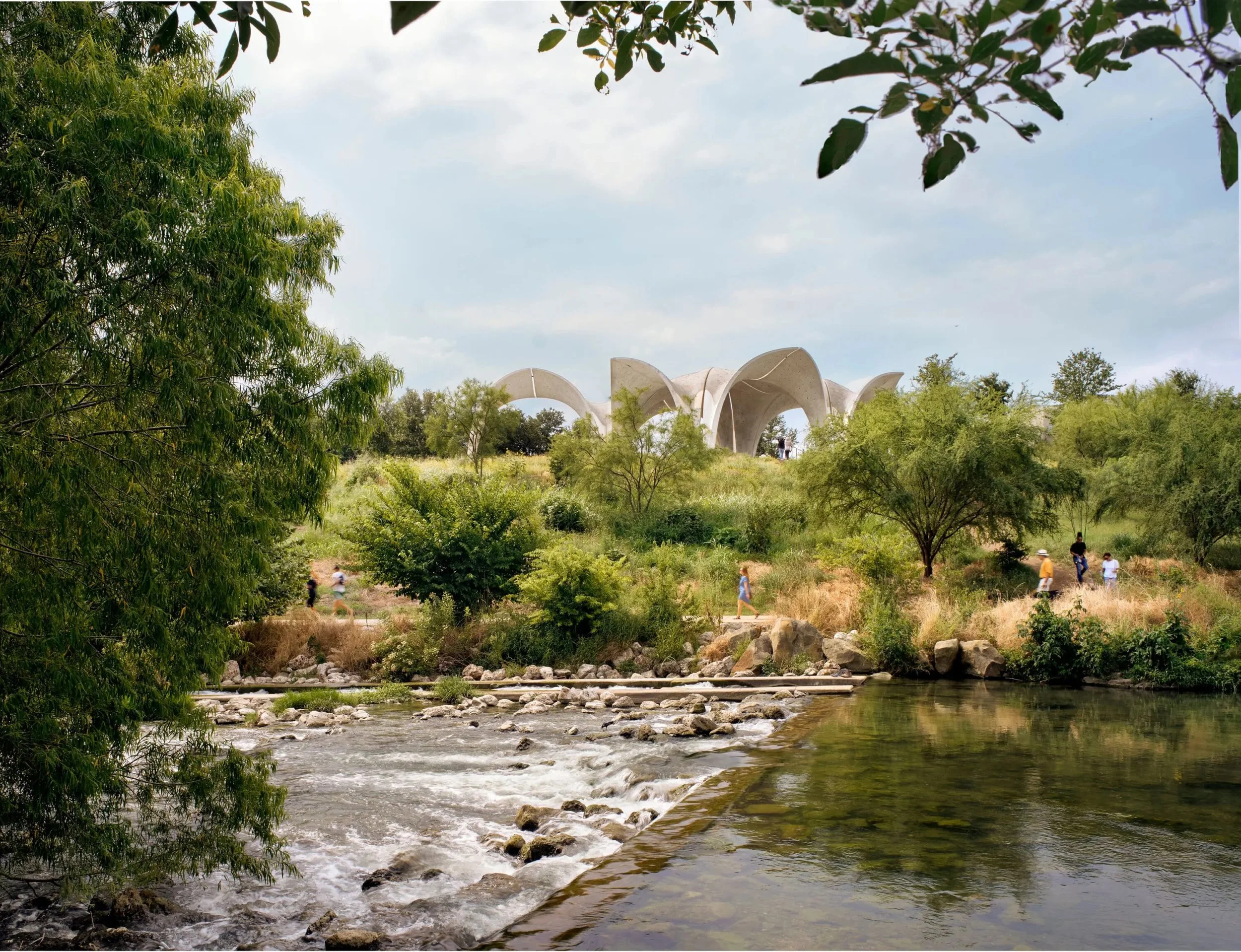
Photography: Casey Dunn
The park showcases an innovative biomimetic rainwater harvesting system: the central pavilion's concrete "petal" structures are "inspired by plants that funnel rainwater to their roots". These petals are formed to collect and funnel rainwater into a central underground catchment basin, predicted to collect around 825,000 gallons annually and capable of holding up to 100,000 gallons. The collected rainwater is filtered through alluvial soils, preventing contaminated runoff from entering the San Antonio River, and is then used for sewage conveyance and irrigation within the park. Instead of imposing purely technological or conventional solutions, the design team at Confluence Park looked to natural systems for elegant and efficient blueprints. This biomimetic approach resulted in a rainwater harvesting system that is not only highly functional but also aesthetically integrated and deeply meaningful to the park's educational mission. Building science and civil engineering expertise is crucial here to translate these natural inspirations into quantifiable performance, ensuring the system's efficiency, capacity, and durability. Architects should explore biomimicry as a powerful source of sustainable design inspiration. By studying how nature solves problems, they can uncover innovative, context-responsive solutions that are both environmentally effective and architecturally compelling. Collaboration with building science experts is key to translating these natural principles into engineered realities.
The Estela Avery Education Center features a green roof and a solar photovoltaic array intended to produce 100% of the park’s energy needs. Confluence Park transformed a blighted industrial site into a vibrant public amenity, welcoming over 32,000 students and registrants since its opening, serving as a powerful example of sustainable urban regeneration.
The park has received significant accolades, including the 2023 AIA Committee on the Environment Top Ten Award and the 2022 Metropolis Planet Positive Award Honoree.
Other Distinctive Projects: A Glimpse into Diverse Collaborations
The breadth of successful collaborations between Lake|Flato and Positive Energy demonstrates the universal applicability and necessity of building science expertise in architectural practice. These projects span diverse geographies (desert, rural Texas, urban Austin, San Antonio), project types (residential, public park), and scales. Positive Energy's scope also varies, from full MEP engineering to specialized building envelope and energy modeling. This diversity demonstrates that building science principles and integrated engineering are not niche disciplines applicable only to extreme climates or highly specialized projects. Instead, they are universally valuable tools for enhancing performance, comfort, durability, and sustainability across virtually any architectural challenge. Positive Energy's ability to adapt its deep expertise to the specific needs of each project—whether it is optimizing complex mechanical systems, fine-tuning a building envelope, or modeling energy flows—underscores the fundamental role of building science in achieving design excellence in varied contexts. Architects should recognize that engaging building science expertise is beneficial for all projects aiming for high performance, occupant well-being, and long-term value. It is not an optional add-on but an integral part of modern, responsible architectural practice, regardless of project type or location.
Madrone Mesa Ranch, for instance, is a multi-building family compound in the Texas Hill Country, designed as a retreat and later a full-time residence. Positive Energy provided MEP Engineering for this project, which is centered around a party barn and courtyard, thoughtfully integrated with large mature oak trees.
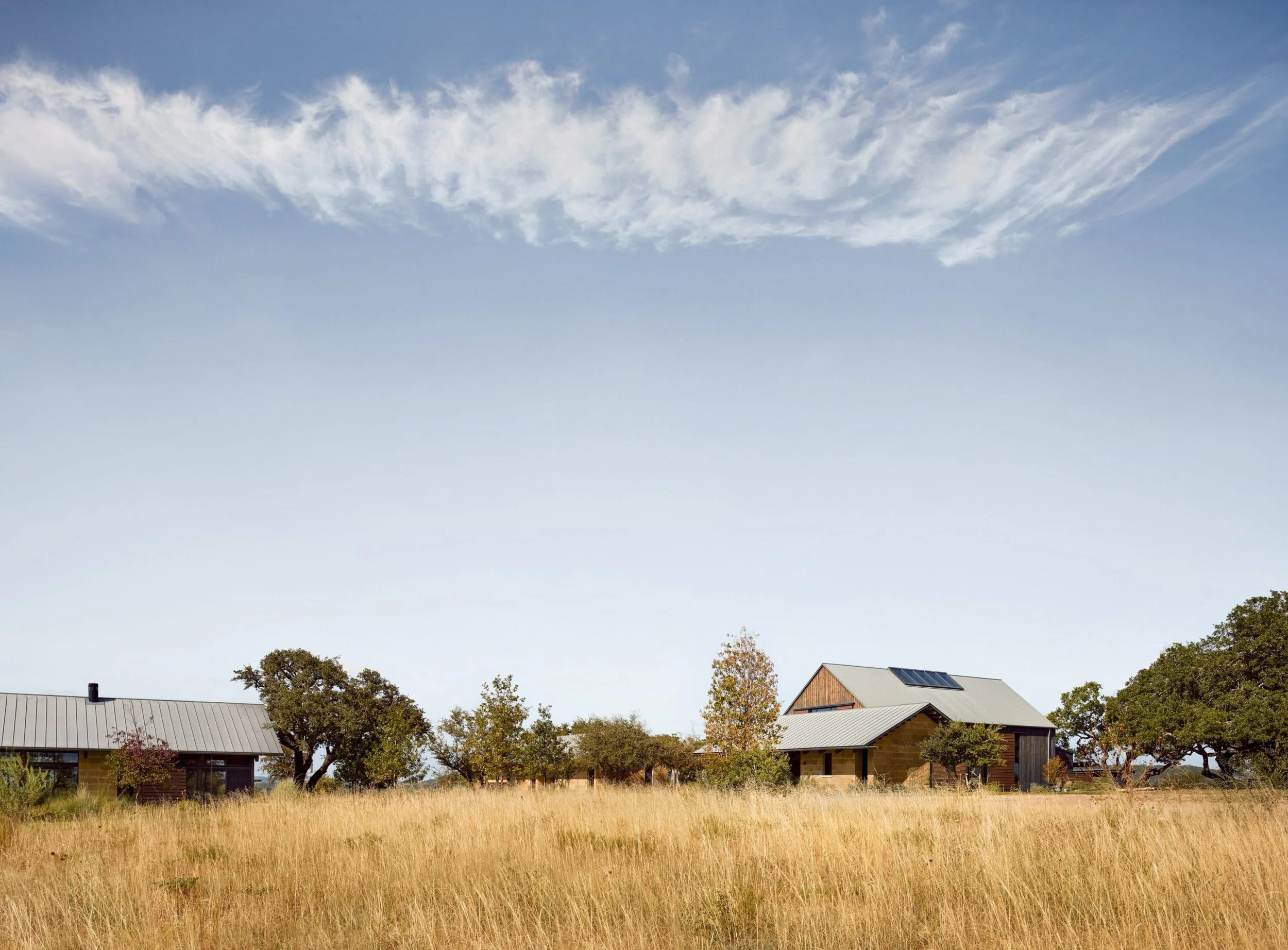
Photography: Casey Dunn
The Fall Creek Residence, for which Positive Energy also provided MEP Engineering, comprises a series of humble shed-roofed structures perched on a bluff. It features limestone walls and weathered steel, with a large porch designed to capture the sound of the falls and interiors using a "rich, truly native palette" of local materials. This project received the 2025 Residential Design Architecture Award.

Photography: Casey Dunn
The River Bend Residence, with MEP Engineering by Positive Energy, was designed to "sit lightly upon the land" overlooking the Guadalupe River, composed of multiple structures. Its orientation strategically takes advantage of prevailing winds for natural ventilation, and large skylights capture Northern daylight. The landscape is intentionally minimal and indigenous to reduce maintenance and environmental impact.
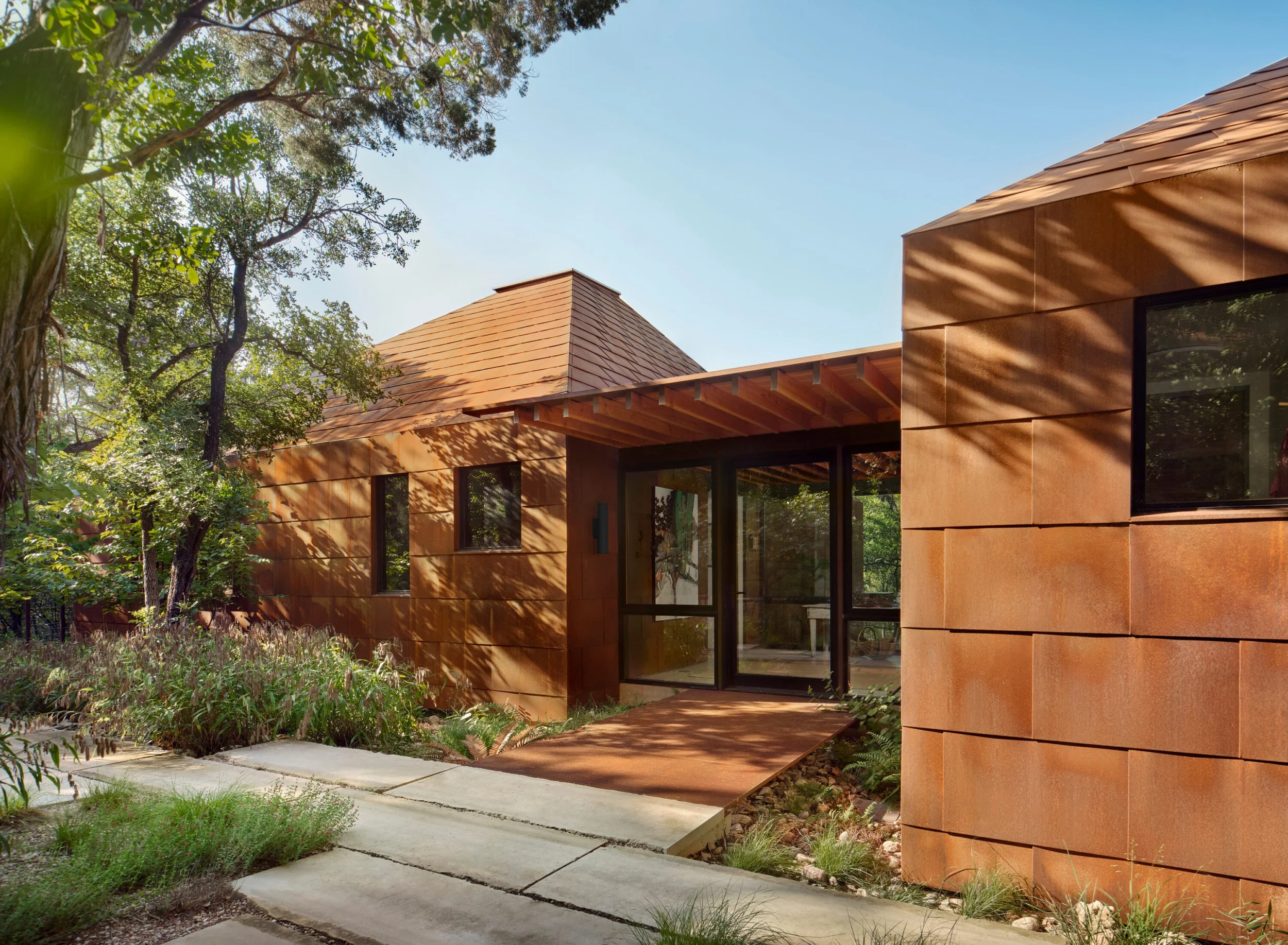
Finally, the Hog Pen Creek Residence, where Positive Energy provided Enclosure & Energy Modeling/Consulting, is situated at the confluence of Hog Pen Creek and Lake Austin. This residence emphasizes exterior living space. Its L-shaped footprint and orientation thoughtfully address challenging site constraints like towering oak trees and a steeply sloping site, featuring a boardwalk connecting structures down to a screened pavilion by the water's edge.

Inspiring the Next Generation of Architecture
The decade-plus-long collaboration between Lake|Flato Architects and Positive Energy stands as a powerful model for the architecture and construction industry. Their joint portfolio of distinctive, award-winning projects demonstrates that high-performance, durable, and healthy buildings are not abstract ideals but achievable realities. These buildings are realized through thoughtful, context-responsive design, the practical application of rigorous building science principles, and, most importantly, deep, early, and integrated collaboration between architectural visionaries and building science experts.
This partnership illustrates that by embracing building science and fostering similar integrated design relationships, architects can create buildings that not only stand the test of time but also profoundly respond to their environment, enhance the lives of their occupants, and inspire the next generation of truly sustainable and resilient architecture.
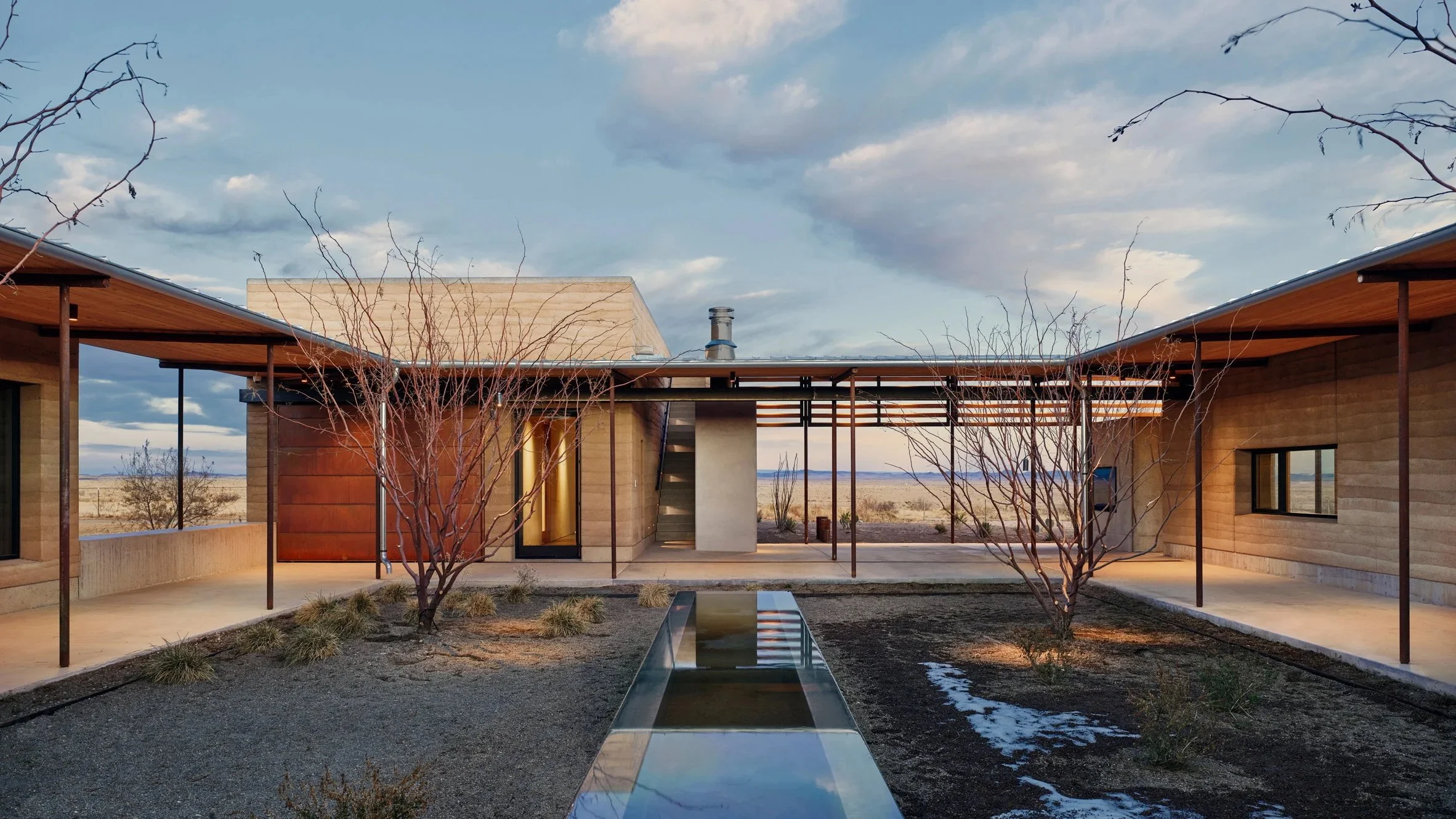
Marfa Ranch
The Marfa Ranch is a distinguished residential project by Lake Flato Architects, is thoughtfully situated on a low rise within the expansive, pristine desert grasslands of Marfa, Texas. This unique location, nestled between the Chihuahuan Desert and the majestic Davis Mountains, presents a challenging yet profoundly beautiful environment. The architectural design of the ranch consciously adopts a low profile, comprising eight distinct structures meticulously organized around a central courtyard. This layout, shaded by native mesquite trees, serves as a cool respite from the sun-drenched desert beyond its walls, drawing inspiration from the area's earliest regional architectural traditions. Architect Bob Harris of Lake Flato articulated that the design embodies a "deliberate quality of spareness that matches the qualities of the land," emphasizing the importance of the house maintaining a low profile to merge seamlessly with the terrain while simultaneously opening to distant views and providing crucial protection from the region's harsh winds and intense sun. This project has garnered significant recognition, including the 2022 Texas Society of Architects Design Award and its inclusion in Dezeen's Top 10 Houses of 2022.
By Positive Energy staff. Photography by Casey Dunn
Architecture Meets Applied Building Science in the Chihuahuan Desert

The Marfa Ranch is a distinguished residential project by Lake Flato Architects, is thoughtfully situated on a low rise within the expansive, pristine desert grasslands of Marfa, Texas. This unique location, nestled between the Chihuahuan Desert and the majestic Davis Mountains, presents a challenging yet profoundly beautiful environment.[1] The architectural design of the ranch consciously adopts a low profile, comprising eight distinct structures meticulously organized around a central courtyard. This layout, shaded by native mesquite trees, serves as a cool respite from the sun-drenched desert beyond its walls, drawing inspiration from the area's earliest regional architectural traditions.[1] Architect Bob Harris of Lake Flato articulated that the design embodies a "deliberate quality of spareness that matches the qualities of the land," emphasizing the importance of the house maintaining a low profile to merge seamlessly with the terrain while simultaneously opening to distant views and providing crucial protection from the region's harsh winds and intense sun.[2] This project has garnered significant recognition, including the 2022 Texas Society of Architects Design Award and its inclusion in Dezeen's Top 10 Houses of 2022.[1]
The design approach at Marfa Ranch exemplifies a profound synergy between traditional and modern climate-responsive architecture. The repeated emphasis on the design "borrowing from the area's earliest structures" [1] and utilizing a courtyard plan with thick rammed earth walls to combat the "extremes of the region — heat, cold, and wind" [1] is not merely a stylistic choice. It represents a deliberate reinterpretation of vernacular architecture, where ancient wisdom regarding thermal mass and passive cooling through courtyards is integrated with contemporary building science and engineering. The project, therefore, is not simply a modern house in the desert; it is a modern house of the desert, demonstrating how historical climate-adapted strategies remain highly relevant and effective when enhanced by modern technical expertise. This integrated perspective suggests that successful high-performance design often finds its roots in time-tested, climate-specific principles.
Positive Energy played a pivotal role as both Mechanical Engineers and Building Envelope consultants for the Marfa Ranch project, collaborating closely with Lake Flato Architects.[1] This dual responsibility is a significant departure from traditional project structures, where these critical roles are often separated. As an MEP engineering firm specializing in high-end residential architecture, Positive Energy is committed to leveraging building science and human-centered design to engineer healthy, comfortable, and resilient spaces.[10] Our overarching vision is to create buildings that are healthy, comfortable, durable, efficient, resilient, sustainable, and regenerative, all while maintaining architectural excellence.[12] The building envelope (comprising walls, roof, and windows) and the MEP systems (including heating, cooling, and ventilation) are intrinsically linked in determining a building's overall energy performance, occupant comfort, and indoor air quality. Positive Energy's comprehensive involvement across both mechanical systems and the building enclosure was part of an integrated design approach where these interconnected elements are considered holistically from the project's inception. This collaborative model leads to optimized performance outcomes that would be challenging to achieve if these critical aspects were addressed in isolation or sequentially, representing a hallmark of advanced building science practices.

The Rammed Earth Building Envelope
Harnessing Thermal Mass in Arid Climates
The concept of thermal mass refers to a material's inherent ability to absorb, store, and subsequently release heat.[13] Materials characterized by high density and a high specific heat capacity are ideally suited for this purpose, with rammed earth being a prime example.[13] The Marfa Ranch prominently features two-foot-thick (approximately 600mm) rammed earth walls, constructed using an impressive three million pounds of earth, some of which was sourced directly from the local site.1 These substantial walls are fundamental to the home's passive heating and cooling strategy.[1]
In arid climates such as Marfa, which are defined by significant diurnal temperature ranges—hot days followed by cool nights—thermal mass proves exceptionally effective.[14] During the intense heat of the day, the thick rammed earth walls absorb thermal energy from direct sunlight and the ambient air, effectively preventing this heat from immediately penetrating the interior spaces. As external temperatures decline during the night, the stored heat is gradually released back into the interior, contributing to a warmer indoor environment.[13] Conversely, during cool nights, the walls release their stored heat, and if the building is strategically ventilated, they can be "regenerated" by absorbing the cooler night air. This process prepares the walls to absorb heat again during the subsequent day, thereby maintaining a comfortable indoor climate.[13]
The effectiveness of rammed earth's thermal mass is directly tied to the diurnal temperature range of the Marfa climate. While insulation (R-value) is commonly understood for its thermal resistance, research consistently highlights that rammed earth's primary thermal benefit in arid climates is its thermal mass and the resulting thermal lag.[13] Studies indicate that rammed earth is "especially beneficial in high diurnal temperature ranges," capable of both moderating indoor temperatures and shifting peak temperatures, with reported time lags ranging from 6 to 9 hours, or even up to 10 hours.[16] This means the wall actively buffers temperature swings rather than simply resisting heat flow. For architects, this distinction is crucial: in climates with significant day-night temperature differences, designing for thermal lag—effectively matching the building's thermal response time to the climate's daily cycle—can provide a powerful impact on occupant comfort and energy efficiency than solely maximizing R-value, particularly given that uninsulated rammed earth typically has a lower thermal resistance.[16] This approach, however, requires a deep understanding of climate-specific building science principles.
The strategic use of rammed earth at Marfa Ranch significantly reduces the reliance on active heating and cooling systems, but does not eliminate the need entirely.[13] Studies on rammed earth buildings demonstrate substantial reductions in heating and cooling loads, ranging from 20% to 52% compared to conventional building assemblies depending on their context.[16] They can contribute to a more stable and comfortable indoor environment throughout the year, minimizing the need for large mechanical cooling systems in favor of smaller, more efficient ones.[13]
Ensuring Durability and Moisture Resilience
To enhance the structural integrity and resistance to weathering, particularly against water and wind driven erosion, rammed earth can be stabilized with additives such as Portland cement, however this does represent additional embodied carbon to an assembly that is otherwise very low embodied carbon.[8] The Marfa Ranch project utilized a stabilized mixture, initially experimenting with 7% Portland cement and ultimately settling on a 9% mixture for the majority of the construction.8 This stabilization process was crucial for achieving high compressive strengths, often comparable to concrete, and contributes to an extended lifespan of the rammed earth, with some stabilized rammed earth structures modeled to endure for more than 1,000 years.[17] This longevity is a key performance metric for sustainability when cement is added - the lifespan is required to offset the upfront carbon. While energy efficiency is a common focus in high-performance buildings, the exceptional durability and long lifespan of properly constructed rammed earth walls suggest that for a "non-disposable" building [22], the enduring quality and low maintenance requirements of the material also become a critical performance metric. This expands the definition of "good" building performance to include reduced future resource consumption and a lower lifecycle environmental impact.
Despite its inherent robustness, effective moisture management is vital for the long-term performance and durability of rammed earth. While rammed earth can naturally regulate indoor humidity if unclad walls containing clay are exposed to the interior [17], external protection is essential. Strategies employed include incorporating hydrophobic (water-repellent) additives during the mixing process [15] and ensuring proper drainage around the foundation. For instance, maintaining a 75mm exposed slab edge above finished grade helps protect against moisture ingress, such as rising damp.[15] Research from Building Science Corporation highlights that even high-R walls can be susceptible to moisture problems, underscoring the necessity of robust moisture management, particularly for wall assemblies relying solely on cavity insulation.[24]
A common assumption might be that a material's thermal properties are static. However, research indicates that the "thermal physical parameters of the rammed earth... increased with an increase in moisture content" [20], and that conductivity "varies enormously" with moisture content.25 This highlights a crucial point: effective moisture management for rammed earth walls is not solely about preventing degradation or mold; it is fundamental to maintaining the intended thermal performance of the wall assembly. If the walls become damp, their ability to store and release heat efficiently is compromised, directly impacting the building's energy consumption and occupant comfort. This demonstrates the interconnectedness of moisture control and thermal design in building science.
Rammed earth walls also exhibit a valuable moisture-buffering capacity (hygric buffering). This means they can absorb and desorb significant amounts of water vapor from the indoor environment, which helps to maintain a stable indoor relative humidity, typically within the comfortable range of 40-60%.17 This hygric mass effect can effectively reduce the demands on mechanical systems for humidification and dehumidification, depending on climate specifics.[25]

Table 1: Rammed Earth Wall Performance Attributes. This table provides a holistic view of rammed earth's performance, moving beyond the singular metric of R-value to emphasize its unique benefits such as thermal mass, moisture buffering, and exceptional durability. It directly addresses the need to understand how walls interact with the physical environment by presenting a multi-faceted performance profile, thereby enabling more informed design decisions for climate-appropriate and durable wall assemblies. It visually reinforces that rammed earth functions as a dynamic system with multiple interacting properties, rather than merely a static barrier.
The Imperative of an Airtight Enclosure
An air barrier is a meticulously designed system of materials intended to control airflow within a building enclosure, effectively resisting air pressure differences.[26] It precisely defines the pressure boundary that separates conditioned indoor air from unconditioned outdoor air.[26] For high-performance buildings like Marfa Ranch, establishing an airtight enclosure is paramount, as it serves multiple critical functions:
Firstly, it prevents significant energy loss. Uncontrolled air leakage, whether through infiltration (outdoor air entering) or exfiltration (conditioned indoor air escaping), can substantially compromise energy efficiency, leading to considerable heat gain in summer or heat loss in winter.[26]
Secondly, airtightness is crucial for preventing moisture issues. Air leakage can transport moisture-laden air into the hidden cavities of wall assemblies. When this warm, humid air encounters cooler surfaces within the wall, it can condense, leading to interstitial condensation, mold growth, and potential long-term structural damage. This is particularly prevalent in humid climates or during heating seasons when indoor air is warmer and more humid than the wall cavity.[24]
Thirdly, a robust air barrier is essential for maintaining superior indoor air quality. An uncontrolled air path allows unfiltered outdoor pollutants—such as dust, pollen, and allergens—to infiltrate the building. Simultaneously, it permits indoor contaminants to circulate freely, undermining the effectiveness of any efforts to maintain a healthy indoor environment.[27]


The outdated concept of "homes needing to breathe" is a common misconception, as highlighted by contemporary building science principles.[27] Instead, the prevailing understanding is that healthy, efficient buildings shouldn't leak and that air sealed walls, ceilings, and floors are fundamental for achieving healthy indoor air quality.[27] This is a foundational principle in building science: an airtight enclosure (the air barrier) is not merely about preventing drafts, but about enabling controlled ventilation. Without an effective air barrier, mechanical ventilation systems cannot efficiently dilute pollutants or recover energy, as uncontrolled air leakage bypasses filters and heat recovery mechanisms. This also exacerbates moisture issues due to uncontrolled air movement.[24] Therefore, the airtightness of the wall assembly is directly linked to the optimal performance of the MEP systems and, consequently, to the health and comfort of the occupants.
Finally, an airtight enclosure is vital for complementing both the thermal mass of the rammed earth walls and the mechanical ventilation systems. It ensures that the thermal mass can perform optimally by preventing unintended heat transfer via uncontrolled air movement. Crucially, it allows mechanical ventilation systems, such as Energy Recovery Ventilators (ERVs) or Heat Recovery Ventilators (HRVs), to operate effectively. This ensures that fresh, filtered, and conditioned outdoor air is delivered precisely where and when needed, without being diluted or contaminated by uncontrolled infiltration.[27]
Engineering for Superior Indoor Air Quality (IAQ)
Defining and Prioritizing IAQ
Indoor Air Quality (IAQ) refers to the overall quality of the air within and immediately surrounding buildings, directly influencing the health, comfort, and productivity of its occupants.[28] It is a critical, yet often underestimated, aspect of building design with significant implications for human well-being and functional performance.[28]
Substandard IAQ can manifest in various adverse health outcomes, including respiratory problems, exacerbated allergies, and chronic fatigue. Beyond physical health, poor IAQ has been shown to negatively affect cognitive function and overall well-being.[28] Common indoor air pollutants that contribute to these issues include particulate matter (such as dust, pollen, and mold spores), volatile organic compounds (VOCs) off-gassing from building materials, and combustion byproducts like carbon monoxide (CO) and nitrogen dioxide (NO2).[29]
High-performance buildings inherently prioritize IAQ as a fundamental component of occupant health and comfort to a large degree.[10] This emphasis aligns with the comprehensive guidelines and best practices established by organizations such as ASHRAE for the design, construction, and commissioning of buildings with excellent indoor air quality.[35]
The importance of IAQ extends far beyond mere comfort. Research explicitly links improved IAQ in green-certified buildings (which homes like the Marfa Ranch embody) to "reduced incidence of respiratory problems, allergies, and other health issues," as well as "higher cognitive function scores and better decision-making abilities".[33] Moreover, it has been observed that passive building strategies, which inherently emphasize superior IAQ, can provide a "cushion of time" during power outages, thereby enhancing a building's resilience.31 This elevates IAQ from a "nice-to-have" feature to a critical component of occupant health, productivity, and a building's overall resilience, providing a robust, data-backed justification for architects to prioritize it in their designs.
MEP Strategies for Clean Indoor Air
Achieving superior indoor air quality is a multi-faceted endeavor that requires a comprehensive and integrated approach to MEP system design. The following strategies are crucial for ensuring clean and healthy indoor environments:
1. Ventilation: Bringing in Fresh Air
Adequate ventilation is fundamental for effectively diluting indoor air pollutants and continuously replenishing indoor air with fresh, filtered outdoor air.[28] High-performance homes frequently incorporate mechanical whole-house fresh air systems, such as Energy Recovery Ventilators (ERVs) or Heat Recovery Ventilators (HRVs).[29] These systems are designed to continuously deliver a consistent volume of fresh, filtered outdoor air while simultaneously exhausting stale indoor air. A key benefit of ERVs and HRVs is their ability to recover energy from the outgoing exhaust air to pre-condition the incoming fresh air, significantly reducing the thermal load on the building's heating and cooling systems.[30] ASHRAE Standard 62.2 provides the recognized minimum ventilation rates and other measures for acceptable indoor air quality in residential buildings, serving as a critical guide for engineers in designing effective systems.[27] Local exhaust systems, particularly high-performing kitchen and bath fans vented directly to the outdoors, are essential for removing source-specific pollutants like cooking fumes (which can include particulates, carbon monoxide, and nitrogen dioxide) and excess humidity at their point of origin.[29]
2. Filtration: Removing Contaminants
High-efficiency air filters are indispensable for effectively removing airborne contaminants such as dust, pollen, and other fine particulates from the air stream.[28] Filters are rated by their Minimum Efficiency Reporting Value (MERV), with higher MERV ratings indicating a greater capacity to capture smaller particles.[29] Positive Energy, in its designs, typically specifies MERV 6+ filters for ducted systems, ensuring that air passes efficiently through the filter rather than bypassing it.[29] Some advanced high-performance projects, such as the Theresa Passive House in Texas (also involving Positive Energy), integrate even more robust, hospital-grade filtration systems to achieve superior air purity.[31]
3. Humidity Control: Preventing Mold and Enhancing Comfort
Excessive indoor humidity creates an environment conducive to mold growth, which can lead to various health issues and potential damage to building materials.[27] Consequently, MEP systems must incorporate measures for precise humidity control, such as dedicated dehumidifiers or properly sized HVAC systems, to maintain optimal indoor humidity levels, typically within the comfortable and healthy range of 40-60% relative humidity.[27] This is particularly crucial in climates that, while generally arid, may experience periods of elevated humidity or have internal moisture sources. For instance, the Marfa Ranch courtyard features a water fountain [8], which, while aesthetically pleasing and providing a connection to water, necessitates careful coordination to prevent adverse effects.
While Marfa is a desert environment, leading one to assume humidity is not a primary concern, the presence of the Marfa Ranch courtyard's "water feature that provides much-needed humidity in the dry climate" [8] introduces a localized moisture source. Our indoor air quality guidance always emphasizes the importance of humidity control to prevent mold, even in a dry climate like Marfa, TX.[27] This reveals a nuanced challenge: even when the outdoor climate is predominantly dry, internal moisture generation (from cooking, bathing, or intentional water features) can create localized humidity issues that require careful MEP design to prevent mold growth and maintain occupant comfort. Architects must consider both the macro-climate and any micro-climates created within or immediately adjacent to the building.
4. Source Control: Minimizing Emissions
The most effective strategy for ensuring good IAQ is to proactively minimize the introduction of pollutants at their source.27 This involves several key practices:
Material Selection: Specifying low-VOC (Volatile Organic Compound) or VOC-free building materials, finishes, furnishings, and cleaning products is paramount.[27] VOCs are chemical compounds that can off-gas into the indoor environment, contributing to air pollution and potential health issues.[28]
Combustion Safety: Ensuring that all combustion appliances (e.g., gas stoves, water heaters, fireplaces) are properly vented to the outdoors prevents dangerous gases like carbon monoxide and nitrogen dioxide from accumulating within the living spaces.[29]
Architects might view ventilation, filtration, and humidity control as separate components. However, the available information consistently presents these as interconnected strategies.[27] The emphasis on an "integrated design approach" for optimal IAQ [28] and the description of a comprehensive "environmental control system" that includes hospital-grade filtration and a dedicated dehumidifier [31] demonstrate that achieving truly superior IAQ requires a holistic MEP design. In this approach, ventilation, advanced filtration, precise humidity control, and source reduction work synergistically. It is not merely about adding an ERV; it is about designing a complete system where each component plays a specific, complementary role in ensuring the highest quality indoor air.

Table 2: Key Indoor Air Quality (IAQ) Parameters and MEP Strategies. This table serves as a practical guide for architects, directly addressing the need to understand "what constitutes indoor air quality" and how to achieve it through specific MEP design interventions. By linking common IAQ concerns to actionable strategies and relevant MEP components, it translates abstract concepts into concrete design considerations, fostering a deeper understanding of the interplay between building science and occupant well-being.
Positive Energy's Holistic MEP Design at Marfa Ranch
Integrated Systems for Comfort and Efficiency
Positive Energy is an MEP engineering firm dedicated to leveraging building science and human-centered design to create spaces that are not only healthy and comfortable but also resilient.[10] Our mission extends beyond conventional engineering, aiming to transform the way buildings are created to improve lives and cultivate meaningful relationships with project partners.[40] Kristof Irwin, one of the principals and visionary co-founder of Positive Energy, often articulates a comprehensive philosophy where buildings are envisioned to be healthy, comfortable, durable, efficient, resilient, sustainable, and regenerative, all while maintaining architectural distinction.[12] That vision is brought to life in each project for which we are fortunate enough to collaborate with great partners. This project was no exception.
As both Mechanical Engineers and Building Envelope consultants for Marfa Ranch, our involvement was instrumental in ensuring the seamless integration of the project's passive design strategies—such as the thermal mass of the rammed earth walls and the cooling effects of the central courtyard—with the active mechanical systems. This home features a hydronic heating system, as well as a VRF heating/cooling system. The home’s mechanical systems also featured humidity control, makeup air, and ventilation components. Positive Energy's commitment to resilient design means creating homes that are capable of adapting to changing climate conditions and future needs.[11] This focus is particularly pertinent in a remote, high-desert environment like Marfa, where extreme temperature swings, wind, and occasional intense rain events present significant environmental challenges.[1] This approach moves beyond merely designing functional mechanical systems to actively shaping the occupant's well-being and their interaction with the built environment. For architects, this redefines the value proposition of MEP consultants, highlighting their integral role in delivering holistic, life-enhancing spaces, rather than simply providing infrastructure.
Sustainable Water Management
The Marfa region, situated within the Chihuahuan Desert, is characterized by sparse rainfall and inherent water scarcity.[3] This environmental reality makes thoughtful water conservation a critical design consideration for any project in the area. Furthermore, concerns regarding groundwater contamination from industrial activities in the nearby Permian Basin underscore the broader importance of both water quality and self-sufficiency in the region.[45]
Lake Flato’s water stewardship ambitions for this project aimed at a 97% reduction in water draw from the local utility compared to typical office buildings.[46] The strategies to achieve this included extensive greywater capture and reuse for irrigation purposes.[46] Complementing this, the property also features substantial onsite water storage capacity: 100,000 gallons stored below grade and an additional 20,000 gallons above ground.[46]
A notable example of adaptive reuse and resourcefulness at Marfa Ranch is the conversion of an old water tank, the only pre-existing structure on the site, into the property's swimming pool.[2] This innovative approach minimizes the consumption of new resources. Additionally, the central courtyard features a fountain that is replenished by collected rainwater, further showcasing the project's commitment to water capture and contributing to the oasis-like quality of the outdoor space.[1]
Designing for Performance and Well-being
The Marfa Ranch serves as a compelling case study for climate-responsive, high-performance residential architecture. It vividly demonstrates how a deep understanding and strategic application of building science principles, combined with thoughtful architectural design, can transform a challenging desert environment into a sanctuary of comfort, health, and sustainability.
The project offers invaluable lessons for architects aiming to design for superior performance and occupant well-being.
Practical Application of Building Science for Durable Wall Assemblies:
Marfa Ranch illustrates that truly durable and high-performing wall assemblies, such as stabilized rammed earth, are not merely a result of selecting a particular material. Their success stems from a comprehensive understanding of how multiple building science principles interact. This includes leveraging the inherent thermal mass of the material, meticulously managing moisture through features like hydrophobic additives and proper drainage, and ensuring the continuous integrity of the air barrier. These elements must work in concert to create a robust enclosure that effectively shields inhabitants from environmental extremes—be it heat, cold, or wind—and guarantees the building's longevity.[8]
Strategies for Good Indoor Air Quality:
Marfa Ranch exemplifies that superior indoor air quality is not an accidental outcome but a deliberate product of multi-faceted MEP strategies. This encompasses controlled ventilation, achieved through Energy Recovery Ventilators (ERVs), ensure a continuous supply of fresh, filtered air while recovering energy. It also involves high-efficiency filtration to remove particulates, precise humidity control to prevent mold growth and enhance comfort, and diligent source control, which includes specifying low-VOC materials and ensuring proper exhaust for pollutant-generating areas like kitchens and bathrooms.[27] These integrated elements collectively ensure a healthy, comfortable, and productive indoor environment, highlighting that IAQ is a proactive design outcome, not a reactive fix.
The Cornerstone of Early and Integrated Collaboration:
The successful execution of Marfa Ranch's complex rammed earth construction and integrated MEP systems underscores the immense value of early and deep collaboration between architects and building science/MEP engineering experts. Positive Energy's unique dual role in both mechanical engineering and building envelope consulting on this project is a clear demonstration of the benefits derived from an integrated design process. This approach allows for performance goals to be established and addressed from the earliest design phases, leading to optimized outcomes across energy efficiency, occupant comfort, health, and durability.[1] For architects aiming to deliver truly high-performance, resilient, and healthy buildings, early and continuous collaboration with building science and MEP experts is not merely beneficial; it is essential. This partnership enables the identification of synergies, the navigation of trade-offs, and the development of optimized solutions that seamlessly integrate architectural vision with scientific principles from the foundational design stages, rather than attempting to retrofit performance later in the project lifecycle.
Building a Healthier, More Resilient Future
The Marfa Ranch project, designed by Lake Flato Architects and engineered by Positive Energy's integral MEP and building envelope consulting, is a compelling benchmark for climate-responsive, high-performance residential architecture. It illustrates how a deep understanding and strategic application of building science can transform a challenging natural environment into a sanctuary of comfort, health, and sustainability.
This project exemplifies Positive Energy's unwavering commitment to delivering buildings that not only meet but consistently exceed expectations for occupant health, comfort, and environmental stewardship. Their specialized expertise in seamlessly integrating passive design strategies with advanced mechanical systems, coupled with a steadfast human-centered approach, illuminates a clear and actionable path forward for the Architecture, Engineering, and Construction (AEC) industry.
Works cited
Marfa Ranch - Lake Flato, accessed May 28, 2025, https://www.lakeflato.com/project/marfa-ranch/
Marfa Ranch / Lake Flato Architects - ArchitectureLab, accessed May 28, 2025, https://www.architecturelab.net/marfa-ranch-lake-flato-architects/
Marfa Ranch - ARQA, accessed May 28, 2025, https://arqa.com/en/architecture/marfa-ranch.html
Monolithic Rammed Earth Walls Keep This Marfa Ranch House Insulated in the Desert Climate - Dwell, accessed May 28, 2025, https://www.dwell.com/article/marfa-ranch-lake-flato-architects-rammed-earth-home-98a60960
This West Texas desert house by Lake|Flato Architects perfectly harmonizes vernacular architecture with the stunning, but harsh natural environment, employing a courtyard typology and two-foot thick rammed-earth walls, accessed May 28, 2025, https://globaldesignnews.com/this-west-texas-desert-house-by-lakeflato-architects-perfectly-harmonizes-vernacular-architecture-with-the-stunning-but-harsh-natural-environment-employing-a-courtyard-typology-and-two-foot-thick-ramm/
Lake Flato Architects creates rammed-earth ranch house in Marfa - Dezeen, accessed May 28, 2025, https://www.dezeen.com/2022/09/08/lake-flato-architects-marfa-ranch-texas/
See this remarkable rammed earth house nestled on a Texas ranch - One Kindesign, accessed May 28, 2025, https://onekindesign.com/rammed-earth-house-texas-ranch/
Gimme Shelter - Texas Architect Magazine, accessed May 28, 2025, https://magazine.texasarchitects.org/2022/07/06/gimme-shelter/
Marfa Ranch - Texas Architect Magazine, accessed May 28, 2025, https://magazine.texasarchitects.org/2022/09/08/marfa-ranch/
Positive Energy | Building Science Focused MEP Engineering, accessed May 28, 2025, https://positiveenergy.pro/
Los Angeles Residential MEP Engineering Firm - Positive Energy, accessed May 28, 2025, https://positiveenergy.pro/los-angeles-residential-mep-engineering-firm
Kristof Irwin, PE, M. Eng. - Positive Energy, accessed May 28, 2025, https://positiveenergy.pro/kristof
Thermal Properties - Rammed Earth Enterprises, accessed May 28, 2025, https://www.rammedearthenterprises.com.au/thermal-properties/
Thermal mass - | YourHome, accessed May 28, 2025, https://www.yourhome.gov.au/passive-design/thermal-mass
Rammed Earth Technical Information, accessed May 28, 2025, https://www.rammedearthenterprises.com.au/rammed-earth-information-for-professionals/
evaluation of rammed earth assemblies as thermal mass - Paper Preparation Guidelines, accessed May 28, 2025, https://publications.ibpsa.org/proceedings/simbuild/2020/papers/simbuild2020_C076.pdf
Rammed earth - Wikipedia, accessed May 28, 2025, https://en.wikipedia.org/wiki/Rammed_earth
Marfa Ranch | Sun Valley Bronze Hardware, accessed May 28, 2025, https://www.sunvalleybronze.com/projects/marfa-ranch
Thermal Mass Explained: Energy Efficiency in New Homes - Constructor, accessed May 28, 2025, https://www.constructor.net.au/thermal-mass-and-your-new-home-what-you-need-to-know/
Thermal and Humidity Performance Test of Rammed-Earth Dwellings in Northwest Sichuan during Summer and Winter - PMC, accessed May 28, 2025, https://pmc.ncbi.nlm.nih.gov/articles/PMC10532870/
Rammed earth | YourHome, accessed May 28, 2025, https://www.yourhome.gov.au/materials/rammed-earth
rammed earth walls | SIREWALL, accessed May 28, 2025, https://sirewall.com/the-sirewall-system/
Optimization of three new compositions of stabilized rammed earth incorporating PCM: Thermal properties characterization and LCA | Request PDF - ResearchGate, accessed May 28, 2025, https://www.researchgate.net/publication/257389761_Optimization_of_three_new_compositions_of_stabilized_rammed_earth_incorporating_PCM_Thermal_properties_characterization_and_LCA
BA-1316: Moisture Management for High R-Value Walls | buildingscience.com, accessed May 28, 2025, https://buildingscience.com/documents/bareports/ba-1316-moisture-management-for-high-r-value-walls/view
Hygrothermal assessment of a traditional earthen wall in a dry Mediterranean climate, accessed May 28, 2025, https://www.researchgate.net/publication/338640116_Hygrothermal_assessment_of_a_traditional_earthen_wall_in_a_dry_Mediterranean_climate
Air Barriers - Building Science, accessed May 28, 2025, https://buildingscience.com/sites/default/files/migrate/pdf/RR-0403_Air_barriers_BFG.pdf
Healthy Home - Positive Energy, accessed May 28, 2025, https://positiveenergy.pro/healthy-home
Enhancing Indoor Air Quality through Effective MEP Design - S3DA Design, accessed May 28, 2025, https://s3da-design.com/enhancing-indoor-air-quality-through-effective-mep-design/
Indoor Air Quality Features | ENERGY STAR, accessed May 28, 2025, https://www.energystar.gov/newhomes/features-benefits/indoor-air-quality-features
Three Basic Strategies to Improve Indoor Air Quality - Airquip Heating & Air Conditioning, accessed May 28, 2025, https://www.airquipheating.com/article.cfm?ArticleNumber=183
There Will Come Soft Rains - Texas Architect Magazine, accessed May 28, 2025, https://magazine.texasarchitects.org/2022/11/07/there-will-come-soft-rains/
3 Human-Centric MEP Design Tips for Better Indoor Environmental Quality - NY Engineers, accessed May 28, 2025, https://www.ny-engineers.com/blog/3-human-centric-mep-design-tips-for-better-indoor-environmental-quality
The impact of green building certifications on market value and occupant satisfaction, accessed May 28, 2025, https://www.researchgate.net/publication/383609782_The_impact_of_green_building_certifications_on_market_value_and_occupant_satisfaction
Marfa, TX Air Quality Index - AccuWeather, accessed May 28, 2025, https://www.accuweather.com/en/us/marfa/79843/air-quality-index/335839
Indoor Air Quality Guide - ASHRAE, accessed May 28, 2025, https://www.ashrae.org/technical-resources/bookstore/indoor-air-quality-guide
Indoor Air Quality Resources - ASHRAE, accessed May 28, 2025, https://www.ashrae.org/technical-resources/bookstore/indoor-air-quality-resources
Whole House ERVs/HRVs - Vents US Shop, accessed May 28, 2025, https://shop.vents-us.com/collections/whole-home-ervs-hrvs
ERV Archives - Page 2 of 2 - Positive Energy Conservation Products, accessed May 28, 2025, https://www.positive-energy.com/product-tag/erv/page/2/
Standards 62.1 & 62.2 - ASHRAE, accessed May 28, 2025, https://www.ashrae.org/technical-resources/bookstore/standards-62-1-62-2
Team - Positive Energy, accessed May 28, 2025, https://positiveenergy.pro/team
Texas' First Radiant Cooling & Heating System (That We Know Of) - Positive Energy, accessed May 28, 2025, https://positiveenergy.pro/building-science-blog/2017/4/24/texas-first-radiant-cooling-heating-system
Kristof Irwin - Facades+, Premier Conference on High-Performance Building Enclosures., accessed May 28, 2025, https://facadesplus.com/person/kristof-irwin/
Marfa Eyed for Massive AI Data Center - Industry Insider, accessed May 28, 2025, https://insider.govtech.com/texas/news/marfa-eyed-for-massive-ai-data-center
AI data center could be coming to Marfa - The Big Bend Sentinel, accessed May 28, 2025, https://bigbendsentinel.com/2025/04/16/ai-data-center-could-be-coming-to-marfa/
An abandoned oil well springs back to life, throwing one West Texas rancher into a battle over her land's future, accessed May 28, 2025, https://www.texasstandard.org/stories/an-abandoned-oil-well-springs-back-to-life-throwing-one-west-texas-rancher-into-a-battle-over-her-lands-future/
Double Take - Texas Architect Magazine, accessed May 28, 2025, https://magazine.texasarchitects.org/2022/11/07/double-take/
Brock Environmental Center, Virginia Beach | Peregrine nation, accessed May 28, 2025, https://peregrine-nation.com/2015/12/05/brock-environmental-center-virginia-beach/
Participate - School of Constructive Arts, accessed May 28, 2025, https://constructivearts.org/Participate
W oodhead Publishing Limited - ePUC, accessed May 28, 2025, https://epuc.vermont.gov/?q=downloadfile/707696/189355