
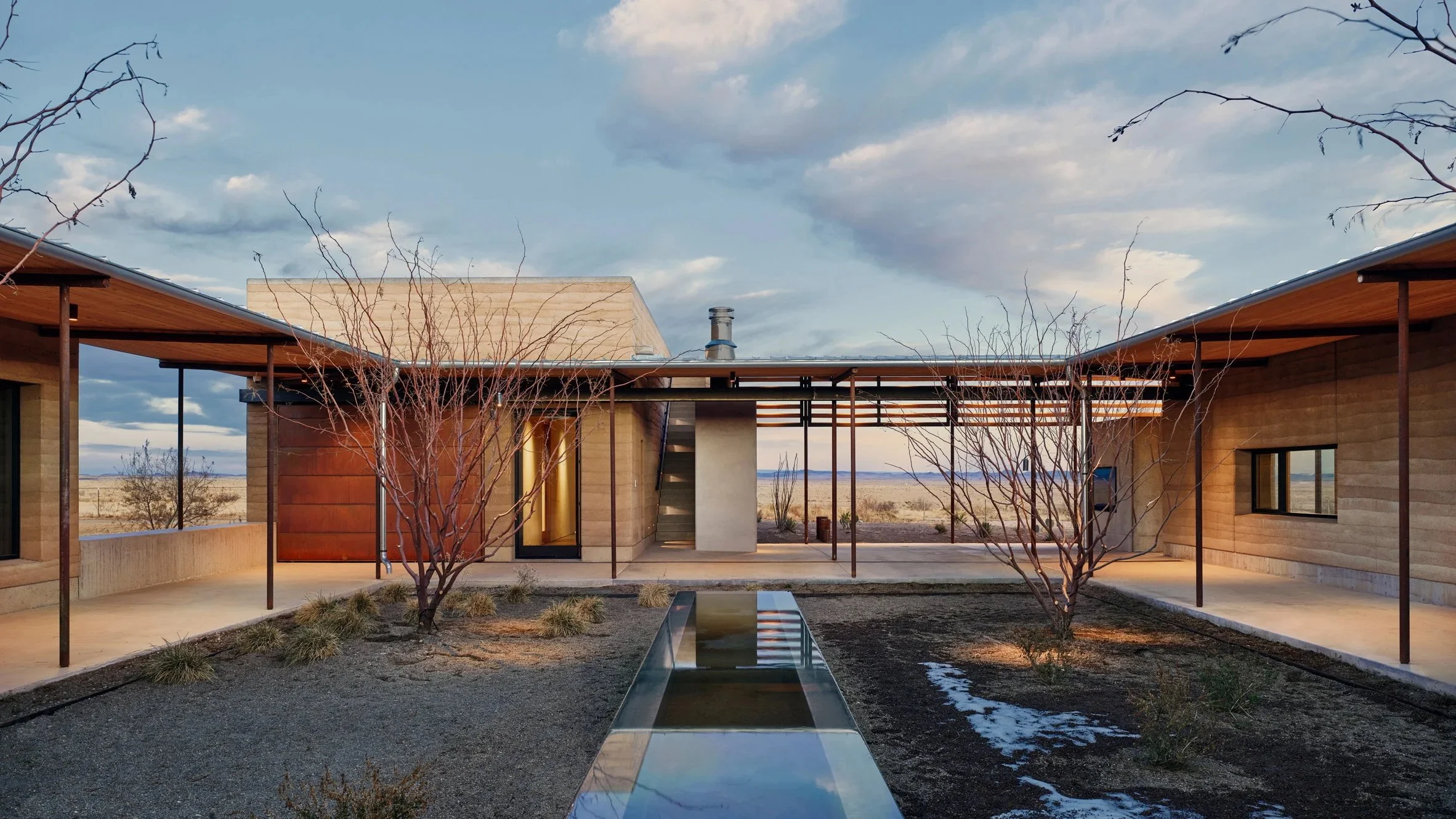
Marfa Ranch
The Marfa Ranch is a distinguished residential project by Lake Flato Architects, is thoughtfully situated on a low rise within the expansive, pristine desert grasslands of Marfa, Texas. This unique location, nestled between the Chihuahuan Desert and the majestic Davis Mountains, presents a challenging yet profoundly beautiful environment. The architectural design of the ranch consciously adopts a low profile, comprising eight distinct structures meticulously organized around a central courtyard. This layout, shaded by native mesquite trees, serves as a cool respite from the sun-drenched desert beyond its walls, drawing inspiration from the area's earliest regional architectural traditions. Architect Bob Harris of Lake Flato articulated that the design embodies a "deliberate quality of spareness that matches the qualities of the land," emphasizing the importance of the house maintaining a low profile to merge seamlessly with the terrain while simultaneously opening to distant views and providing crucial protection from the region's harsh winds and intense sun. This project has garnered significant recognition, including the 2022 Texas Society of Architects Design Award and its inclusion in Dezeen's Top 10 Houses of 2022.
By Positive Energy staff. Photography by Casey Dunn
Architecture Meets Applied Building Science in the Chihuahuan Desert

The Marfa Ranch is a distinguished residential project by Lake Flato Architects, is thoughtfully situated on a low rise within the expansive, pristine desert grasslands of Marfa, Texas. This unique location, nestled between the Chihuahuan Desert and the majestic Davis Mountains, presents a challenging yet profoundly beautiful environment.[1] The architectural design of the ranch consciously adopts a low profile, comprising eight distinct structures meticulously organized around a central courtyard. This layout, shaded by native mesquite trees, serves as a cool respite from the sun-drenched desert beyond its walls, drawing inspiration from the area's earliest regional architectural traditions.[1] Architect Bob Harris of Lake Flato articulated that the design embodies a "deliberate quality of spareness that matches the qualities of the land," emphasizing the importance of the house maintaining a low profile to merge seamlessly with the terrain while simultaneously opening to distant views and providing crucial protection from the region's harsh winds and intense sun.[2] This project has garnered significant recognition, including the 2022 Texas Society of Architects Design Award and its inclusion in Dezeen's Top 10 Houses of 2022.[1]
The design approach at Marfa Ranch exemplifies a profound synergy between traditional and modern climate-responsive architecture. The repeated emphasis on the design "borrowing from the area's earliest structures" [1] and utilizing a courtyard plan with thick rammed earth walls to combat the "extremes of the region — heat, cold, and wind" [1] is not merely a stylistic choice. It represents a deliberate reinterpretation of vernacular architecture, where ancient wisdom regarding thermal mass and passive cooling through courtyards is integrated with contemporary building science and engineering. The project, therefore, is not simply a modern house in the desert; it is a modern house of the desert, demonstrating how historical climate-adapted strategies remain highly relevant and effective when enhanced by modern technical expertise. This integrated perspective suggests that successful high-performance design often finds its roots in time-tested, climate-specific principles.
Positive Energy played a pivotal role as both Mechanical Engineers and Building Envelope consultants for the Marfa Ranch project, collaborating closely with Lake Flato Architects.[1] This dual responsibility is a significant departure from traditional project structures, where these critical roles are often separated. As an MEP engineering firm specializing in high-end residential architecture, Positive Energy is committed to leveraging building science and human-centered design to engineer healthy, comfortable, and resilient spaces.[10] Our overarching vision is to create buildings that are healthy, comfortable, durable, efficient, resilient, sustainable, and regenerative, all while maintaining architectural excellence.[12] The building envelope (comprising walls, roof, and windows) and the MEP systems (including heating, cooling, and ventilation) are intrinsically linked in determining a building's overall energy performance, occupant comfort, and indoor air quality. Positive Energy's comprehensive involvement across both mechanical systems and the building enclosure was part of an integrated design approach where these interconnected elements are considered holistically from the project's inception. This collaborative model leads to optimized performance outcomes that would be challenging to achieve if these critical aspects were addressed in isolation or sequentially, representing a hallmark of advanced building science practices.

The Rammed Earth Building Envelope
Harnessing Thermal Mass in Arid Climates
The concept of thermal mass refers to a material's inherent ability to absorb, store, and subsequently release heat.[13] Materials characterized by high density and a high specific heat capacity are ideally suited for this purpose, with rammed earth being a prime example.[13] The Marfa Ranch prominently features two-foot-thick (approximately 600mm) rammed earth walls, constructed using an impressive three million pounds of earth, some of which was sourced directly from the local site.1 These substantial walls are fundamental to the home's passive heating and cooling strategy.[1]
In arid climates such as Marfa, which are defined by significant diurnal temperature ranges—hot days followed by cool nights—thermal mass proves exceptionally effective.[14] During the intense heat of the day, the thick rammed earth walls absorb thermal energy from direct sunlight and the ambient air, effectively preventing this heat from immediately penetrating the interior spaces. As external temperatures decline during the night, the stored heat is gradually released back into the interior, contributing to a warmer indoor environment.[13] Conversely, during cool nights, the walls release their stored heat, and if the building is strategically ventilated, they can be "regenerated" by absorbing the cooler night air. This process prepares the walls to absorb heat again during the subsequent day, thereby maintaining a comfortable indoor climate.[13]
The effectiveness of rammed earth's thermal mass is directly tied to the diurnal temperature range of the Marfa climate. While insulation (R-value) is commonly understood for its thermal resistance, research consistently highlights that rammed earth's primary thermal benefit in arid climates is its thermal mass and the resulting thermal lag.[13] Studies indicate that rammed earth is "especially beneficial in high diurnal temperature ranges," capable of both moderating indoor temperatures and shifting peak temperatures, with reported time lags ranging from 6 to 9 hours, or even up to 10 hours.[16] This means the wall actively buffers temperature swings rather than simply resisting heat flow. For architects, this distinction is crucial: in climates with significant day-night temperature differences, designing for thermal lag—effectively matching the building's thermal response time to the climate's daily cycle—can provide a powerful impact on occupant comfort and energy efficiency than solely maximizing R-value, particularly given that uninsulated rammed earth typically has a lower thermal resistance.[16] This approach, however, requires a deep understanding of climate-specific building science principles.
The strategic use of rammed earth at Marfa Ranch significantly reduces the reliance on active heating and cooling systems, but does not eliminate the need entirely.[13] Studies on rammed earth buildings demonstrate substantial reductions in heating and cooling loads, ranging from 20% to 52% compared to conventional building assemblies depending on their context.[16] They can contribute to a more stable and comfortable indoor environment throughout the year, minimizing the need for large mechanical cooling systems in favor of smaller, more efficient ones.[13]
Ensuring Durability and Moisture Resilience
To enhance the structural integrity and resistance to weathering, particularly against water and wind driven erosion, rammed earth can be stabilized with additives such as Portland cement, however this does represent additional embodied carbon to an assembly that is otherwise very low embodied carbon.[8] The Marfa Ranch project utilized a stabilized mixture, initially experimenting with 7% Portland cement and ultimately settling on a 9% mixture for the majority of the construction.8 This stabilization process was crucial for achieving high compressive strengths, often comparable to concrete, and contributes to an extended lifespan of the rammed earth, with some stabilized rammed earth structures modeled to endure for more than 1,000 years.[17] This longevity is a key performance metric for sustainability when cement is added - the lifespan is required to offset the upfront carbon. While energy efficiency is a common focus in high-performance buildings, the exceptional durability and long lifespan of properly constructed rammed earth walls suggest that for a "non-disposable" building [22], the enduring quality and low maintenance requirements of the material also become a critical performance metric. This expands the definition of "good" building performance to include reduced future resource consumption and a lower lifecycle environmental impact.
Despite its inherent robustness, effective moisture management is vital for the long-term performance and durability of rammed earth. While rammed earth can naturally regulate indoor humidity if unclad walls containing clay are exposed to the interior [17], external protection is essential. Strategies employed include incorporating hydrophobic (water-repellent) additives during the mixing process [15] and ensuring proper drainage around the foundation. For instance, maintaining a 75mm exposed slab edge above finished grade helps protect against moisture ingress, such as rising damp.[15] Research from Building Science Corporation highlights that even high-R walls can be susceptible to moisture problems, underscoring the necessity of robust moisture management, particularly for wall assemblies relying solely on cavity insulation.[24]
A common assumption might be that a material's thermal properties are static. However, research indicates that the "thermal physical parameters of the rammed earth... increased with an increase in moisture content" [20], and that conductivity "varies enormously" with moisture content.25 This highlights a crucial point: effective moisture management for rammed earth walls is not solely about preventing degradation or mold; it is fundamental to maintaining the intended thermal performance of the wall assembly. If the walls become damp, their ability to store and release heat efficiently is compromised, directly impacting the building's energy consumption and occupant comfort. This demonstrates the interconnectedness of moisture control and thermal design in building science.
Rammed earth walls also exhibit a valuable moisture-buffering capacity (hygric buffering). This means they can absorb and desorb significant amounts of water vapor from the indoor environment, which helps to maintain a stable indoor relative humidity, typically within the comfortable range of 40-60%.17 This hygric mass effect can effectively reduce the demands on mechanical systems for humidification and dehumidification, depending on climate specifics.[25]

Table 1: Rammed Earth Wall Performance Attributes. This table provides a holistic view of rammed earth's performance, moving beyond the singular metric of R-value to emphasize its unique benefits such as thermal mass, moisture buffering, and exceptional durability. It directly addresses the need to understand how walls interact with the physical environment by presenting a multi-faceted performance profile, thereby enabling more informed design decisions for climate-appropriate and durable wall assemblies. It visually reinforces that rammed earth functions as a dynamic system with multiple interacting properties, rather than merely a static barrier.
The Imperative of an Airtight Enclosure
An air barrier is a meticulously designed system of materials intended to control airflow within a building enclosure, effectively resisting air pressure differences.[26] It precisely defines the pressure boundary that separates conditioned indoor air from unconditioned outdoor air.[26] For high-performance buildings like Marfa Ranch, establishing an airtight enclosure is paramount, as it serves multiple critical functions:
Firstly, it prevents significant energy loss. Uncontrolled air leakage, whether through infiltration (outdoor air entering) or exfiltration (conditioned indoor air escaping), can substantially compromise energy efficiency, leading to considerable heat gain in summer or heat loss in winter.[26]
Secondly, airtightness is crucial for preventing moisture issues. Air leakage can transport moisture-laden air into the hidden cavities of wall assemblies. When this warm, humid air encounters cooler surfaces within the wall, it can condense, leading to interstitial condensation, mold growth, and potential long-term structural damage. This is particularly prevalent in humid climates or during heating seasons when indoor air is warmer and more humid than the wall cavity.[24]
Thirdly, a robust air barrier is essential for maintaining superior indoor air quality. An uncontrolled air path allows unfiltered outdoor pollutants—such as dust, pollen, and allergens—to infiltrate the building. Simultaneously, it permits indoor contaminants to circulate freely, undermining the effectiveness of any efforts to maintain a healthy indoor environment.[27]


The outdated concept of "homes needing to breathe" is a common misconception, as highlighted by contemporary building science principles.[27] Instead, the prevailing understanding is that healthy, efficient buildings shouldn't leak and that air sealed walls, ceilings, and floors are fundamental for achieving healthy indoor air quality.[27] This is a foundational principle in building science: an airtight enclosure (the air barrier) is not merely about preventing drafts, but about enabling controlled ventilation. Without an effective air barrier, mechanical ventilation systems cannot efficiently dilute pollutants or recover energy, as uncontrolled air leakage bypasses filters and heat recovery mechanisms. This also exacerbates moisture issues due to uncontrolled air movement.[24] Therefore, the airtightness of the wall assembly is directly linked to the optimal performance of the MEP systems and, consequently, to the health and comfort of the occupants.
Finally, an airtight enclosure is vital for complementing both the thermal mass of the rammed earth walls and the mechanical ventilation systems. It ensures that the thermal mass can perform optimally by preventing unintended heat transfer via uncontrolled air movement. Crucially, it allows mechanical ventilation systems, such as Energy Recovery Ventilators (ERVs) or Heat Recovery Ventilators (HRVs), to operate effectively. This ensures that fresh, filtered, and conditioned outdoor air is delivered precisely where and when needed, without being diluted or contaminated by uncontrolled infiltration.[27]
Engineering for Superior Indoor Air Quality (IAQ)
Defining and Prioritizing IAQ
Indoor Air Quality (IAQ) refers to the overall quality of the air within and immediately surrounding buildings, directly influencing the health, comfort, and productivity of its occupants.[28] It is a critical, yet often underestimated, aspect of building design with significant implications for human well-being and functional performance.[28]
Substandard IAQ can manifest in various adverse health outcomes, including respiratory problems, exacerbated allergies, and chronic fatigue. Beyond physical health, poor IAQ has been shown to negatively affect cognitive function and overall well-being.[28] Common indoor air pollutants that contribute to these issues include particulate matter (such as dust, pollen, and mold spores), volatile organic compounds (VOCs) off-gassing from building materials, and combustion byproducts like carbon monoxide (CO) and nitrogen dioxide (NO2).[29]
High-performance buildings inherently prioritize IAQ as a fundamental component of occupant health and comfort to a large degree.[10] This emphasis aligns with the comprehensive guidelines and best practices established by organizations such as ASHRAE for the design, construction, and commissioning of buildings with excellent indoor air quality.[35]
The importance of IAQ extends far beyond mere comfort. Research explicitly links improved IAQ in green-certified buildings (which homes like the Marfa Ranch embody) to "reduced incidence of respiratory problems, allergies, and other health issues," as well as "higher cognitive function scores and better decision-making abilities".[33] Moreover, it has been observed that passive building strategies, which inherently emphasize superior IAQ, can provide a "cushion of time" during power outages, thereby enhancing a building's resilience.31 This elevates IAQ from a "nice-to-have" feature to a critical component of occupant health, productivity, and a building's overall resilience, providing a robust, data-backed justification for architects to prioritize it in their designs.
MEP Strategies for Clean Indoor Air
Achieving superior indoor air quality is a multi-faceted endeavor that requires a comprehensive and integrated approach to MEP system design. The following strategies are crucial for ensuring clean and healthy indoor environments:
1. Ventilation: Bringing in Fresh Air
Adequate ventilation is fundamental for effectively diluting indoor air pollutants and continuously replenishing indoor air with fresh, filtered outdoor air.[28] High-performance homes frequently incorporate mechanical whole-house fresh air systems, such as Energy Recovery Ventilators (ERVs) or Heat Recovery Ventilators (HRVs).[29] These systems are designed to continuously deliver a consistent volume of fresh, filtered outdoor air while simultaneously exhausting stale indoor air. A key benefit of ERVs and HRVs is their ability to recover energy from the outgoing exhaust air to pre-condition the incoming fresh air, significantly reducing the thermal load on the building's heating and cooling systems.[30] ASHRAE Standard 62.2 provides the recognized minimum ventilation rates and other measures for acceptable indoor air quality in residential buildings, serving as a critical guide for engineers in designing effective systems.[27] Local exhaust systems, particularly high-performing kitchen and bath fans vented directly to the outdoors, are essential for removing source-specific pollutants like cooking fumes (which can include particulates, carbon monoxide, and nitrogen dioxide) and excess humidity at their point of origin.[29]
2. Filtration: Removing Contaminants
High-efficiency air filters are indispensable for effectively removing airborne contaminants such as dust, pollen, and other fine particulates from the air stream.[28] Filters are rated by their Minimum Efficiency Reporting Value (MERV), with higher MERV ratings indicating a greater capacity to capture smaller particles.[29] Positive Energy, in its designs, typically specifies MERV 6+ filters for ducted systems, ensuring that air passes efficiently through the filter rather than bypassing it.[29] Some advanced high-performance projects, such as the Theresa Passive House in Texas (also involving Positive Energy), integrate even more robust, hospital-grade filtration systems to achieve superior air purity.[31]
3. Humidity Control: Preventing Mold and Enhancing Comfort
Excessive indoor humidity creates an environment conducive to mold growth, which can lead to various health issues and potential damage to building materials.[27] Consequently, MEP systems must incorporate measures for precise humidity control, such as dedicated dehumidifiers or properly sized HVAC systems, to maintain optimal indoor humidity levels, typically within the comfortable and healthy range of 40-60% relative humidity.[27] This is particularly crucial in climates that, while generally arid, may experience periods of elevated humidity or have internal moisture sources. For instance, the Marfa Ranch courtyard features a water fountain [8], which, while aesthetically pleasing and providing a connection to water, necessitates careful coordination to prevent adverse effects.
While Marfa is a desert environment, leading one to assume humidity is not a primary concern, the presence of the Marfa Ranch courtyard's "water feature that provides much-needed humidity in the dry climate" [8] introduces a localized moisture source. Our indoor air quality guidance always emphasizes the importance of humidity control to prevent mold, even in a dry climate like Marfa, TX.[27] This reveals a nuanced challenge: even when the outdoor climate is predominantly dry, internal moisture generation (from cooking, bathing, or intentional water features) can create localized humidity issues that require careful MEP design to prevent mold growth and maintain occupant comfort. Architects must consider both the macro-climate and any micro-climates created within or immediately adjacent to the building.
4. Source Control: Minimizing Emissions
The most effective strategy for ensuring good IAQ is to proactively minimize the introduction of pollutants at their source.27 This involves several key practices:
Material Selection: Specifying low-VOC (Volatile Organic Compound) or VOC-free building materials, finishes, furnishings, and cleaning products is paramount.[27] VOCs are chemical compounds that can off-gas into the indoor environment, contributing to air pollution and potential health issues.[28]
Combustion Safety: Ensuring that all combustion appliances (e.g., gas stoves, water heaters, fireplaces) are properly vented to the outdoors prevents dangerous gases like carbon monoxide and nitrogen dioxide from accumulating within the living spaces.[29]
Architects might view ventilation, filtration, and humidity control as separate components. However, the available information consistently presents these as interconnected strategies.[27] The emphasis on an "integrated design approach" for optimal IAQ [28] and the description of a comprehensive "environmental control system" that includes hospital-grade filtration and a dedicated dehumidifier [31] demonstrate that achieving truly superior IAQ requires a holistic MEP design. In this approach, ventilation, advanced filtration, precise humidity control, and source reduction work synergistically. It is not merely about adding an ERV; it is about designing a complete system where each component plays a specific, complementary role in ensuring the highest quality indoor air.

Table 2: Key Indoor Air Quality (IAQ) Parameters and MEP Strategies. This table serves as a practical guide for architects, directly addressing the need to understand "what constitutes indoor air quality" and how to achieve it through specific MEP design interventions. By linking common IAQ concerns to actionable strategies and relevant MEP components, it translates abstract concepts into concrete design considerations, fostering a deeper understanding of the interplay between building science and occupant well-being.
Positive Energy's Holistic MEP Design at Marfa Ranch
Integrated Systems for Comfort and Efficiency
Positive Energy is an MEP engineering firm dedicated to leveraging building science and human-centered design to create spaces that are not only healthy and comfortable but also resilient.[10] Our mission extends beyond conventional engineering, aiming to transform the way buildings are created to improve lives and cultivate meaningful relationships with project partners.[40] Kristof Irwin, one of the principals and visionary co-founder of Positive Energy, often articulates a comprehensive philosophy where buildings are envisioned to be healthy, comfortable, durable, efficient, resilient, sustainable, and regenerative, all while maintaining architectural distinction.[12] That vision is brought to life in each project for which we are fortunate enough to collaborate with great partners. This project was no exception.
As both Mechanical Engineers and Building Envelope consultants for Marfa Ranch, our involvement was instrumental in ensuring the seamless integration of the project's passive design strategies—such as the thermal mass of the rammed earth walls and the cooling effects of the central courtyard—with the active mechanical systems. This home features a hydronic heating system, as well as a VRF heating/cooling system. The home’s mechanical systems also featured humidity control, makeup air, and ventilation components. Positive Energy's commitment to resilient design means creating homes that are capable of adapting to changing climate conditions and future needs.[11] This focus is particularly pertinent in a remote, high-desert environment like Marfa, where extreme temperature swings, wind, and occasional intense rain events present significant environmental challenges.[1] This approach moves beyond merely designing functional mechanical systems to actively shaping the occupant's well-being and their interaction with the built environment. For architects, this redefines the value proposition of MEP consultants, highlighting their integral role in delivering holistic, life-enhancing spaces, rather than simply providing infrastructure.
Sustainable Water Management
The Marfa region, situated within the Chihuahuan Desert, is characterized by sparse rainfall and inherent water scarcity.[3] This environmental reality makes thoughtful water conservation a critical design consideration for any project in the area. Furthermore, concerns regarding groundwater contamination from industrial activities in the nearby Permian Basin underscore the broader importance of both water quality and self-sufficiency in the region.[45]
Lake Flato’s water stewardship ambitions for this project aimed at a 97% reduction in water draw from the local utility compared to typical office buildings.[46] The strategies to achieve this included extensive greywater capture and reuse for irrigation purposes.[46] Complementing this, the property also features substantial onsite water storage capacity: 100,000 gallons stored below grade and an additional 20,000 gallons above ground.[46]
A notable example of adaptive reuse and resourcefulness at Marfa Ranch is the conversion of an old water tank, the only pre-existing structure on the site, into the property's swimming pool.[2] This innovative approach minimizes the consumption of new resources. Additionally, the central courtyard features a fountain that is replenished by collected rainwater, further showcasing the project's commitment to water capture and contributing to the oasis-like quality of the outdoor space.[1]
Designing for Performance and Well-being
The Marfa Ranch serves as a compelling case study for climate-responsive, high-performance residential architecture. It vividly demonstrates how a deep understanding and strategic application of building science principles, combined with thoughtful architectural design, can transform a challenging desert environment into a sanctuary of comfort, health, and sustainability.
The project offers invaluable lessons for architects aiming to design for superior performance and occupant well-being.
Practical Application of Building Science for Durable Wall Assemblies:
Marfa Ranch illustrates that truly durable and high-performing wall assemblies, such as stabilized rammed earth, are not merely a result of selecting a particular material. Their success stems from a comprehensive understanding of how multiple building science principles interact. This includes leveraging the inherent thermal mass of the material, meticulously managing moisture through features like hydrophobic additives and proper drainage, and ensuring the continuous integrity of the air barrier. These elements must work in concert to create a robust enclosure that effectively shields inhabitants from environmental extremes—be it heat, cold, or wind—and guarantees the building's longevity.[8]
Strategies for Good Indoor Air Quality:
Marfa Ranch exemplifies that superior indoor air quality is not an accidental outcome but a deliberate product of multi-faceted MEP strategies. This encompasses controlled ventilation, achieved through Energy Recovery Ventilators (ERVs), ensure a continuous supply of fresh, filtered air while recovering energy. It also involves high-efficiency filtration to remove particulates, precise humidity control to prevent mold growth and enhance comfort, and diligent source control, which includes specifying low-VOC materials and ensuring proper exhaust for pollutant-generating areas like kitchens and bathrooms.[27] These integrated elements collectively ensure a healthy, comfortable, and productive indoor environment, highlighting that IAQ is a proactive design outcome, not a reactive fix.
The Cornerstone of Early and Integrated Collaboration:
The successful execution of Marfa Ranch's complex rammed earth construction and integrated MEP systems underscores the immense value of early and deep collaboration between architects and building science/MEP engineering experts. Positive Energy's unique dual role in both mechanical engineering and building envelope consulting on this project is a clear demonstration of the benefits derived from an integrated design process. This approach allows for performance goals to be established and addressed from the earliest design phases, leading to optimized outcomes across energy efficiency, occupant comfort, health, and durability.[1] For architects aiming to deliver truly high-performance, resilient, and healthy buildings, early and continuous collaboration with building science and MEP experts is not merely beneficial; it is essential. This partnership enables the identification of synergies, the navigation of trade-offs, and the development of optimized solutions that seamlessly integrate architectural vision with scientific principles from the foundational design stages, rather than attempting to retrofit performance later in the project lifecycle.
Building a Healthier, More Resilient Future
The Marfa Ranch project, designed by Lake Flato Architects and engineered by Positive Energy's integral MEP and building envelope consulting, is a compelling benchmark for climate-responsive, high-performance residential architecture. It illustrates how a deep understanding and strategic application of building science can transform a challenging natural environment into a sanctuary of comfort, health, and sustainability.
This project exemplifies Positive Energy's unwavering commitment to delivering buildings that not only meet but consistently exceed expectations for occupant health, comfort, and environmental stewardship. Their specialized expertise in seamlessly integrating passive design strategies with advanced mechanical systems, coupled with a steadfast human-centered approach, illuminates a clear and actionable path forward for the Architecture, Engineering, and Construction (AEC) industry.
Works cited
Marfa Ranch - Lake Flato, accessed May 28, 2025, https://www.lakeflato.com/project/marfa-ranch/
Marfa Ranch / Lake Flato Architects - ArchitectureLab, accessed May 28, 2025, https://www.architecturelab.net/marfa-ranch-lake-flato-architects/
Marfa Ranch - ARQA, accessed May 28, 2025, https://arqa.com/en/architecture/marfa-ranch.html
Monolithic Rammed Earth Walls Keep This Marfa Ranch House Insulated in the Desert Climate - Dwell, accessed May 28, 2025, https://www.dwell.com/article/marfa-ranch-lake-flato-architects-rammed-earth-home-98a60960
This West Texas desert house by Lake|Flato Architects perfectly harmonizes vernacular architecture with the stunning, but harsh natural environment, employing a courtyard typology and two-foot thick rammed-earth walls, accessed May 28, 2025, https://globaldesignnews.com/this-west-texas-desert-house-by-lakeflato-architects-perfectly-harmonizes-vernacular-architecture-with-the-stunning-but-harsh-natural-environment-employing-a-courtyard-typology-and-two-foot-thick-ramm/
Lake Flato Architects creates rammed-earth ranch house in Marfa - Dezeen, accessed May 28, 2025, https://www.dezeen.com/2022/09/08/lake-flato-architects-marfa-ranch-texas/
See this remarkable rammed earth house nestled on a Texas ranch - One Kindesign, accessed May 28, 2025, https://onekindesign.com/rammed-earth-house-texas-ranch/
Gimme Shelter - Texas Architect Magazine, accessed May 28, 2025, https://magazine.texasarchitects.org/2022/07/06/gimme-shelter/
Marfa Ranch - Texas Architect Magazine, accessed May 28, 2025, https://magazine.texasarchitects.org/2022/09/08/marfa-ranch/
Positive Energy | Building Science Focused MEP Engineering, accessed May 28, 2025, https://positiveenergy.pro/
Los Angeles Residential MEP Engineering Firm - Positive Energy, accessed May 28, 2025, https://positiveenergy.pro/los-angeles-residential-mep-engineering-firm
Kristof Irwin, PE, M. Eng. - Positive Energy, accessed May 28, 2025, https://positiveenergy.pro/kristof
Thermal Properties - Rammed Earth Enterprises, accessed May 28, 2025, https://www.rammedearthenterprises.com.au/thermal-properties/
Thermal mass - | YourHome, accessed May 28, 2025, https://www.yourhome.gov.au/passive-design/thermal-mass
Rammed Earth Technical Information, accessed May 28, 2025, https://www.rammedearthenterprises.com.au/rammed-earth-information-for-professionals/
evaluation of rammed earth assemblies as thermal mass - Paper Preparation Guidelines, accessed May 28, 2025, https://publications.ibpsa.org/proceedings/simbuild/2020/papers/simbuild2020_C076.pdf
Rammed earth - Wikipedia, accessed May 28, 2025, https://en.wikipedia.org/wiki/Rammed_earth
Marfa Ranch | Sun Valley Bronze Hardware, accessed May 28, 2025, https://www.sunvalleybronze.com/projects/marfa-ranch
Thermal Mass Explained: Energy Efficiency in New Homes - Constructor, accessed May 28, 2025, https://www.constructor.net.au/thermal-mass-and-your-new-home-what-you-need-to-know/
Thermal and Humidity Performance Test of Rammed-Earth Dwellings in Northwest Sichuan during Summer and Winter - PMC, accessed May 28, 2025, https://pmc.ncbi.nlm.nih.gov/articles/PMC10532870/
Rammed earth | YourHome, accessed May 28, 2025, https://www.yourhome.gov.au/materials/rammed-earth
rammed earth walls | SIREWALL, accessed May 28, 2025, https://sirewall.com/the-sirewall-system/
Optimization of three new compositions of stabilized rammed earth incorporating PCM: Thermal properties characterization and LCA | Request PDF - ResearchGate, accessed May 28, 2025, https://www.researchgate.net/publication/257389761_Optimization_of_three_new_compositions_of_stabilized_rammed_earth_incorporating_PCM_Thermal_properties_characterization_and_LCA
BA-1316: Moisture Management for High R-Value Walls | buildingscience.com, accessed May 28, 2025, https://buildingscience.com/documents/bareports/ba-1316-moisture-management-for-high-r-value-walls/view
Hygrothermal assessment of a traditional earthen wall in a dry Mediterranean climate, accessed May 28, 2025, https://www.researchgate.net/publication/338640116_Hygrothermal_assessment_of_a_traditional_earthen_wall_in_a_dry_Mediterranean_climate
Air Barriers - Building Science, accessed May 28, 2025, https://buildingscience.com/sites/default/files/migrate/pdf/RR-0403_Air_barriers_BFG.pdf
Healthy Home - Positive Energy, accessed May 28, 2025, https://positiveenergy.pro/healthy-home
Enhancing Indoor Air Quality through Effective MEP Design - S3DA Design, accessed May 28, 2025, https://s3da-design.com/enhancing-indoor-air-quality-through-effective-mep-design/
Indoor Air Quality Features | ENERGY STAR, accessed May 28, 2025, https://www.energystar.gov/newhomes/features-benefits/indoor-air-quality-features
Three Basic Strategies to Improve Indoor Air Quality - Airquip Heating & Air Conditioning, accessed May 28, 2025, https://www.airquipheating.com/article.cfm?ArticleNumber=183
There Will Come Soft Rains - Texas Architect Magazine, accessed May 28, 2025, https://magazine.texasarchitects.org/2022/11/07/there-will-come-soft-rains/
3 Human-Centric MEP Design Tips for Better Indoor Environmental Quality - NY Engineers, accessed May 28, 2025, https://www.ny-engineers.com/blog/3-human-centric-mep-design-tips-for-better-indoor-environmental-quality
The impact of green building certifications on market value and occupant satisfaction, accessed May 28, 2025, https://www.researchgate.net/publication/383609782_The_impact_of_green_building_certifications_on_market_value_and_occupant_satisfaction
Marfa, TX Air Quality Index - AccuWeather, accessed May 28, 2025, https://www.accuweather.com/en/us/marfa/79843/air-quality-index/335839
Indoor Air Quality Guide - ASHRAE, accessed May 28, 2025, https://www.ashrae.org/technical-resources/bookstore/indoor-air-quality-guide
Indoor Air Quality Resources - ASHRAE, accessed May 28, 2025, https://www.ashrae.org/technical-resources/bookstore/indoor-air-quality-resources
Whole House ERVs/HRVs - Vents US Shop, accessed May 28, 2025, https://shop.vents-us.com/collections/whole-home-ervs-hrvs
ERV Archives - Page 2 of 2 - Positive Energy Conservation Products, accessed May 28, 2025, https://www.positive-energy.com/product-tag/erv/page/2/
Standards 62.1 & 62.2 - ASHRAE, accessed May 28, 2025, https://www.ashrae.org/technical-resources/bookstore/standards-62-1-62-2
Team - Positive Energy, accessed May 28, 2025, https://positiveenergy.pro/team
Texas' First Radiant Cooling & Heating System (That We Know Of) - Positive Energy, accessed May 28, 2025, https://positiveenergy.pro/building-science-blog/2017/4/24/texas-first-radiant-cooling-heating-system
Kristof Irwin - Facades+, Premier Conference on High-Performance Building Enclosures., accessed May 28, 2025, https://facadesplus.com/person/kristof-irwin/
Marfa Eyed for Massive AI Data Center - Industry Insider, accessed May 28, 2025, https://insider.govtech.com/texas/news/marfa-eyed-for-massive-ai-data-center
AI data center could be coming to Marfa - The Big Bend Sentinel, accessed May 28, 2025, https://bigbendsentinel.com/2025/04/16/ai-data-center-could-be-coming-to-marfa/
An abandoned oil well springs back to life, throwing one West Texas rancher into a battle over her land's future, accessed May 28, 2025, https://www.texasstandard.org/stories/an-abandoned-oil-well-springs-back-to-life-throwing-one-west-texas-rancher-into-a-battle-over-her-lands-future/
Double Take - Texas Architect Magazine, accessed May 28, 2025, https://magazine.texasarchitects.org/2022/11/07/double-take/
Brock Environmental Center, Virginia Beach | Peregrine nation, accessed May 28, 2025, https://peregrine-nation.com/2015/12/05/brock-environmental-center-virginia-beach/
Participate - School of Constructive Arts, accessed May 28, 2025, https://constructivearts.org/Participate
W oodhead Publishing Limited - ePUC, accessed May 28, 2025, https://epuc.vermont.gov/?q=downloadfile/707696/189355

The Case for Dedicated Dehumidification In Sealed Attics
Modern building design increasingly embraces sealed attic construction as a strategy to enhance energy efficiency and improve air leakage control, particularly beneficial for the performance of HVAC ductwork. This approach, where the attic space is brought within the building's thermal and air control envelope, fundamentally alters the moisture dynamics compared to traditional vented attics. While offering significant advantages, sealed attics introduce unique moisture challenges that demand precise and active management to prevent long-term durability issues and maintain superior indoor air quality.
By Positive Energy staff
Modern building design increasingly embraces sealed attic construction as a strategy to enhance energy efficiency and improve air leakage control, particularly beneficial for the performance of HVAC ductwork. This approach, where the attic space is brought within the building's thermal and air control envelope, fundamentally alters the moisture dynamics compared to traditional vented attics. While offering significant advantages, sealed attics introduce unique moisture challenges that demand precise and active management to prevent long-term durability issues and maintain superior indoor air quality.
For effective and safe moisture control in these critical spaces, a dedicated, whole-house dehumidifier represents a superior solution compared to simply extending the main HVAC system's supply and return ductwork into the attic. This blog post will demonstrate that the dedicated dehumidifier approach is paramount for safeguarding indoor air quality by preventing cross-contamination, enhancing building durability by mitigating condensation and mold risks, and achieving greater energy efficiency through the precise, decoupled management of humidity. The principles underpinning this recommendation are analogous to the established best practices for crawl spaces, where direct connection to a home's breathing zone via the main HVAC system is widely recognized as detrimental.
Understanding Sealed Attics & The Evolution of Attic Design
This section introduces the concept of sealed attics, explaining their construction, inherent benefits, and the unique moisture challenges they present, thereby establishing the foundation for understanding effective moisture control strategies.
What Defines a Sealed Attic?
A sealed attic, often referred to as a "conditioned" or "cathedralized" attic, represents a significant departure from conventional attic design. Unlike traditional vented attics that communicate with the exterior environment, sealed attics are intentionally integrated into the building's thermal and air control envelope. This integration is achieved by relocating the air barrier and thermal barrier (insulation) from the ceiling plane to the sloped roof plane.[1] By excluding vents to the exterior, sealed attic construction effectively prevents the ingress of moisture-laden outside air, offering a more robust method for controlling air leakage at the uppermost part of residential structures.[3]
The construction of a sealed attic typically involves applying insulation, such as spray foam or rigid insulation, directly to the underside or top of the roof deck. This application creates a continuous thermal and air barrier that envelops the attic space.[3] Critical to the success of this design is meticulous air sealing at all penetrations, including those for vents and exhaust ducts, to ensure the integrity of the envelope.3 A key objective is to maintain the roof deck temperature sufficiently warm throughout the year, often achieved through the strategic placement of rigid insulation above the roof deck, thereby minimizing condensation potential.[5]
It is important to distinguish between truly "conditioned" attics, where the space is actively heated and cooled to maintain temperatures similar to the living space, and "unconditioned" unvented attics, where insulation is at the roof plane but active conditioning to living space temperatures is not the primary goal, often relying on vapor diffusion ports for moisture management.6 While building codes, such as the IRC (Section R806.5), refer to "conditioned attics," this terminology primarily signifies that the primary insulation is positioned at the roof deck rather than at the ceiling. This code designation does not inherently imply that these attics are or must be maintained at specific living space temperatures.[7] This distinction is crucial because simply being within the thermal envelope does not guarantee a controlled environment, a point often overlooked in design. The shift from a passively ventilated "outdoor" attic to an "indoor" or "semi-conditioned" space fundamentally alters its moisture dynamics. Traditional attics rely on bulk airflow to dissipate moisture, whereas sealed attics, by excluding external airflow, necessitate active and controlled moisture removal from internal sources. This means that simply sealing an attic without a robust internal moisture control strategy can lead to significant problems, particularly in humid climates, as it represents a move from passive, uncontrolled ventilation to a need for active, controlled dehumidification.
Why Sealed Attics?
The adoption of sealed attic construction is driven by several compelling benefits, primarily centered on energy efficiency and building performance.
Energy Efficiency: A primary advantage of sealed attics is the substantial reduction in thermal losses from ductwork and HVAC equipment. By enclosing these components within the conditioned envelope, they operate in a more stable temperature environment, significantly reducing energy consumption. Studies have indicated that sealed attics can yield considerable HVAC energy savings, with some simulations showing an average of 18% savings across various climate regions, predominantly from heating energy reductions.[8] Placing HVAC units and ducting in unconditioned spaces is widely considered a poor choice due to the significant temperature differentials that force units to cycle more frequently and inefficiently, leading to wasted energy.[2]
Air Leakage Control & Durability: Sealed attics offer superior control over uncontrolled air infiltration and exfiltration, which are major contributors to energy loss and moisture transport in conventionally vented attics. In hot-humid climates, where humid outdoor air can easily enter vented attics and cause condensation problems, sealing the attic is often the most effective solution to prevent moisture ingress.3 This approach prevents the major cause of humidity problems in southern humid climates, which is the introduction of humid outdoor air coming into contact with cold surfaces.[3]
Improved Duct Performance: Ducts situated within a sealed attic benefit from operating in a more consistent temperature environment. This minimizes heat gain or loss through duct walls, thereby enhancing the overall efficiency and performance of the HVAC system.8 The original intent behind insulating HVAC systems is to prevent heat transfer, and locating them within a sealed, more thermally stable attic space aligns with this principle, reducing inefficiency.[10]
Other Benefits: Beyond energy and air quality, sealed attics offer additional advantages such as enhanced fire safety by preventing the entry of ash and embers through vents, and reduced vulnerability to wind-driven rain penetration, particularly in coastal and high-wind regions.2
The Inherent Moisture Challenge in Sealed Attics
Despite their advantages, sealed attics are not immune to moisture problems; rather, they present a different set of moisture dynamics that require careful management.
Sources of Moisture: Even in meticulously sealed attics, moisture can originate from various internal sources. A significant contributor is air leakage from the living space below. Despite efforts to air seal at the roof plane, ceiling penetrations for lighting, wiring, and plumbing can still act as pathways for moist air from the conditioned space to migrate into the attic. This phenomenon is exacerbated by the "stack effect," where buoyant hot air rises and creates positive pressure against the ceiling, pushing air through any openings into the attic. This process can pull unconditioned air from lower levels, carrying a substantial moisture load into the attic.[1] Another source is the natural hygric buffering capacity of wood framing materials. Wood can absorb moisture during periods of high humidity (e.g., at night) and release it when conditions change (e.g., during the day), leading to fluctuations in attic air dew point.[3] While this buffering offers some resilience against intermittent condensation, relying solely on it for continuous or significant moisture loads is a critical design flaw. It can create a persistent moisture reservoir that, if not actively dried, leads to chronic dampness, mold growth, and eventual material degradation, undermining the long-term durability of the assembly.
Condensation Risks: The most critical moisture challenge in sealed attics is the risk of condensation. When cold surfaces within the attic, such as HVAC ductwork, framing, or sheathing, drop below the dew point temperature of the surrounding attic air, condensation will occur.[5] This risk is particularly pronounced during periods of air conditioning operation, as supply ducts and diffusers can become very cold. With typical supply temperatures around 10-13°C (50-55°F) and attic air dew points potentially reaching 29°C (85°F), condensation is a significant concern.[3] Maintaining the roof deck above 45°F (7°C) is a key strategy to minimize or eliminate condensation, as condensation will not occur unless the dew point of the interior air exceeds this temperature and contacts the surface.[5]
Consequences of Uncontrolled Moisture: The implications of high humidity and condensation in a sealed attic are severe and far-reaching. These include the proliferation of mold and mildew, which can lead to health problems for occupants and contribute to odors and stains.[8] Furthermore, persistent dampness can cause wood rot, swelling, delamination of wood products like OSB and plywood, and corrosion of metal fasteners, ultimately compromising the structural integrity and durability of the building.11 Wet insulation also loses its thermal effectiveness, negating the energy efficiency benefits of a sealed attic.[14]
The Case Against Connecting Attics to Main HVAC Systems
This section details the fundamental flaws and significant drawbacks associated with using a home's main HVAC system to control moisture dynamics in a sealed attic, emphasizing the critical indoor air quality and performance compromises.
Cross-Contamination and Indoor Air Quality (IAQ)
The analogy of a crawl space serves as a foundational principle in building science: these spaces should either be fully integrated into the conditioned living space or completely isolated from it. Connecting them directly to the main house HVAC system is widely considered a poor practice due to significant indoor air quality (IAQ) concerns.15 This principle extends directly to attics, even sealed ones.
ASHRAE (American Society of Heating, Refrigerating and Air-Conditioning Engineers) standards explicitly caution against drawing air from unconditioned or semi-conditioned spaces like attics or crawl spaces into the dwelling's breathing zone. ASHRAE Standard 62.2, for instance, mandates that "Ventilation air shall come from outdoors and shall not be transferred from adjacent dwelling units, garages, unconditioned attics or crawl spaces".[18] It further stipulates that "Measures shall be taken to minimize air movement across envelope components to dwelling units from adjacent spaces such as garages, unconditioned crawlspaces, unconditioned attics, and other dwelling units".[19] This is not merely a recommendation but a fundamental principle enshrined in ASHRAE's IAQ standard for residential buildings, implying significant liability and performance risk for designs that allow such connections. The standard also highlights that exhaust-only ventilation systems, if not properly designed, may draw makeup air from "paths of least resistance," including attics, which can lead to "more contaminated" indoor air.[20] This means that for architects, directly connecting a sealed attic—which, even with insulation at the roof plane, is often not fully conditioned to living space standards without dedicated systems—to the main HVAC system's supply or return violates the spirit and often the letter of these critical IAQ guidelines. Such a connection directly compromises occupant health by introducing potentially contaminated, unfiltered air into the breathing zone, signaling that these spaces must be decoupled from the primary IAQ system.
Attics, even when sealed, can harbor various contaminants that would be drawn into the living space if connected to the HVAC return:
Off-gassing from Materials: While spray foam insulation, for example, typically cures over time, initial off-gassing can occur. Other building materials or stored items in the attic could also release volatile organic compounds (VOCs).[10]
Pests and Allergens: Attics can be susceptible to rodents, insects, their droppings, and mold spores, especially if humidity levels are not consistently controlled.[12]
Dust and Debris: General construction dust, insulation fibers, and other particulate matter can accumulate in attic spaces.
Combustion Byproducts: Although less common in new, sealed attics with modern appliances, the presence of unsealed combustion equipment in any unconditioned space poses a risk of combustion byproducts entering the air stream.[21]
The mechanism of cross-contamination is straightforward: tapping the HVAC system, particularly the return, creates negative pressure in the living space relative to the attic, actively pulling in attic air.[7] Even adding a supply register without a balanced return can force attic air into the house due to pressure imbalances.7 This uncontrolled air movement bypasses filtration systems designed for the living space, introducing unfiltered air and potential contaminants directly into the breathing zone.
Energy Inefficiency and System Strain
Beyond IAQ concerns, integrating the attic into the main HVAC system introduces significant energy inefficiencies and places undue strain on the equipment.
Duct Leakage and Thermal Penalties: Even in sealed attics, ductwork, despite insulation, remains susceptible to heat gain or loss. Any leakage from the duct system into the attic, or infiltration from the attic into the ducts, introduces unconditioned attic air into the system. This leads to thermal penalties, resulting in increased energy consumption. For instance, duct leakage in attics can account for approximately 20% of the total space conditioning load.[22]
Impact on HVAC System Sizing and Performance: If the main HVAC system is tasked with conditioning the attic, it must be oversized to account for this additional load. This oversizing leads to inefficient cycling, as the system may short-cycle during periods of low sensible load, reducing its ability to effectively remove moisture.[9] Conventional air conditioning equipment is primarily designed to control sensible cooling (temperature) and is less efficient at removing latent heat (moisture).[23] The ambiguity in the term "conditioned attic" within building codes can lead architects to assume that simply insulating at the roof plane, or providing minimal HVAC connection, is sufficient. This is a critical practical pitfall. While the attic is technically within the thermal envelope, it is rarely maintained at the same precise temperature and humidity as the living space without dedicated mechanical intervention. Relying on passive conditioning or minimal HVAC connections means the attic remains a zone of elevated temperature and humidity, acting as a significant thermal and latent load on the HVAC system, increasing energy consumption, and creating a persistent environment ripe for condensation and mold on HVAC components and structural elements. Architects must recognize that "conditioned" in code does not automatically mean "controlled" in practice for moisture.
Latent Load Challenge: Standard AC units are not designed to handle significant latent (moisture) loads independently, especially during mild weather or "shoulder seasons" when sensible cooling demand is low but humidity remains high.[24] In such conditions, an AC unit may cycle off prematurely once the set temperature is reached, leaving the indoor air feeling "sticky" and uncomfortable due to elevated humidity. Tapping the main HVAC into an attic, particularly in humid climates, exacerbates this issue by introducing additional latent load from air leakage and material desorption.[3] This added latent load further strains the AC, potentially leading to increased energy consumption and reduced comfort, as the AC is less effective at removing moisture when it's not running long cycles for sensible cooling.[24] The practice of tapping the main HVAC into an attic, particularly in humid regions, exacerbates the inherent limitation of ACs in handling latent loads. This creates a hidden energy penalty and comfort compromise. Architects, often focused on sensible loads, must understand that neglecting dedicated latent load management in these semi-conditioned spaces forces the primary HVAC system to operate sub-optimally, leading to higher overall energy use and a less comfortable, potentially unhealthy, indoor environment. This underscores the need for a system designed specifically for moisture removal, independent of sensible cooling demands.
Practical Drawbacks and Durability Concerns
Beyond IAQ and energy, connecting the main HVAC to the attic introduces several practical and durability issues.
Risk of Mold and Degradation: As previously discussed, cold surfaces in the attic, such as ductwork or sheathing, combined with high dew point air from the living space or the attic itself, create prime conditions for condensation.[3] This condensation inevitably leads to mold growth and material degradation, compromising the longevity of the building components.
Challenges in Airflow and Pressure Balancing: Simply adding supply or return registers to an attic without a carefully engineered system can disrupt the pressure balance of the entire home. This can lead to unintended air movement between zones, reduced HVAC efficiency in the main living areas, and inadequate airflow to critical spaces.[10] Proper balancing is complex and often overlooked, leading to systemic performance issues.
Maintenance Issues: HVAC equipment located in attics, even sealed ones, remains difficult and uncomfortable to access for routine maintenance and repairs. Attics can still experience elevated temperatures, making service challenging for technicians and potentially leading to neglected maintenance, which further compromises system performance and lifespan.[9]
The Dedicated Dehumidifier Solution For Sealed Attics
Dedicated dehumidifiers are the preferred solution for moisture control in sealed attics, detailing its benefits for moisture control, indoor air quality, and energy efficiency, along with practical considerations for architects.
Better Moisture Control and IAQ
Dedicated dehumidifiers offer a level of precision and independence in moisture control that central HVAC systems cannot match, leading to superior indoor air quality and building protection.
Optimal Humidity Maintenance: Unlike central air conditioning units that primarily cool air and only dehumidify as a secondary effect, dedicated dehumidifiers are specifically engineered to remove moisture from the air, maintaining indoor relative humidity (RH) within the ideal range of 30-60%.[15] ASHRAE recommends maintaining RH around 50% for optimal health and comfort, as levels around this point can be lethal to various pathogenic organisms and reduce the virulence of viruses.[12] This independent control is crucial for preventing the "sticky" feeling often experienced in humid climates even when temperatures are comfortable, and ensures that the environment is consistently healthy and comfortable.[25]
Reduced Airborne Contaminants: By actively controlling humidity, dedicated dehumidifiers directly inhibit the growth and proliferation of mold, mildew, and dust mites. These organisms thrive in high-humidity environments and are major indoor air quality concerns, contributing to allergies, asthma, and other respiratory issues.[12] The reduction of indoor moisture directly translates to a reduced mold threat and a healthier living environment.
Protection of Building Materials and Contents: Consistent and controlled humidity levels are vital for preserving the integrity of building materials and contents. High humidity can lead to warping of wood floors and furniture, corrosion of metal components, and damage to textiles and stored valuables.[12] A dedicated dehumidifier safeguards the home's structure and its contents from such moisture-related degradation, ensuring long-term durability.
Energy Efficiency and System Independence
The strategic use of a dedicated dehumidifier specifically for the sealed attic space (and not coupled to the dehumidifier for the HVAC system(s)) contributes significantly to overall energy efficiency and optimizes the performance of the primary HVAC system, allowing the system to function for breathing zones without concerns.
Here are some general principles that apply to dedicated dehumidifiers that are worth keeping in mind.
Decoupling Latent and Sensible Loads: A key advantage of a dedicated dehumidifier is its ability to decouple the latent (moisture) load from the sensible (temperature) load. This allows the main HVAC system to operate more efficiently, focusing solely on temperature control, without needing to overcool the space to achieve adequate dehumidification.[23] When dry air is maintained, the AC system's cooling efficiency increases because it requires less effort to achieve the desired temperature.24 This prevents the common problem of "sticky" indoor air even when temperatures are comfortable, and avoids the energy waste of overcooling. For architects, this means designing for decoupled humidity control is a hallmark of a truly high-performance, comfortable, and durable building, rather than trying to force a single system to do both jobs inefficiently.
Reduced Workload on Primary HVAC: By effectively managing humidity independently, the dehumidifier can reduce the overall run time and strain on the main air conditioning unit. This not only contributes to energy savings but also potentially extends the lifespan of the primary HVAC system.[25]
Targeted Operation: Dedicated dehumidifiers can operate precisely when needed, such as during mild shoulder seasons when cooling is not required but outdoor humidity is high. This targeted operation provides comfort and protection without unnecessary cooling, making them a more energy-efficient solution for year-round humidity control.[24]
Integrating Building Science for Durable Assemblies
This section broadens the discussion to core building science principles, explaining how they apply to sealed attics and how a dedicated dehumidifier supports overall building envelope performance and durability.
Core Principles Revisited: Air, Moisture, and Thermal Control
A deep understanding of fundamental building science principles is essential for designing durable and healthy sealed attic assemblies.
Understanding Psychrometrics: While architects are not expected to perform complex HVAC calculations, a practical understanding of psychrometrics is invaluable. Psychrometric charts graphically represent the physical and thermodynamic properties of air, including dry-bulb temperature, relative humidity, and crucially, dew point temperature.14 The dew point is the temperature at which water vapor in the air will condense into liquid water. Understanding this concept empowers architects to anticipate condensation risks within their assemblies, such as on roof sheathing or ductwork surfaces, based on anticipated attic air conditions and material temperatures. This shifts moisture control from a reactive problem-solving exercise to a proactive design consideration, allowing for informed material selection and system integration that prevents issues before they arise. It is a fundamental tool for designing durable, resilient building envelopes.[14]
The Primacy of the Air Barrier: Controlling air movement is paramount for effective moisture control. Air leakage carries significantly more moisture than vapor diffusion, making a continuous and robust air barrier a non-negotiable component of any high-performance building envelope.[4] Meticulous attention to achieving exceptional airtightness at the ceiling plane (between the living space and the attic) is critical to minimize moisture migration from internal sources. Similarly, a continuous and meticulously sealed air barrier at the roof deck prevents external moisture entry and helps control the internal attic environment.
Vapor Control: The role of vapor retarders and vapor-permeable materials in managing moisture diffusion is important, but secondary to air sealing. In many unvented attic designs, interior vapor barriers are often not recommended. This allows for inward drying, meaning that if moisture does enter the assembly, it has a pathway to dry towards the interior, preventing it from becoming trapped and leading to problems.4 This clarifies the hierarchy of moisture control strategies: air sealing is paramount, acting as the first and most critical line of defense against moisture transport. Vapor control, while important, plays a secondary role in managing diffusion. For architects, this means obsessive attention to detail in air barrier continuity at the ceiling plane and roof deck is far more impactful than agonizing over vapor retarder placement alone. In sealed attics, the ability for materials to dry inward is often desired, making a "vapor-open to the interior" approach preferable, provided air leakage is rigorously controlled. This prevents moisture from getting trapped and ensures the assembly can dry if it does get wet.
Thermal Control and Condensing Surfaces: To prevent condensation, it is essential to keep all surfaces within the sealed attic above the dew point temperature of the attic air.[5] This is achieved through adequate insulation and strategic material placement, ensuring that cold surfaces do not form where moist air can condense. Maintaining the roof deck temperature above 45°F (7°C) is a key design consideration for minimizing condensation.[5]
The following table summarizes these key building science principles and their implications for moisture-resilient attics:

Table 1: Key Building Science Principles for Moisture-Resilient Attics
Designing for Resilience: How Dehumidifiers Support the Building Envelope
The integration of a dedicated dehumidifier is not merely an HVAC component; it is a fundamental element of a resilient and durable sealed attic assembly.
Mitigating Condensation Risk: The primary function of a dehumidifier in a sealed attic is to actively lower the dew point of the air within that space.[26] By reducing the moisture content of the air, the dehumidifier significantly reduces the likelihood of condensation forming on cooler surfaces, such as HVAC ductwork, framing, or the underside of the roof sheathing, even during prolonged periods of air conditioner operation.[3] This direct control over attic humidity is essential for preventing moisture accumulation and its associated problems.
Protecting Wood Framing and Sheathing: Wood-based materials, common in roof assemblies, are hygroscopic, meaning they absorb and release moisture.[3] While this offers some buffering capacity, persistent high humidity can lead to chronic moisture accumulation, resulting in rot, swelling, and mold growth.[8] A dehumidifier ensures that the attic environment remains consistently dry, preventing moisture from building up in these critical structural components, thereby safeguarding the long-term structural integrity of the roof assembly.
Enhancing Insulation Performance: Insulation materials, particularly fibrous types, lose a significant portion of their thermal effectiveness when wet.[14] By actively keeping the attic dry, the dehumidifier ensures that the insulation performs as designed, maintaining its R-value and contributing to consistent energy efficiency throughout the building's lifespan.
Overall Durability and Sustainability: Just as a conditioned crawl space needs an active drying mechanism, a sealed attic, being a semi-conditioned space, requires a dedicated dehumidifier to serve as its primary active drying mechanism.[17] It is not enough to simply seal the attic; one must also actively manage the moisture that inevitably enters or is generated within it. The dehumidifier ensures that the attic environment remains consistently dry, protecting the building components (insulation, framing, sheathing, ducts) from moisture accumulation and degradation, thereby guaranteeing the long-term performance and durability of the entire roof assembly. This is the missing link for architects to achieve truly resilient sealed attics. A building envelope that deteriorates prematurely due to moisture issues is neither green nor sustainable, leading to costly repairs and replacements.[13] By actively managing moisture, a dedicated dehumidifier contributes directly to the overall durability and longevity of the building, reducing its environmental footprint and long-term operational costs.
Recommendations for Architects
Based on the comprehensive analysis of sealed attic moisture dynamics, the following recommendations are provided for architects to ensure the long-term performance, durability, and indoor air quality of their designs:
Prioritize Sealed Attics with Dedicated, Ducted Dehumidification: Architects should advocate for sealed attic construction as the preferred design strategy, particularly in humid climates, due to its inherent benefits in energy efficiency and air leakage control. Crucially, this design must be paired with the integration of a dedicated, whole-house dehumidifier. This unit should be ducted to circulate air throughout the sealed attic space, serving as the primary means of moisture control. This approach aligns with the most robust building science practices for maintaining superior indoor air quality and ensuring building durability, moving beyond the limitations of traditional HVAC systems for humidity management.
Emphasize Robust Air Sealing at the Ceiling Plane and Roof Deck: Achieving exceptional airtightness is fundamental. Architects must stress the critical importance of meticulous air sealing at the ceiling plane, which forms the boundary between the living space and the attic. This minimizes the migration of moist air from internal sources into the attic. Equally vital is the implementation of continuous and rigorously sealed air barriers at the roof deck itself, which prevents external moisture entry and effectively isolates and controls the internal attic environment. This dual focus on air sealing is paramount for success.
Collaborate with Building Science and MEP Engineering Experts Early in Design: The complexities of moisture dynamics in sealed attics necessitate specialized expertise. Architects are strongly advised to engage specialized consultants, including building science professionals and MEP (Mechanical, Electrical, and Plumbing) engineers, from the earliest conceptual design phases. These experts are indispensable for:
Performing accurate latent load calculations and precise dehumidifier sizing, which goes beyond simple square footage estimates and considers specific climate and building performance data.
Designing integrated systems that ensure proper airflow, effective pressure balancing, and reliable condensate management within the sealed attic.
Providing expert guidance on material selection and assembly details to proactively prevent condensation and ensure the long-term durability of the entire roof assembly.
Navigating complex code interpretations related to "conditioned" spaces and ventilation standards, ensuring compliance and optimal performance.
The transition to sealed attic construction offers significant advancements in energy efficiency and building envelope performance. However, this modern approach introduces distinct moisture dynamics that demand a sophisticated and targeted control strategy. The analysis unequivocally demonstrates that a dedicated, whole-house dehumidifier is not an optional amenity but a fundamental component for the successful design and long-term resilience of sealed attics.
This dedicated approach ensures superior indoor air quality by preventing the cross-contamination inherent in tapping the main HVAC system. It optimizes energy performance by decoupling sensible cooling from latent moisture removal, allowing both systems to operate at peak efficiency. Most critically, it secures the long-term durability and structural integrity of the building envelope by actively mitigating condensation, mold growth, and material degradation. By championing these best practices in their designs, architects can move beyond conventional limitations, creating healthier, more efficient, and enduring homes that provide lasting value and comfort for their clients.
Works cited
DuPont™ Tyvek® AtticWrap™ in the Sealed Attic System - BuildSite, accessed May 23, 2025, https://www.buildsite.com/pdf/duponttyvek/Tyvek-AtticWrap-Technical-Notes-219822.pdf
ASHRAE Journal - June 2020 - 77 - Nxtbook, accessed May 23, 2025, https://www.nxtbook.com/nxtbooks/ashrae/ashraejournal_STUBMW/index.php?startid=77
Vented and Sealed Attics In Hot Climates - Building Science, accessed May 23, 2025, https://buildingscience.com/sites/default/files/document/rr-0981_vented_sealed_attics.pdf
Unvented Roof Literature - American Chemistry Council, accessed May 23, 2025, https://www.americanchemistry.com/content/download/5205/file/Unvented-Roof-Literature-Review.pdf
Unvented Roof Systems - Building Science, accessed May 23, 2025, https://buildingscience.com/sites/default/files/migrate/pdf/RR-0108_Unvented_Roof_Systems.pdf
GM-2101: Guide For Building Conditioned Unvented Attics And Unconditioned Unvented Attics With Fiberglass And Mineral Wool Insulation | buildingscience.com, accessed May 23, 2025, https://buildingscience.com/documents/guides-and-manuals/gm-2101-guide-building-conditioned-unvented-attics-and-unconditioned
“Conditioned” Attics | Russell King, M.E., accessed May 23, 2025, https://russellking.me/2025/01/22/conditioned-attics/
Sealed and Insulated Attic Hygrothermal Performance in New California Homes Using Vapor and Air Permeable Insulation—Field Study and Simulation (Technical Report) | OSTI.GOV, accessed May 23, 2025, https://www.osti.gov/biblio/1526610
Does the hvac unit in the unconditioned attic need to be insulated? : r/DIY - Reddit, accessed May 23, 2025, https://www.reddit.com/r/DIY/comments/1b5y4zt/does_the_hvac_unit_in_the_unconditioned_attic/
Installer put a hole in return I assume to get air flow in conditioned attic. Have spray foam insulation. This ok? Been a few years and I don't see any mold anywhere in the attic and in summer months AC works fine. Anything I should consider? : r/hvacadvice - Reddit, accessed May 23, 2025, https://www.reddit.com/r/hvacadvice/comments/16f2hld/installer_put_a_hole_in_return_i_assume_to_get/
Condensation Control in Attics and Roofs in Cold Weather | Building America Solution Center, accessed May 23, 2025, https://basc.pnnl.gov/resource-guides/condensation-control-attics-and-roofs-cold-weather
HUMIDIFIERS - ASHRAE, accessed May 23, 2025, https://www.ashrae.org/file%20library/technical%20resources/covid-19/i-p_s16_ch22humidifiers.pdf
Functions | ASHRAE 1.12 Moisture Management in Buildings, accessed May 23, 2025, https://tpc.ashrae.org/Functions?cmtKey=6160cdee-aac9-4052-8fd0-9782949100ab
Psychrometric Charts | Sustainability Workshop - VentureWell, accessed May 23, 2025, https://sustainabilityworkshop.venturewell.org/node/1195.html
Encapsulation of a Basement and Crawl Space - AprilAire Partners, accessed May 23, 2025, https://www.aprilairepartners.com/blog/encapsulation-basement-crawlspace-dehumidifier/
Conditioned Crawlspaces - WSU Energy Program, accessed May 23, 2025, https://www.energy.wsu.edu/documents/FAQ%20conditioned%20crawlspaces~2023-07-31.pdf
BSI-115: Crawlspaces - Either In or Out | buildingscience.com, accessed May 23, 2025, https://buildingscience.com/documents/building-science-insights-newsletters/bsi-115-crawlspaces-either-or-out
4.6 Indoor Air Quality and Mechanical Ventilation - Energy Code Ace, accessed May 23, 2025, https://energycodeace.com/site/custom/public/reference-ace-2019/Documents/46indoorairqualityandmechanicalventilation.htm
interpretation ic 62.2-2022-1 of - ASHRAE, accessed May 23, 2025, https://www.ashrae.org/file%20library/technical%20resources/standards%20and%20guidelines/standards%20intepretations/ic-62.2-2022-1.pdf
BA-1309: Ventilation System Effectiveness and Tested Indoor Air Quality Impacts, accessed May 23, 2025, https://buildingscience.com/documents/bareports/ba-1309-ventilation-system-effectiveness-and-indoor-air-quality-impacts/view
Addressing Indoor Environmental Concerns During Remodeling | US EPA, accessed May 23, 2025, https://www.epa.gov/indoor-air-quality-iaq/addressing-indoor-environmental-concerns-during-remodeling
BSD-102: Understanding Attic Ventilation | buildingscience.com, accessed May 23, 2025, https://buildingscience.com/documents/digests/bsd-102-understanding-attic-ventilation
Procedures for Calculating Residential Dehumidification Loads - Publications, accessed May 23, 2025, https://docs.nrel.gov/docs/fy16osti/66515.pdf
Whole House Dehumidifier vs. AC: Which Is More Effective - AlorairCrawlspace, accessed May 23, 2025, https://aloraircrawlspace.com/blogs/news/whole-house-dehumidifier-vs-ac
Whole home air conditioning vs dehumidifier : r/hvacadvice - Reddit, accessed May 23, 2025, https://www.reddit.com/r/hvacadvice/comments/18w2das/whole_home_air_conditioning_vs_dehumidifier/
Basement & Crawl Space, accessed May 23, 2025, https://images.thdstatic.com/catalog/pdfImages/4b/4b1e1947-1762-4b94-b22a-68e7b3df0466.pdf
Info-620: Supplemental Humidity Control | buildingscience.com, accessed May 23, 2025, https://buildingscience.com/documents/information-sheets/information-sheet-supplemental-humidity-control
Trane Dehumidifiers: Improve Indoor Air Quality and Comfort, accessed May 23, 2025, https://www.trane.com/residential/en/resources/glossary/dehumidifier/
How To Install a Whole-House Dehumidifier, accessed May 23, 2025, https://www.thisoldhouse.com/heating-cooling/21017304/how-to-install-a-whole-house-dehumidifier
Portable Dehumidifiers Vs Whole-House Dehumidifiers - Mattioni Plumbing, accessed May 23, 2025, https://www.callmattioni.com/blog/t-portable-vs-whole-house-dehumidifier/
Energy and Latent Performance Impacts from Four Different Common Ducted Dehumidifier Configurations - Publications – of the FSEC Energy Research Center - University of Central Florida, accessed May 23, 2025, https://publications.energyresearch.ucf.edu/wp-content/uploads/2020/10/FSEC-PF-479-20_VC-20-C034.pdf
Dehumidification, accessed May 23, 2025, https://images.thdstatic.com/catalog/pdfImages/ca/cabd61a3-ff67-4652-ab21-66503e44ac90.pdf
Humidity Solutions - Aquarius Home Services, accessed May 23, 2025, https://aquariushomeservices.com/wp-content/uploads/2024/10/126-20240607142239-aprilaire-dehumidifier-product-guide-981-compressed-compressed.pdf
How to Properly Size a Dehumidifier - HVAC School, accessed May 23, 2025, http://www.hvacrschool.com/how-to-properly-size-a-dehumidifier/
The Maintenance Schedule For Your Dehumidifier | ACHR News, accessed May 23, 2025, https://www.achrnews.com/articles/88818-the-maintenance-schedule-for-your-dehumidifier
Using the Psychrometric Chart in building measurements - Architectural Science Association, accessed May 23, 2025, https://anzasca.net/wp-content/uploads/2014/08/ANZAScA_2010_Horan_P_and_Luther_M_B.pdf
Conditioned Crawl Space Construction, Performance and Codes - Building Science, accessed May 23, 2025, https://buildingscience.com/sites/default/files/migrate/pdf/BA-0401_Conditioned_Crawlspace_Construction.pdf